
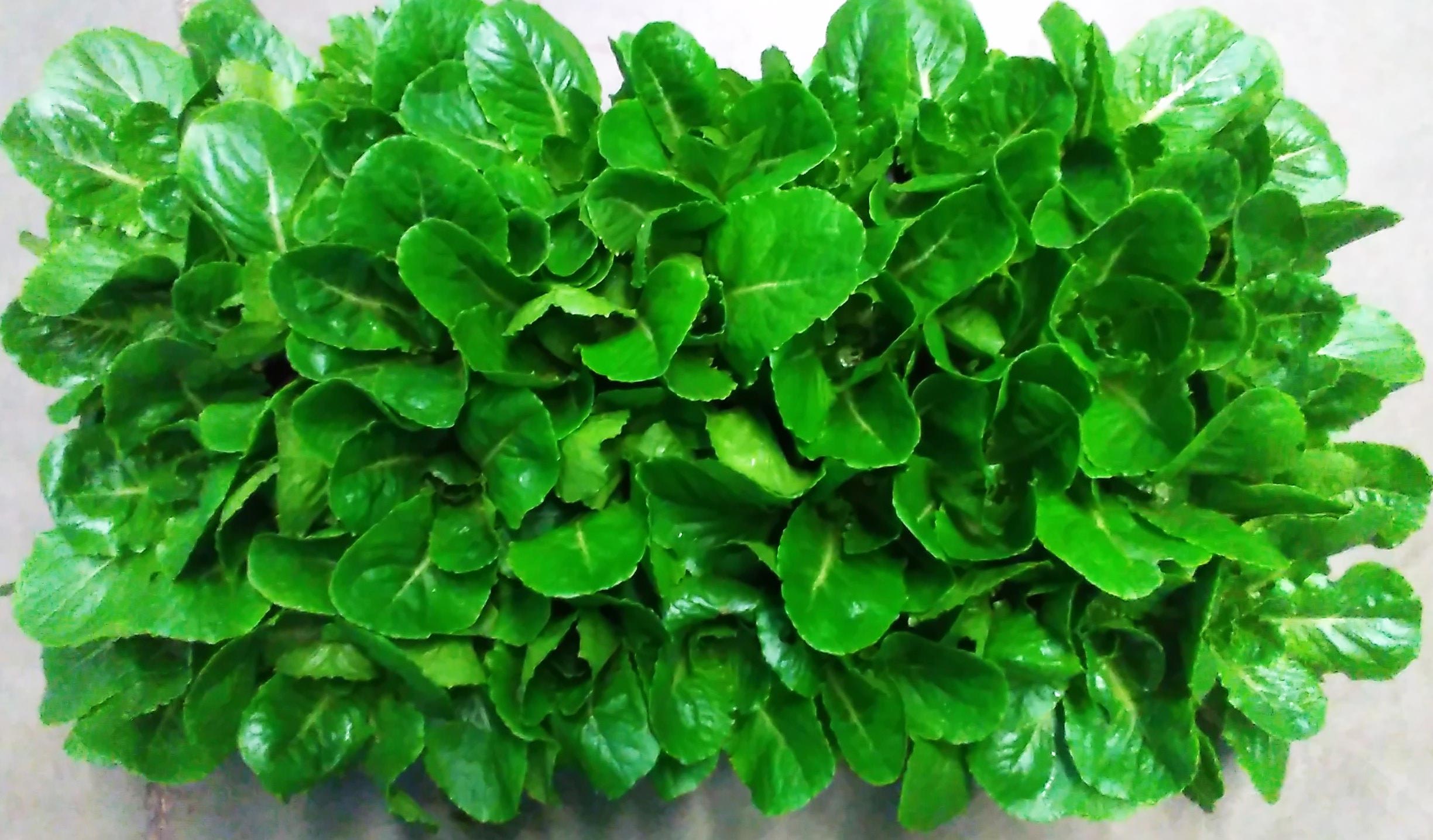
NASA researchers developed transgenic lettuce that produces a bone-stimulating hormone to help prevent bone loss in astronauts on long space missions. This could also aid those on Earth lacking access to osteoporosis treatments.
NASA is preparing to send humans to Mars sometime in the 2030s. The 3-year mission will expose astronauts to a long period of microgravity, which will cause them to lose bone mass. But now, scientists report transgenic lettuce that produces a bone-stimulating hormone. Someday, astronauts could grow the lettuce in space and help guard against bone loss — simply by eating a big bowl of salad. In addition, the lettuce might help stave off osteoporosis in resource-limited areas here on Earth, the researchers say.
The researchers will present their results today at the spring meeting of the American Chemical Society (ACS). ACS Spring 2022 is a hybrid meeting being held virtually and in-person March 20-24, with on-demand access available March 21-April 8. The meeting features more than 12,000 presentations on a wide range of science topics.
Previous studies of astronauts on extended space missions have shown that they lose, on average, more than 1% of bone mass per month spent in space, a condition known as osteopenia. “Right now, astronauts on the International Space Station have certain exercise regimens to try to maintain bone mass,” says Kevin Yates, a graduate student who is presenting the work at the meeting. “But they’re not typically on the International Space Station for more than 6 months.” In contrast, it takes about 10 months to get to Mars, and the astronauts would remain for about a year to study the planet before making the trip home to Earth.
The 3-year mission could leave astronauts vulnerable to osteopenia, and later, osteoporosis. A medication containing a peptide fragment of human parathyroid hormone (PTH) stimulates bone formation and could help restore bone mass in microgravity, but it requires daily injections. Transporting large quantities of the medication and syringes and administering it during space missions is impractical. So Yates; Somen Nandi, Ph.D.; Karen McDonald, Ph.D.; and their colleagues wanted to find a way for astronauts to produce it themselves — while also enjoying some tasty greens, which are severely lacking in astronauts’ mostly canned and freeze-dried diets.
Developing Transgenic Lettuce to Produce Bone-Stimulating Hormone
“Astronauts can carry transgenic seeds, which are very tiny — you can have a few thousand seeds in a vial about the size of your thumb — and grow them just like regular lettuce,” Nandi says. “They could use the plants to synthesize pharmaceuticals, such as PTH, on an as-required basis and then eat the plants.”
On the International Space Station, astronauts have already shown they can grow regular lettuce in this resource-limited environment. Yates, Nandi and McDonald, who are at the University of California, Davis, wanted to develop a transgenic lettuce that expresses the PTH peptide in a form that could be taken orally, instead of by injection. The special lettuce might also help treat osteopenia in regions of Earth that lack access to traditional medications. To increase PTH’s stability and bioavailability in the body, they attached a piece of another protein, the fragment crystallizable (Fc) domain of a human antibody, to PTH’s sequence. Previous studies have shown that the Fc fragment increases the time that the attached peptide circulates in the blood, making it more effective.
The researchers introduced a gene encoding PTH-Fc to lettuce by infecting plant cells with Agrobacterium tumefaciens — a species of bacteria used in the lab to transfer genes to plants. They screened the transgenic lettuce plants and their progeny for PTH-Fc production. Preliminary results indicate that, on average, the plants express about 10-12 milligrams of the modified peptide hormone per kilogram of fresh lettuce. According to Yates, this means that astronauts would need to eat about 380 grams, or about 8 cups, of lettuce daily to get a sufficient dose of the hormone, assuming about 10% bioavailability, which he acknowledges is a “pretty big salad.”
“One thing we’re doing now is screening all of these transgenic lettuce lines to find the one with the highest PTH-Fc expression,” McDonald says. “We’ve just looked at a few of them so far, and we observed that the average was 10-12 mg/kg, but we think we might be able to increase that further. The higher we can boost the expression, the smaller the amount of lettuce that needs to be consumed.” The team also wants to test how well the transgenic lettuce grows on the International Space Station and whether it produces the same amount of PTH-Fc as on Earth.
Applications on Earth and Mars
Although the researchers haven’t tasted the lettuce yet because its safety hasn’t been established, they anticipate that it will taste very similar to its regular counterpart, like most other transgenic plants. Before the transgenic lettuce can grace astronauts’ plates, though, the researchers must optimize the PTH-Fc expression levels, and then they will test the lettuce for its ability to safely prevent bone loss in animal models and human clinical trials. Nonetheless, Yates predicts, “I would be very surprised that if, by the time we send astronauts to Mars, plants aren’t being used to produce pharmaceuticals and other beneficial compounds.”
The researchers acknowledge support and funding from NASA through the Center for the Utilization of Biological Engineering in Space (CUBES).
Title
Development of a plant generated therapeutic made in-flight to treat microgravity osteopenia
Abstract
Extended space missions in a microgravity environment alter normal physiology in the human body. One critical issue in spaceflight is loss of bone mineral density. In the process of bone homeostasis, specialized cells facilitate bone remodeling with coupled bone resorption and formation. The reduced mechanical loading in microgravity causes resorption to outpace formation, which results in loss of bone mass. Medications such as parathyroid hormone (PTH) [amino acids 1-34], a peptide fragment of naturally occurring human PTH, stimulate bone formation and may be able to restore bone mass in microgravity. However, this requires a daily subcutaneous injection for a number of months, and in a limited resource environment, this is impractical. An alternative to transporting an injectable medication is to instead build capacity to produce it during the mission, which we propose to do in transgenic plants.
We are producing transgenic lettuce which expresses a fusion protein consisting of PTH [amino acids 1-34] linked with a fragment crystallizable (Fc) domain of human IgG1 via a flexible linker. The Fc component and sequestration of the PTH-Fc within the plant endoplasmic reticulum is intended to increase bioavailability via oral delivery. We constructed a binary vector for expression of this PTH-Fc protein and used it to constitutively produce PTH-Fc in two varieties of transgenic lettuce via Agrobacterium tumefaciens mediated transformation of wild type lettuce. We have successfully generated transgenic (T) plants and screened T1 and T2 generations using a selectable marker and PCR. An extraction protocol coupled with Western blotting has enabled the detection of PTH-Fc in plant extracts by targeting either the PTH or the Fc regions of the fusion protein. An optimized ELISA protocol is being developed to quantify expression levels of PTH-Fc. It is estimated from preliminary results that the expression level is on the order of 10-12 mg PTH-Fc per kilogram of fresh weight biomass.
Never miss a breakthrough: Join the SciTechDaily newsletter.
Follow us on Google and Google News.