
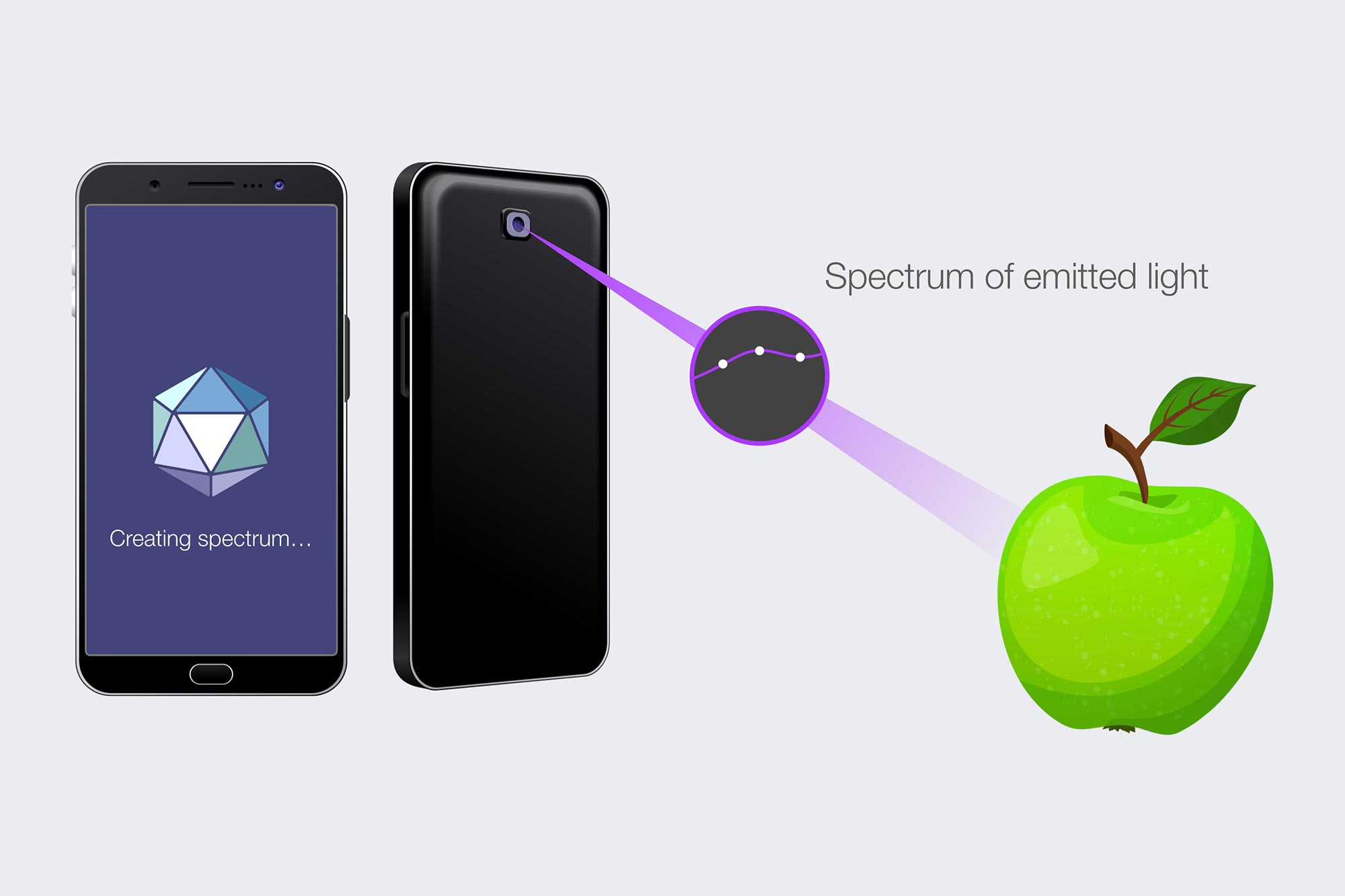
A team of engineers has unveiled a revolutionary mini-spectrometer that can fit on a fingertip and operate with low voltage, scanning light from UV to near-infrared in under a millisecond.
This game-changing device replaces bulky traditional spectrometers and could soon be embedded in smartphones, unlocking powerful tools for material analysis, biomedical diagnostics, and more—right in your pocket. Its tiny photodetector shifts light sensitivity with simple voltage changes, offering speed and precision in a package smaller than a pixel.
Breakthrough in Compact Spectrometry
Researchers have developed a groundbreaking spectrometer that is significantly smaller than existing models, yet still capable of precisely detecting light wavelengths across a broad range—from ultraviolet to near-infrared. This advancement opens the door to compact, handheld spectroscopy tools and could lead to the creation of high-resolution imaging spectrometers built from arrays of these miniature sensors.
“Spectrometers are critical tools for helping us understand the chemical and physical properties of various materials based on how light changes when it interacts with those materials,” says Brendan O’Connor, corresponding author of a paper on the work and a professor of mechanical and aerospace engineering at North Carolina State University. “They are used in applications that range from manufacturing to biomedical diagnostics. However, the smallest spectrometers on the market are still fairly bulky.
Spectrometer the Size of a Pixel
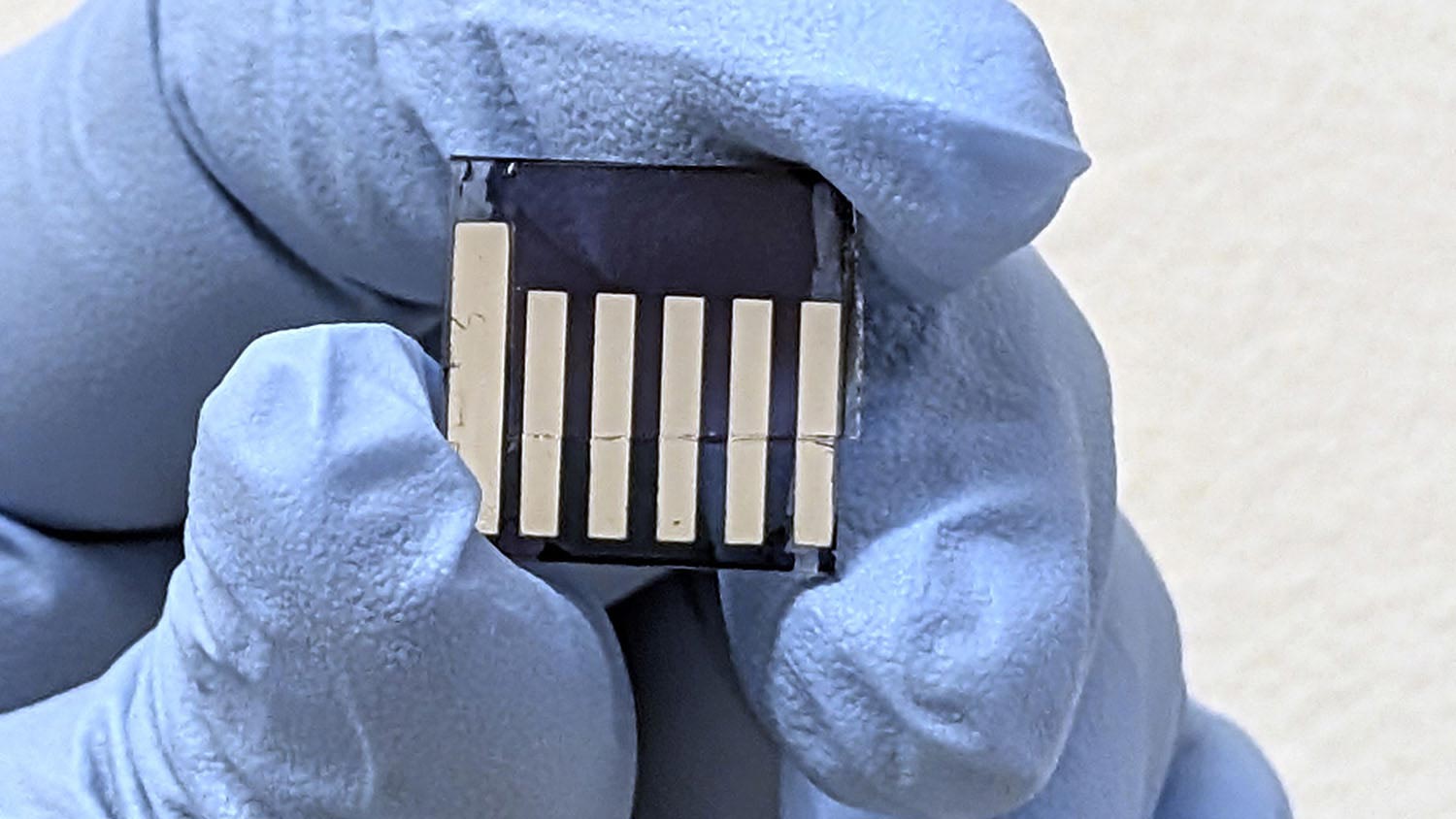
“We’ve created a spectrometer that operates quickly, at low voltage, and that is sensitive to a wide spectrum of light,” O’Connor says. “Our demonstration prototype is only a few square millimeters in size – it could fit on your phone. You could make it as small as a pixel, if you wanted to.”
This innovative design uses a miniature photodetector that can capture different wavelengths of light after it interacts with a given material. By adjusting the voltage applied to the photodetector, researchers can control which wavelengths it is most responsive to.
Millisecond-Speed Precision with Minimal Power
“If you rapidly apply a range of voltages to the photodetector, and measure all of the wavelengths of light being captured at each voltage, you have enough data that a simple computational program can recreate an accurate signature of the light that is passing through or reflecting off of the target material,” O’Connor says. “The range of voltages is less than one volt, and the entire process can take place in less than a millisecond.”
Previous attempts to create miniaturized photodetectors have relied on complex optics, used high voltages, or have not been as sensitive to such a broad range of wavelengths.
Performance Matches Conventional Devices
In proof-of-concept testing, the researchers found their pixel-sized spectrometer was as accurate as a conventional spectrometer and had sensitivity comparable to commercial photodetection devices.
“In the long term, our goal is to bring spectrometers to the consumer market,” O’Connor says. “The size and energy demand of the technology make it feasible to incorporate into a smartphone, and we think this makes some exciting applications possible. From a research standpoint, this also paves the way for improved access to imaging spectroscopy, microscopic spectroscopy, and other applications that would be useful in the lab.”
Reference: “Single-pixel spectrometer based on a bias-tunable tandem organic photodetector” by Harry M. Schrickx, Abdullah Al Shafe, Caleb Moore, Yusen Pei, Franky So, Michael Kudenov and Brendan T. O’Connor, 22 July 2025, Device.
DOI: 10.1016/j.device.2025.100866
The paper, “Single pixel spectrometer based on a bias-tunable tandem organic photodetector,” is published in the journal Device. First author of the paper is Harry Schrickx, a former Ph.D. student at NC State. The paper was co-authored by Abdullah Al Shafe, a former Ph.D. student at NC State; Caleb Moore, a former undergraduate at NC State; Yusen Pei, a Ph.D. student at NC State; Franky So, the Walter and Ida Freeman Distinguished Professor of Materials Science and Engineering at NC State; and Michael Kudenov, the John and Catherine Amein Family Distinguished Professor of Electrical and Computer Engineering at NC State.
The work was done with support from the National Science Foundation under grants 1809753 and 2324190, and from the Office of Naval Research under grant N000142412101.
Never miss a breakthrough: Join the SciTechDaily newsletter.
Follow us on Google and Google News.