
Close Menu
    Facebook X (Twitter) Instagram
    SciTechDaily
    • Biology
    • Chemistry
    • Earth
    • Health
    • Physics
    • Science
    • Space
    • Technology
    Facebook X (Twitter) Pinterest YouTube RSS
    SciTechDaily
    Home»Space»This Week @NASA: Sending a Swarm of Satellites Into Orbit, Rogue Planets, TROPICS First Light
    Space

    This Week @NASA: Sending a Swarm of Satellites Into Orbit, Rogue Planets, TROPICS First Light

    By NASAJuly 23, 2023No Comments3 Mins Read
    Facebook Twitter Pinterest Telegram LinkedIn WhatsApp Email Reddit
    Share
    Facebook Twitter LinkedIn Pinterest Telegram Email Reddit
    NASA Starling Mission
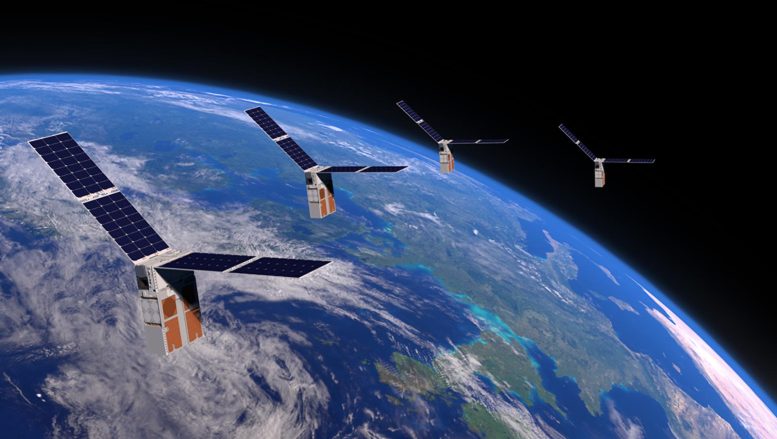
    NASA’s Starling mission will test new technologies for autonomous swarm navigation on four CubeSats in low-Earth orbit. Credit: Blue Canyon Technologies/NASA

    Sending a swarm of small satellites into orbit …

    The first views from NASA’s newest storm-watching mission …

    And making the grade for investing in small business …

    A few of the stories to tell you about – This Week at NASA!

    NASA’s Starling Mission Sends Swarm of Satellites into Orbit

    A Rocket Lab Electron rocket launched from New Zealand on July 18 to carry four small satellites to low-Earth orbit for NASA’s Starling mission. The cereal box-sized spacecraft will work together as a swarm to see if they can maneuver, communicate, and make decisions on their own, without real-time updates from ground controllers. The mission could help to advance self-coordinating robotic swarms for future science and exploration missions to the Moon, Mars, and deep space.
    NASA TROPICS First Light Hurricane Adrian
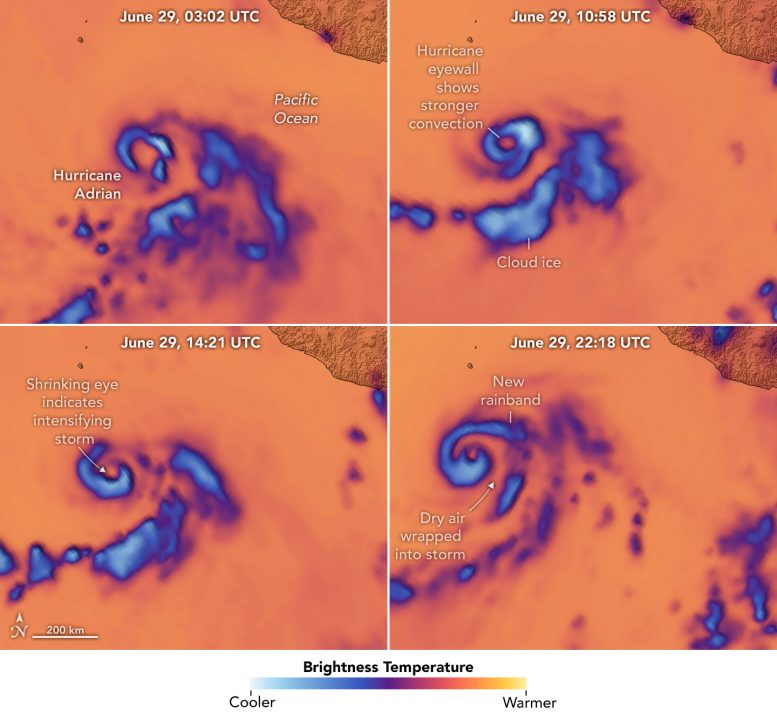
    Credit: NASA Earth Observatory images by Lauren Dauphin, using data provided by the TROPICS team.

    TROPICS CubeSat Mission Captures First Views of Hurricanes

    NASA’s storm-observing TROPICS satellites recently collected the mission’s first views of hurricanes. Late last month, the mission captured imagery data of the first named storms of the Eastern Pacific hurricane season. TROPICS uses a constellation of four identical small satellites to observe tropical cyclones about once an hour – far more frequently than most science satellites. The increased observations could help forecasters and officials better understand and prepare for rapidly evolving storms.
    NASA Investing in Small Businesses
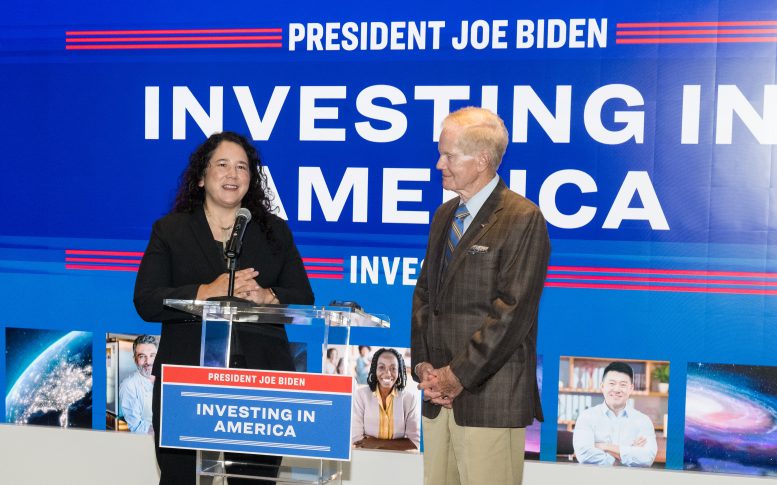
    Isabella Casillas Guzman, Administrator of the Small Business Administration (SBA), left, answers a question after unveiling the 2022 Small Business Federal Procurement Scorecard, at an event hosted by NASA Administrator Bill Nelson, right, and NASA Deputy Administrator Pam Melroy, Tuesday, July 18, 2023 in the Earth Information Center at the Mary W. Jackson NASA Headquarters building in Washington. For the sixth year in a row NASA has received an “A” rating from SBA for its work with small businesses. Credit: NASA/Aubrey Gemignani

    NASA Maintains “A” for Investing in Small Businesses

    During a July 18 event at NASA headquarters, the Small Business Administration announced that NASA earned an “A” on the Fiscal Year 2022 Small Business Federal Procurement Scorecard. The scorecard looks at how federal agencies rank on meeting their small business goals. NASA has directly invested $3.6 billion in over 1,700 small businesses across the country, creating good-paying jobs and opportunities for Americans in all 50 states.
    Ice-Encrusted, Earth-Mass Rogue Planet
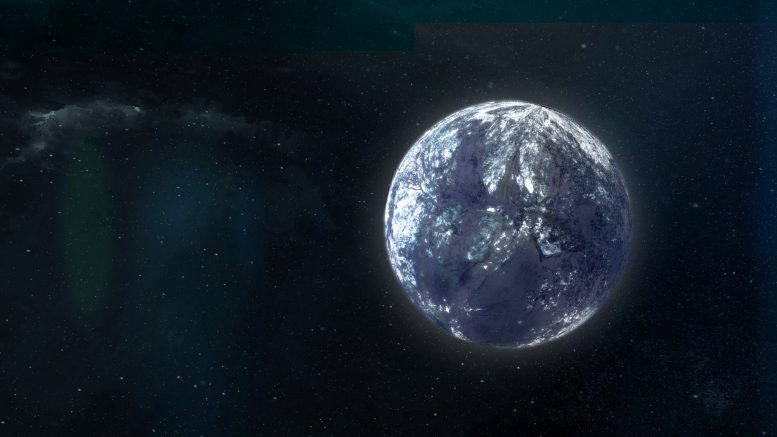
    This artist’s concept shows an ice-encrusted, Earth-mass rogue planet drifting through space alone. Credit: NASA’s Goddard Space Flight Center

    Roman Space Telescope Could Find 400 Earth-Mass Rogue Planets

    According to new research from NASA and Japan’s Osaka University, rogue planets – which are planets that drift freely through space untethered to a star – far outnumber planets that orbit stars. With so many rogue planets out there, researchers believe that NASA’s Nancy Grace Roman Space Telescope could find about 400 rogue planets similar in mass to Earth after the telescope launches in 2027.

    That’s what’s up this week @NASA!

    Never miss a breakthrough: Join the SciTechDaily newsletter.
    Follow us on Google and Google News.

    NASA
    Share. Facebook Twitter Pinterest LinkedIn Email Reddit

    Related Articles

    Liftoff! NASA’s Artemis II Launch Sends Astronauts Around the Moon for First Time in 50 Years

    Scientists Propose a Radical New Method To Find Alien Life

    NASA’s Psyche Could Reveal the Secret Inside This Metal World

    Mars Was Once Warm and Wet. NASA’s ESCAPADE Is About to Learn What Went Wrong

    NASA’s Curiosity Rover Discovers Spiderweb Ridges on Mars That Hint at Ancient Water

    NASA’s DART Impact Actually Changed an Asteroid System’s Orbit Around the Sun

    NASA’s Webb Telescope Reveals an Eerie Nebula That Looks Like a Giant Brain

    “At First, We Thought Something Was Wrong” – NASA DART Mission Reveals a Cosmic Snowball Fight

    “Ghost Galaxy” Made of 99% Dark Matter Discovered 300 Million Light Years Away

    Leave A Reply Cancel Reply

    • Facebook
    • Twitter
    • Pinterest
    • YouTube

    Don't Miss a Discovery

    Subscribe for the Latest in Science & Tech!

    Trending News

    Scientists Discover Cheap, Natural Remedy for High Blood Pressure

    Earth’s Upper Atmosphere Is Cooling Fast and Scientists Finally Know Why

    32,000 Olympic Pools of Magma Nearly Erupted Beneath Atlantic Island

    Exercise Changes the Heart in a Way Researchers Never Expected

    Too Much Sleep May Age Your Body Faster, New Study Warns

    Scientists Uncover Promising New Strategy To Stop Parkinson’s in Its Tracks

    Experts Reveal the Surprising Cancer Link Behind a Common Vitamin

    This Strange “Golden Orb” Found 2 Miles Deep Stumped Scientists for Years

    Follow SciTechDaily
    • Facebook
    • Twitter
    • YouTube
    • Pinterest
    • Newsletter
    • RSS
    SciTech News
    • Biology News
    • Chemistry News
    • Earth News
    • Health News
    • Physics News
    • Science News
    • Space News
    • Technology News
    Recent Posts
    • Canada’s Billion-Year-Old Rocks Could Hold the Future of Clean Energy
    • Climate Change Is Quietly Choking Rivers Across the Planet
    • Scientists Finally Solve the Mystery of “Clockwork” Earthquakes
    • Your Immune System Remembers Obesity for up to a Decade, Study Finds
    • Breakthrough Parkinson’s Drug Targets Disease at Its Genetic Roots
    Copyright © 1998 - 2026 SciTechDaily. All Rights Reserved.
    • Science News
    • About
    • Contact
    • Editorial Board
    • Privacy Policy
    • Terms of Use

    Type above and press Enter to search. Press Esc to cancel.