
A team of astronomers discovered over 70 rogue planets using ESO and Gaia data, the largest haul to date.
Rogue planets are elusive cosmic objects that have masses comparable to those of the planets in our Solar System but do not orbit a star, instead roaming freely on their own. Not many were known until now, but a team of astronomers, using data from several European Southern Observatory (ESO) telescopes and other facilities, have just discovered at least 70 new rogue planets in our galaxy. This is the largest group of rogue planets ever discovered, an important step towards understanding the origins and features of these mysterious galactic nomads.
Astronomers have used ESO telescopes to detect at least 70 rogue planets in our Milky Way, the largest group to date. Learn more about these elusive cosmic nomads in this video summarizing the discovery!
“We did not know how many to expect and are excited to have found so many,” says Núria Miret-Roig, an astronomer at the Laboratoire d’Astrophysique de Bordeaux, France and the University of Vienna, Austria, and the first author of the new study published today (December 22, 2021) in Nature Astronomy.
Rogue planets, lurking far away from any star illuminating them, would normally be impossible to image. However, Miret-Roig and her team took advantage of the fact that, in the few million years after their formation, these planets are still hot enough to glow, making them directly detectable by sensitive cameras on large telescopes. They found at least 70 new rogue planets with masses comparable to Jupiter’s in a star-forming region close to our Sun, located within the Scorpius and Ophiuchus constellations.[1]
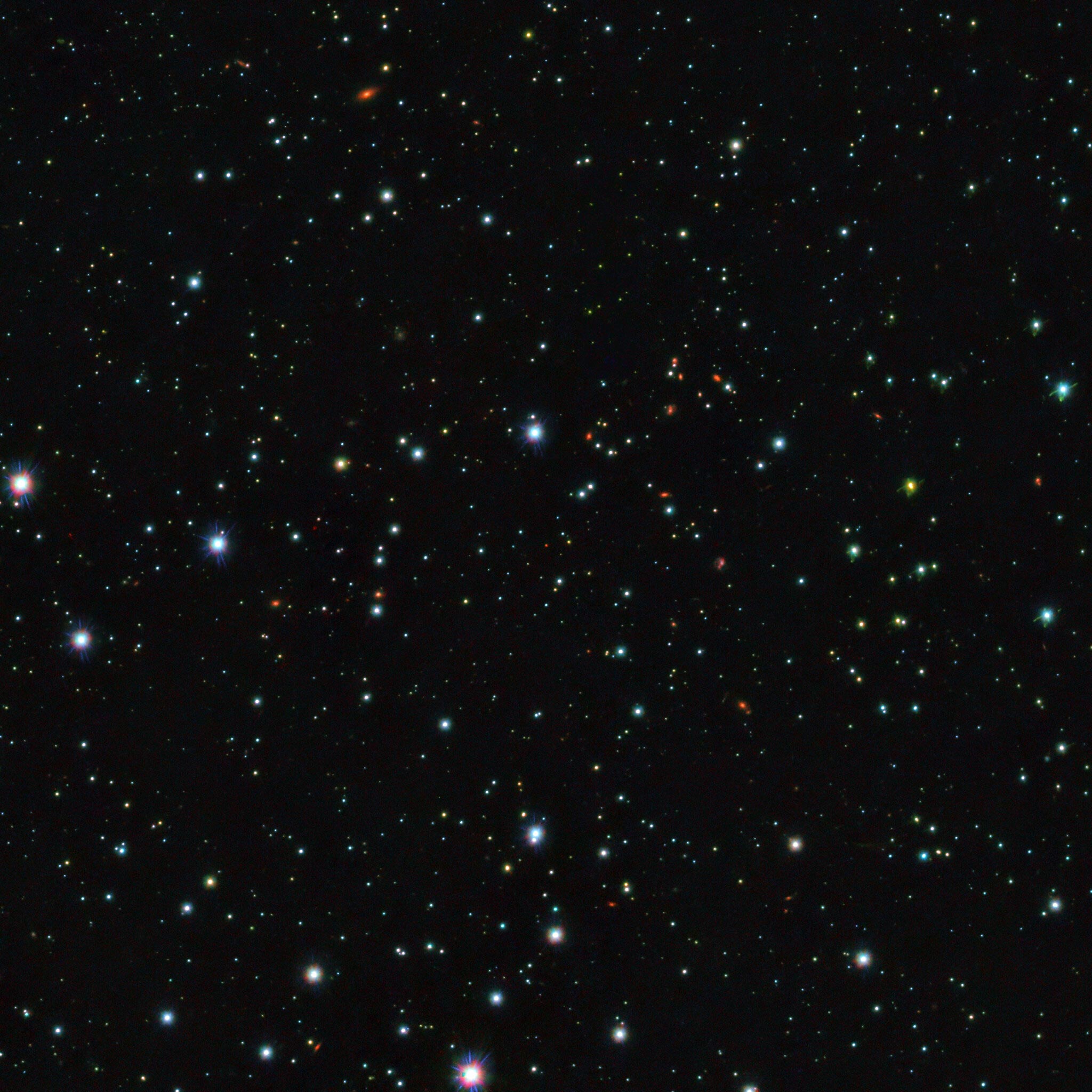
To spot so many rogue planets, the team used data spanning about 20 years from a number of telescopes on the ground and in space. “We measured the tiny motions, the colors, and luminosities of tens of millions of sources in a large area of the sky,” explains Miret-Roig. “These measurements allowed us to securely identify the faintest objects in this region, the rogue planets.”
The team used observations from ESO’s Very Large Telescope (VLT), the Visible and Infrared Survey Telescope for Astronomy (VISTA), the VLT Survey Telescope (VST) and the MPG/ESO 2.2-meter (7.2-foot) telescope located in Chile, along with other facilities. “The vast majority of our data come from ESO observatories, which were absolutely critical for this study. Their wide field of view and unique sensitivity were keys to our success,” explains Hervé Bouy, an astronomer at the Laboratoire d’Astrophysique de Bordeaux, France, and project leader of the new research. “We used tens of thousands of wide-field images from ESO facilities, corresponding to hundreds of hours of observations, and literally tens of terabytes of data.”
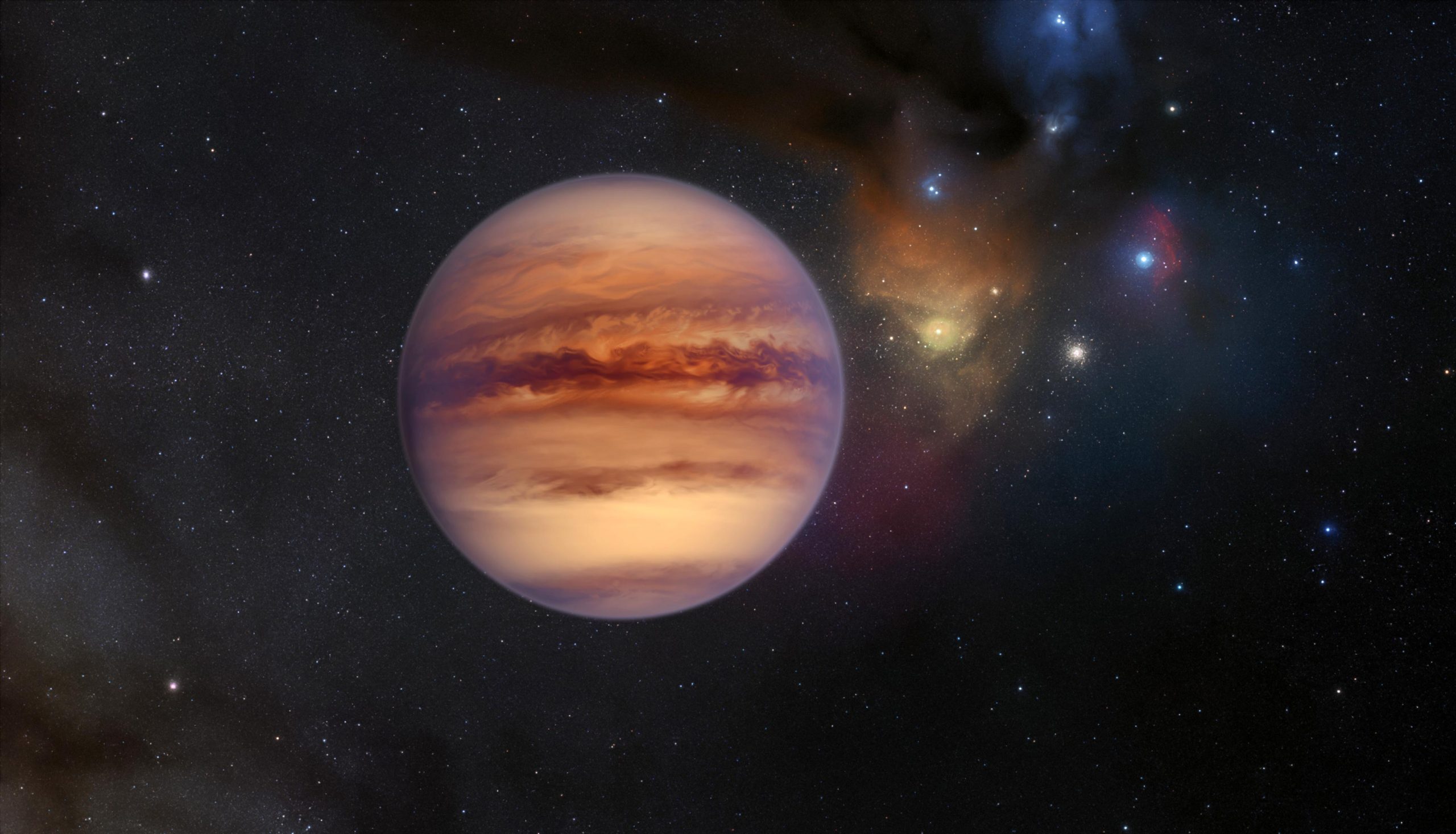
This artist’s animation shows what a rogue planet — a planet that does not orbit a star but instead roams freely on its own — could look like. Recently, a team of astronomers, using data from several European Southern Observatory (ESO) telescopes and other facilities, discovered at least 70 new rogue planets in a region of the sky occupied by Upper Scorpius and Ophiucus. The cloud complex Rho Ophiuchi is visible in the background.
The team also used data from the European Space Agency’s Gaia satellite, marking a huge success for the collaboration of ground- and space-based telescopes in the exploration and understanding of our Universe.
The study suggests there could be many more of these elusive, starless planets that we have yet to discover. “There could be several billions of these free-floating giant planets roaming freely in the Milky Way without a host star,” Bouy explains.
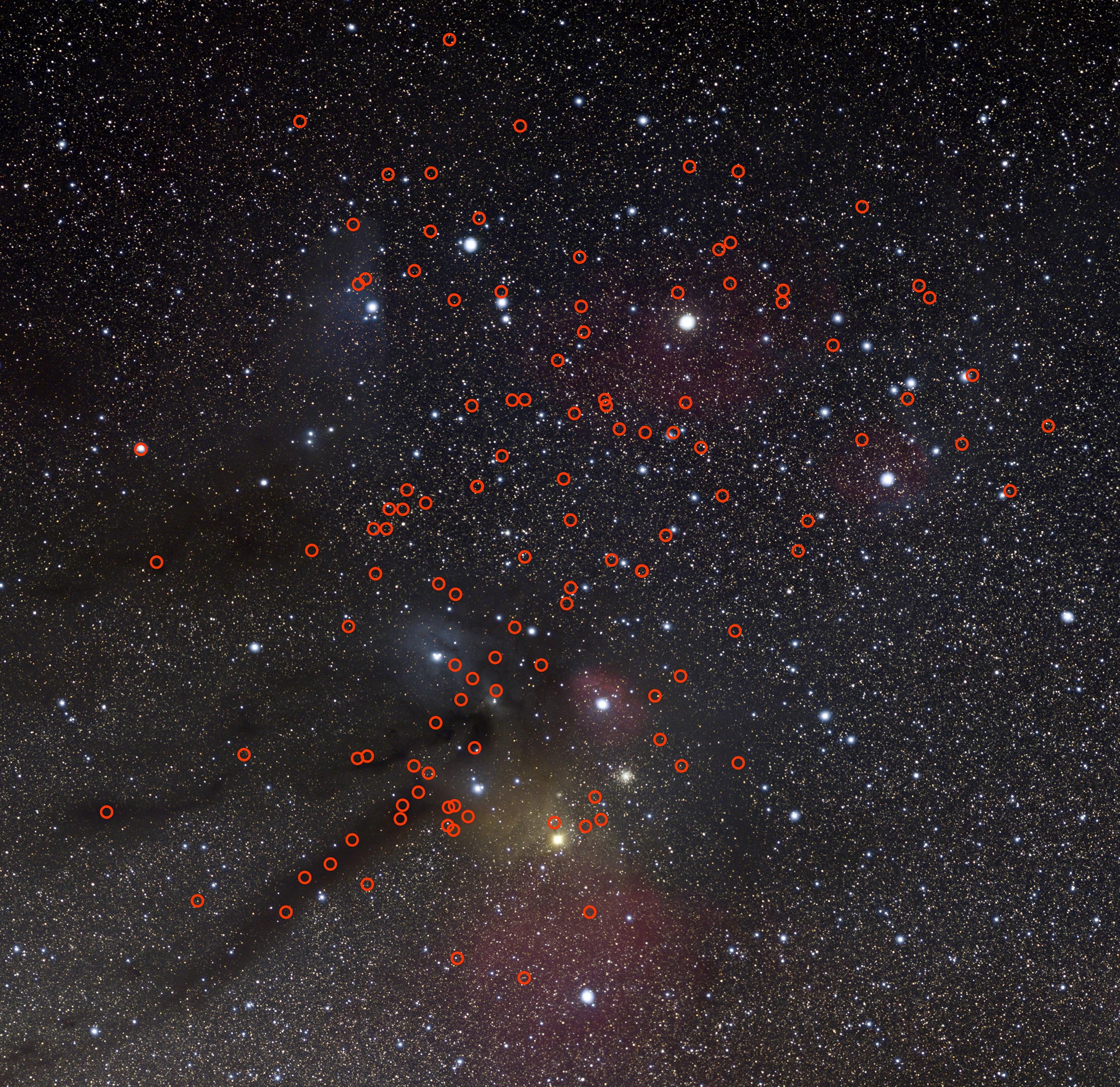
This animation lets us plunge into a region of the sky occupied by Upper Scorpius and Ophiucus, where the largest group of rogue planets — at least 70, highlighted in the circles — has recently been discovered. Here we zoom in on one of them.
By studying the newly found rogue planets, astronomers may find clues to how these mysterious objects form. Some scientists believe rogue planets can form from the collapse of a gas cloud that is too small to lead to the formation of a star, or that they could have been kicked out from their parent system. But which mechanism is more likely remains unknown.
Further advances in technology will be key to unlocking the mystery of these nomadic planets. The team hopes to continue to study them in greater detail with ESO’s forthcoming Extremely Large Telescope (ELT), currently under construction in the Chilean Atacama Desert and due to start observations later this decade. “These objects are extremely faint and little can be done to study them with current facilities,” says Bouy. “The ELT will be absolutely crucial to gathering more information about most of the rogue planets we have found.”
Notes
- The exact number of rogue planets found by the team is hard to pin down because the observations don’t allow the researchers to measure the masses of the probed objects. Objects with masses higher than about 13 times the mass of Jupiter are most likely not planets, so they cannot be included in the count. However, since the team didn’t have values for the mass, they had to rely on studying the planets’ brightness to provide an upper limit to the number of rogue planets observed. The brightness is, in turn, related to the age of the planets themselves, as the older the planet, the longer it has been cooling down and reducing in brightness. If the studied region is old, then the brightest objects in the sample are likely above 13 Jupiter masses, and below if the region is on the younger side. Given the uncertainty in the age of the study region, this method gives a rogue planet count of between 70 and 170.
Reference
“A rich population of free-floating planets in the Upper Scorpius young stellar association” by Núria Miret-Roig, Hervé Bouy, Sean N. Raymond, Motohide Tamura, Emmanuel Bertin, David Barrado, Javier Olivares, Phillip A. B. Galli, Jean-Charles Cuillandre, Luis Manuel Sarro, Angel Berihuete and Nuria Huélamo, 22 December 2021, Nature Astronomy.
DOI: 10.1038/s41550-021-01513-x
More information
This research was presented in the paper “A rich population of free-floating planets in the Upper Scorpius young stellar association” to appear in Nature Astronomy (DOI: 10.1038/s41550-021-01513-x). It has received funding from the European Research Council (ERC) under the European Union’s Horizon 2020 research and innovation programme (grant agreement No 682903, P.I. H. Bouy), and from the French State in the framework of the ”Investments for the Future” Program, IdEx Bordeaux, reference ANR-10-IDEX-03-02.
The team is composed of Núria Miret-Roig (Laboratoire d’Astrophysique de Bordeaux, Univ. Bordeaux, CNRS, France [LAB]; University of Vienna, Department of Astrophysics, Austria), Hervé Bouy (LAB), Sean N. Raymond (LAB), Motohide Tamura (Department of Astronomy, Graduate School of Science, The University of Tokyo, Japan; Astrobiology Center, National Institutes of Natural Sciences, Tokyo, Japan [ABC-NINS]), Emmanuel Bertin (CNRS, UMR 7095, Institut d’Astrophysique de Paris,France [IAP]; Sorbonne Université, IAP, France) David Barrado (Centro de Astrobiología [CSIC-INTA], Depto. de Astrofísica, ESAC Campus, Spain), Javier Olivares (LAB), Phillip Galli (LAB), Jean-Charles Cuillandre (AIM, CEA, CNRS, Université Paris-Saclay, Université de Paris, France), Luis Manuel Sarro (Depto. de Inteligencia Artificial, UNED, Spain) Angel Berihuete (Depto. Estadística e Investigación Operativa, Universidad de Cádiz, Spain) & Nuria Huélamo (CSIC-INTA).
Never miss a breakthrough: Join the SciTechDaily newsletter.
Follow us on Google and Google News.
2 Comments
The Webb ‘scope is the most powerful IR ‘scope since IRAS! Even Hubble doesn’t have that-but Webb is orders of magnitude above IRAS in resolving capabilities. We WILL find out if planet X exists AND we WILL watch the incoming galactic sheath sheath of plasma hit our solar system from the galactic center that occurs every 230 million years.
Wow, rogue planets. Where I live on a planet called Earth this theory wouldn’t fly or float freely unless it were to explain a Kilanova but as all alien beings on Earth or “space aliens” know which happens to float freely in space those are just large orbs like ours that host life for other alien beings or “space aliens” because we our all in space.