
Close Menu
    Facebook X (Twitter) Instagram
    SciTechDaily
    • Biology
    • Chemistry
    • Earth
    • Health
    • Physics
    • Science
    • Space
    • Technology
    Facebook X (Twitter) Pinterest YouTube RSS
    SciTechDaily
    Home»Health»Tiny High-Tech Needles Inspired by Parasites May Help Eliminate Painful Shots
    Health

    Tiny High-Tech Needles Inspired by Parasites May Help Eliminate Painful Shots

    By Rutgers UniversityMarch 22, 20201 Comment3 Mins Read
    Facebook Twitter Pinterest Telegram LinkedIn WhatsApp Email Reddit
    Share
    Facebook Twitter LinkedIn Pinterest Telegram Email Reddit
    Microneedle Array
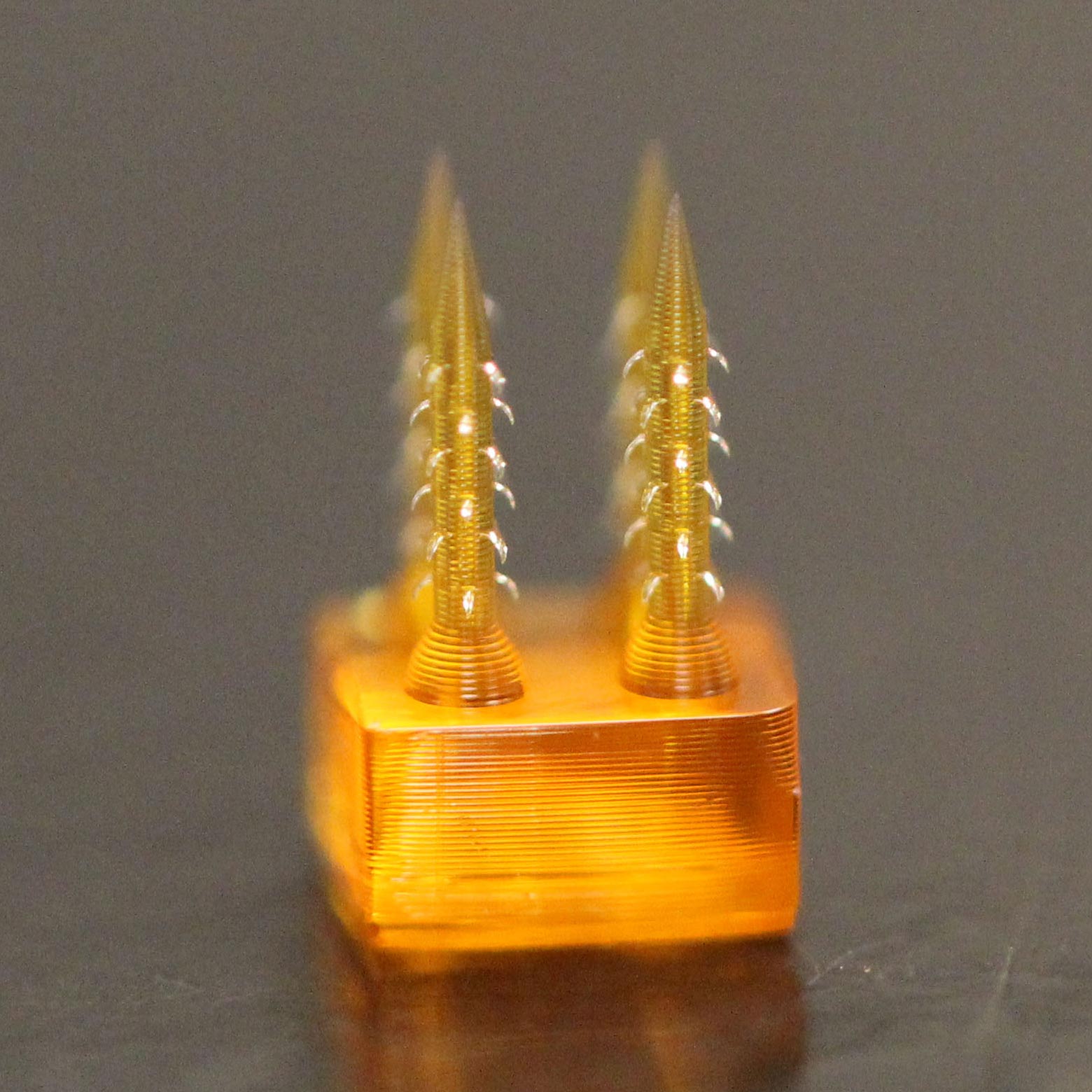
    This microneedle array has backward-facing barbs that interlock with tissue when inserted, enhancing adhesion. Credit: Riddish Morde

    4D printing creates tiny needles inspired by parasites that could replace hypodermic needles.

    Painful hypodermic needles may not be needed in the future to give shots, inject drugs and get blood samples.

    With 4D printing, Rutgers engineers have created tiny needles that mimic parasites that attach to skin and could replace hypodermic needles, according to a study in the journal Advanced Functional Materials.

    While 3D printing builds objects layer by layer, 4D goes further with smart materials that are programmed to change shape after printing. Time is the fourth dimension that allows materials to morph into new shapes.

    “We think our 4D-printed microneedle array will allow for more robust and sustained use of minimally invasive, pain-free and easy-to-use microneedles for delivering drugs, healing wounds, biosensing and other soft tissue applications,” said senior author Howon Lee, an assistant professor in the Department of Mechanical and Aerospace Engineering in the School of Engineering at Rutgers University–New Brunswick.
    Bioinspired Microneedle Array
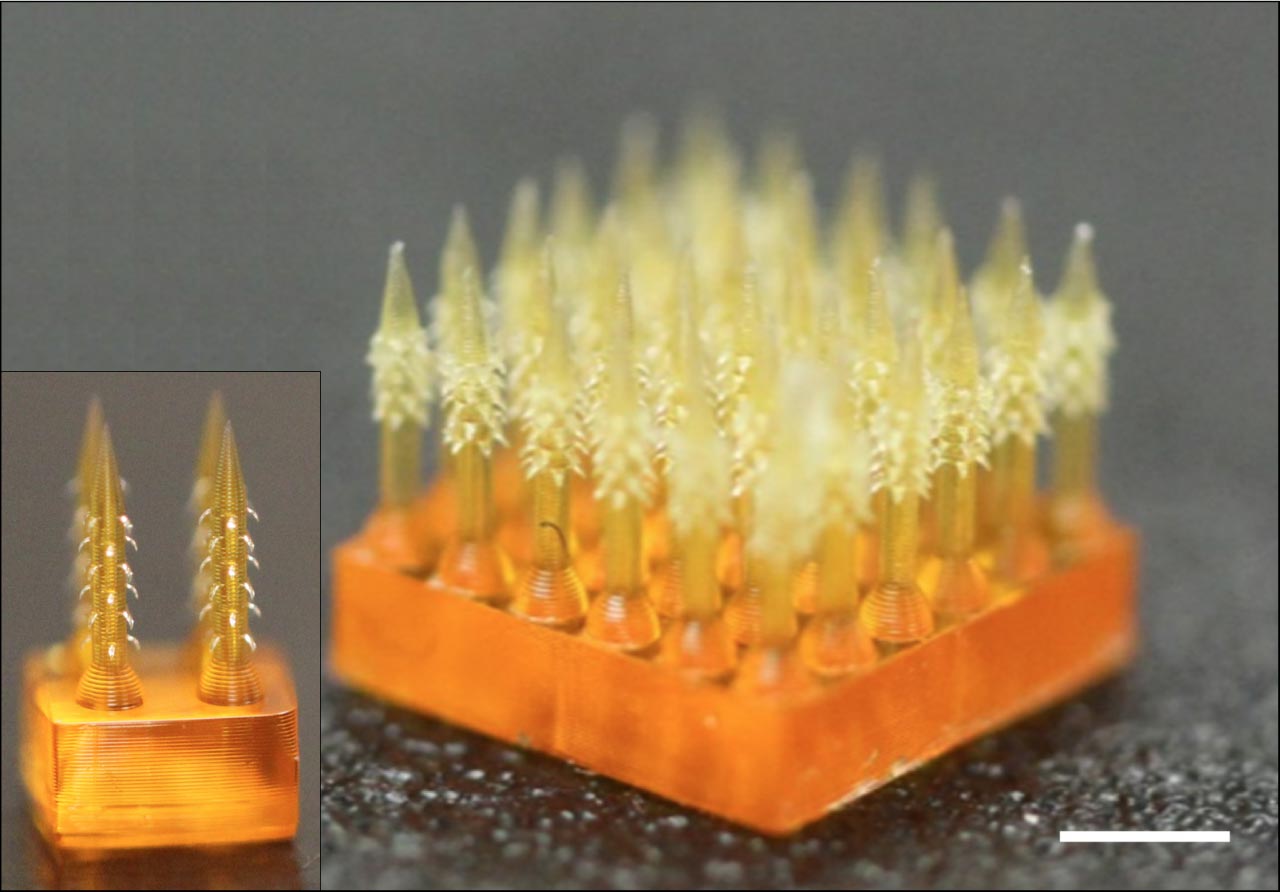
    This microneedle array has backward-facing barbs that interlock with tissue when inserted, enhancing adhesion. Credit: Riddish Morde

    Hypodermic needles are widely used in hospitals and labs to extract blood and inject drugs, causing pain, scarring skin and posing an infection risk. People with diabetes often take blood samples multiple times a day with needles to monitor blood sugar levels.

    Microneedles (miniaturized needles) are gaining attention because they are short, thin and minimally invasive, reduce pain and the risk of infection and are easy-to-use. But their weak adhesion to tissues is a major challenge for controlled drug delivery over the long run or for biosensing, which involves using a device to detect DNA, enzymes, antibodies and other health indicators.

    In nature, some insects and other organisms have developed microscopic features that adhere to tissue, such as the microhooks of parasites, barbed stingers of honeybees and scaled quills of porcupines. Inspired by these examples, Rutgers engineers developed a microneedle that interlocks with tissue when inserted, enhancing adhesion. They combined a micro 3D-printing technique and a 4D-printing approach to create backward-facing barbs on a microneedle.

    Using chicken muscle tissue as a model, the researchers showed that tissue adhesion with their microneedle is 18 times stronger than with a barbless microneedle. Their creation outperforms previously reported examples, resulting in more stable and robust drug delivery, collection of bio-fluids and biosensing, the study says.

    Reference: “4D Printing of a Bioinspired Microneedle Array with Backward‐Facing Barbs for Enhanced Tissue Adhesion” by Daehoon Han, Riddish S. Morde, Stefano Mariani, Antonino A. La Mattina, Emanuele Vignali, Chen Yang, Giuseppe Barillaro and Howon Lee, 4 February 2020, Advanced Functional Materials.
    DOI: 10.1002/adfm.201909197

    The study’s three co-lead authors include Daehoon Han, a former Rutgers doctoral student who is now a postdoc at the University of Minnesota, Riddish S. Morde, a former Rutgers master’s student, and a researcher at the University of Pisa in Italy. Rutgers doctoral student Chen Yang and researchers at the University of Pisa contributed to the study, which was funded by the New Jersey Health Foundation and Italian Ministry of Education, University and Research.

    Never miss a breakthrough: Join the SciTechDaily newsletter.
    Follow us on Google and Google News.

    Biomedical Engineering Mechanical Engineering Rutgers University
    Share. Facebook Twitter Pinterest LinkedIn Email Reddit

    Related Articles

    Scientists Find That Mechanical Stimulation Could Be Used To Strengthen Muscles

    First-Ever Transient Pacemaker Harmlessly Dissolves in Body – Disappears After It’s No Longer Needed

    Open-Source Model Created to Help Clinicians Safely Ventilate Two COVID-19 Patients With a Single Ventilator

    “Shocking” Results When WWI Helmets Were Compared to Modern Military Designs

    Researchers Discover Cause of Asthmatic Lung Spasms

    New Algorithm Analyzes Carbon Dioxide to Help Determine How to Treat Patients

    New Evidence of a Possible Link Between Diabetes and the Hardening of Heart Valves

    Therapeutic Cancer Vaccine Begins Human Clinical Trials

    MIT Study Measures the Effects of Low Doses of Radiation on DNA

    1 Comment

    1. Vadim Yuzhakov on March 22, 2020 3:03 pm

      AdminMed, a leading microneedle array company, is already producing and selling several types of hollow metal microneedle array devices in a full spectrum of sizes. AdminPen allows intradermal injections for more effective and painless delivery of immunotherapeutics (cancer treatment, vaccines), medical drugs, or cosmetics.
      http://www.adminmed.com/

      Reply
    Leave A Reply Cancel Reply

    • Facebook
    • Twitter
    • Pinterest
    • YouTube

    Don't Miss a Discovery

    Subscribe for the Latest in Science & Tech!

    Trending News

    Scientists Uncover Potential Brain Risks of Popular Fish Oil Supplements

    Scientists Discover a Surprising Way To Make Bread Healthier and More Nutritious

    After 60 Years, Scientists Uncover Unexpected Brain Effects of Popular Diabetes Drug Metformin

    New Research Uncovers Hidden Side Effects of Popular Weight-Loss Drugs

    Scientists Rethink Extreme Warming After Surprising Ocean Discovery

    Landmark Study Links Never Marrying to Significantly Higher Cancer Risk

    Researchers Discover Unknown Beetle Species Just Steps From Their Lab

    Largest-Ever Study Finds Medicinal Cannabis Ineffective for Anxiety, Depression, PTSD

    Follow SciTechDaily
    • Facebook
    • Twitter
    • YouTube
    • Pinterest
    • Newsletter
    • RSS
    SciTech News
    • Biology News
    • Chemistry News
    • Earth News
    • Health News
    • Physics News
    • Science News
    • Space News
    • Technology News
    Recent Posts
    • Not Just Alzheimer’s: Scientists Uncover Clues to a Second, Overlooked Disorder
    • Scientists Uncover Dangerous Connection Between Serotonin and Heart Valve Disease
    • Scientists Discover a “Protector” Protein That Could Help Reverse Hair Loss
    • Powerful Lasers Reveal How Matter Becomes Plasma in Trillionths of a Second
    • A Simpler Path to Super-Resolution: Scientists Reinvent Microscopy
    Copyright © 1998 - 2026 SciTechDaily. All Rights Reserved.
    • Science News
    • About
    • Contact
    • Editorial Board
    • Privacy Policy
    • Terms of Use

    Type above and press Enter to search. Press Esc to cancel.