
A rapid and precise blood test could deliver quicker results to physicians and first responders.
Every second matters during a heart attack. A new blood test can diagnose it in minutes instead of hours and could be adapted for use by first responders or even at home.
“Heart attacks require immediate medical intervention in order to improve patient outcomes, but while early diagnosis is critical, it can also be very challenging—and near impossible outside of a clinical setting,” said lead author Peng Zheng, an assistant research scientist at Johns Hopkins University. “We were able to invent a new technology that can quickly and accurately establish if someone is having a heart attack.”
The proof-of-concept work, which can be modified to detect infectious diseases and cancer biomarkers, is newly published in Advanced Science.
Using Biophotonics to Diagnose Heart Attacks
Zheng and senior author Ishan Barman develop diagnostic tools through biophotonics, using laser light to detect biomarkers, which are bodily responses to conditions including disease. Here they used the technology to find the earliest signs in the blood that someone was having a heart attack. Though an estimated 800,000-plus people have heart attacks every year just in the United States, heart attacks remain one of the trickiest conditions to diagnose, with symptoms that vary widely and biological signals that can be subtle and easy to miss in the early stages of an attack, when medical intervention can do the most good.
People suspected of having heart attacks typically are given a combination of tests to confirm the diagnosis—usually starting with electrocardiograms to measure the electrical activity of the heart, a procedure that takes about five minutes, and blood tests to detect the hallmarks of a heart attack, where lab work can take at least an hour and often has to be repeated.
Faster and More Accurate Diagnosis
The stand-alone blood test the team created provides results in five to seven minutes. It’s also more accurate and more affordable than current methods, the researchers say.
Though created for speedy diagnostic work in a clinical setting, the test could be adapted as a hand-held tool that first responders could use in the field, or that people might even be able to use themselves at home.
“We’re talking about speed, we’re talking about accuracy, and we’re talking of the ability to perform measurements outside of a hospital,” said Barman, a bioengineer in the Department of Mechanical Engineering. “In the future, we hope this could be made into a hand-held instrument like a Star Trek tricorder where you have a drop of blood and then, voilà, in a few seconds you have detection.”
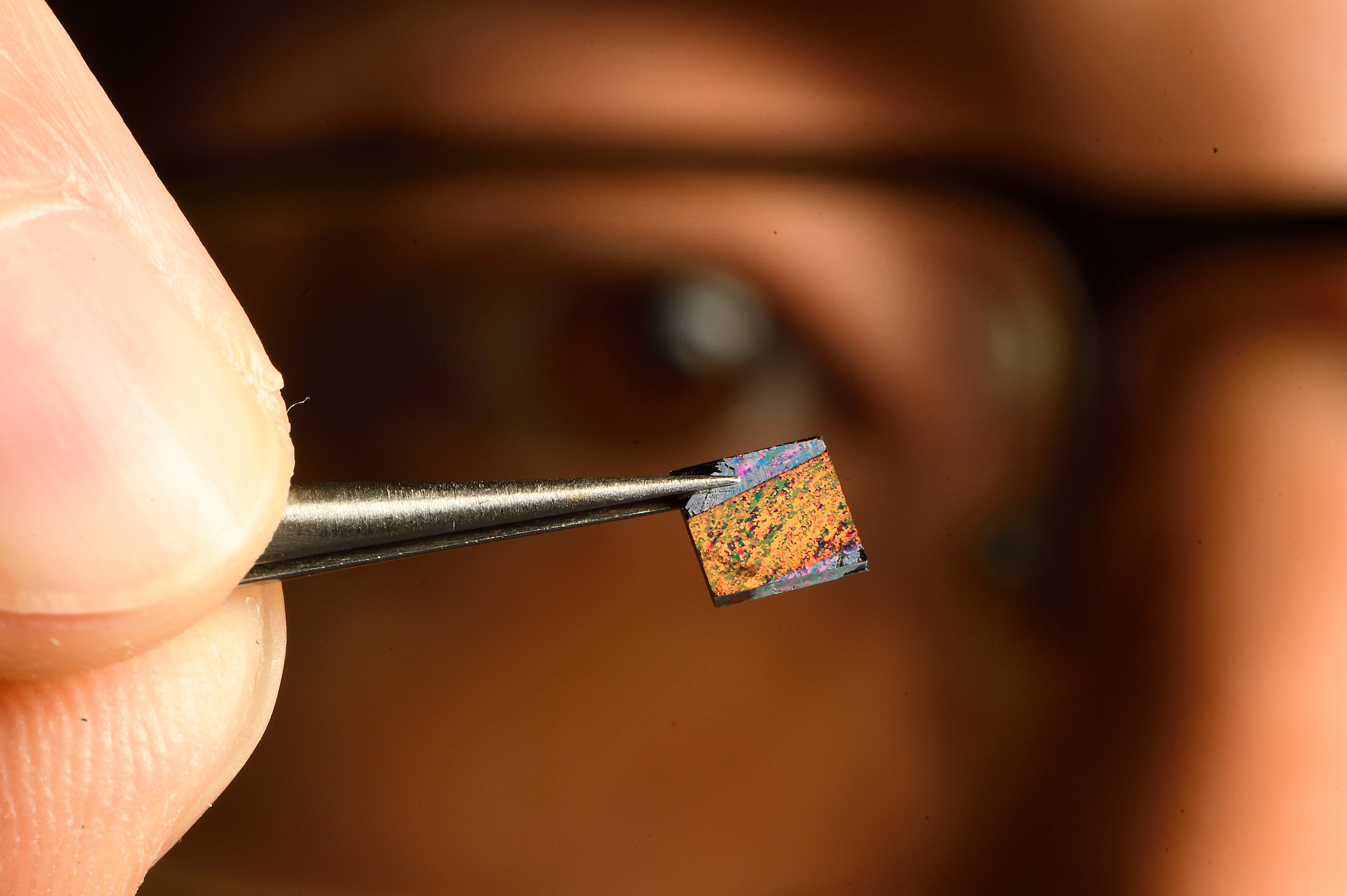
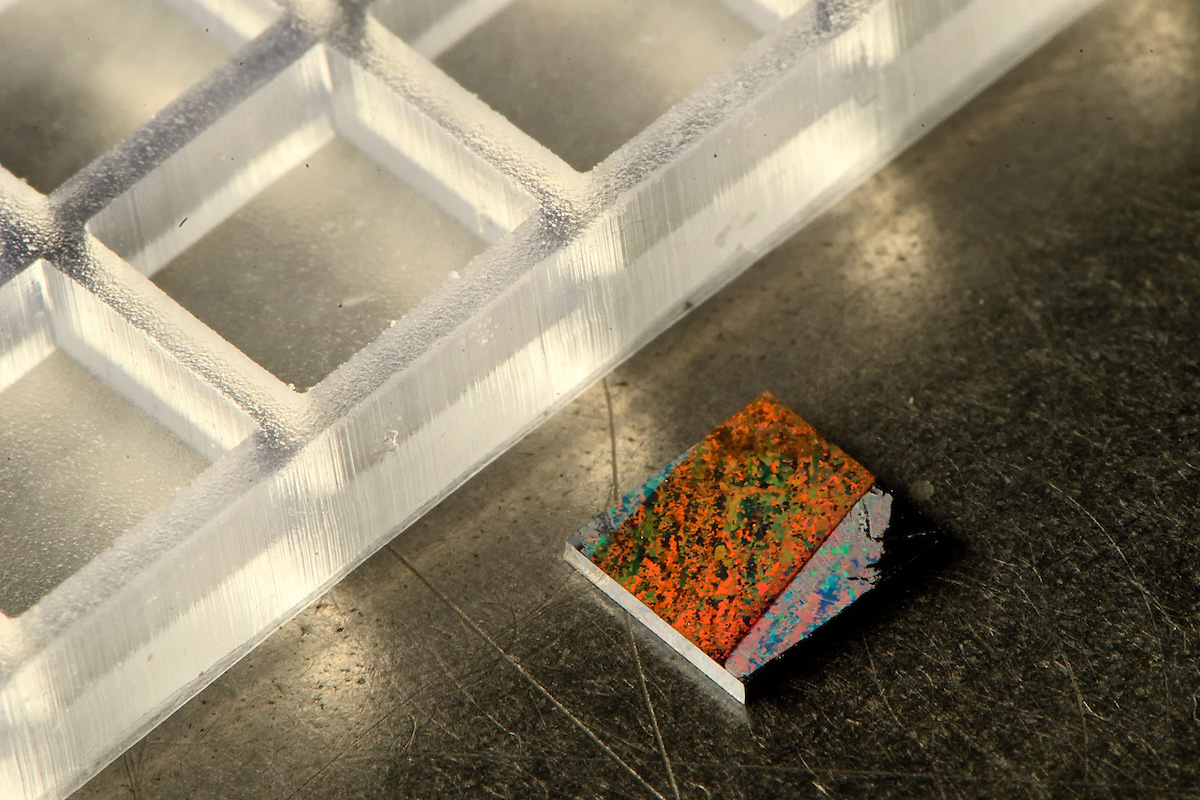
The heart of the invention is a tiny chip with a groundbreaking nanostructured surface on which blood is tested. The chip’s “metasurface” enhances electric and magnetic signals during Raman spectroscopy analysis, making heart attack biomarkers visible in seconds, even in ultra-low concentrations. The tool is sensitive enough to flag heart attack biomarkers that might not be detected at all with current tests, or not detected until much later in an attack.
Though designed to diagnose heart attacks, the tool could be adapted to detect cancer and infectious diseases, the researchers say.
“There is enormous commercial potential,” Barman said. “There’s nothing that limits this platform technology.”
Next the team plans to refine the blood test and explore larger clinical trials.
Reference: “Multiplexed SERS Detection of Serum Cardiac Markers Using Plasmonic Metasurfaces” by Peng Zheng, Lintong Wu, Piyush Raj, Jeong Hee Kim, Santosh Kumar Paidi, Steve Semancik and Ishan Barman, 15 October 2024, Advanced Science.
DOI: 10.1002/advs.202405910
The study was funded by the National Institute of General Medical Sciences.
Never miss a breakthrough: Join the SciTechDaily newsletter.
Follow us on Google and Google News.
2 Comments
In late 2015 I endured a costly (e.g., hospitalization) heart attack ‘scare’ after (later learned) ingesting two tiny doses the FDA approved (1972) cooking oil preservative TBHQ in one afternoon. Blood testing showed a high ‘Troponin I’ hormone (the ‘gold standard?’) level. Imaging showed no blockage and no heart muscle damage and I was discharged with prescriptions for blood pressure drugs with known (also personally, previously) undesirable side effects which I declined taking, again. A better course would be with the prevention of medical errors, with commercially prepared food products being as natural, pure and safe as possible, as opposed to promoting a longer shelf life and preventing oil discoloration caused by iron.
SOmething like this needs to be integrated into smart watches and rings.
Then you can make an informed decision as to whether to call for help or not.