
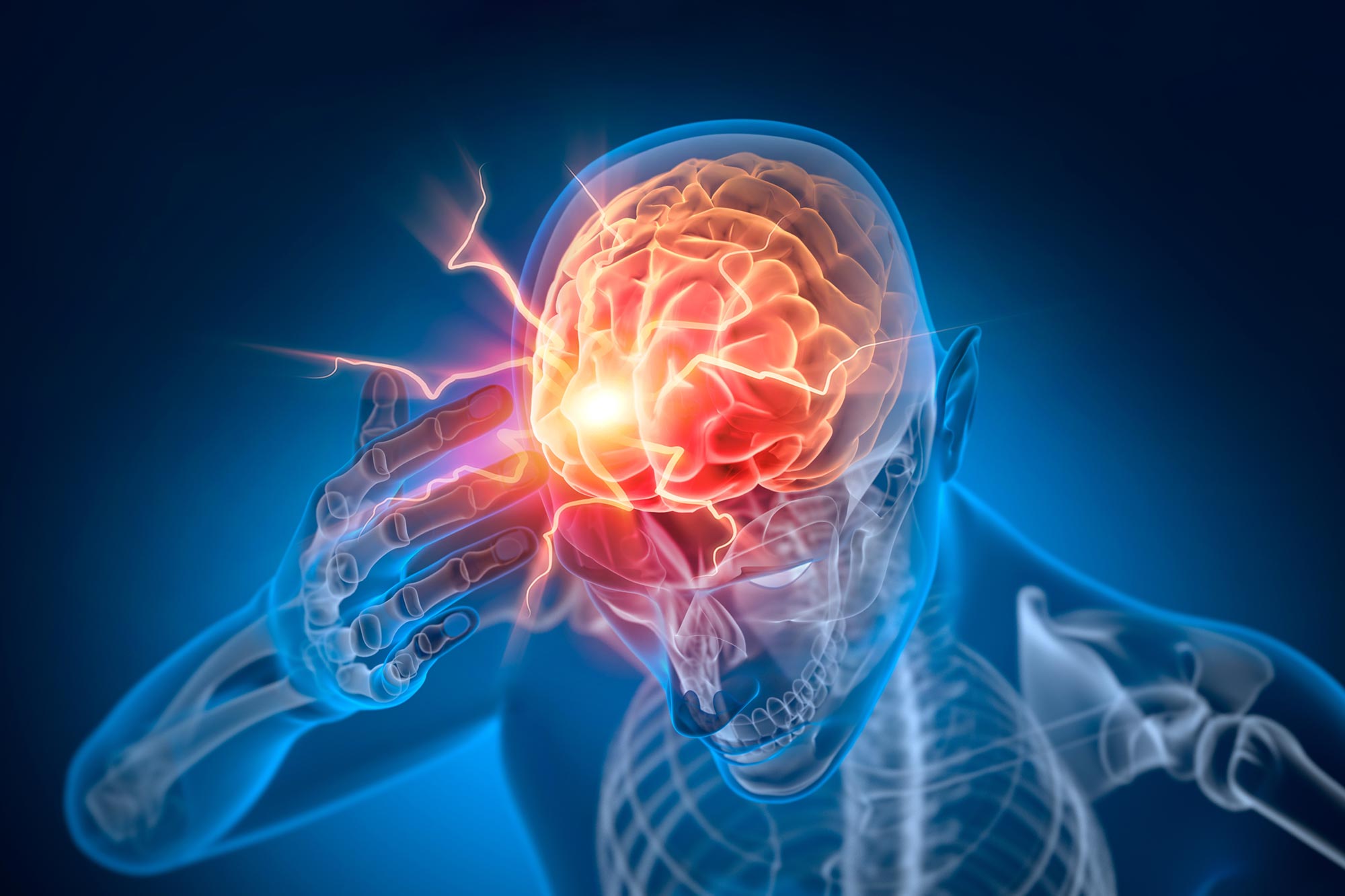
A newly identified brain circuit may hold the key to understanding why some pain fades while other pain lingers long after injury.
A small, little-known region of the brain may hold the switch that determines whether pain fades or lingers for months or even years. New research from the University of Colorado Boulder suggests that this hidden circuit does more than process discomfort. It may actively decide if pain becomes chronic.
In an animal study published in the Journal of Neuroscience, researchers found that shutting down this pathway, called the caudal granular insular cortex (CGIC), prevented chronic pain from developing. In cases where pain was already persistent, turning off the circuit caused it to disappear.
“Our paper used a variety of state-of-the-art methods to define the specific brain circuit crucial for deciding for pain to become chronic and telling the spinal cord to carry out this instruction,” said senior author Linda Watkins, distinguished professor of behavioral neuroscience in the College of Arts and Sciences. “If this crucial decision maker is silenced, chronic pain does not occur. If it is already ongoing, chronic pain melts away.”
The work comes during what lead author Jayson Ball describes as a “gold rush of neuroscience.”
Advances in technology now allow scientists to precisely alter specific groups of brain cells. This level of detail is helping researchers pinpoint new treatment targets. In the future, approaches such as targeted infusions or brain-machine interfaces may offer safer and more effective options than opioids.
“This study adds an important leaf to the tree of knowledge about chronic pain,” said Ball, who completed his doctorate in Watkins’ lab and now works at Neuralink, a California company focused on brain-machine interfaces for medical use.
When touch hurts
Chronic pain affects about one in four adults, according to the Centers for Disease Control, and nearly one in ten say it disrupts daily life. In many cases, the problem is not the original injury but the nervous system itself.
One example is allodynia, in which even light touch becomes painful. This happens when the brain and spinal cord begin to misinterpret normal sensory input as a threat. Under typical conditions, acute pain serves a protective role. A stubbed toe sends a signal through the spinal cord to the brain, prompting a quick response. Once the injury heals, the signal stops.
Chronic pain follows a different pattern. The signal continues even after the tissue has recovered, as if the body’s alarm system is stuck in the “on” position.
“Why, and how, pain fails to resolve, leaving you in chronic pain, is a major question that is still in search of answers,” said Watkins.
Disabling the chronic pain circuit
Earlier work from Watkins’ lab suggested that the CGIC, a small cluster of cells buried deep within the insula, is involved in allodynia. Studies in humans have also found that this region is overactive in people with chronic pain.
Until recently, researchers could only study this area by removing it, which is not a practical approach for treatment.
In the new study, scientists used fluorescent proteins to track which nerve cells became active after a rat experienced a sciatic nerve injury. They then applied advanced “chemogenetic” methods to turn specific neurons on or off.
The results showed that the CGIC plays only a minor role in immediate pain but is essential for keeping pain active over time.
The study found that the CGIC sends signals to the somatosensory cortex, the brain’s main pain processing area. That region then signals the spinal cord to continue transmitting pain.
“We found that activating this pathway excites the part of the spinal cord that relays touch and pain to the brain, causing touch to now be perceived as pain as well,” said Ball.
When researchers switched off this pathway right after injury, the animals experienced only brief pain. In those already showing chronic allodynia, disabling the circuit caused the pain to stop.
“Our research presents a clear case that specific brain pathways can be directly targeted to modulate sensory pain,” said Ball.
Scientists still do not know what triggers the CGIC to begin sending long-term pain signals, and more research is needed before these findings can be applied to people.
Even so, Ball envisions future treatments that target precise brain cells through injections or infusions, avoiding the side effects and addiction risks linked to opioids. He also points to brain-machine interfaces, whether implanted or externally attached, as another possible approach for severe chronic pain. Many companies are now racing to develop these technologies.
“Now that we have access to tools that allow you to manipulate the brain, not based just on a general region but on specific sub-populations of cells, the quest for new treatments is moving much faster,” he said.
Reference: “Caudal Granular Insular Cortex to Somatosensory Cortex I: A Critical Pathway for the Transition of Acute to Chronic Pain” by Jayson B. Ball, Maggie R. Finch, Jeremy A. Taylor, Zachariah Z. Smith, Igor Rafael Correia Rocha, Suzanne M. Green-Fulgham, Ethan B. Rowe, Joseph M. Dragavon, Connor J. McNulty, Renee A. Dreher, Imaad I. Siddique, Gavin Davis, Andrew M. Tan, Michael V. Baratta, Daniel S. Barth and Linda R. Watkins, 3 February 2026, Journal of Neuroscience.
DOI: 10.1523/JNEUROSCI.1306-25.2025
Never miss a breakthrough: Join the SciTechDaily newsletter.
Follow us on Google and Google News.
2 Comments
I’ve had two spinal operations, the operations helped with some of the on going pain , the 2nd operation took over a year before I was able to semi function body functions, still the pain continues, lower back pain , left leg nerve pain , the doctors put me on muscle relaxers and ibuprofen, physical therapy for months, with very little relief, this has been going on since 2017 , the drs advised a third operation to possibly help with the back pain , I refused , so now they want to burn the nerve endings , to minimize the nerve pain , any suggestions??
Hope this works and is made widely available.