
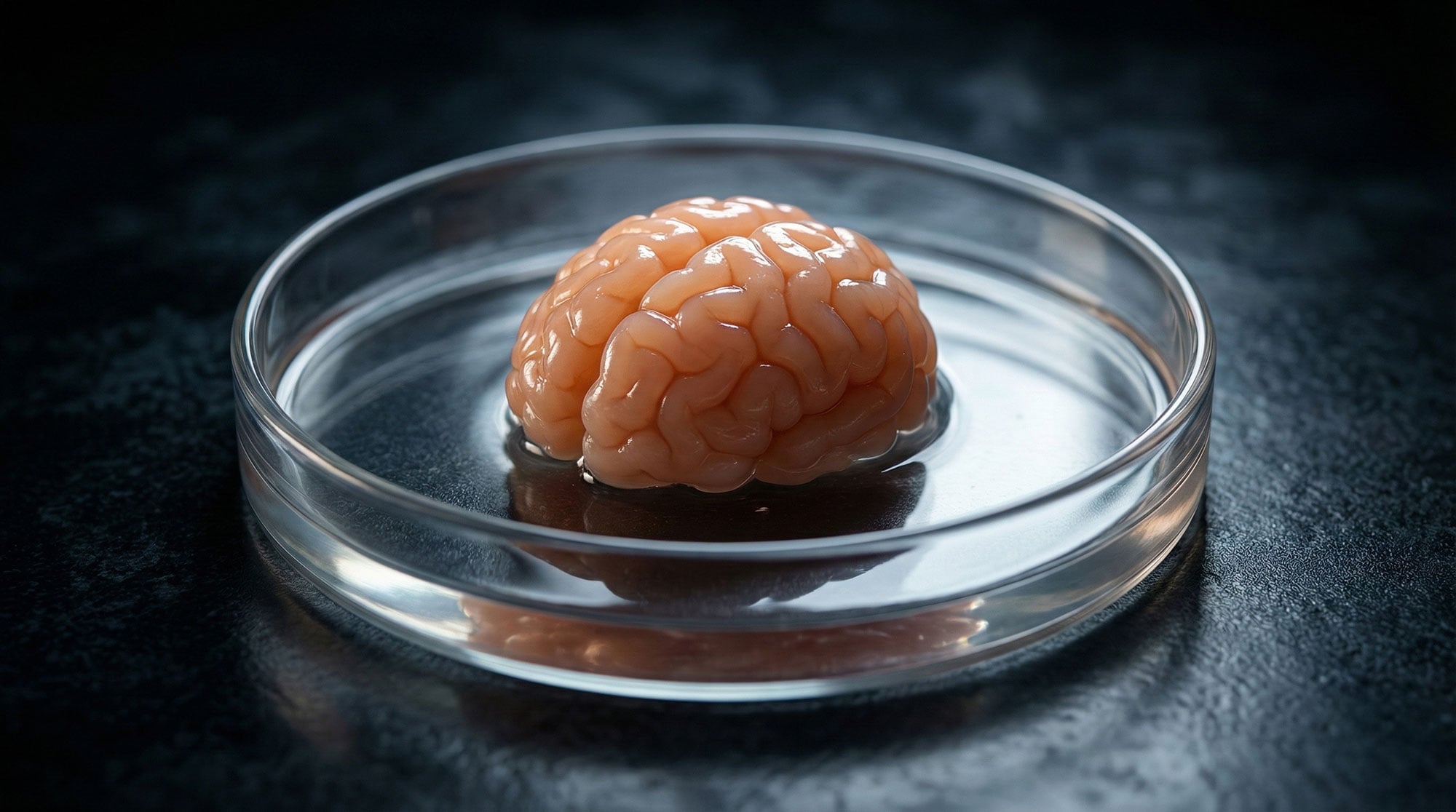
Using lab-grown brain tissue, researchers uncovered complex patterns of neural signaling that differ subtly between healthy brains and those linked to severe psychiatric disorders.
For the first time, scientists have used pea-sized brain organoids grown in the laboratory to uncover how neurons may malfunction in schizophrenia and bipolar disorder. These psychiatric conditions affect millions of people around the world, yet they remain difficult to diagnose because researchers still lack a clear understanding of their underlying molecular mechanisms.
The results could eventually help clinicians reduce diagnostic uncertainty when treating these and other mental health conditions. At present, such disorders are typically identified through clinical judgment alone, and treatment often relies on lengthy trial-and-error approaches to medication.
A detailed account of the findings was published in the journal APL Bioengineering.
“Schizophrenia and bipolar disorder are very hard to diagnose because no particular part of the brain goes off. No specific enzymes are going off like in Parkinson’s, another neurological disease where doctors can diagnose and treat based on dopamine levels even though it still doesn’t have a proper cure,” said Annie Kathuria, a Johns Hopkins University biomedical engineer who led the research. “Our hope is that in the future we can not only confirm a patient is schizophrenic or bipolar from brain organoids, but that we can also start testing drugs on the organoids to find out what drug concentrations might help them get to a healthy state.”
Machine learning decodes disease specific signals
Kathuria’s team created the organoids, simplified versions of brain tissue, by reprogramming blood and skin cells from people with schizophrenia, bipolar disorder, and from healthy volunteers into stem cells capable of forming brain-like structures. They then applied machine learning tools to analyze the electrical activity of the organoids’ cells, allowing them to identify neural firing patterns associated with healthy and diseased states. In the human brain, neurons communicate through small electrical signals.
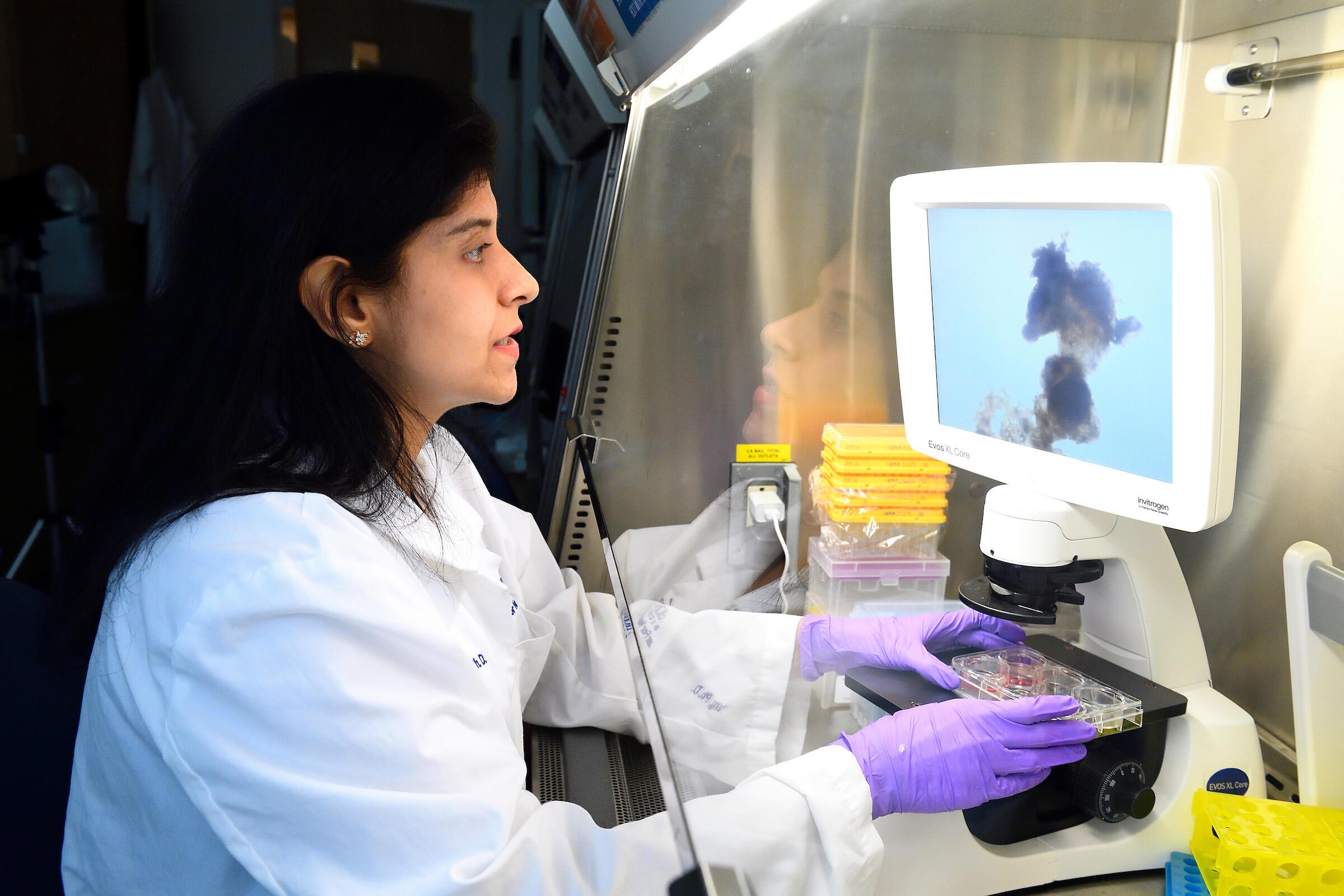
Specific features of this brain-like activity acted as biomarkers for schizophrenia and bipolar disorder, enabling the researchers to correctly identify the origin of the organoids with an accuracy of 83 percent. After applying gentle electrical stimulation to uncover additional neural activity, that accuracy increased to 92 percent.
Disorder-specific electrical signatures
The newly identified patterns reflected complex electrophysiological behavior unique to schizophrenia and bipolar disorder. Neural firing spikes and timing changes occurred simultaneously across multiple parameters, producing distinct electrical signatures for each condition.
“At least molecularly, we can check what goes wrong when we are making these brains in a dish and distinguish between organoids from a healthy person, a schizophrenia patient, or a bipolar patient based on these electrophysiology signatures,” Kathuria said. “We track the electrical signals produced by neurons during development, comparing them to organoids from patients without these mental health disorders.”
To study how the organoids’ cells formed neural networks with one another, they placed them on a microchip fitted with multi-electrode arrays resembling an electrical grid. The setup helped them streamline data as if it came from a tiny electroencephalogram, or EEG, which doctors use to measure patients’ brain activity.
Fully grown with about three-millimeter diameters, the organoids pack various kinds of neural cell types found in the brain’s prefrontal cortex, which is known for its higher cognitive functions. They also contain myelin, cellular material that wraps around nerves like insulation around electrical wires to improve networking of the signals needed by the brain to communicate with the rest of the body.
Toward personalized psychiatric treatment
The research only involved 12 patients, but the findings will likely have real-world, clinical application, Kathuria said, as they could be the beginning of an important testbed for psychiatric drug therapies.
The team is currently working with neurosurgeons, psychiatrists, and other neuroscientists at the John Hopkins School of Medicine to recruit blood samples from psychiatric patients and test how various drug concentrations might influence their findings. Even with a small sample, the team could start suggesting drug concentrations that might work on a patient if they can normalize the organoid’s conditions, Kathuria said.
“That’s how most doctors give patients these drugs, with a trial-and-error method that may take six or seven months to finds the right drug,” Kathuria said. “Clozapine is the most common drug prescribed for schizophrenia, but about 40% of patients are resistant to it. With our organoids, maybe we won’t have to do that trial-and-error period. Maybe we can give them the right drug sooner than that.”
Reference: “Machine learning-enabled detection of electrophysiological signatures in iPSC-derived models of schizophrenia and bipolar disorder” by Kai Cheng, Autumn Williams, Anannya Kshirsagar, Sai Kulkarni, Rakesh Karmacharya, Deok-Ho Kim, Sridevi V. Sarma and Annie Kathuria, 22 September 2025, APL Bioengineering.
DOI: 10.1063/5.0250559
This work was supported by NIH grants R01MH113858 and K08MH086846 (to R.K.), and R01NS133965 (to D.-H.K.).
Never miss a breakthrough: Join the SciTechDaily newsletter.
Follow us on Google and Google News.
29 Comments
So this test was on 12 “patients”, and you use 83% as if it’s high, but that’s 10/12 patients. Then you use 92% as if it’s a significant jump, but that’s just one more, making it 11/12 patients. And you’re calling these lab grown mini brains, called organoids, on an electrical grid… patients? And you think it’s the same as my brain? I have Schizophrenia and I can tell you that it’s hard to have hallucinations a lot and get misdiagnosed. Lol. But aside from that, my brain isn’t some perfect specimen with Schizo being the only thing wrong or the only limiting factor, as you’re testing “perfect” mini brains and rely on the data from them.
One step closer, sure, but in all reality everything I have ever discussed and researched is medication for Schizo is for dopamine and serotonin. Nothing will stop the hallucinations. It’s all mood control, and my mood doesn’t affect the hallucinations.
So please, progress and keep striving to learn! I love it. But what the heck is this article. Who wrote this?
Good points. I think people use a lot of AI to write (and illustrate) science articles because the actual science is less sensational and comprehensible.
The picture is extremely misleading seeing as the organoids are only 3mm in diameter. I get attracting attention for readership, but that’s just wrong.
Nonsense!
12 is enough to get funding for more research. The article says “may” & “likely”, for this stuff that’s relatively fair.
And besides that’s not 92% of patients, that’s 92% of signal tests. We give off tons of little signals between billions of neurons every second.
This might be one of those things that takes 15 years, or even a false lead. But if it takes 15 years that still means some kids today would have less bs than we had
Reference: “Machine learning-enabled detection of electrophysiological signatures in iPSC-derived models of schizophrenia and bipolar disorder” by Kai Cheng, Autumn Williams, Anannya Kshirsagar, Sai Kulkarni, Rakesh Karmacharya, Deok-Ho Kim, Sridevi V. Sarma and Annie Kathuria, 22 September 2025, APL Bioengineering.
DOI: 10.1063/5.0250559
This is referenced in the article near the bottom.
Interesting. I as well am schizophrenic. I am one of the happiest people. I don’t take meds. I hear them 24/7. I just don’t give into what they say. The voices I hear are very chatty. To not hear them would be awesome. I agree. I do understand though how many could get depressed. I did go bonkers and sever depression for a year. A wise woman told me once we adapt. That’s when I knew I had to be the change.
It’s Brain mechanics to prevent?
Hi, I have bipolar an di would like to help in any way with these studies. I’d be willing to get tested on or anything that would be a help to your company.
Clozapine is the most common drug prescribed for schizophrenia, but about 40% of patients are resistant to it. Wow…And so- 4 out of 10s ok, being -Not OK- with it or about it- 👍, yeh ?.. bad luck, for the team of four, i suppose, 😉, must be ‘taking one’- for the team of, six..A..😊 ..for science..✊️
Very funny!
Oh, goodie – more drugs, less actually fixing a problem
I’m with you on this. More meds blah blah blah
Agree, no new meds. I don’t want samples taken from the frontal lobe of my brain just to come up with a new medication. Or from my cerebellum either. Please come up with better percentages without all of that brain invasion. Who came up with the word Organoids anyway?
Wonderful research that few will ignore, even if sample size has been small to date. It’s a pathfinder.
ML tools on schizophrenia and OCD need update
I have OCD, PTSD, Schizophrenia, diagnosised most about 1984, I have had severe nighterrors and sleep walking, I have times even as a 5 yr old child that I can’t sleep. I have gone up to 5 days with only a few minutes at a time of sleep. I have had 2 sleep tests as an adult. I was told my neurons were miss firering. That it’s like I never sleep, my mind doesn’t shut down. It just keeps going. You all complain about people taking Klonopin or Xanax. Things that work for some of us. But no you all insist we stop what’s been working for many years. Just so you all can turn us into human lab rats.. I am 67 yrs old and because I don’t want to try all your new drugs I have been denied the medication that helps me function like other healthy people. It is cruel and painful . So as of today I have no happiness or joy. I don’t feel comfortable going out. So maybe you doctors might want to remember we are not all alike. Thank you for your time
I was 45 when i was diagnosed with BP2 and Sever Depression. The problem is I lived with it for 25 years before treatment ; I thought t
my behavior was “normal” ,so when I was tested after a major blow up that caused me to get detained in a mental treatment center.
The medicine helps some, but after 4 concussion *called acute* in 9 mos its not working that well. The doctor didn’t find bleeding , brushing or anything realy pronoused, but something is their…working memory needs help.
I agree with you totally. We are just lab rats. I’m bipolar 1 and have been put on so much medication. I’m 55 now and had a bit of a hiccup not too long ago. You guessed it, more meds.
I live my days quite numb now. Yes from the meds.
Have scientists discovered Satan yet?
Got to consult the sexsperts
schizophrenia , OCD , epilepsy , Depresion , bipolar Disorder , split personally etc . Can be cured by Sahaja yoga meditation .
schizophrenia , OCD , epilepsy , Depresion , bipolar Disorder , split personally etc . Can be cured by Sahaja yoga meditation .
I wonder who the patients are and how they were chosen (gender, age, lifestyle, religion, family situation), whether they knew each other.
I wonder if we have no way to find what biologically signifies what these disorder are then how did we take materials from patients verified as having these disorders with 100% surety. How do we know what really makes up the 2 disorders that are to this point diagnosed with a cluster of symptoms through patient description and observation. I would really like to know the connection that makes this directly connected to what we believe to be the concept we have coined as the definition that is these 2 disorders. I want to see the thinking that makes them rely on the travel path of the observed groups of symptoms that make up the disorders to how it lead them to knowing that it was what they know to be what is medically those 2 disorders, by the cells they collected. By this I mean, if the persons they collected the material from have been diagnosed with the 2 disorders and it can’t be verified biologically yet, then the samples they took could produce an unknown result that looks like something they believe to be the disorders. I want to read more on the direct connection to why it is schizophrenia and bipolar that they grew from these samples, instead of the goals they hope to achieve by what these organoids offer.
Yeah I think working towards a cure treatment is always good in regards to Schizophrenia. I’d love to make my treatment with drugs end someday.
I was daiognosed scitz when 19. Lucky I was admitted to hospital. I fought it.
But a few years with taking g different meds on n off. I started to see something was wrong. I got help to be admitted a last time. Age 23.
I asked to get a imi injection 2weekly. Because I was scared to not get medicated. It took about 2 yrs with self help books inspirational books. And being fairly honest with docs about how the jab was working. Wich we together ,got to a low dose. It worked OK for about 15 yrs. Not easy but life can be tuff for anyone. I got help from a fairly level friend. At this point. And saw the doctors again. Age 35.
And tried a 3rd Gen daily med. ( a low or equal dose. Was bloody hard as for a year. But came right after. Now im 45. And life is good
We all have what it takes to live ok. Just gotta love even one person enough to trust them. Just for a bit.
I count myself very lucky. Alot of friends from hospital died. In times of hardship. All the most beautiful people have a hardship. Even the saints all had it for the good. Of us today. My ex bi.polar says God gives his tuffest challenges to his strongest worriers.
Eagles rise against the wind
Dear sir/medam I am from Africa-Ethiopia,I suffer from schizophrenia &bipolar disorder, so that I need best treatment,may I get your scientific research treatment.
Thank you.
We already know that manic depression is genetic and highly heritable and made worse by PTSD and various harms. The scientists at the Salk Institute by my alma mater have already established that the mitochondria of every cell differ, it’s not “just” mental or brain based. AKAP11 is a genetic test that has shown some of the genetic markers. The gold standard for anti suicide and mood stabilization remains lithium.
Work at the Prechter Bipolar Research Program at U of Michigan developed the bipolar brain cells it sounds like they’re using in this research. Prechter has the first longitudinal study of bipolar going 20+ years. Doing other studies as well, such as on the gut biome. A few years ago they made all their data available to any researcher in the world to study bipolar. So thankful for this good work.
When they first developed the brain ‘cells’ to study, the bipolar cells in the petri dishes were noticably excited more than the controls. When they applied lithium to the excited cells they calmed. Fascinating.
SO SO SO thankful for their research, and THIS Johns Hopkins research, and bipolar research anywhere and everywhere.