
Close Menu
    Facebook X (Twitter) Instagram
    SciTechDaily
    • Biology
    • Chemistry
    • Earth
    • Health
    • Physics
    • Science
    • Space
    • Technology
    Facebook X (Twitter) Pinterest YouTube RSS
    SciTechDaily
    Home»Space»Tiny Telescope, Big Discoveries: How ExTrA Hunts for Earth-Like Worlds
    Space

    Tiny Telescope, Big Discoveries: How ExTrA Hunts for Earth-Like Worlds

    By European Southern Observatory (ESO)February 10, 2025No Comments2 Mins Read
    Facebook Twitter Pinterest Telegram LinkedIn WhatsApp Email Reddit
    Share
    Facebook Twitter LinkedIn Pinterest Telegram Email Reddit
    ExTrA Project
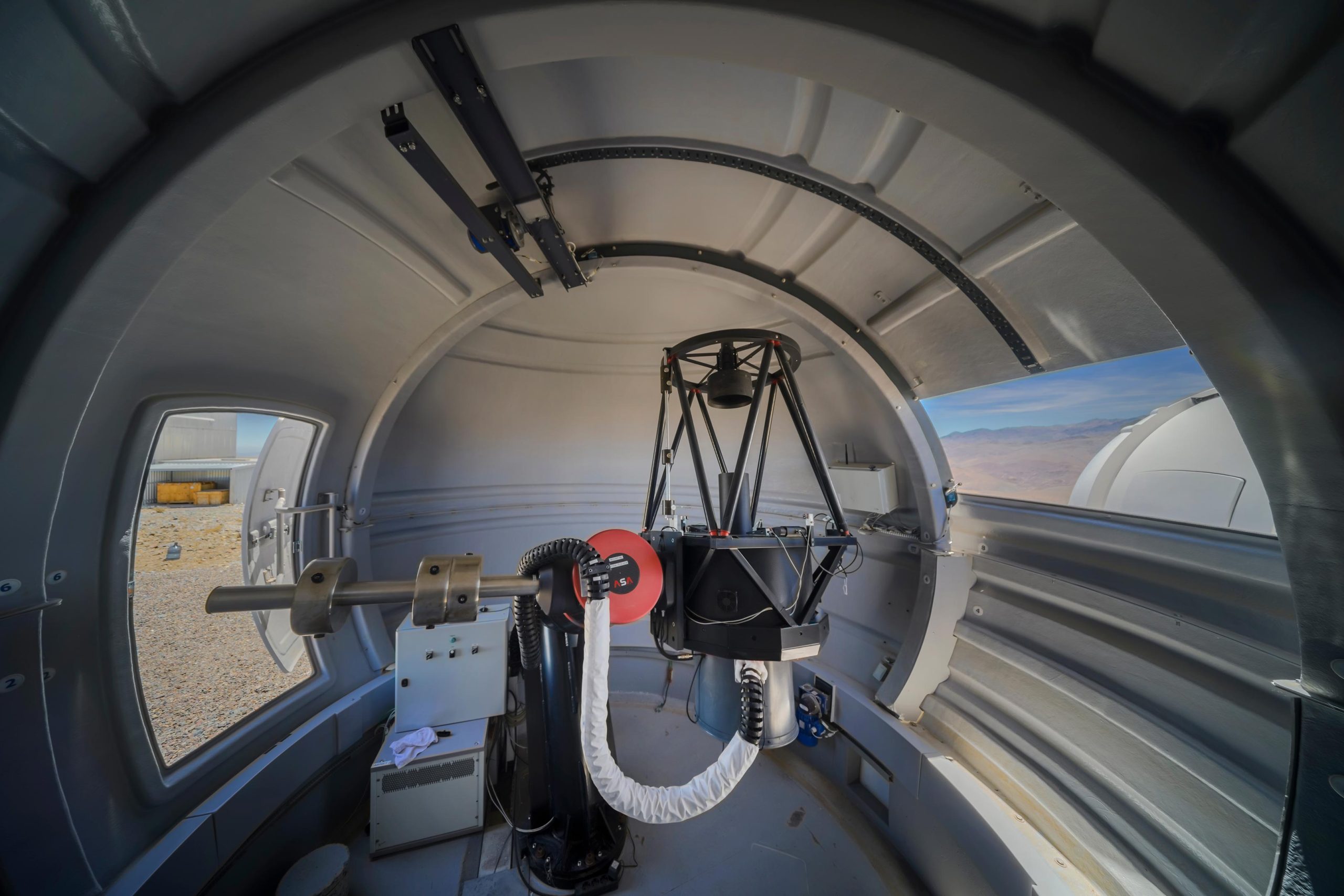
    Hidden in Chile’s La Silla Observatory, a small but mighty telescope is part of the ExTrA project, scanning the skies for Earth-like planets around distant stars. Using the subtle dimming of starlight as planets pass in front, ExTrA targets red dwarf stars, where potential habitable worlds are easier to detect. Credit: ESO/A. Ghizzi Panizza (www.albertoghizzipanizza.com)

    Using clever light-detecting techniques, ExTrA searches red dwarf stars for planets that might support life. By studying tiny dips in starlight, scientists can reveal planetary atmospheres and prepare for deeper exploration with powerful telescopes.

    Hidden within ESO’s La Silla Observatory in Chile, a small but powerful telescope is helping astronomers search for Earth-like planets. It is one of three telescopes in the French-led ExTrA project, designed to detect planets orbiting distant stars in the Milky Way and study their environments. But how do these telescopes uncover so much about worlds light-years away?

    When a planet passes in front of its star from our perspective, it briefly blocks a tiny fraction of the star’s light — similar to how the Moon darkens the Sun during a solar eclipse. ExTrA focuses on red dwarf stars, which are smaller and dimmer than our Sun. Because these stars emit less light, an Earth-sized planet passing in front of them blocks a more noticeable portion of their brightness, making detection easier.

    Beyond simply finding planets, ExTrA also analyzes the starlight passing through their atmospheres. Using spectroscopy, it examines different wavelengths of light to identify possible atmospheric components. The most promising candidates are then studied in more detail using ESO’s Very Large Telescope and, in the future, the Extremely Large Telescope. These powerful instruments could reveal whether these planets have the right conditions to support life — bringing us one step closer to discovering our first cosmic neighbors.

    Never miss a breakthrough: Join the SciTechDaily newsletter.
    Follow us on Google and Google News.

    Astronomy European Southern Observatory Exoplanet
    Share. Facebook Twitter Pinterest LinkedIn Email Reddit

    Related Articles

    Just 6 Light-Years Away: Astronomers Discover New Planet Around Barnard’s Star

    Exotrojan Unicorns: Astronomers Uncover Possible Sibling Planets

    “Puzzling and Counterintuitive” Discovery: Heaviest Element Ever Found in an Exoplanet Atmosphere

    New Planet Discovered Next Door – Orbiting Proxima Centauri

    New Planet Detected Nearby – Orbiting Around Star Closest to the Sun

    Mysterious Galactic Nomads: At Least 70 Rogue Planets Uncovered in Our Milky Way

    Surprise Planet Discovered Around Extreme Star Pair

    Astronomers Find Small Rocky Planet – Just Half the Mass of Venus

    First Clear Detection of a Moon-Forming Disc Around a Planet Outside Our Solar System

    Leave A Reply Cancel Reply

    • Facebook
    • Twitter
    • Pinterest
    • YouTube

    Don't Miss a Discovery

    Subscribe for the Latest in Science & Tech!

    Trending News

    Mezcal “Worm” in a Bottle Mystery: DNA Testing Reveals a Surprise

    New Research Reveals That Your Morning Coffee Activates an Ancient Longevity Switch

    This Is What Makes You Irresistible to Mosquitoes

    Shockingly Powerful Giant Octopuses Ruled the Seas 100 Million Years Ago

    Scientists Stunned by New Organic Molecules Found on Mars

    Rewriting Dinosaur Evolution: Scientists Unearth Remarkable 150-Million-Year-Old Stegosaur Skull

    Omega-3 Supplements Linked to Cognitive Decline in Surprising New Study

    First-of-Its-Kind Discovery: Homer’s Iliad Found Embedded in a 1,600-Year-Old Egyptian Mummy

    Follow SciTechDaily
    • Facebook
    • Twitter
    • YouTube
    • Pinterest
    • Newsletter
    • RSS
    SciTech News
    • Biology News
    • Chemistry News
    • Earth News
    • Health News
    • Physics News
    • Science News
    • Space News
    • Technology News
    Recent Posts
    • Scientists Just Discovered the Hidden Trick That Keeps Your Cells Alive
    • This Simple Movement Could Be Secretly Cleaning Your Brain
    • Male Birth Control Breakthrough: Scientists Find Way To Turn Sperm Production Off and Back On
    • A Common Vitamin Could Hold the Key to Treating Fatty Liver Disease
    • New Research Shows Vitamin B12 May Hold the Key to Healthy Aging
    Copyright © 1998 - 2026 SciTechDaily. All Rights Reserved.
    • Science News
    • About
    • Contact
    • Editorial Board
    • Privacy Policy
    • Terms of Use

    Type above and press Enter to search. Press Esc to cancel.