

Astronomers using ESO’s Very Large Telescope have discovered an exoplanet named Barnard b, orbiting the nearest single star to our Sun, Barnard’s star.
This exoplanet, with at least half the mass of Venus, orbits its star every three days and is one of the lightest exoplanets identified. The observations also revealed possible signals of three additional exoplanets in the system.
Discovery of an Exoplanet Near Barnard’s Star
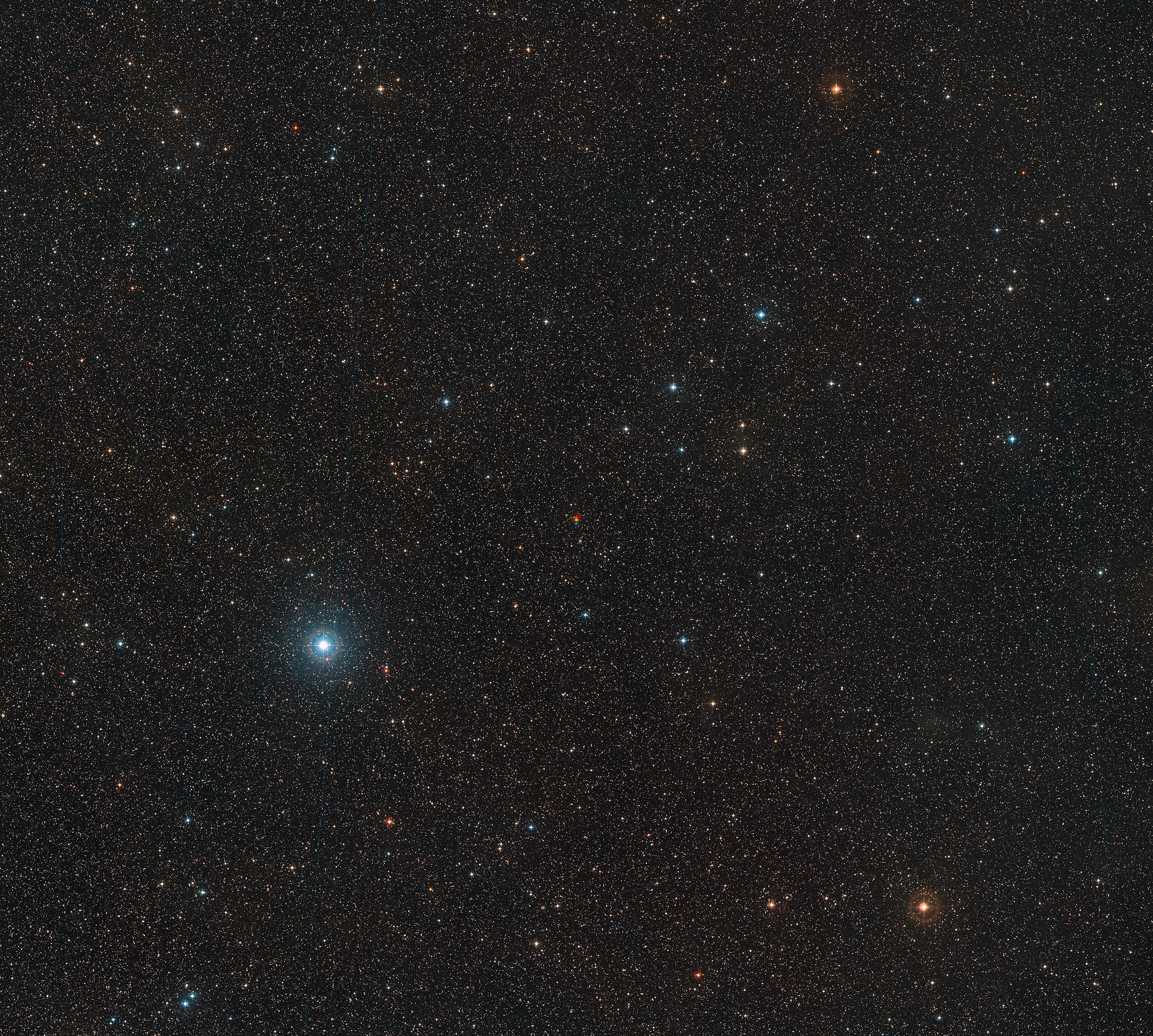
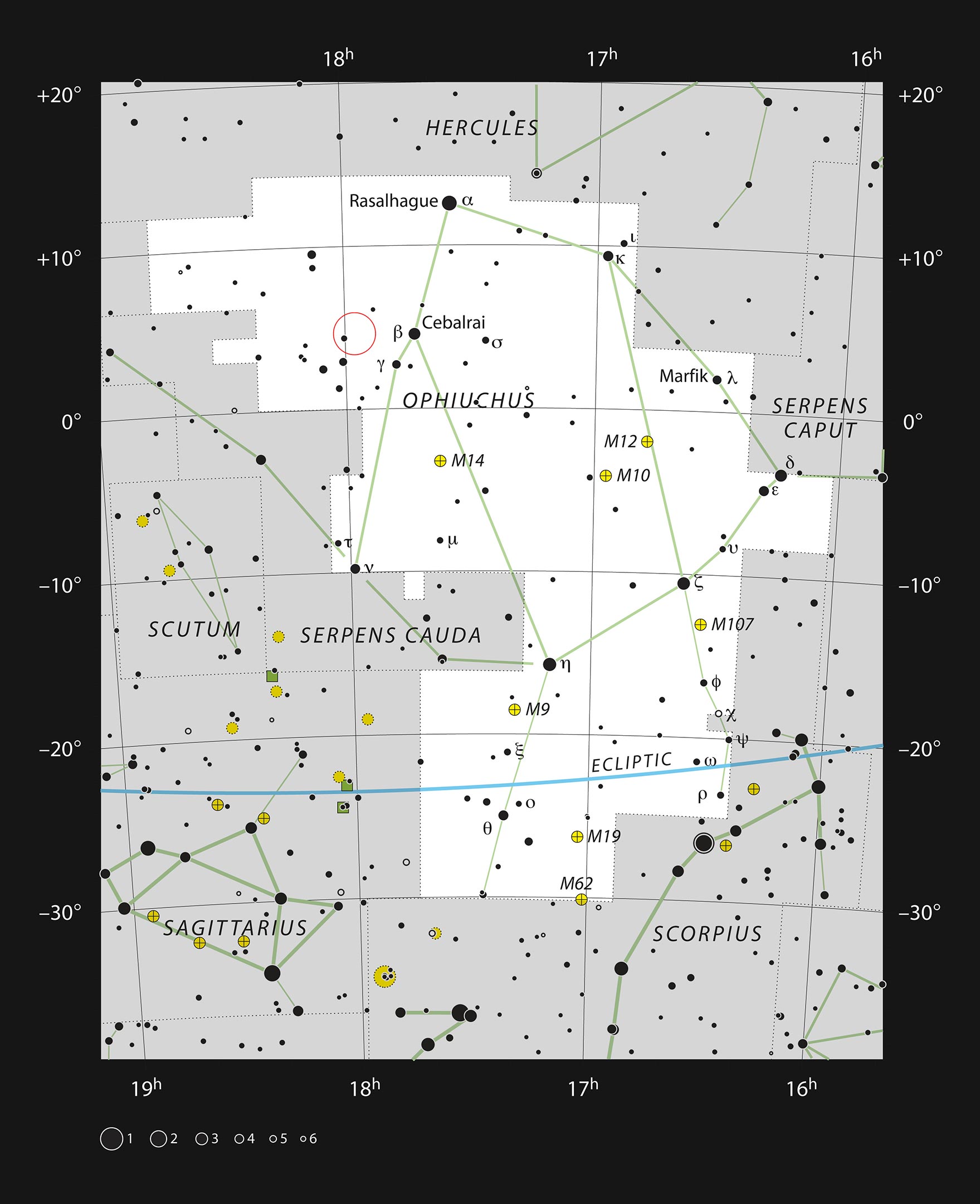
Astronomers at the European Southern Observatory (ESO) using the Very Large Telescope (VLT) have identified an exoplanet orbiting Barnard’s star, the nearest single star to the Sun. On this newly discovered exoplanet, which has at least half the mass of Venus, a year lasts just over three Earth days. The team’s observations also hint at the existence of three more exoplanet candidates, in various orbits around the star.
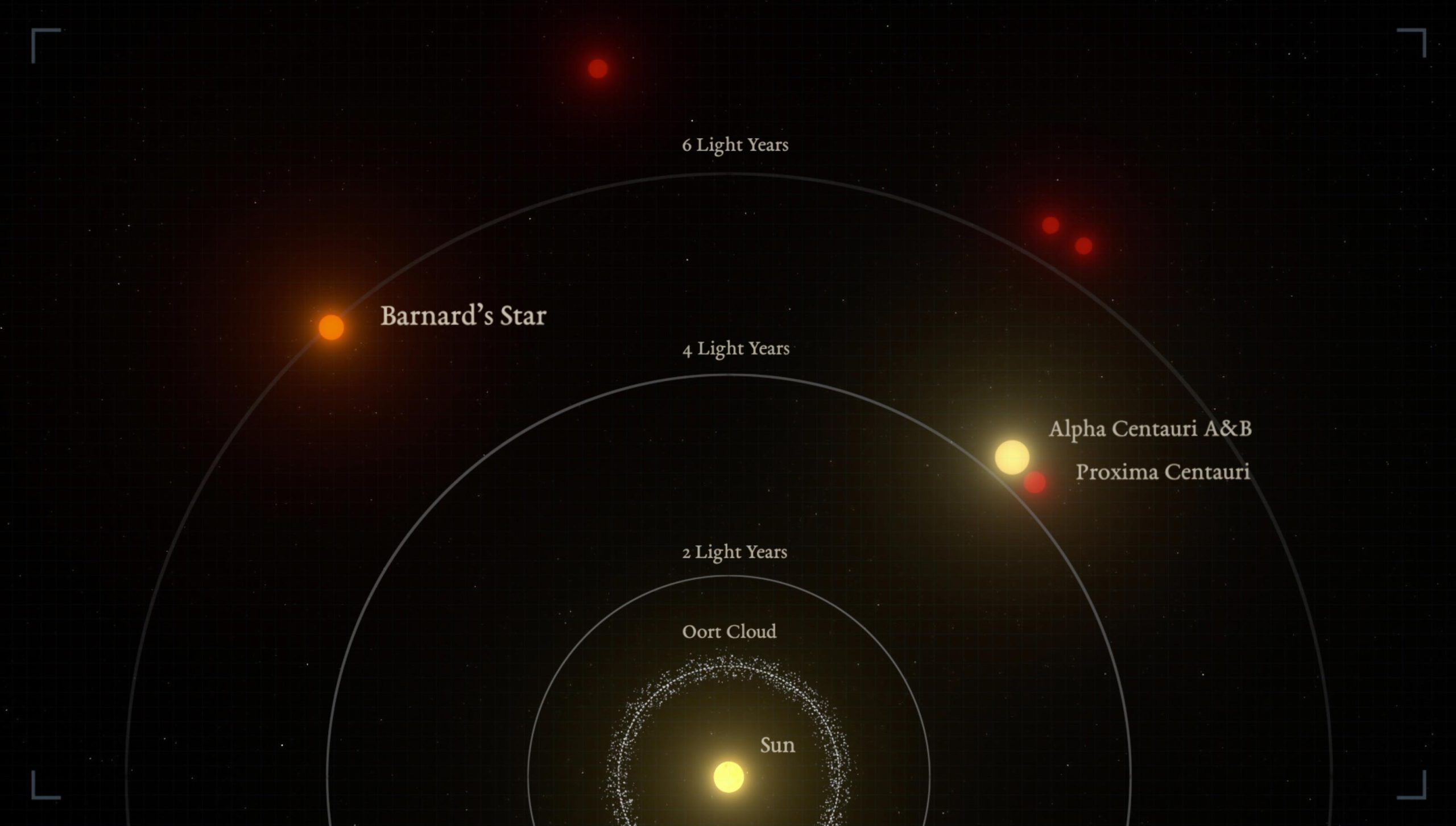
Located just six light-years away, Barnard’s star is the second-closest stellar system — after Alpha Centauri’s three-star group — and the closest individual star to us. Owing to its proximity, it is a primary target in the search for Earth-like exoplanets. Despite a promising detection back in 2018, no planet orbiting Barnard’s star had been confirmed until now.
Observational Achievements and Exoplanet Characteristics
The discovery of this new exoplanet — announced in a paper published today in the journal Astronomy & Astrophysics — is the result of observations made over the last five years with ESO’s VLT, located at Paranal Observatory in Chile.
“Even if it took a long time, we were always confident that we could find something,” says Jonay González Hernández, a researcher at the Instituto de Astrofísica de Canarias in Spain, and lead author of the paper. The team were looking for signals from possible exoplanets within the habitable or temperate zone of Barnard’s star — the range where liquid water can exist on the planet’s surface. Red dwarfs like Barnard’s star are often targeted by astronomers since low-mass rocky planets are easier to detect there than around larger Sun-like stars.[1]
Barnard b,[2] as the newly discovered exoplanet is called, is twenty times closer to Barnard’s star than Mercury is to the Sun. It orbits its star in 3.15 Earth days and has a surface temperature of around 125 °C (257 °F).
“Barnard b is one of the lowest-mass exoplanets known and one of the few known with a mass less than that of Earth. But the planet is too close to the host star, closer than the habitable zone,” explains González Hernández. “Even if the star is about 2500 degrees cooler than our Sun, it is too hot there to maintain liquid water on the surface.”
Future Research and Technological Advancements
For their observations, the team used ESPRESSO, a highly precise instrument designed to measure the wobble of a star caused by the gravitational pull of one or more orbiting planets. The results obtained from these observations were confirmed by data from other instruments also specialized in exoplanet hunting: HARPS at ESO’s La Silla Observatory, HARPS-N, and CARMENES. The new data do not, however, support the existence of the exoplanet reported in 2018.
In addition to the confirmed planet, the international team also found hints of three more exoplanet candidates orbiting the same star. These candidates, however, will require additional observations with ESPRESSO to be confirmed. “We now need to continue observing this star to confirm the other candidate signals,” says Alejandro Suárez Mascareño, a researcher also at the Instituto de Astrofísica de Canarias and co-author of the study. “But the discovery of this planet, along with other previous discoveries such as Proxima b and d, shows that our cosmic backyard is full of low-mass planets.”
ESO’s Extremely Large Telescope (ELT), currently under construction, is set to transform the field of exoplanet research. The ELT’s ANDES instrument will allow researchers to detect more of these small, rocky planets in the temperate zone around nearby stars, beyond the reach of current telescopes, and enable them to study the composition of their atmospheres.
This animation zooms out of our Solar System, revealing the stars in our cosmic neighborhood. One of them, Barnard’s star, is just six light-years away. It is the second-closest stellar system — after Alpha Centauri’s three-star group — and the closest individual star to us. Credit: ESO/L. Calçada/Vladimir Romanyuk (spaceengine.org). Music: Astral Electronics
Notes
- Astronomers target cool stars, like red dwarfs, because their temperate zone is much closer to the star than that of hotter stars, like the Sun. This means that the planets orbiting within their temperate zone have shorter orbital periods, allowing astronomers to monitor them over several days or weeks, rather than years. In addition, red dwarfs are much less massive than the Sun, so they are more easily disturbed by the gravitational pull of the planets around them and thus they wobble more strongly.
- It’s common practice in science to name exoplanets by the name of their host star with a lowercase letter added to it, ‘b’ indicating the first known planet, ’c’ the next one, and so on. The name Barnard b was therefore also given to a previously suspected planet candidate around Barnard’s star, which scientists were unable to confirm.
Reference: “A sub-Earth-mass planet orbiting Barnard’s star” by J. I. González Hernández, A. Suárez Mascareño, A. M. Silva, A. K. Stefanov, J. P. Faria, H. M. Tabernero, A. Sozzetti, R. Rebolo, F. Pepe, N. C. Santos, S. Cristiani, C. Lovis, X. Dumusque, P. Figueira, J. Lillo-Box, N. Nari, S. Benatti, M. J. Hobson, A. Castro-González, R. Allart, V. M. Passegger, M.-R. Zapatero Osorio, V. Adibekyan, Y. Alibert, C. Allende Prieto, F. Bouchy, M. Damasso, V. D’Odorico, P. Di Marcantonio, D. Ehrenreich, G. Lo Curto, R. Génova Santos, C. J. A. P. Martins, A. Mehner, G. Micela, P. Molaro, N. Nunes, E. Palle, S. G. Sousa and S. Udry, 1 October 2024, Astronomy & Astrophysics.
DOI: 10.1051/0004-6361/202451311
The team is composed of J. I. González Hernández (Instituto de Astrofísica de Canarias, Spain [IAC] and Departamento de Astrofísica, Universidad de La Laguna, Spain [IAC-ULL]), A. Suárez Mascareño (IAC and IAC-ULL), A. M. Silva (Instituto de Astrofísica e Ciências do Espaço, Universidade do Porto, Portugal [IA-CAUP] and Departamento de Física e Astronomia Faculdade de Ciências, Universidade do Porto, Portugal [FCUP]), A. K. Stefanov (IAC and IAC-ULL), J. P. Faria (Observatoire de Genève, Université de Genève, Switzerland [UNIGE]; IA-CAUP and FCUP), H. M. Tabernero (Departamento de Física de la Tierra y Astrofísica & Instituto de Física de Partículas y del Cosmos, Universidad Complutense de Madrid, Spain), A. Sozzetti (INAF – Osservatorio Astrofisico di Torino [INAF-OATo] and Istituto Nazionale di Astrofisica, Torino, Italy), R. Rebolo (IAC; IAC-ULL and Consejo Superior de Investigaciones Científicas, Spain [CSIC]), F. Pepe (UNIGE), N. C. Santos (IA-CAUP; FCUP), S. Cristiani (INAF – Osservatorio Astronomico di Trieste, Italy [INAF-OAT] and Institute for Fundamental Physics of the Universe, Trieste, Italy [IFPU]), C. Lovis (UNIGE), X. Dumusque (UNIGE), P. Figueira (UNIGE and IA-CAUP), J. Lillo-Box (Centro de Astrobiología, CSIC-INTA, Madrid, Spain [CAB]), N. Nari (IAC; Light Bridges S. L., Canarias, Spain and IAC-ULL), S. Benatti (INAF – Osservatorio Astronomico di Palermo, Italy [INAF-OAPa]), M. J. Hobson (UNIGE), A. Castro-González (CAB), R. Allart (Institut Trottier de Recherche sur les Exoplanètes, Université de Montréal, Canada and UNIGE), V. M. Passegger (National Astronomical Observatory of Japan, Hilo, USA; IAC; IAC-ULL and Hamburger Sternwarte, Hamburg, Germany), M.-R. Zapatero Osorio (CAB), V. Adibekyan (IA-CAUP and FCUP), Y. Alibert (Center for Space and Habitability, University of Bern, Switzerland and Weltraumforschung und Planetologie, Physikalisches Institut, University of Bern, Switzerland), C. Allende Prieto (IAC and IAC-ULL), F. Bouchy (UNIGE), M. Damasso (INAF-OATo), V. D’Odorico (INAF-OAT and IFPU), P. Di Marcantonio (INAF-OAT), D. Ehrenreich (UNIGE), G. Lo Curto (European Southern Observatory, Santiago, Chile [ESO Chile]), R. Génova Santos (IAC and IAC-ULL), C. J. A. P. Martins (IA-CAUP and Centro de Astrofísica da Universidade do Porto, Portugal), A. Mehner (ESO Chile), G. Micela (INAF-OAPa), P. Molaro (INAF-OAT), N. Nunes (Instituto de Astrofísica e Ciências do Espaço, Universidade de Lisboa), E. Palle (IAC and IAC-ULL), S. G. Sousa (IA-CAUP and FCUP), and S. Udry (UNIGE).
Never miss a breakthrough: Join the SciTechDaily newsletter.
Follow us on Google and Google News.
1 Comment
i wish they would stop with the cgi representation of exoplanets… we can’t see them… as this article points out… we see a gravitational anomaly or we see a bit of light change as the object transients the star they orbit.. the garbage about atmosphere and habitability is just that… garbage… we are doing an analysis of a bit of the light spectrum… often not visible light… x-ray, gamma, or infrared …. not visible light… it’s a bit reckless to draw the conclusions we do… from a sliver of light traveling trillions of miles…