
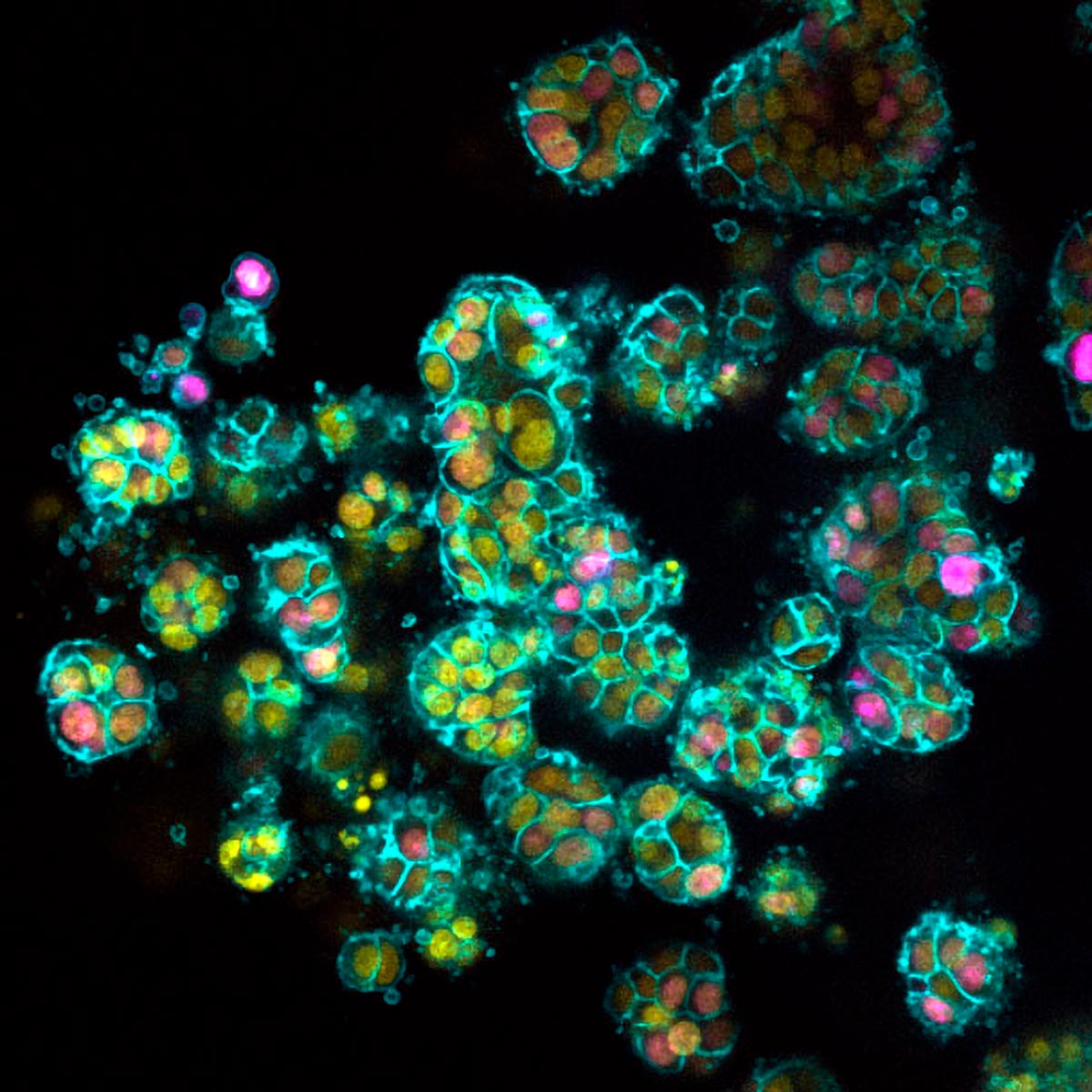
PanKind’s funding supports vital research for a pioneering early-detection blood test for pancreatic cancer, potentially revolutionizing the diagnosis and treatment of this highly fatal disease in Australia.
Research that could lead to the first early-detection blood test for pancreatic cancer has received critical funding from PanKind, The Australian Pancreatic Cancer Foundation.
Pancreatic cancer is one of Australia’s biggest killers, with poor survival rates marred by a lack of distinct symptoms and screening tools needed to detect the disease in its initial stages.
It’s hoped the test will, for the first time, accurately identify patients with early stages of pancreatic cancer – a crucial step towards improving survival rates and quality of life for patients.
At a Glance
- Project to develop a blood-based test to identify patients with early pancreatic cancer receives PanKind funding boost.
- The test is based on a critical WEHI discovery of proteins that can identify early pancreatic cancer in patients. Currently, there are no early-detection biomarkers for the disease.
- Researchers hope the test could, in the future, be used by general practitioners and oncologists as a tool for early intervention to enable more effective treatment options for patients.
The Growing Threat of Pancreatic Cancer
Pancreatic cancer is projected to be the fourth biggest cancer killer in Australia this year, with 3600 people predicted to die from the disease.
It is often diagnosed late due to a lack of specific symptoms in the early stages of the disease, meaning most patients are diagnosed once the cancer has grown and has already begun to affect nearby organs.

Leadership and Innovation
Project lead Dr. Belinda Lee said the new grant would help the team translate their findings into a diagnostic test, potentially improving the lives of hundreds of thousands of people in Australia and around the world.
“There are no early detection biomarkers for pancreatic cancer and this needs to urgently change,” Dr. Lee, a consultant medical oncologist at WEHI, said.
“We have identified 13 proteins that could distinguish between the early and late stages of pancreatic ductal adenocarcinoma (PDAC) – the most common type of pancreatic cancer that’s fast-becoming the cancer of our generation.
“While the 5-year survival rate of most other cancers has improved, the incidence and death rate from PDAC is rising – and it’s projected to become the second leading cause of cancer-related death by 2030.
“Even with a diagnosis, there are no biomarkers that can guide clinical decisions for pancreatic cancer, meaning clinicians have limited opportunities to ensure the right, and best, treatment for their patients.
“We hope to validate these proteins and show that they can be used to reliably screen for early pancreatic cancer.
“This would allow us to create the first diagnostic test to identify patients who have early stages of pancreatic cancer – something that unfortunately does not exist at the moment.”
Significant Data
To achieve this goal, researchers will leverage the global PURPLE Pancreatic Cancer Translational Registry, established by Dr. Lee at WEHI in 2016 with philanthropic support, which also helped the team identify the 13 critical proteins.
The registry is a large-scale database that tracks the treatment journey of patients at 48 cancer centers across Australia, New Zealand, and Singapore, with over 4000 patients and 2000 biospecimens currently available.
Data from the registry confirms that 70% of patients present with advanced disease, highlighting the need for biomarkers to enable earlier detection.
Research and Development
“We will utilize state-of-the art technologies and computational methodologies to compare the protein signature in the blood of healthy individuals, to pancreatic cancer patients with early and late-stage disease,” Dr. Lee said.
“The results will allow us to identify potential novel blood-based biomarkers that can be further developed to create a simple, non-invasive screening test to identify early-stage pancreatic cancer.
“We hope this test can be used by general practitioners to identify patients with disease, or by oncologists to identify the right treatment for patients.
“The ultimate goal is that this tool leads to earlier diagnosis of this silent cancer, thereby increasing the number of patients who go into remission and helping us triple survival rates by 2030.”
The project, Development of a blood-based test to identify patients with early pancreatic cancer, is supported by PanKind’s $100,000 Marianne Allan Pancreatic Cancer Research Grant.
Never miss a breakthrough: Join the SciTechDaily newsletter.
Follow us on Google and Google News.