
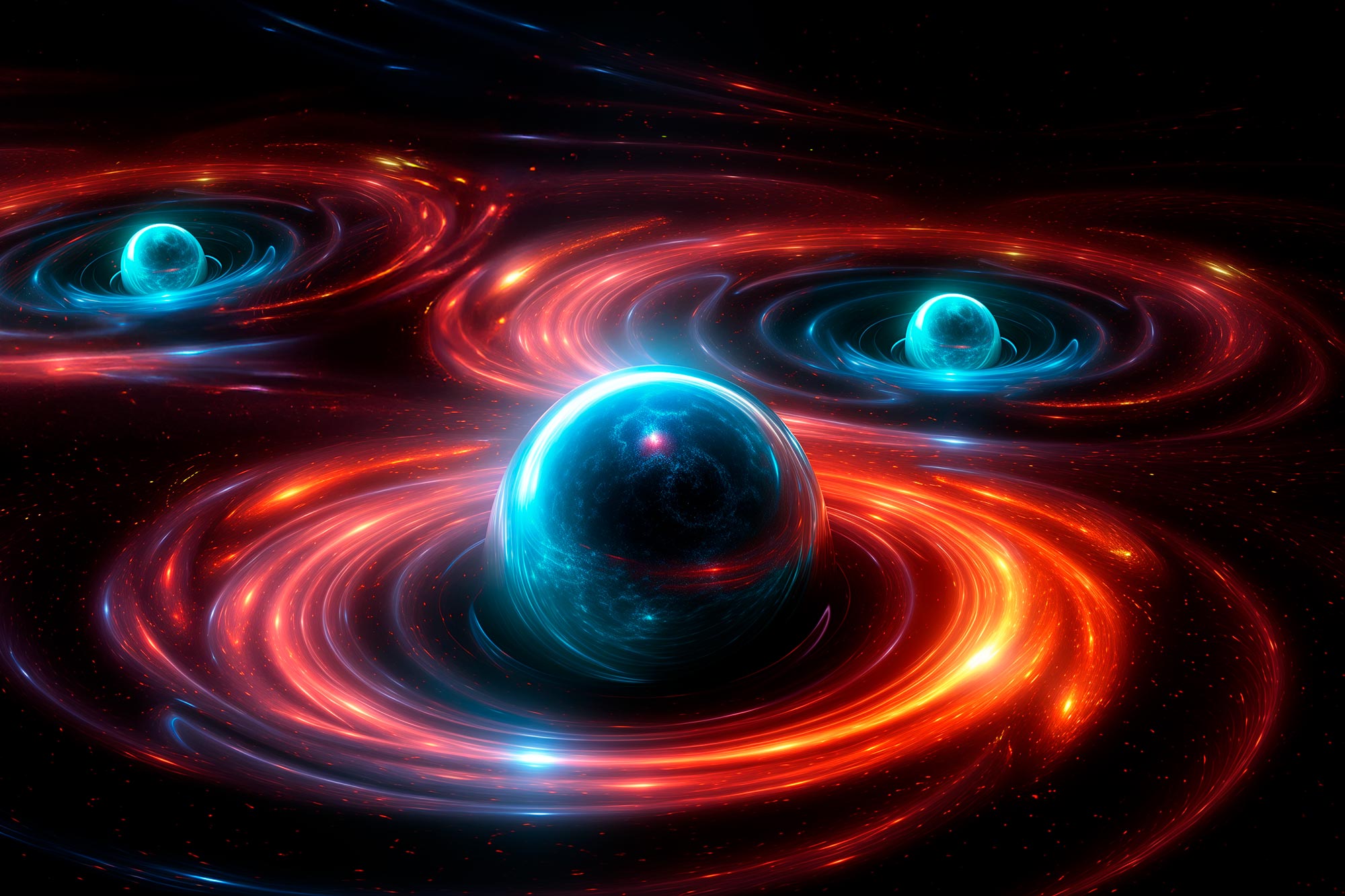
A groundbreaking study by University of Leeds scientists proposes that Be stars are part of triple star systems, not binary systems as previously thought. This finding, derived from Gaia satellite data, challenges conventional star formation theories and could impact our knowledge of black holes, neutron stars, and gravitational waves.
A ground-breaking new discovery by University of Leeds scientists could transform the way astronomers understand some of the biggest and most common stars in the Universe.
Research by PhD student Jonathan Dodd and Professor René Oudmaijer, from the University’s School of Physics and Astronomy, points to intriguing new evidence that massive Be stars – until now mainly thought to exist in double stars – could in fact be “triples.”
The remarkable discovery could revolutionize our understanding of the objects – a subset of B stars – which are considered an important “test bed” for developing theories on how stars evolve more generally.
The Nature of Be Stars
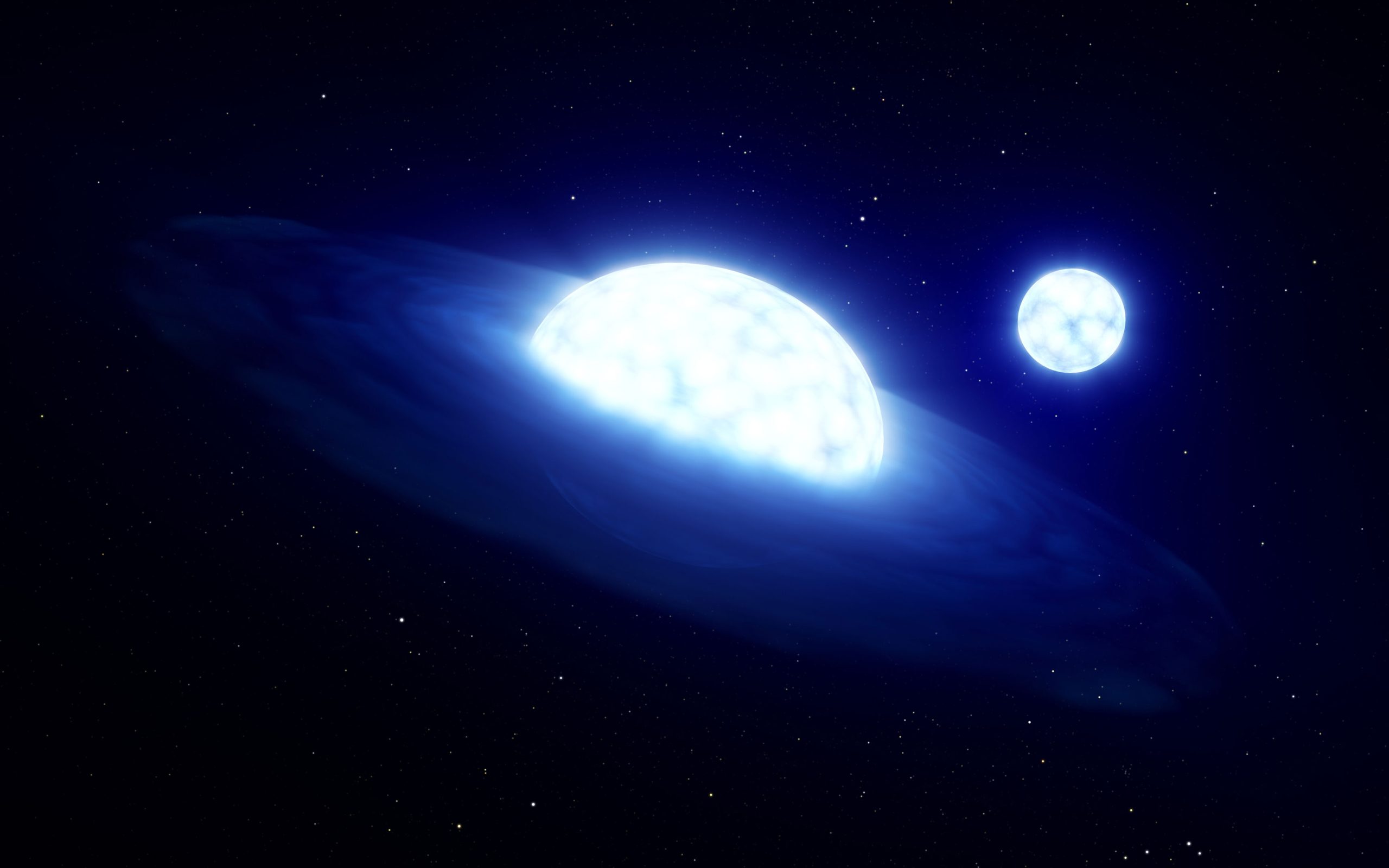
Be stars are surrounded by a characteristic disc made of gas – similar to the rings of Saturn in our own Solar System. Although Be stars have been known for about 150 years – having first been identified by renowned Italian astronomer Angelo Secchi in 1866 – until now, no one has known how they were formed.
The consensus among astronomers so far has said the discs are formed by the rapid rotation of the Be stars, and that itself can be caused by the stars interacting with another star in a binary system.
Revealing the Triple Systems
Mr. Dodd, corresponding author of the research, said: “The best point of reference for that is if you’ve watched Star Wars, there are planets where they have two Suns.”
But now, by analyzing data from the European Space Agency’s Gaia satellite, the scientists say they have found evidence these stars actually exist in triple systems – with three bodies interacting instead of just two.
Mr. Dodd added: “We observed the way the stars move across the night sky, over longer periods like 10 years, and shorter periods of around six months. If a star moves in a straight line, we know there’s just one star, but if there is more than one, we will see a slight wobble or, in the best case, a spiral.
“We applied this across the two groups of stars that we are looking at – the B stars and the Be stars – and what we found, confusingly, is that at first it looks like the Be stars have a lower rate of companions than the B stars. This is interesting because we’d expect them to have a higher rate.”
However, Principal Investigator Prof Oudmaijer said: “The fact that we do not see them might be because they are now too faint to be detected.”
Mass Transfer
The researchers then looked at a different set of data, looking for companion stars that are further away, and found that at these larger separations, the rate of companion stars is very similar between the B and Be stars.
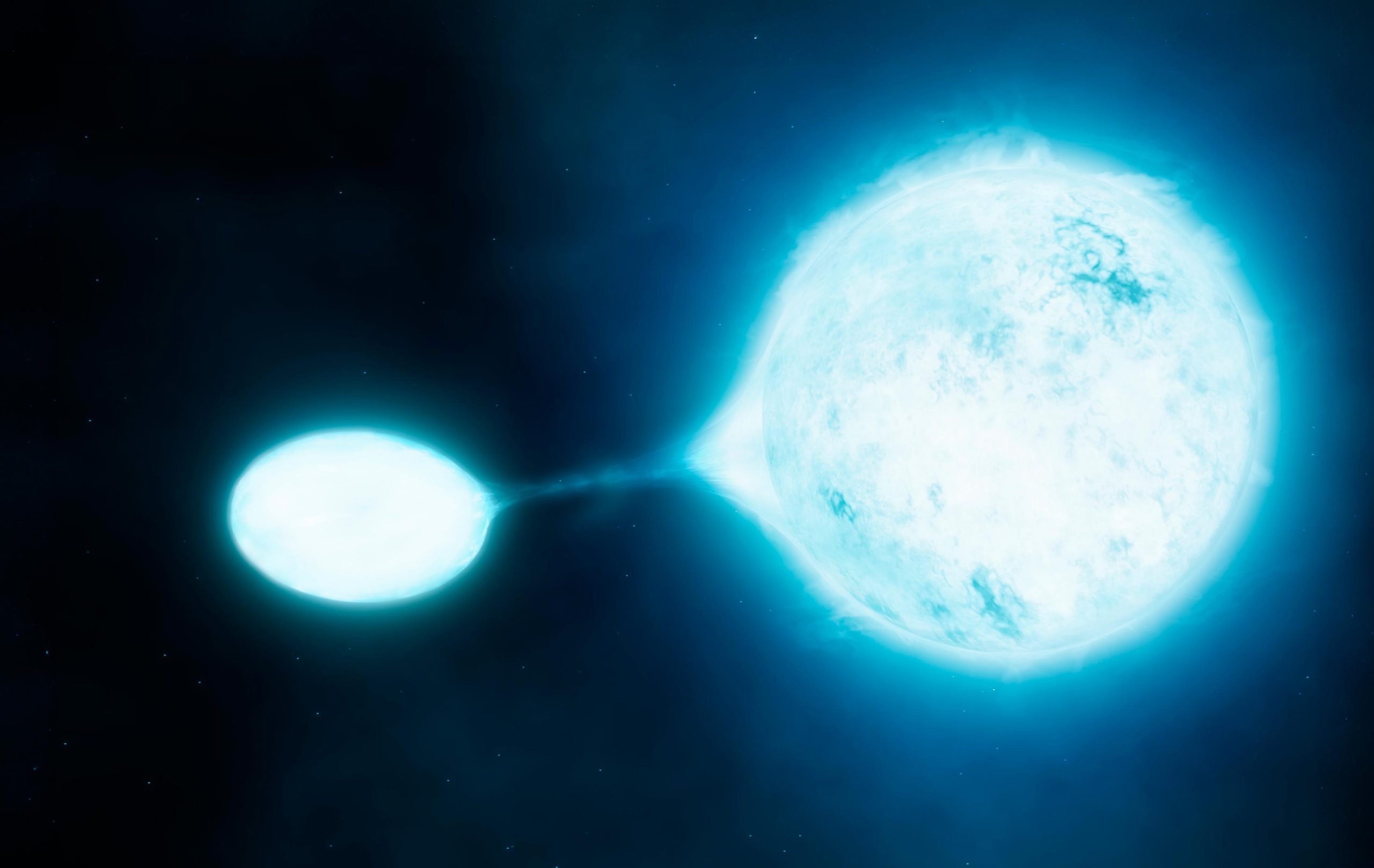
From this, they were able to infer that in many cases a third star is coming into play, forcing the companion closer to the Be star – close enough that mass can be transferred from one to the other and form the characteristic Be star disc. This could also explain why we do not see these companions anymore; they have become too small and faint to be detected after the “vampire” Be star has sucked in so much of their mass.
Broader Astronomical Impact
The discovery could have huge impacts on other areas of astronomy – including our understanding of black holes, neutron stars, and gravitational wave sources.
Prof Oudmaijer said: “There’s a revolution going on in physics at the moment around gravitational waves. We have only been observing these gravitational waves for a few years now, and these have been found to be due to merging black holes.
“We know that these enigmatic objects – black holes and neutron stars – exist, but we don’t know much about the stars that would become them. Our findings provide a clue to understanding these gravitational wave sources.”
He added: “Over the last decade or so, astronomers have found that binarity is an incredibly important element in stellar evolution. We are now moving more towards the idea it is even more complex than that and that triple stars need to be considered.”
“Indeed,” Oudmaijer said, “triples have become the new binaries.”
Reference: “Gaia uncovers difference in B and Be star binarity at small scales: evidence for mass transfer causing the Be phenomenon” by Jonathan M Dodd, René D Oudmaijer, Isaac C Radley, Miguel Vioque and Abigail J Frost, 12 October 2023, Monthly Notices of the Royal Astronomical Society.
DOI: 10.1093/mnras/stad3105
The team behind the discovery includes PhD student Mr. Dodd and Prof. Oudmaijer from Leeds, along with University of Leeds PhD student Isaac Radley and two former Leeds academics Dr. Miguel Vioque of the ALMA Observatory in Chile and Dr. Abigail Frost at the European Southern Observatory in Chile. The team received funding from the Science and Technology Facilities Council (STFC).
Never miss a breakthrough: Join the SciTechDaily newsletter.
Follow us on Google and Google News.