
Close Menu
    Facebook X (Twitter) Instagram
    SciTechDaily
    • Biology
    • Chemistry
    • Earth
    • Health
    • Physics
    • Science
    • Space
    • Technology
    Facebook X (Twitter) Pinterest YouTube RSS
    SciTechDaily
    Home»Science»Turning Hazelnut Shells Into a Clean, Renewable Energy Source
    Science

    Turning Hazelnut Shells Into a Clean, Renewable Energy Source

    By American Institute of PhysicsAugust 24, 2021No Comments3 Mins Read
    Facebook Twitter Pinterest Telegram LinkedIn WhatsApp Email Reddit
    Share
    Facebook Twitter LinkedIn Pinterest Telegram Email Reddit
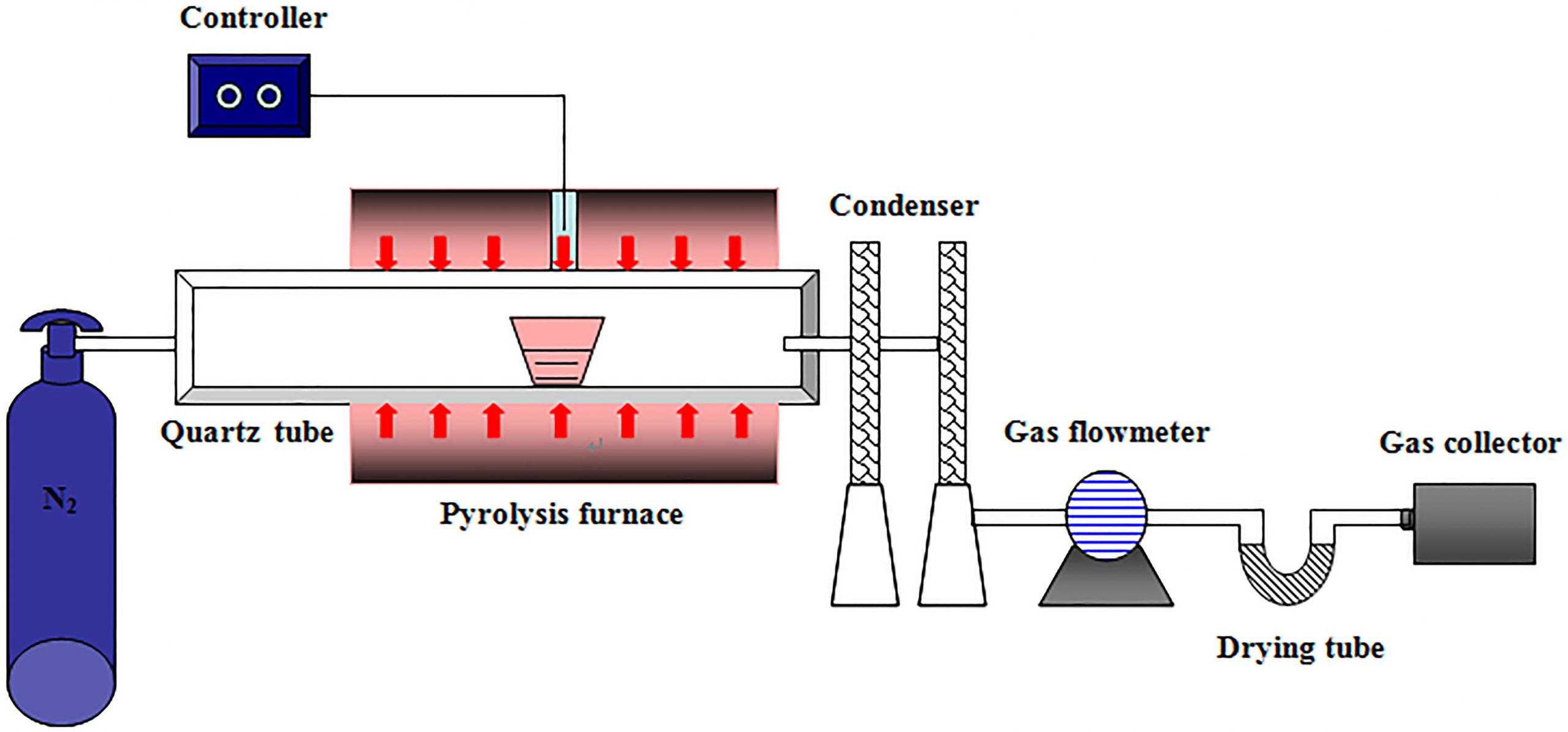
    Tube Furnace Pyrolysis Reactor
    Tube furnace pyrolysis reactor. Credit: Aihui Chen, Xifeng Liu, Haibin Zhang, Hao Wu, Dong Xu, Bo Li and Chenxi Zhao

    Wood vinegar and tar fraction in bio-oil produced from hazelnut shells pyrolysis at 400 C to 1,000 C.

    Biomass is attracting growing interest from researchers as a source of renewable, sustainable, and clean energy. It can be converted into bio-oil by thermochemical methods, such as gasification, liquefaction, and pyrolysis, and used to produce fuels, chemicals, and biomaterials.

    In Journal for Renewable and Sustainable Energy, researchers from Heilongjiang Academy of Agricultural Machinery Sciences in China share their work on the physicochemical properties and antioxidant activity of wood vinegar and tar fraction in bio-oil produced from hazelnut shells pyrolysis at 400 degrees Celsius to 1,000 C (750 degrees Fahrenheit to 1,800 F).

    Wood vinegar is often used in agricultural fields as insect repellent, fertilizer, and plant growth promoter or inhibitor, and can be applied as an odor remover, wood preservative, and animal feed additive.

    “After these results, wood vinegar and tar obtained from residual hazelnut shells could be considered as potential source of renewable energy dependent on their own characteristics,” said author Liu Xifeng.

    The researchers found the wood vinegar and tar left over after burning the shells contained the most phenolic substances, which laid a foundation for the subsequent research on antioxidant properties.

    The experiments were conducted in a tube furnace pyrolysis reactor, and hazelnut shells samples weighing 20 grams (0.7 ounces) were placed in the waiting area of a quartz tube in advance. When the target temperature was reached and stable, the raw materials were pushed to the reaction region and heated for 20 minutes.

    The biochar was determined as the ratio of pyrolytic char and biomass weight, and the bio-oil yield was calculated by the increased weight of the condenser.

    To separate two fractions of bio-oil sufficiently, the liquid product was centrifuged at 3,200 revolutions per minute for eight minutes, and the aqueous fraction was called wood vinegar. The separated tar fraction remained stationary for 24 hours without the appearance of the aqueous phase.

    The wood vinegar and tar were respectively stored in a sealed tube and preserved in a refrigerator at 4 C (39 F) for experimental analysis, and the gas yield was calculated by considering their combined volume.

    The researchers found the pyrolysis temperature had a significant effect on the yield and properties of wood vinegar and tar fraction in bio-oil obtained from hazelnut shells. Wood vinegar was the dominant liquid fraction with maximal yield of 31.23 weight percent obtained at 700 C (1,300 F), attributable to the high concentration of water.

    This research sets the groundwork for further applications of bio-oil from waste hazelnut shell pyrolysis, and its application in antioxidant activity has been extended.

    Reference: “Influence of pyrolysis temperature on bio-oil produced from hazelnut shells: Physico-chemical properties and antioxidant activity of wood vinegar and tar fraction” by Xifeng Liu, Aihui Chen, Haibin Zhang, Hao Wu, Dong Xu, Bo Li and Chenxi Zhao, 24 August 2021, Journal of Renewable and Sustainable Energy.
    DOI: 10.1063/5.0051944

    Never miss a breakthrough: Join the SciTechDaily newsletter.
    Follow us on Google and Google News.

    American Institute of Physics Energy Green Energy Sustainability
    Share. Facebook Twitter Pinterest LinkedIn Email Reddit

    Related Articles

    How Environmental Satellites Are Helping Solar Power Plants on Earth

    Harvesting Ocean Energy: Bio-Inspired Membrane Efficiently Produces Electricity From Saltwater

    Carbon Intensity of Power Sector Down in 2019 As Renewables Saw Considerable Growth

    Innovative Hydrogen Boride Nanosheets: Huge Potential As Hydrogen Carrier

    New Technologies to Extract Clean Fuel From Sunlight

    Nanostructure Increases Solar-to-Hydrogen Conversion Efficiency by a Factor of Eleven

    MIT-Developed Technique Turns Emissions Into Fuel

    Energy-Efficient Construction is Key to Lowering Urban Emissions

    Graphite Foam Could Harness Energy from Temperature Gradient in Oceans

    Leave A Reply Cancel Reply

    • Facebook
    • Twitter
    • Pinterest
    • YouTube

    Don't Miss a Discovery

    Subscribe for the Latest in Science & Tech!

    Trending News

    Collapsing Plasma May Hold the Key to Cosmic Magnetism

    This Breakthrough Solar Panel Generates Power From Both Sunlight and Raindrops

    Scientists Uncover New Metabolic Effects Beyond Weight Loss of Mounjaro

    Scientists Discover Cancer Tumors Are “Addicted” to This Common Antioxidant

    1,800 Miles Down: Scientists Uncover Mysterious Movements at the Edge of Earth’s Core

    Scientists Discover Hidden “Good Fats” in Green Rice That Could Transform Nutrition

    Your Child’s Clothes Could Contain Toxic Lead, Study Finds

    Researchers Break a 150-Year-Old Math Law With a Surprising Donut Discovery

    Follow SciTechDaily
    • Facebook
    • Twitter
    • YouTube
    • Pinterest
    • Newsletter
    • RSS
    SciTech News
    • Biology News
    • Chemistry News
    • Earth News
    • Health News
    • Physics News
    • Science News
    • Space News
    • Technology News
    Recent Posts
    • The Mystery of the Notes: Why No One Knows How This 120-Year-Old Song Should Sound
    • Scientists Discover 132-Million-Year-Old Dinosaur Tracks on South Africa’s Coast
    • Scientists Uncover the Secret Ingredient Behind the Spark That May Have Started Life on Earth
    • Natural Oils vs. Antibiotics: The Swine Study That Could Change Farming
    • The Biggest Volcanic Event in Earth’s History Transformed an Entire Oceanic Plate
    Copyright © 1998 - 2026 SciTechDaily. All Rights Reserved.
    • Science News
    • About
    • Contact
    • Editorial Board
    • Privacy Policy
    • Terms of Use

    Type above and press Enter to search. Press Esc to cancel.