
Close Menu
    Facebook X (Twitter) Instagram
    SciTechDaily
    • Biology
    • Chemistry
    • Earth
    • Health
    • Physics
    • Science
    • Space
    • Technology
    Facebook X (Twitter) Pinterest YouTube RSS
    SciTechDaily
    Home»Technology»U.S. Army Creates Sensor With 100,000 Times Higher Sensitivity – Improves Thermal Imaging, Electronic Warfare, Communications
    Technology

    U.S. Army Creates Sensor With 100,000 Times Higher Sensitivity – Improves Thermal Imaging, Electronic Warfare, Communications

    By U.S. Army Research LaboratoryOctober 5, 20202 Comments4 Mins Read
    Facebook Twitter Pinterest Telegram LinkedIn WhatsApp Email Reddit
    Share
    Facebook Twitter LinkedIn Pinterest Telegram Email Reddit
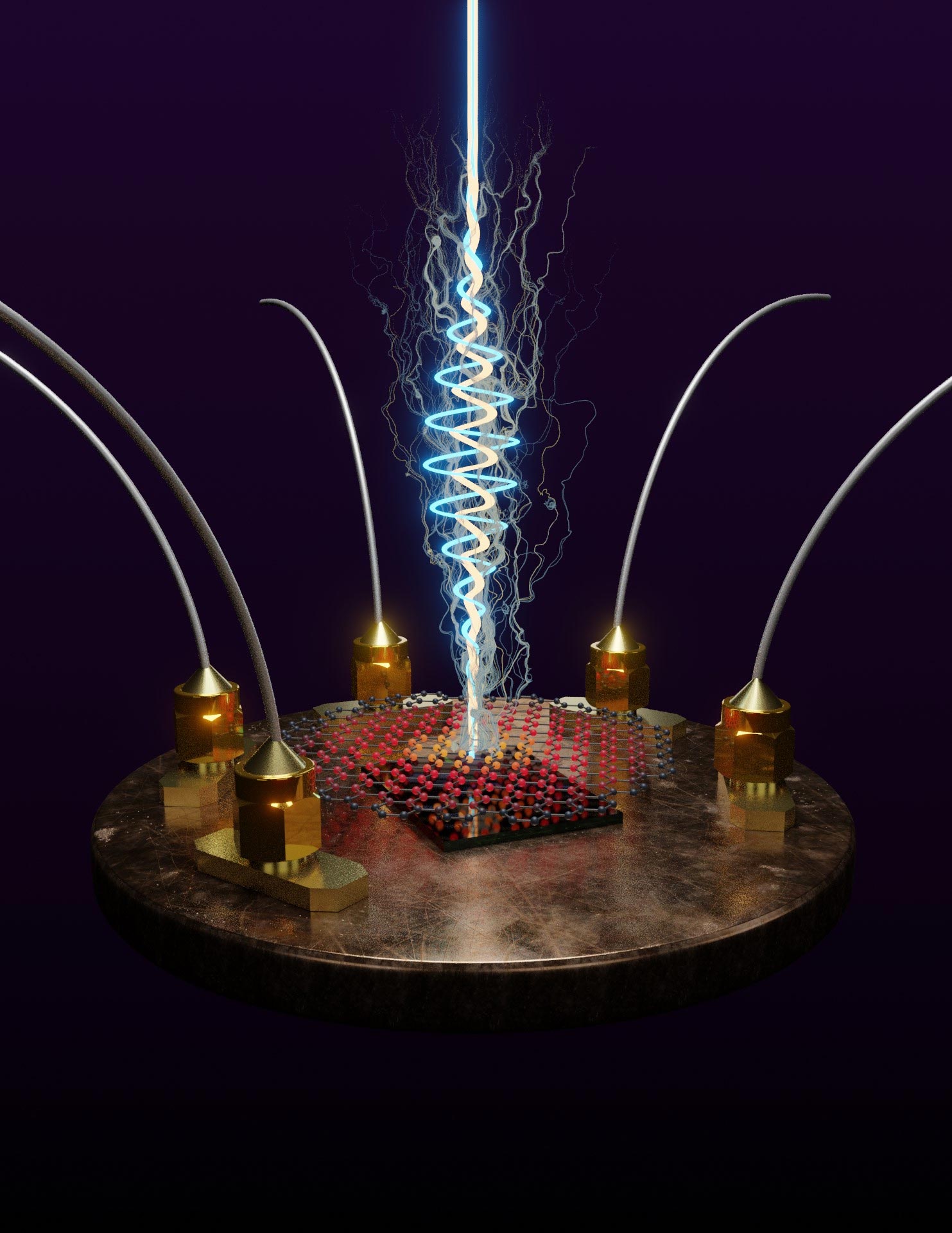
    Graphene Bolometer Sensor
    Army-funded research develops a graphene bolometer sensor with 100,000x higher sensitivity than currently available commercial sensors. Detecting microwave radiation is key to thermal imaging, electronic warfare, radio communications and radar, but detection sensitivity limits the performance of these systems. Credit: Raytheon BBN Technologies

    Better detection of microwave radiation will improve thermal imaging, electronic warfare, radio communications.

    Army-funded research developed a new microwave radiation sensor with 100,000 times higher sensitivity than currently available commercial sensors. Researchers said better detection of microwave radiation will enable improved thermal imaging, electronic warfare, radio communications, and radar.

    Researchers published their study in the peer-reviewed journal Nature. The team includes scientists from Harvard University, The Institute of Photonic Sciences, Massachusetts Institute of Technology, Pohang University of Science and Technology, and Raytheon BBN Technologies. The Army, in part, funded the work to fabricate this bolometer by exploiting the giant thermal response of graphene to microwave radiation.

    “The microwave bolometer developed under this project is so sensitive that it is capable of detecting a single microwave photon, which is the smallest amount of energy in nature,” said Dr. Joe Qiu, program manager for solid-state electronics and electromagnetics, Army Research Office, an element of the U.S. Army Combat Capabilities Development Command’s Army Research Laboratory. “This technology will potentially enable new capabilities for applications such as quantum sensing and radar, and ensure the U.S. Army maintains spectral dominance in the foreseeable future.”
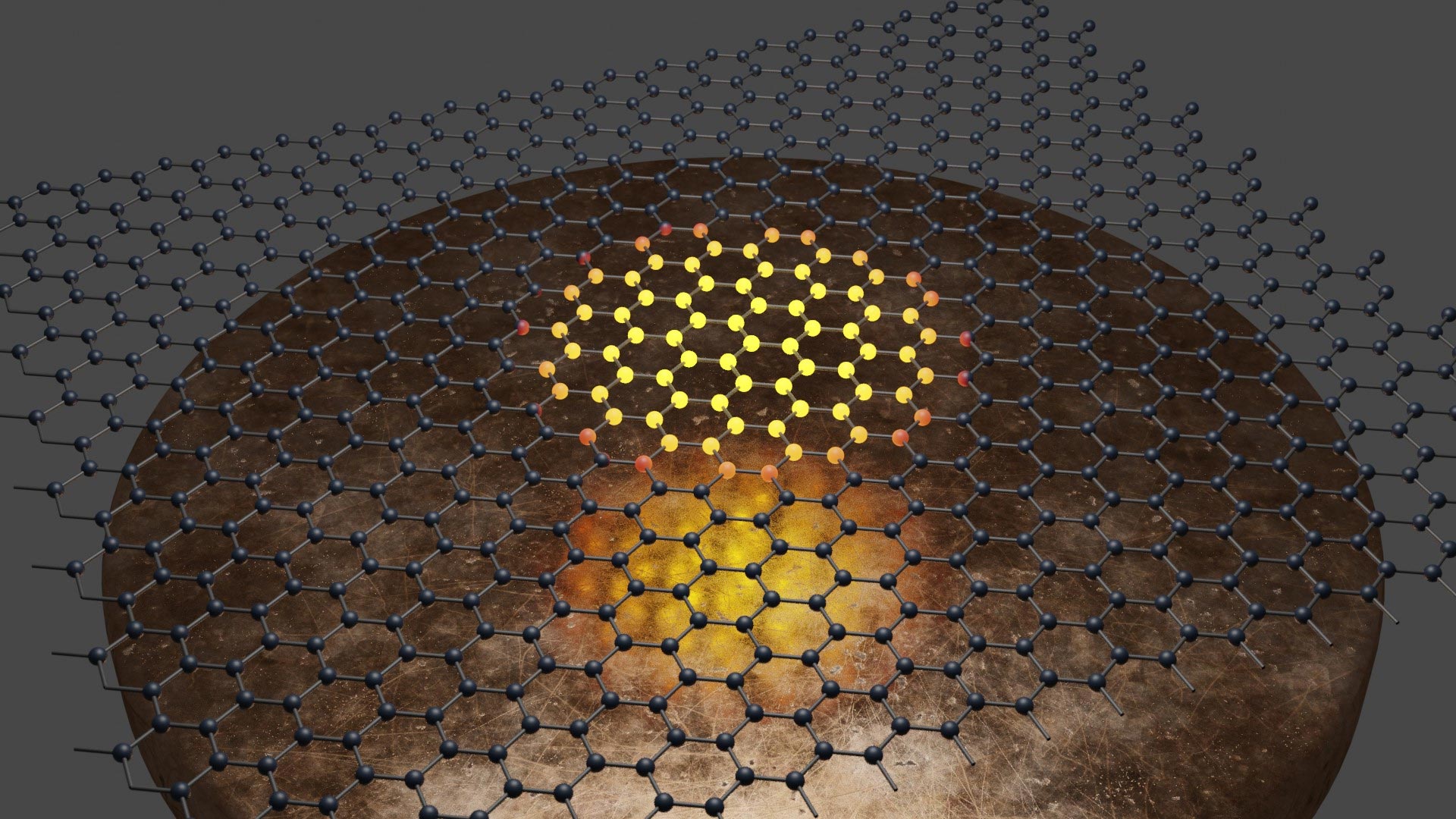
    Bolometer Detects Electromagnetic Radiation
    A bolometer detects electromagnetic radiation by measuring the temperature rise as the photons are absorbed into the sensor. The research team fabricate this bolometer by exploiting the giant thermal response of graphene to microwave radiation. Credit: Raytheon BBN Technologies

    The graphene bolometer sensor detects electromagnetic radiation by measuring the temperature rise as the photons are absorbed into the sensor. Graphene is a two-dimensional, one-atom layer thick material. The researchers achieved a high bolometer sensitivity by incorporating graphene in the microwave antenna.

    A key innovation in this advancement is to measure the temperature rise by superconducting Josephson junction while maintaining a high microwave radiation coupling into the graphene through an antenna, researchers said. The coupling efficiency is essential in a high sensitivity detection because “every precious photon counts.”

    A Josephson junction is a quantum mechanical device which is made of two superconducting electrodes separated by a barrier (thin insulating tunnel barrier, normal metal, semiconductor, ferromagnet, etc.)
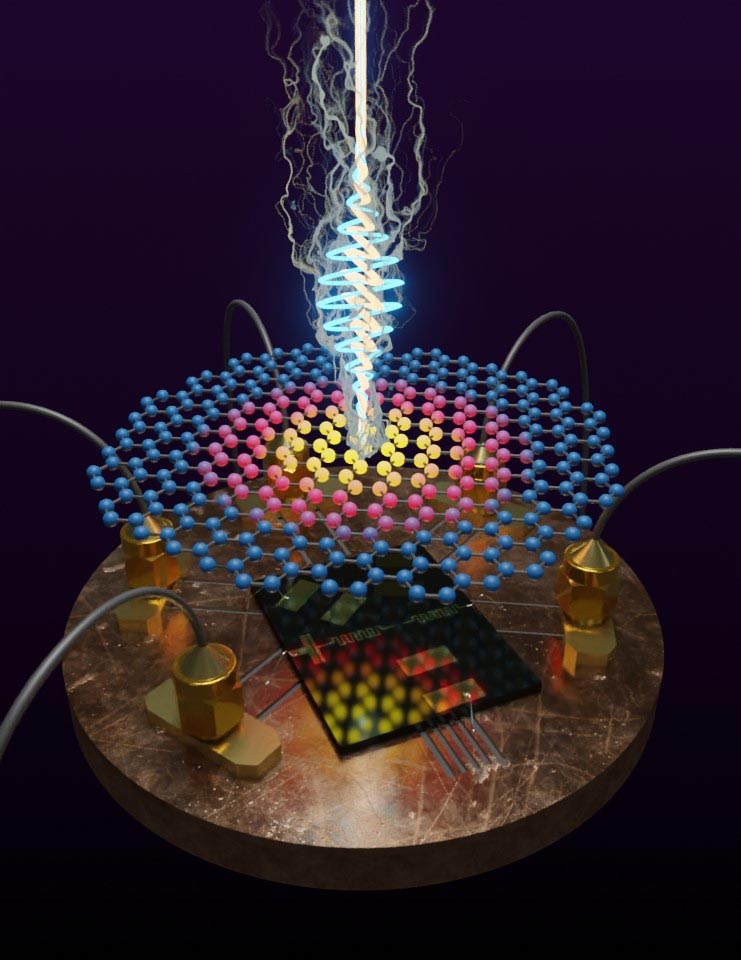
    New Microwave Bolometer
    The microwave bolometer developed under this project is capable of detecting a single microwave photon, the smallest amount of energy in nature. Credit: Raytheon BBN Technologies

    In addition to being thin, the electrons in graphene are also in a very special band structure in which the valence and conduction bands meet at only one point, known as Dirac point.

    “The density of states vanishes there so that when the electrons receive the photon energy, the temperature rise is high while the heat leakage is small,” said Dr. Kin Chung Fong, Raytheon BBN Technologies.

    With increased sensitivity of bolometer detectors, this research has found a new pathway to improve the performance of systems detecting electromagnetic signal such as radar, night vision, LIDAR (Light Detection and Ranging), and communication. It could also enable new applications such as quantum information science, thermal imaging as well as the search of dark matter.

    Reference: “Graphene-based Josephson junction microwave bolometer” by Gil-Ho Lee, Dmitri K. Efetov, Woochan Jung, Leonardo Ranzani, Evan D. Walsh, Thomas A. Ohki, Takashi Taniguchi, Kenji Watanabe, Philip Kim, Dirk Englund and Kin Chung Fong, 30 September 2020, Nature.
    DOI: 10.1038/s41586-020-2752-4

    The part of the research conducted at MIT included work from the Institute for Soldier Nanotechnologies. The U.S. Army established the institute in 2002 as an interdisciplinary research center to dramatically improve the protection, survivability, and mission capabilities of the Soldier and of Soldier-supporting platforms and systems.

    Never miss a breakthrough: Join the SciTechDaily newsletter.
    Follow us on Google and Google News.

    Graphene Nanotechnology Popular Sensor U.S. Army Research Laboratory
    Share. Facebook Twitter Pinterest LinkedIn Email Reddit

    Related Articles

    Next-Generation Energy Storage Breakthrough: Fast-Charging, Long-Running, Flexible

    Graphene Surprises Researchers Again: Strange ‘Melting’ Behavior

    Graphene Bolometer is Faster, Simpler and Covers More Wavelengths

    MIT Researchers Create Perfect Nanoscrolls from Graphene Oxide

    Ballistic Transport in Graphene Nanoribbons Suggests New Type of Graphene-Based Electronics

    Graphene “Sandwich” Protects Microscopic Materials from Radiation

    Controlled Graphene Crumpling Used as Artificial Muscle Actuators

    Desalination Technique Using Graphene Sheets Improves Permeability and Efficiency

    Graphene Based Composite Being Developed as Rust Proofing Alternative

    2 Comments

    1. Greg on October 5, 2020 7:07 pm

      I amaze myself when I think of the Technology difference from when I joined the Navy in 1973, to today…

      Reply
    2. P F Cameron on October 6, 2020 1:03 am

      I’m struggling to make the mental jump of how these improvements in the microwave porting of the electro-magnetic spectrum(EMS) is helping see better in the Infrared portion of the EMS.

      Reply
    Leave A Reply Cancel Reply

    • Facebook
    • Twitter
    • Pinterest
    • YouTube

    Don't Miss a Discovery

    Subscribe for the Latest in Science & Tech!

    Trending News

    Mezcal “Worm” in a Bottle Mystery: DNA Testing Reveals a Surprise

    New Research Reveals That Your Morning Coffee Activates an Ancient Longevity Switch

    This Is What Makes You Irresistible to Mosquitoes

    Shockingly Powerful Giant Octopuses Ruled the Seas 100 Million Years Ago

    Scientists Stunned by New Organic Molecules Found on Mars

    Rewriting Dinosaur Evolution: Scientists Unearth Remarkable 150-Million-Year-Old Stegosaur Skull

    Omega-3 Supplements Linked to Cognitive Decline in Surprising New Study

    First-of-Its-Kind Discovery: Homer’s Iliad Found Embedded in a 1,600-Year-Old Egyptian Mummy

    Follow SciTechDaily
    • Facebook
    • Twitter
    • YouTube
    • Pinterest
    • Newsletter
    • RSS
    SciTech News
    • Biology News
    • Chemistry News
    • Earth News
    • Health News
    • Physics News
    • Science News
    • Space News
    • Technology News
    Recent Posts
    • Male Birth Control Breakthrough: Scientists Find Way To Turn Sperm Production Off and Back On
    • A Common Vitamin Could Hold the Key to Treating Fatty Liver Disease
    • New Research Shows Vitamin B12 May Hold the Key to Healthy Aging
    • Scientists Map Thousands of Brain Connections With RNA Barcodes
    • This Gene Tweak Turns Strawberries Into Healthier, Tastier Superfruit
    Copyright © 1998 - 2026 SciTechDaily. All Rights Reserved.
    • Science News
    • About
    • Contact
    • Editorial Board
    • Privacy Policy
    • Terms of Use

    Type above and press Enter to search. Press Esc to cancel.