
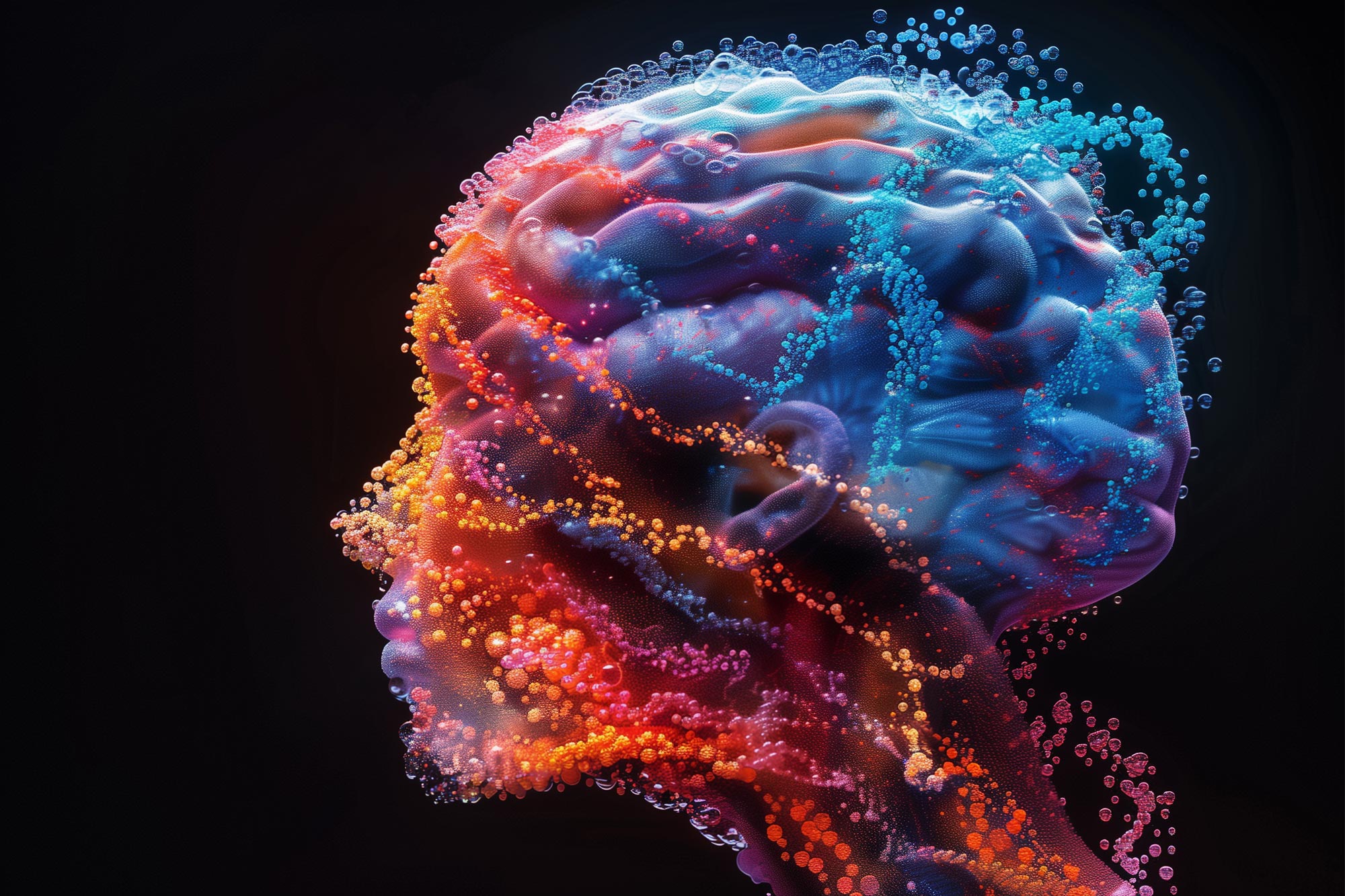
UCLA researchers have developed a detailed map of brain development, focusing on DNA modification in the hippocampus and prefrontal cortex to understand mental health origins.
This map is crucial for pinpointing the genetic underpinnings of neuropsychiatric conditions like schizophrenia, autism spectrum disorder.
Gene Regulation in Brain Development
A UCLA-led study has revealed unprecedented insights into how gene regulation evolves during human brain development, illustrating the critical role of the 3D structure of chromatin—comprising DNA and proteins. This groundbreaking research provides new perspectives on how early brain development influences lifelong mental health.
Published today (October 9) in Nature, the study was led by Dr. Chongyuan Luo at UCLA and Dr. Mercedes Paredes at UC San Francisco, in collaboration with researchers from the Salk Institute, UC San Diego, and Seoul National University. They produced the first-ever map of DNA modification in the hippocampus and prefrontal cortex—key areas of the brain essential for learning, memory, and emotional regulation. These regions are also commonly associated with disorders such as autism and schizophrenia.
Potential Impact on Neuropsychiatric Disorders
The researchers hope the data resource, which they’ve made publicly available through an online platform, will be a valuable tool scientists can use to connect genetic variants associated with these conditions to the genes, cells and developmental periods that are most sensitive to their effects.
“Neuropsychiatric disorders, even those emerging in adulthood, often stem from genetic factors disrupting early brain development,” said Luo, a member of the Eli and Edythe Broad Center of Regenerative Medicine and Stem Cell Research at UCLA. “Our map offers a baseline to compare against genetic studies of diseased-affected brains and pinpoint when and where molecular changes occur.”
Innovations in Epigenetic Research Techniques
To produce the map, the research team used a cutting-edge sequencing approach Luo developed and scaled with support from the UCLA Broad Stem Cell Research Center Flow Cytometry Core called single nucleus methyl-seq and chromatin conformation capture, or snm3C-seq.
This technique enables researchers to simultaneously analyze two epigenetic mechanisms that control gene expression on a single-cell basis: chemical changes to DNA known as methylation and chromatin conformation, the 3D structure of how chromosomes are tightly folded to fit into nuclei.
Figuring out how these two regulatory elements act on genes that affect development is a critical step to understanding how errors in this process lead to neuropsychiatric conditions.
Linking Genetic Variants to Gene Regulation
“The vast majority of disease-causing variants we’ve identified are located between genes on the chromosome, so it’s challenging to know which genes they regulate,” said Luo, who is also an assistant professor of human genetics at the David Geffen School of Medicine at UCLA. “By studying how DNA is folded inside of individual cells, we can see where genetic variants connect with certain genes, which can help us pinpoint the cell types and developmental periods most vulnerable to these conditions.”
For example, autism spectrum disorder is commonly diagnosed in children aged 2 and over. However, if researchers can gain a better understanding of the genetic risk of autism and how it impacts development, they can potentially develop intervention strategies to help alleviate the symptoms of autism, like communication challenges, while the brain is developing.
Insights From a Broad Developmental Spectrum
The research team analyzed more than 53,000 brain cells from donors spanning mid-gestation to adulthood, revealing significant changes in gene regulation during critical developmental windows. In capturing such a broad spectrum of developmental phases, the researchers were able to assemble a remarkably comprehensive picture of the massive genetic rewiring that occurs during critical timepoints in human brain development.
One of the most dynamic periods comes around the midpoint of pregnancy. At this time, neural stem cells called radial glia, which have produced billions of neurons during the first and second trimesters, stop producing neurons and begin generating glial cells, which support and protect neurons. At the same time, the newly formed neurons mature, gaining the characteristics they need to fulfill specific functions and forming the synaptic connections that enable them to communicate.
This stage of development has been overlooked in previous studies, the researchers say, due to the limited availability of brain tissue from this period.
“Our study tackles the complex relationship between DNA organization and gene expression in developing human brain at ages typically not interrogated: the third trimester and infancy,” said Paredes, an associate professor of neurology at UCSF. “The connections we’ve identified across different cell types through this work could untangle the current challenges in identifying meaningful genetic risk factors for neurodevelopmental and neuropsychiatric conditions.”
Implications for Brain Development Models
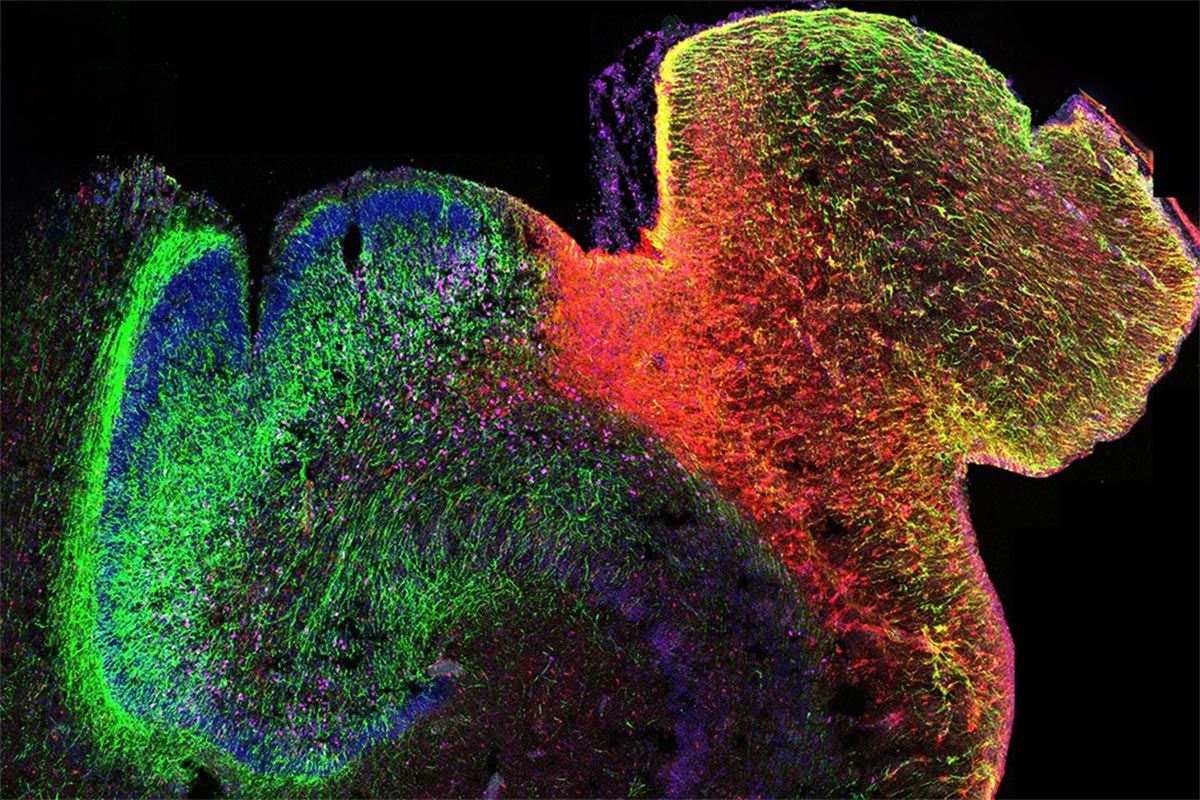
The findings also have implications for improving stem cell-based models, such as brain organoids, which are used to study brain development and diseases. The new map offers a benchmark for scientists to ensure these models accurately replicate human brain development.
“Growing a healthy human brain is a tremendous feat,” says co-author Dr. Joseph Ecker, professor at the Salk Institute and Howard Hughes Medical Institute investigator. “Our study establishes an important database that captures key epigenetic changes that occur during brain development, in turn bringing us closer to understanding where and when failures arise in this development that can lead to neurodevelopmental disorders like autism.”
Reference: “Temporally distinct 3D multi-omic dynamics in the developing human brain” by Matthew G. Heffel, Jingtian Zhou, Yi Zhang, Dong-Sung Lee, Kangcheng Hou, Oier Pastor-Alonso, Kevin D. Abuhanna, Joseph Galasso, Colin Kern, Chu-Yi Tai, Carlos Garcia-Padilla, Mahsa Nafisi, Yi Zhou, Anthony D. Schmitt, Terence Li, Maximilian Haeussler, Brittney Wick, Martin Jinye Zhang, Fangming Xie, Ryan S. Ziffra, Eran A. Mukamel, Eleazar Eskin, Tomasz J. Nowakowski, Jesse R. Dixon, Bogdan Pasaniuc, Joseph R. Ecker, Quan Zhu, Bogdan Bintu, Mercedes F. Paredes and Chongyuan Luo, 9 October 2024, Nature.
DOI: 10.1038/s41586-024-08030-7
The group’s efforts were supported by the National Institutes of Health’s BRAIN Initiative Cell Atlas Network, or BICAN, which aims to build reference brain cell atlases that will provide a foundational framework for studying brain function and disorders.
Funding was also provided by the National Institute of Mental Health, the National Human Genome Research Institute, the Simons Foundation, the Roberta and Oscar Gregory Endowment in Stroke and Brain Research, the Chan Zuckerberg Biohub, the National Research Foundation of Korea, the Shurl and Kay Curci Foundation, National Institute on Drug Abuse and the California Institute for Regenerative Medicine.
Additional authors are: Jingtian Zhou, Yi Zhang, Dong-Sung Lee, Kangcheng Hou, Oier Pastor Alonso, Kevin D Abuhanna, Joseph Galasso, Colin Kern, Chu-Yi Tai, Carlos Garcia Padilla, Mahsa Nafisi, Yi Zhou, Anthony D. Schmitt, Terence Li, Maximilian Haeussler, Brittney Wick, Martin Jinye Zhang, Fangming Xie, Ryan S. Ziffra, Eran A. Mukamel, Eleazar Eskin, Tomasz J. Nowakowski, Jesse R. Dixon, Bogdan Pasaniuc, Joseph R. Ecker, Quan Zhu, and Bogdan Bintu.
Never miss a breakthrough: Join the SciTechDaily newsletter.
Follow us on Google and Google News.