
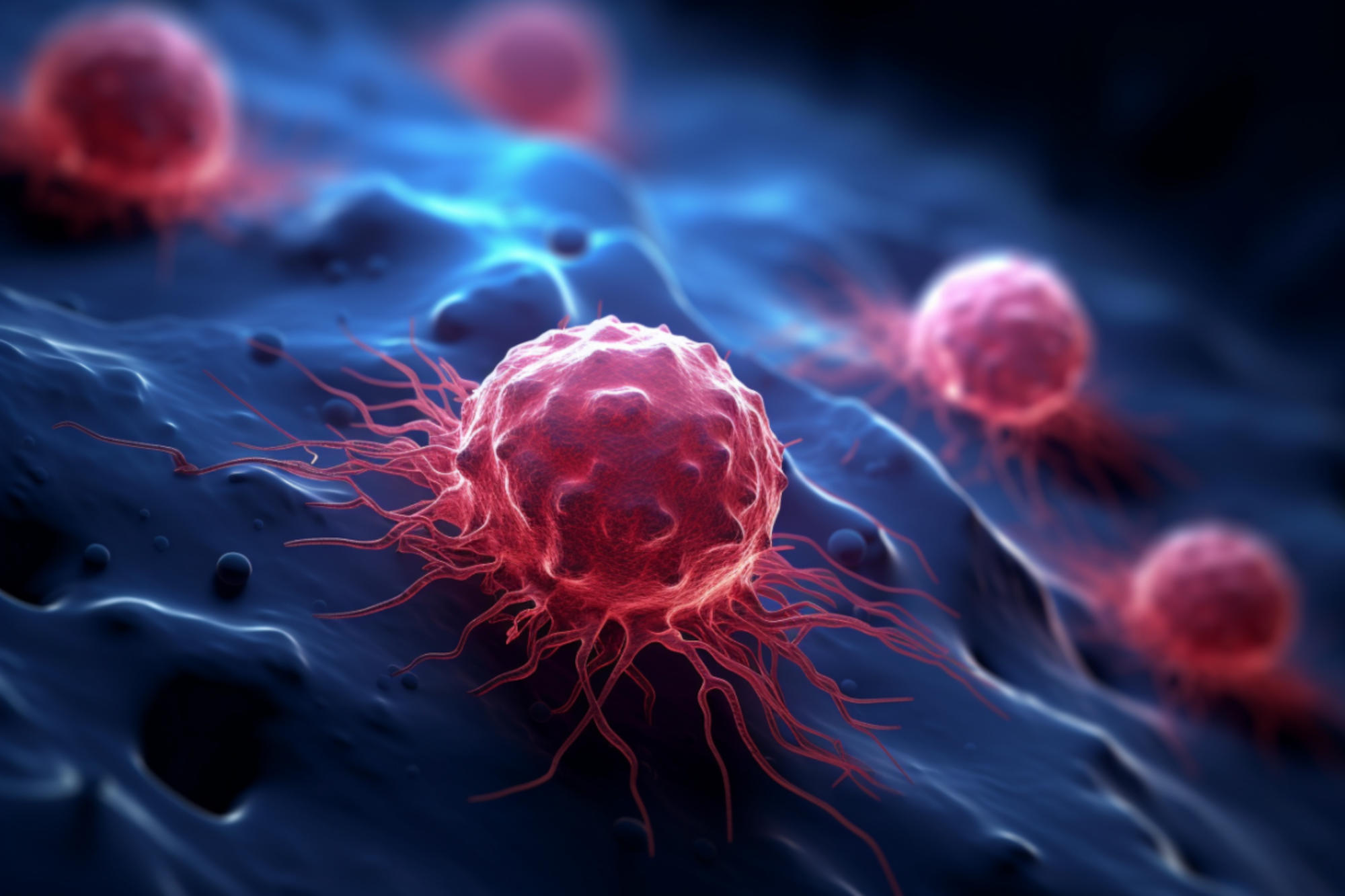
New research explores the adaptation strategies of polyploid plants, offering insights for cancer treatment and enhancing crop resilience against environmental challenges.
Whole genome duplication (WGD) occurs across all kingdoms of life. While it is most prevalent in plants, it also takes place in certain highly aggressive cancers. Following WGD, a cell acquires additional sets of genomes and is referred to as polyploid.
Most of our major crops are also polyploid, including, wheat, apples, bananas, oats, strawberries, sugar, and brassicas like broccoli and cauliflower. Polyploidy also occurs in some of the most aggressive gliomas (a brain cancer) and is associated with cancer progression. In general, polyploidy has been associated with robustness (as in crops) and adaptation to the environment (as in cancers that metastasize).
Because polyploids have more genomes to manage, the doubling of these genomes can be a weakness, so it is important to understand what factors stabilize young polyploids and how genome-doubled populations evolve.
In this new study, published in Cell Reports, experts from the University of Nottingham’s School of Life Sciences look at how three successfully polyploid plant species evolved to manage the extra DNA and whether they each did this differently or all the same way.
Research Insights from Polyploids
Professor Levi Yant, who led the study said: “Understanding the range of issues that face polyploids may help us to understand why some succeed while others don’t. We see that successful polyploids overcome specific issues with DNA management and we focus on exactly what their ‘natural solutions’ are.
“In our study, we looked at three instances where species have adapted to ‘polyploid life’ and not only survived, but even thrived. Then we looked at whether they used the same molecular solutions to survive. Surprisingly, they did not.”
The researchers found that the clearest signal of rapid adaptation to the polyploid state came from the CENP-E molecule, which is an exact molecule that other groups recently found to be an Achilles heel for polypoid cancers, and is a promising therapeutic target to kill the cancers. The next clearest signal came from ‘meiosis genes’, which Professor Yant notes are turned on in many cancers, whereas they are turned off in nearly all normal cells.
Implications for Cancer Research and Agriculture
“We discovered signals of rapid adaptation to the WGD state in the same molecular networks, and in the case of CENP-E, the exact molecule that is specifically important to polyploid cancers,” continues Professor Yant.
“This WGD gives cancer a short-term advantage over most therapies, but targeting that exact molecule, CENP-E, specifically kills the polyploid cancer. This is a striking example of evolutionary repetition (or convergence) from completely different directions, but to the same adaptive hurdle. We can now take this model that adapts well to polyploidy and that can inform our thinking about certain types of cancer.”
The findings of the study could impact in better understanding of how certain polyploid cancers, such as gliomas (brain cancers) are able to use polyploidy to progress, and what molecules can be targeted as part of any therapy to ‘kill’ the cancer cells.
More broadly, the study is important evidence that shows that mining evolutionary biology for these natural solutions can inform future therapies. Finally, the study also illustrates different ways in the future that we can better engineer our many polyploid crops to be more resilient to certain cataclysmic events – such as climate change.
Reference: “Kinetochore and ionomic adaptation to whole-genome duplication in Cochlearia shows evolutionary convergence in three autopolyploids” by Sian M. Bray, Tuomas Hämälä, Min Zhou, Silvia Busoms, Sina Fischer, Stuart D. Desjardins, Terezie Mandáková, Chris Moore, Thomas C. Mathers, Laura Cowan, Patrick Monnahan, Jordan Koch, Eva M. Wolf, Martin A. Lysak, Filip Kolar, James D. Higgins, Marcus A. Koch and Levi Yant, 7 August 2024, Cell Reports.
DOI: 10.1016/j.celrep.2024.114576
The study was funded by the European Research Council, BBSRC, and the Leverhulme Trust.
Never miss a breakthrough: Join the SciTechDaily newsletter.
Follow us on Google and Google News.