
Close Menu
    Facebook X (Twitter) Instagram
    SciTechDaily
    • Biology
    • Chemistry
    • Earth
    • Health
    • Physics
    • Science
    • Space
    • Technology
    Facebook X (Twitter) Pinterest YouTube RSS
    SciTechDaily
    Home»Biology»Plant Protein Curbs the Reproduction of Colon Cancer Tumor Cells
    Biology

    Plant Protein Curbs the Reproduction of Colon Cancer Tumor Cells

    By Elena Lázaro, University of CordobaApril 26, 2018No Comments2 Mins Read
    Facebook Twitter Pinterest Telegram LinkedIn WhatsApp Email Reddit
    Share
    Facebook Twitter LinkedIn Pinterest Telegram Email Reddit
    Plant Protein Curbs Reproduction of Colon Cancer Tumor Cells
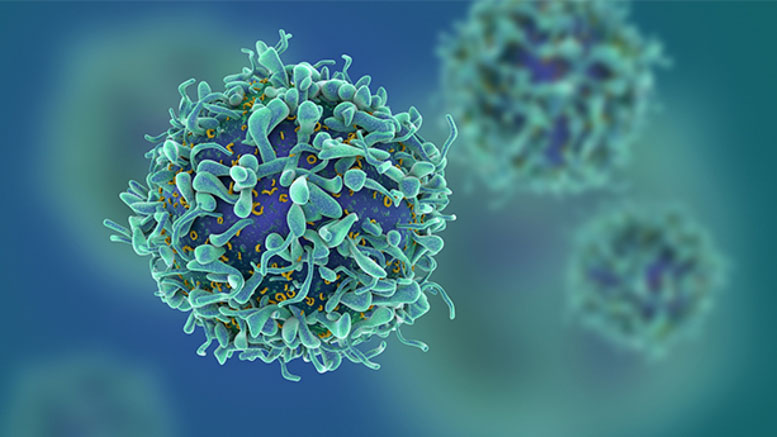
    Plants offer a promising approach in controlling tumor growth by utilizing the activity of their enzyme to reprogram human cancer DNA.

    Plants have provided a new avenue in curbing tumor growth. On this occasion, it doesn’t involve miracle species or the like, but rather the results obtained by the University of Cordoba BIO301 research team called “Epigenetics and DNA Repair.” This research team is affiliated with the Maimonides Institute of Biomedical Research and is led by Genetics Professor María Teresa Roldán Arjona.

    This team has been able to stably express a plant protein in cancer cells, altering the expression of genes that cause tumor growth. This project, published in the journal Epigenetics, was headed by researchers Teresa Morales Ruiz and Maria Victoria García Ortiz, who have done laboratory work with colon tumor cells and used genomic analyses on a large scale.

    According to the authors, this is “a protein which could be used as a tool to erase molecular tags that silence genes. In this way, tumor behavior in cancer cells could be partly reverted.” These plant enzymes are the first to act on a biochemical pathway that directly eliminates these tags in the DNA that turns off or silences the genes. The final result is that the DNA is free from those marks. In humans, the same process has not been described, though similar pathways exist. These pathways include more reactions and the marks are erased indirectly. Hence, the key point of this project was “using the activity of these plant enzymes so as to reprogram human cancer DNA.”

    The results obtained by the University of Cordoba research team open up new options to study gene expression not only in pathologies such as cancer but also in normal situations.

    Reference: “DNA methylation reprogramming of human cancer cells by expression of a plant 5-methylcytosine DNA glycosylase” by Teresa Morales-Ruiz, María Victoria García-Ortiz, Iván Devesa-Guerra, Laura Raya-Ruiz, Juan R. Tejedor, Gustavo F. Bayón, Marta I. Sierra, Mario F. Fraga, Rafael R. Ariza and Teresa Roldán-Arjona, 7 February 2018, Epigenetics.
    DOI: 10.1080/15592294.2017.1414128

    Never miss a breakthrough: Join the SciTechDaily newsletter.
    Follow us on Google and Google News.

    Cancer Disease Epigenetics Plants Popular University of Cordoba
    Share. Facebook Twitter Pinterest LinkedIn Email Reddit

    Related Articles

    Scientists Discover Chemical That Makes Naked Mole Rats Cancer-Proof

    Biologists Develop Bioelectric Signals That Can Detect Early Cancer

    BubR1 Protein Could Fight Cancer & Aging

    Blind Mole Rats May Hold Cellular Clues to Effective Treatments for Cancer

    Magnets Used to Eradicate Cancer Cells

    High Pyruvate Kinase Activity May Suppress Tumor Growth

    How Chronic Inflammation of Organs Can Become Cancerous

    Cancer Cells May Grow More Easily than Thought

    Researchers Use Bioinformatics and Epigenetics to Aid Cancer Research

    Leave A Reply Cancel Reply

    • Facebook
    • Twitter
    • Pinterest
    • YouTube

    Don't Miss a Discovery

    Subscribe for the Latest in Science & Tech!

    Trending News

    Scientists May Have Found the Key to Jupiter and Saturn’s Moon Mystery

    Scientists Uncover Brain Changes That Link Pain to Depression

    Saunas May Do More Than Raise Body Temperature – They Activate Your Immune System

    Exercise in a Pill? Metformin Shows Surprising Effects in Cancer Patients

    Hidden Oceans of Magma Could Be Protecting Alien Life

    New Study Challenges Alzheimer’s Theories: It’s Not Just About Plaques

    Artificial Sweeteners May Harm Future Generations, Study Suggests

    Splashdown! NASA Artemis II Returns From Record-Breaking Moon Mission

    Follow SciTechDaily
    • Facebook
    • Twitter
    • YouTube
    • Pinterest
    • Newsletter
    • RSS
    SciTech News
    • Biology News
    • Chemistry News
    • Earth News
    • Health News
    • Physics News
    • Science News
    • Space News
    • Technology News
    Recent Posts
    • Hidden “Trade Winds” Inside Cells Could Explain Cancer Spread
    • Humans Owe Their Eyes to a Tiny One-Eyed “Cyclops”
    • Researchers Capture Quantum Interference in One of Nature’s Rarest Atoms
    • Ancient DNA Reveals Irish Goats Have a 3,000-Year-Old Lineage Still Alive Today
    • Historians Reveal Secrets of the Strange Hat Wars That Shook Early Modern England
    Copyright © 1998 - 2026 SciTechDaily. All Rights Reserved.
    • Science News
    • About
    • Contact
    • Editorial Board
    • Privacy Policy
    • Terms of Use

    Type above and press Enter to search. Press Esc to cancel.