
Close Menu
    Facebook X (Twitter) Instagram
    SciTechDaily
    • Biology
    • Chemistry
    • Earth
    • Health
    • Physics
    • Science
    • Space
    • Technology
    Facebook X (Twitter) Pinterest YouTube RSS
    SciTechDaily
    Home»Space»Unprecedented Find in Meteorite Challenges Astrophysical Models
    Space

    Unprecedented Find in Meteorite Challenges Astrophysical Models

    By Curtin UniversityApril 26, 2024No Comments3 Mins Read
    Facebook Twitter Pinterest Telegram LinkedIn WhatsApp Email Reddit
    Share
    Facebook Twitter LinkedIn Pinterest Telegram Email Reddit
    Supernova Meteorite Art
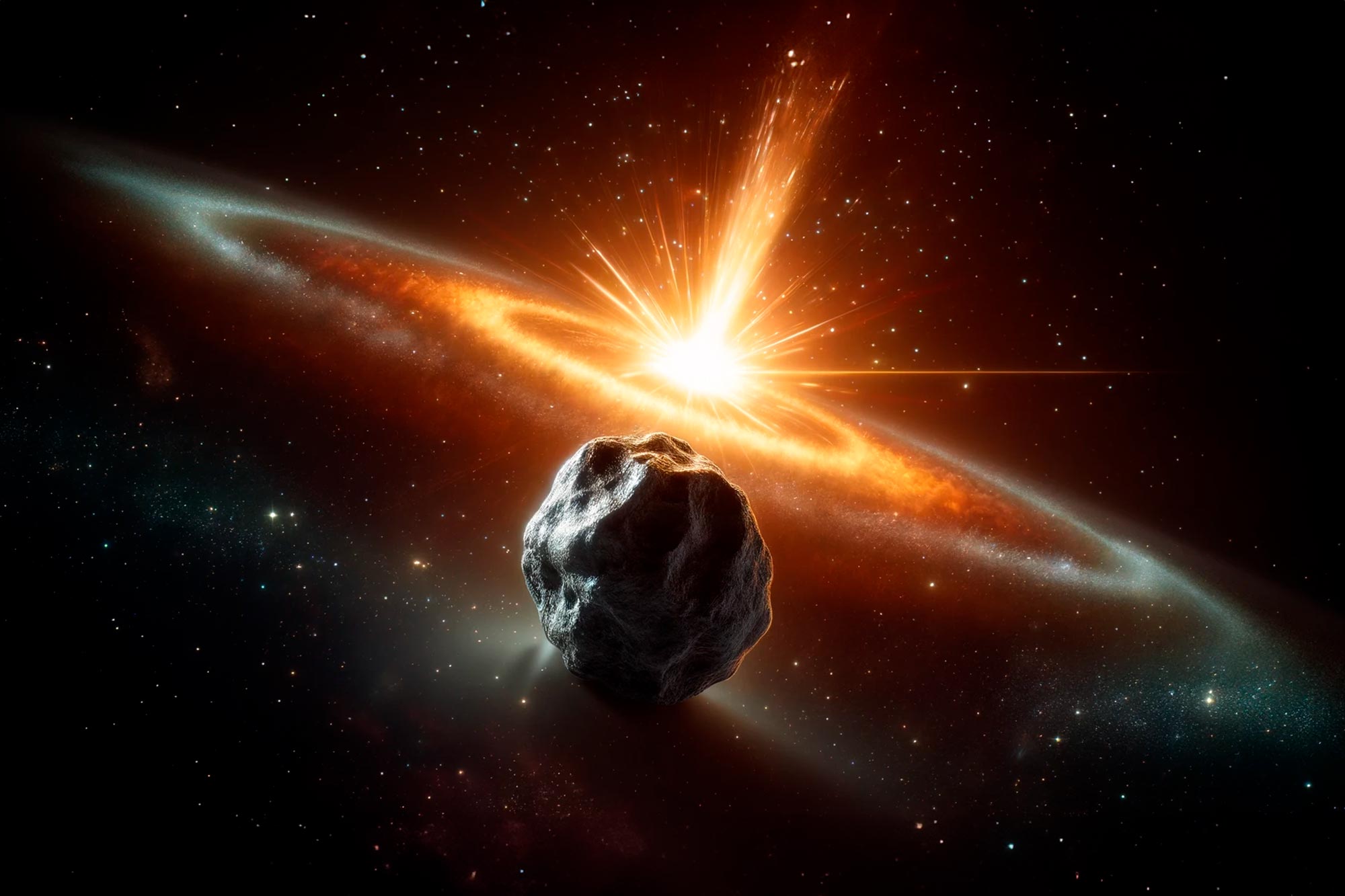
    Researchers have discovered a rare dust particle in a meteorite, formed by a star other than our sun. Using advanced atom probe tomography, they analyzed the particle’s unique magnesium isotopic ratio, revealing its origin from a newly identified type of hydrogen-burning supernova. This breakthrough provides deeper insights into cosmic events and the formation of stars. Credit: SciTechDaily.com

    Scientists have discovered a meteorite particle with an unprecedented magnesium isotopic ratio, indicating its origin from a hydrogen burning supernova.

    Research has discovered a rare dust particle trapped in an ancient extra-terrestrial meteorite that was formed by a star other than our sun.

    The discovery was made by lead author Dr. Nicole Nevill and colleagues during her PhD studies at Curtin University, now working at the Lunar and Planetary Science Institute in collaboration with NASA’s Johnson Space Center.

    Meteorites and Presolar Grains

    Meteorites are mostly made up of material that formed in our solar system and can also contain tiny particles that originate from stars born long before our sun.

    Clues that these particles, known as presolar grains, are relics from other stars are found by analyzing the different types of elements inside them.

    Innovative Analytical Techniques

    Dr. Nevill used a technique called atom probe tomography to analyze the particle and reconstruct the chemistry on an atomic scale, accessing the hidden information within.

    “These particles are like celestial time capsules, providing a snapshot into the life of their parent star,” Dr. Nevill said.

    “Material created in our solar system have predictable ratios of isotopes – variants of elements with different numbers of neutrons. The particle that we analyzed has a ratio of magnesium isotopes that is distinct from anything in our solar system.

    “The results were literally off the charts. The most extreme magnesium isotopic ratio from previous studies of presolar grains was about 1,200. The grain in our study has a value of 3,025, which is the highest ever discovered.

    “This exceptionally high isotopic ratio can only be explained by formation in a recently discovered type of star – a hydrogen burning supernova.”

    Breakthroughs in Astrophysics

    Co-author Dr. David Saxey, from the John de Laeter Centre at Curtin said the research is breaking new ground in how we understand the universe, pushing the boundaries of both analytical techniques and astrophysical models.

    “The atom probe has given us a whole level of detail that we haven’t been able to access in previous studies,” Dr. Saxey said. 

    “Hydrogen burning supernova is a type of star that has only been discovered recently, around the same time as we were analyzing the tiny dust particle. The use of the atom probe in this study, gives a new level of detail helping us understand how these stars formed.”

    Linking Lab Findings to Cosmic Phenomena

    Co-author Professor Phil Bland, from Curtin’s School of Earth and Planetary Sciences said new discoveries from studying rare particles in meteorites are enabling us to gain insights into cosmic events beyond our solar system.

    “It is simply amazing to be able to link atomic-scale measurements in the lab to a recently discovered type of star.”

    The research titled “Atomic-scale Element and Isotopic Investigation of 25Mg-rich Stardust from an H-burning Supernova” was published in the Astrophysical Journal.

    Reference: “Atomic-scale Element and Isotopic Investigation of 25Mg-rich Stardust from an H-burning Supernova” by N. D. Nevill, P. A. Bland, D. W. Saxey, W. D. A. Rickard, P. Guagliardo, N. E. Timms, L. V. Forman, L. Daly and S. M. Reddy, 28 March 2024, The Astrophysical Journal.
    DOI: 10.3847/1538-4357/ad2996

    Never miss a breakthrough: Join the SciTechDaily newsletter.
    Follow us on Google and Google News.

    Astronomy Astrophysics Curtin University Meteorites Popular Supernova
    Share. Facebook Twitter Pinterest LinkedIn Email Reddit

    Related Articles

    Astronomers Captured a Star’s Final Explosion in Stunning Detail

    Webb Telescope Captures the Final Moments of a Doomed Star Cloaked in Dust

    “Like Nothing Anyone Has Ever Seen Before” – Bizarre Supernova Stuns Scientists

    Scientists Think This Star Could Be the Next Supernova

    Rare Supernova Defies Textbooks and Reveals Inner Layers of a Dying Star

    Exploding Star Could Shed New Light on the Nature of Dark Energy

    12 Billion-Year Old Supernova Discovered by Astronomers

    Cloud of Hydrogen and Helium Plunging Toward the Galactic Center

    Astronomers Detect X-rays From the Remains of Supernova SN 1957D

    Leave A Reply Cancel Reply

    • Facebook
    • Twitter
    • Pinterest
    • YouTube

    Don't Miss a Discovery

    Subscribe for the Latest in Science & Tech!

    Trending News

    Popular Sugar-Free Sweetener Linked to Liver Disease, Study Warns

    What Is Hantavirus? The Deadly Disease Raising Alarm Worldwide

    Scientists Just Discovered How the Universe Builds Monster Black Holes

    Scientists Unveil New Treatment Strategy That Could Outsmart Cancer

    A Simple Vitamin May Hold the Key to Treating Rare Genetic Diseases

    Scientists Think the Real Fountain of Youth May Be Hiding in Your Gut

    Ravens Don’t Follow Wolves, They Predict Them

    This Common Knee Surgery May Be Doing More Harm Than Good

    Follow SciTechDaily
    • Facebook
    • Twitter
    • YouTube
    • Pinterest
    • Newsletter
    • RSS
    SciTech News
    • Biology News
    • Chemistry News
    • Earth News
    • Health News
    • Physics News
    • Science News
    • Space News
    • Technology News
    Recent Posts
    • Scientists Build a Living AI Device Using Real Brain Cells
    • Why Are So Many New Fathers Dying? Scientists Say the U.S. Has a Dangerous Blind Spot
    • Scientists Identify Simple Supplement That Greatly Reduces Alzheimer’s Damage
    • You May Have a Dangerous Type of Cholesterol Even if Your Tests Look Normal
    • Study Reveals Dangerous Flaw in AI Symptom Checkers
    Copyright © 1998 - 2026 SciTechDaily. All Rights Reserved.
    • Science News
    • About
    • Contact
    • Editorial Board
    • Privacy Policy
    • Terms of Use

    Type above and press Enter to search. Press Esc to cancel.