
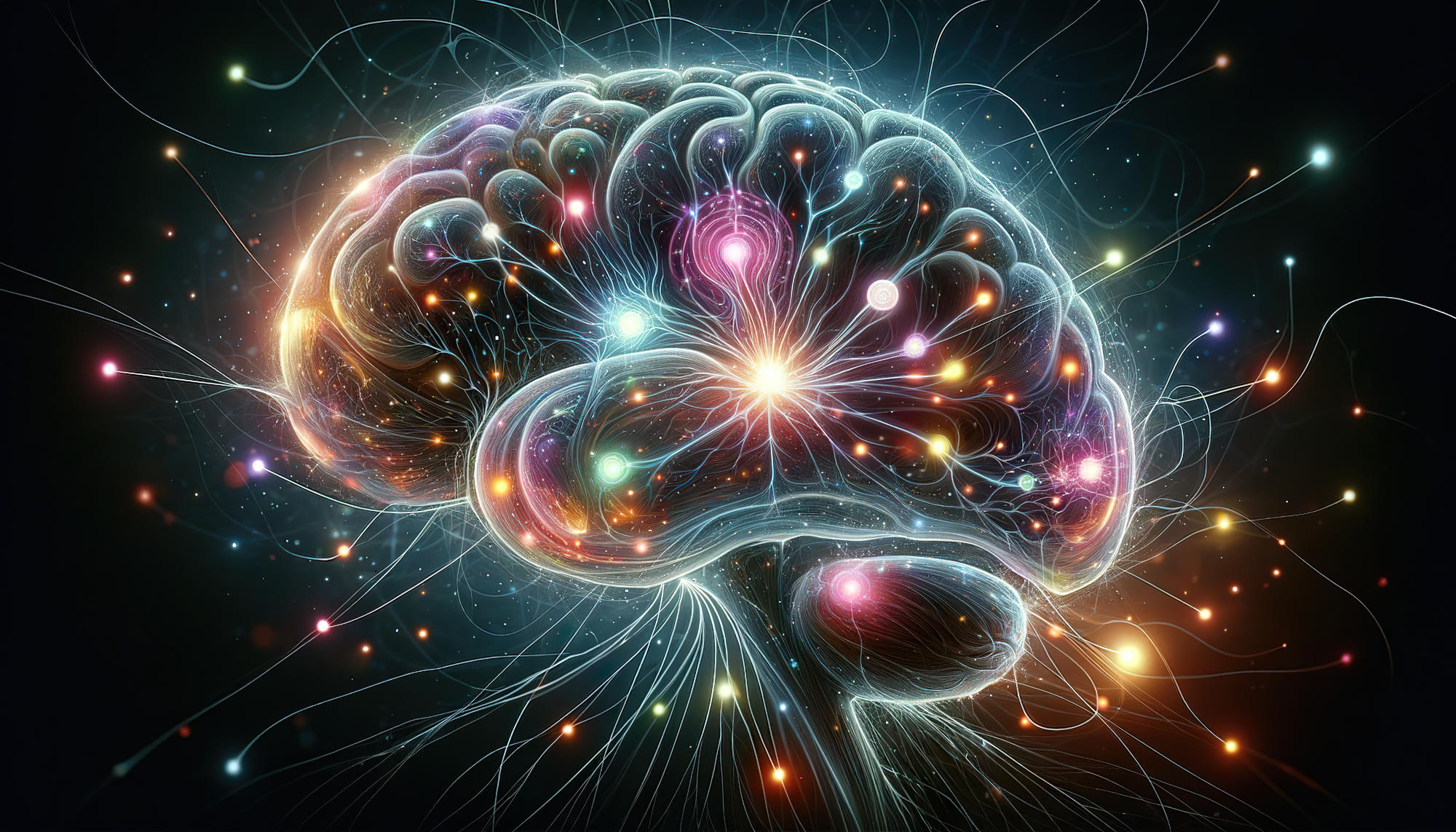
The mammalian brain is a web of densely interconnected neurons, yet one of the mysteries in neuroscience is how tools that capture relatively few components of brain activity have allowed scientists to predict behavior in mice. It is hard to believe that much of the brain’s complexity is irrelevant background noise.
“We wondered why such a redundant and metabolically costly scheme would have evolved,” says Rockefeller’s Alipasha Vaziri.
Now, a new study in Neuron—which presents an unprecedented simultaneous recording of the activity of one million neurons in mice—offers a surprising answer to this fundamental question: technological limitations have misled us, and there’s far more to the brain than once thought.
“Previous assumptions about the true dimensionality of the brain dynamics might have been due to the lack of ability to record from a sufficiently large number of neurons,” Vaziri says.
Using a custom technique developed in the Vaziri lab, the researchers discovered that more than 90 percent of the dimensions they observed in neural activity (independent components that one needs in order to describe the observed neuronal dynamics that contain signals that are different from noise) were not connected to any spontaneous movements or sensory inputs in the mice studied. Thousands of these dimensions, containing more than half of the cumulative neural activity of the mice, were spread across the brain in space and time, without forming distinct clusters in any one region and ranging in time from minutes to less than seconds.
The mouse was clearly using this thrum of pervasive, continuous activity for some purpose. But for what? “We still don’t know, but it’s definitely a signal that is distinct from noise,” Vaziri says. “It could offer a window into to a variety of complex internal states or neurocomputation.”
Neural flashes
Vaziri’s lab focuses on the development of optical technologies to advance neuroscience and allow observations of the simultaneous activity of many neurons distributed across the brain. In 2021 the lab developed light-beads microscopy, a two-photon imaging technique that uniquely enabled a 100-fold increase in the number of neurons that could be simultaneously recorded. Putting the technology to the test, the researchers recorded the activity of more than one million neurons across the entire cortex of the mouse brain for the first time while animals were observed by multiple cameras from different angles as they were engaged in spontaneous and uninstructed behaviors, such as running on a treadmill or grooming.
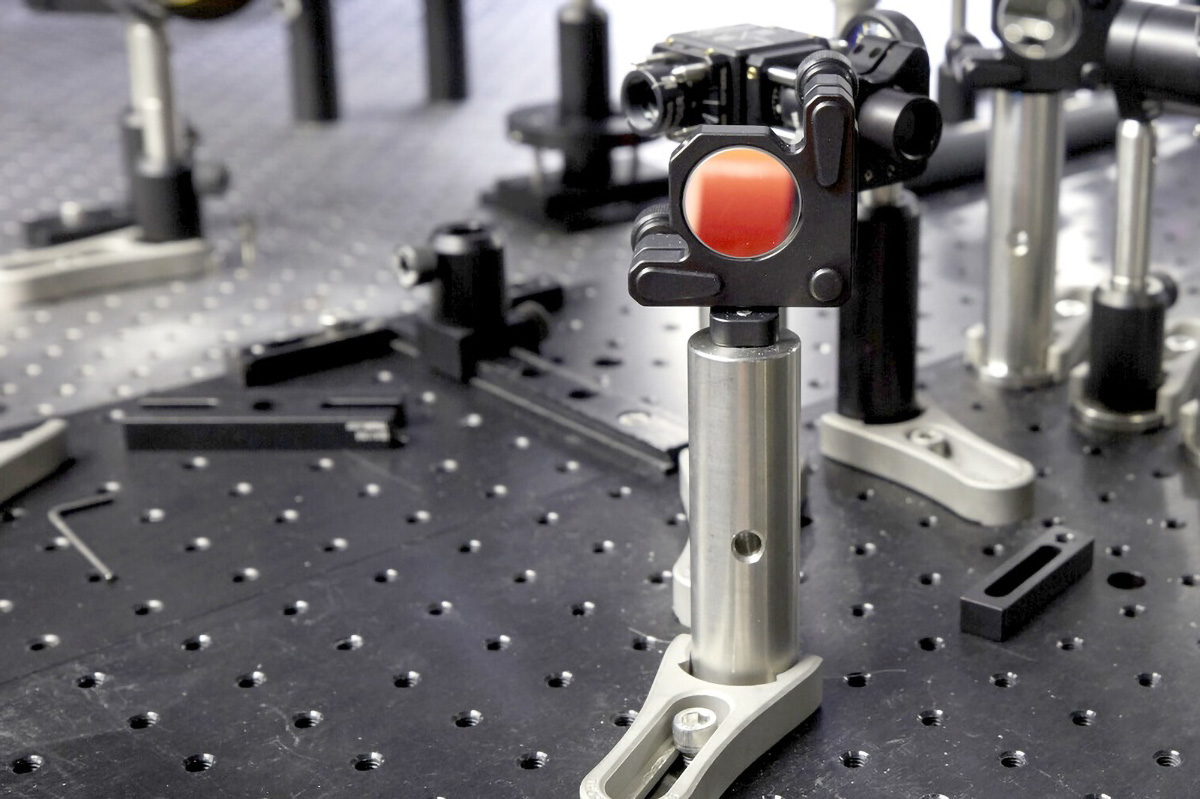
Having demonstrated the efficacy of the tool, the lab became interested in using it to address fundamental questions in neurobiology. “We had a tool that could allow us to make discoveries that other technologies could not,” Vaziri says. “So we tried to ask questions that only such a tool could answer. To wit: how much more information are we extracting as we keep recording from more and more neurons, and what does that information represent?”
To investigate, the researchers used LBM in combination with advanced data analysis, computational modeling, and machine learning techniques to study the neural activity of mice as they spontaneously moved and reacted to their environment.
The missing 90 percent
Neural activity linked to animal movements was known to be streamlined into a low-dimensional subspace, allowing previous techniques, which could record fewer neurons, to identify these connections. “However, it was only thanks to LBM’s capability that we could discover that more than 90 percent of the remaining dimensions contained reliable signals that were distinct from noise, not required for behavior, and not explained by environmental stimuli,” Vaziri says.
Unexpectedly, these neurons were also firing everywhere. “What are they doing? We don’t know,” Vaziri says. “They may underlie a brain-wide network of correlated neural fluctuations, perhaps related to some sort of internal state dynamics such as hunger or motivation.”
How this may apply to the human brain is still far from settled (“the human brain is an ocean compared to the pond of a mouse brain,” Vaziri says) but the findings strongly suggest that we are only beginning to understand the true complexity of the mammalian brain.
A new kind of observatory
LBM is one of the key instruments that will find a home in the Rockefeller Brain Observatory, a new initiative spearheaded by Vaziri to make pioneering, commercially unavailable instruments accessible to neuroscientists “that can do things that are otherwise impossible,” Vaziri says.
The facility is akin to an astronomical observatory, where visiting scientists will be able to conduct research on powerful instruments. “The idea is that people will be supported by staff as they conduct research using the microscopes in the center,” he says. “It’s something we want to open up to the community within Rockefeller but also to neuroscientists from around the world.”
Vaziri and his team are also helping researchers at several universities, including at Stanford University and UCL-London, replicate LBM technology in their own neuroscience labs. The data they’ve amassed from the current study is also available for analysis by other researchers.
They’re also hoping to increase the range of LBM’s applicability. “For example, we’d like to welcome research groups that work with different model systems beyond mice—insects, nonhuman primates, and so on—so we need to have versions of LBM that are more versatile, robust, and user friendly,” Vaziri says.
Reference: “Simultaneous, cortex-wide dynamics of up to 1 million neurons reveal unbounded scaling of dimensionality with neuron number” by Jason Manley, Sihao Lu, Kevin Barber, Jeffrey Demas, Hyewon Kim, David Meyer, Francisca Martínez Traub and Alipasha Vaziri, 6 March 2024, Neuron.
DOI: 10.1016/j.neuron.2024.02.011
Never miss a breakthrough: Join the SciTechDaily newsletter.
Follow us on Google and Google News.