
Close Menu
    Facebook X (Twitter) Instagram
    SciTechDaily
    • Biology
    • Chemistry
    • Earth
    • Health
    • Physics
    • Science
    • Space
    • Technology
    Facebook X (Twitter) Pinterest YouTube RSS
    SciTechDaily
    Home»Space»More Than Meets the Eye: Hubble Misses Vast Amounts of Energy
    Space

    More Than Meets the Eye: Hubble Misses Vast Amounts of Energy

    By European Space AgencySeptember 26, 2021No Comments2 Mins Read
    Facebook Twitter Pinterest Telegram LinkedIn WhatsApp Email Reddit
    Share
    Facebook Twitter LinkedIn Pinterest Telegram Email Reddit
    NGC 5728
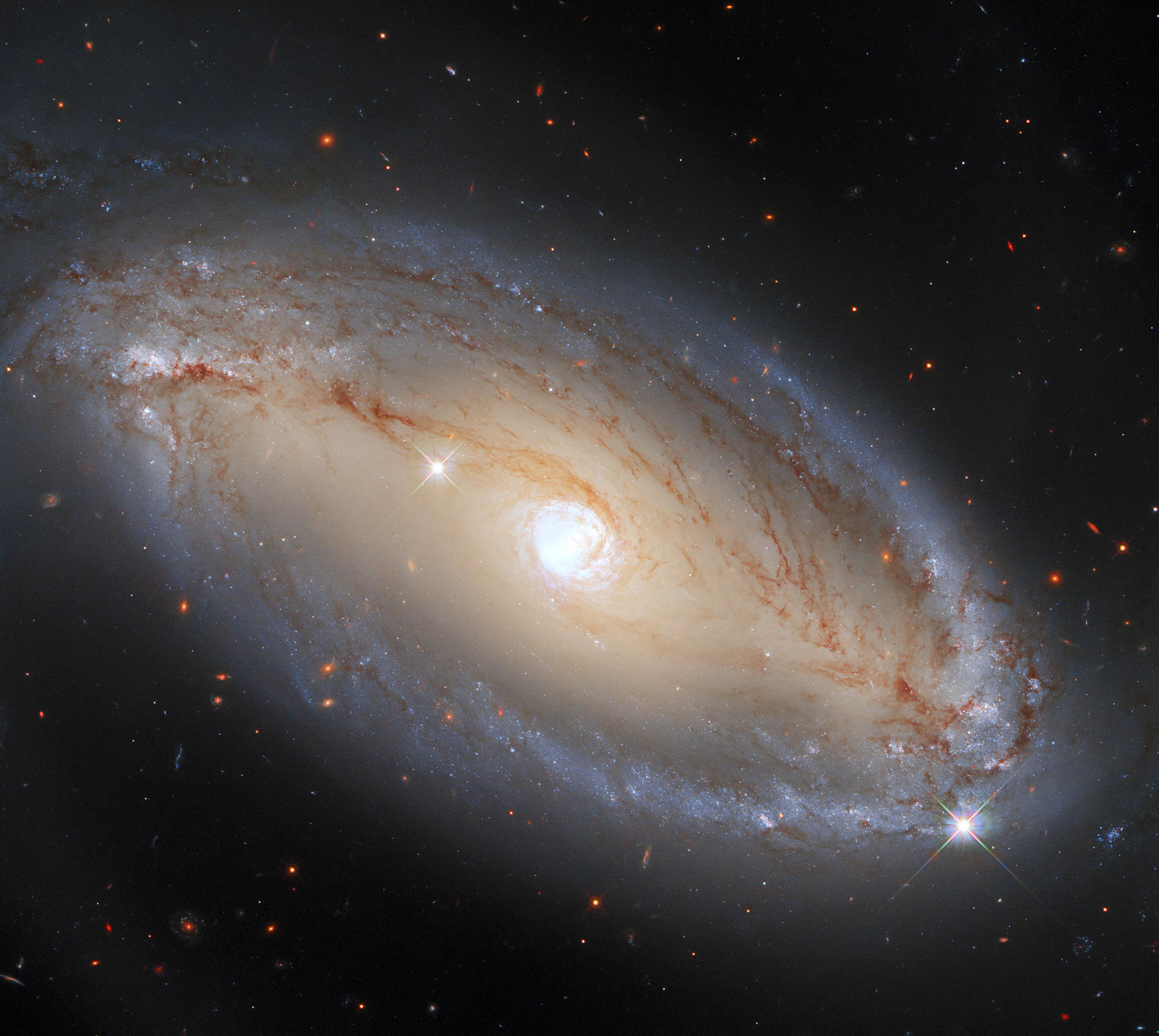
    NGC 5728 is a spiral galaxy around 130 million light-years from Earth. Credit: ESA/Hubble, A. Riess et al., J. Greene

    NGC 5728 is a seemingly normal spiral galaxy hiding an incredibly active core. As a Seyfert galaxy, it hosts an active galactic nucleus that radiates energy, much of it unseen in Hubble’s visible and infrared range.

    Meet NGC 5728, a spiral galaxy around 130 million light-years from Earth. This image was captured using Hubble’s Wide Field Camera 3 (WFC3), which is extremely sensitive to visible and infrared light. Therefore, this image beautifully captures the regions of NGC 5728 that are emitting visible and infrared light. However, there are many other types of light that galaxies such as NGC 5728 can emit, which WFC3 cannot see.

    In this image, NCG 5728 appears to be an elegant, luminous, barred spiral galaxy. What this image does not show, however, is that NGC 5728 is also a monumentally energetic type of galaxy, known as a Seyfert galaxy.

    This extremely energetic class of galaxies are powered by their active cores, which are known as active galactic nuclei (AGNs). There are many different types of AGNs, and only some of them power Seyfert galaxies.

    NGC 5728, like all Seyfert galaxies, is distinguished from other galaxies with AGNs because the galaxy itself can be seen clearly. Other types of AGNs, such as quasars, emit so much radiation that it is almost impossible to observe the galaxy that houses them.

    As this image shows, NGC 5728 is clearly observable, and at optical and infrared wavelengths it looks quite normal. It is fascinating to know that the galaxy’s center is emitting vast amounts of light in parts of the electromagnetic spectrum that WFC3 just isn’t sensitive to!

    Just to complicate things, the AGN at NGC 5728’s core might actually be emitting some visible and infrared light — but it may be blocked by the dust surrounding the galaxy’s core.

    Never miss a breakthrough: Join the SciTechDaily newsletter.
    Follow us on Google and Google News.

    Astronomy European Space Agency Hubble Space Telescope NASA
    Share. Facebook Twitter Pinterest LinkedIn Email Reddit

    Related Articles

    Hubble’s Newest Discovery Isn’t a Star, It’s a Window Into the Dark Universe

    This Nearby Galaxy Shows How Frozen Clouds Ignite Into Stars

    This Chaotic Spiral Galaxy Is Still Recovering From a Cosmic Collision

    This Strange Spiral Galaxy Is Hiding a Massive Black Hole

    Hubble Zooms In on a Galaxy That Maps the Universe’s Expansion

    Hubble Captures a Dazzling Spiral Galaxy Alive With Birth and Destruction

    Hubble Spots a Glowing “Ring of Fire” in a Distant Spiral Galaxy

    Dust, Light & Ancient Collisions: The Sombrero Galaxy Like You’ve Never Seen It

    Star Formation in Motion: Hubble Reveals Spiraling Stars and Sculpted Nebulae

    Leave A Reply Cancel Reply

    • Facebook
    • Twitter
    • Pinterest
    • YouTube

    Don't Miss a Discovery

    Subscribe for the Latest in Science & Tech!

    Trending News

    This Copper Drug Clears Alzheimer’s Brain Toxins and Boosts Memory

    Adults Over 65 Lost Massive Amounts of Weight With Ozempic

    How Flocking Birds “Defy” One of Physics’ Most Fundamental Laws

    Physicists Create a New Kind of Schrödinger’s Cat State From Exotic Quantum Building Blocks

    Your Diet Could Be Missing the Key Ingredient for Heart Protection

    Researchers Warn Widely Prescribed Blood Pressure Drugs Could Be Harming Diabetic Kidneys

    James Webb Spots Something Strange Between Day and Night on an Alien Planet

    How Ancient People Moved a 6-Ton Stone 700 Kilometers to Stonehenge

    Follow SciTechDaily
    • Facebook
    • Twitter
    • YouTube
    • Pinterest
    • Newsletter
    • RSS
    SciTech News
    • Biology News
    • Chemistry News
    • Earth News
    • Health News
    • Physics News
    • Science News
    • Space News
    • Technology News
    Recent Posts
    • Could Vitamin C Be the Secret to Keeping Your Brain Younger?
    • The Surprising Fix for Robot Traffic Jams
    • Near Absolute Zero, This Transistor Starts Acting Like a Brain Cell
    • Beyond DNA: Scientists Discover Inheritance That Breaks the Rules of Genetics
    • A Surprising Discovery Challenges What Scientists Thought DNA Methylation Was For
    Copyright © 1998 - 2026 SciTechDaily. All Rights Reserved.
    • Science News
    • About
    • Contact
    • Editorial Board
    • Privacy Policy
    • Terms of Use

    Type above and press Enter to search. Press Esc to cancel.