

One of the fundamental and timeless questions of life concerns the mechanics of its inception. Take human development, for example: how do individual cells come together to form complex structures like skin, muscles, bones, or even a brain, a finger, or a spine?
Although the answers to such questions remain unknown, one line of scientific inquiry lies in understanding gastrulation — the stage at which embryo cells develop from a single layer to a multidimensional structure with a main body axis. In humans, gastrulation happens around 14 days after conception.
It’s not possible to study human embryos at this stage, so researchers at the University of California San Diego, the University of Dundee (UK), and Harvard University were able to study gastrulation in chick embryos, which have many similarities to human embryos at this stage.
This research was conducted through what UC San Diego Assistant Professor of Physics Mattia Serra calls an ideal loop: an interdisciplinary, back-and-forth combination of theoretical and experimental science. Mattia is a theorist interested in finding emergent patterns in complex biophysical systems.
Development of Predictive Mathematical Models
Here, he and his team built a mathematical model based on input from the University of Dundee biologists. The model was able to accurately predict the gastrulation flows — the motion of tens of thousands of cells in the entire chick embryo — observed under a microscope. This is the first time a self-organizing mathematical model has been able to reproduce these flows in chick embryos.
The biologists then wanted to see if the model could not just replicate what they knew experimentally to be true, but also predict what might happen under different conditions. Serra’s team “perturbed” the model — in other words, changing the initial conditions or the present parameters.
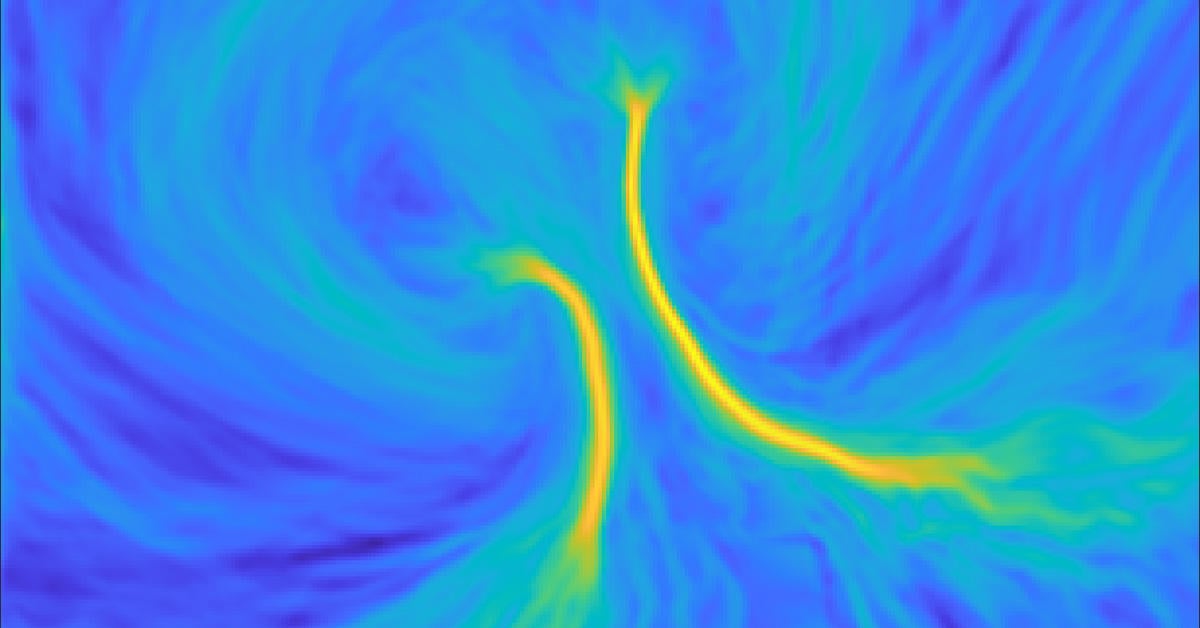
The results were surprising: the model generated cellular flows that were not observed naturally in the chick, but were observed in two other vertebrate species — the frog and fish.
To ensure these results were not a mathematical fantasy of the model, biology collaborators mimicked the exact perturbations from the model in the lab on the chick embryo. Strikingly, these manipulated chick embryos also showed gastrulation flows that are naturally observed in fish and frogs.
Implications and Future Research
These findings, published in Science Advances, suggest that the same physical principles behind multicellular self-organization may have evolved across vertebrate species.
“Fish, frogs, and chicks all live in different environments, so over time, the evolutionary pressure may have changed the parameters and the initial conditions of embryo development,” stated Serra. “But some of the self-organizing core principles, at least in this early stage of gastrulation, may be the same in all three.”
Serra and his collaborators are now studying other mechanisms that give rise to embryo-scale self-organizing patterns. They hope this research could advance biomaterials design and regenerative medicine to help humans live longer, healthier lives.
“The human body is the most complex dynamical system in existence,” he stated. “There are so many interesting biological, physical, and mathematical questions about our bodies — it’s beautiful to contemplate. There is no end to the discoveries we can make.”
Reference: “A mechanochemical model recapitulates distinct vertebrate gastrulation modes” by Mattia Serra, Guillermo Serrano Nájera, Manli Chuai, Alex M. Plum, Sreejith Santhosh, Vamsi Spandan, Cornelis J. Weijer and L. Mahadevan, 6 December 2023, Science Advances.
DOI: 10.1126/sciadv.adh8152
Never miss a breakthrough: Join the SciTechDaily newsletter.
Follow us on Google and Google News.