
Visual marker in petunia flowers sheds light on a little-known process.
A research team led by Purdue University has begun translating the intricate molecular language of petunias. The grammar and vocabulary of this language are deeply concealed within the countless proteins and other compounds that populate the cells of flowers.
Being rooted to the ground, plants can’t run away from insects, pathogens, or other threats to their survival. But plant scientists have long known that they do send warnings to each other via scent chemicals called volatile organic compounds.
“They use volatiles because they can’t talk,” said Natalia Dudareva, Distinguished Professor of Biochemistry and Horticulture and Landscape Architecture at Purdue. “Plants inform neighboring plants about pathogen attacks. It looks almost like immunization. Under normal conditions, you don’t see any changes in the receiver plant. But as soon as a receiver plant is infected, it responds much faster. It’s prepared for response.”
Plant scientists have long known about this immunization-like priming, but until a few years ago, they had no way to study the process. They needed a marker showing that the plants had detected the volatile compounds.
New Discoveries in Plant Signaling
Dudareva and 13 co-authors describe new details of the detection process in a paper recently published in the journal Science. The team includes researchers from Purdue, Université Jean Monnet Saint-Etienne in France, and the University of California-Davis.
Scientists know little about plant receptors for volatiles. Mammals and insects have them, too, but the way they perceive volatiles is too different to help researchers study the process in plants, Dudareva said.
A research team led by Purdue University scientists has documented new details about how petunias use volatile organic compounds to communicate.
The Role of Volatiles in Plant Protection
In 2019, in the journal Nature Chemical Biology, Dudareva and her associates published their discovery of a new physiological process, “Natural fumigation as a mechanism for volatile transport between flower organs.” The study described how a plant’s floral tubes produce volatile compounds to sterilize their stigma, the part of the pistil that collects pollen, to protect against attack by pathogens.
“There are a lot of sugars on the stigma, especially in petunias. It means that bacteria will grow very nicely without these volatiles present,” Dudareva said. “But if the stigma does not receive tube-produced volatiles, it’s also smaller. This was interorgan communication. Now we had a good marker — stigma size — to study this communication process.”
Measurements made from photographs showed statistical differences in the stigma size upon exposure to volatiles, said the Science study’s lead author, Shannon Stirling, a Ph.D. student in horticulture and landscape architecture at Purdue. “You can see that this is a consistent trend,” she said. “Once you’ve looked at enough stigmas, you can see by eye that there is a slight difference in size.”
A Breakthrough in Understanding Plant Responses
Combined with the genetic manipulation of the potential proteins involved, the work surprisingly revealed that a karrikin-like signaling pathway played a key role in petunia cellular signaling.
“Karrikins aren’t produced by plants,” Stirling said. “They’re produced when plants burn, and our plants have never been exposed to smoke or fire.”
The team also documented the importance of the karrikin-like pathway in the detection of volatile sesquiterpenes. Many plants use sesquiterpenes to communicate with other plants, among other functions.
Surprisingly, the identified karrikin receptor showed the ability to selectively perceive signaling from one type of sesquiterpene compound but not its mirror image, a trait called “stereospecificity.” The receptor appears to be highly selective to the compound, said study co-author Matthew Bergman, a postdoctoral researcher in biochemistry at Purdue.
“The plant produces many different volatile compounds and is exposed to plenty of others,” Bergman said. “It’s quite remarkable how selective and specific this receptor is exclusively for this signal being sent from the tubes. Such specificity ensures that no other volatile signals are getting by. There’s no false signaling.”
Methodological Challenges and Innovations
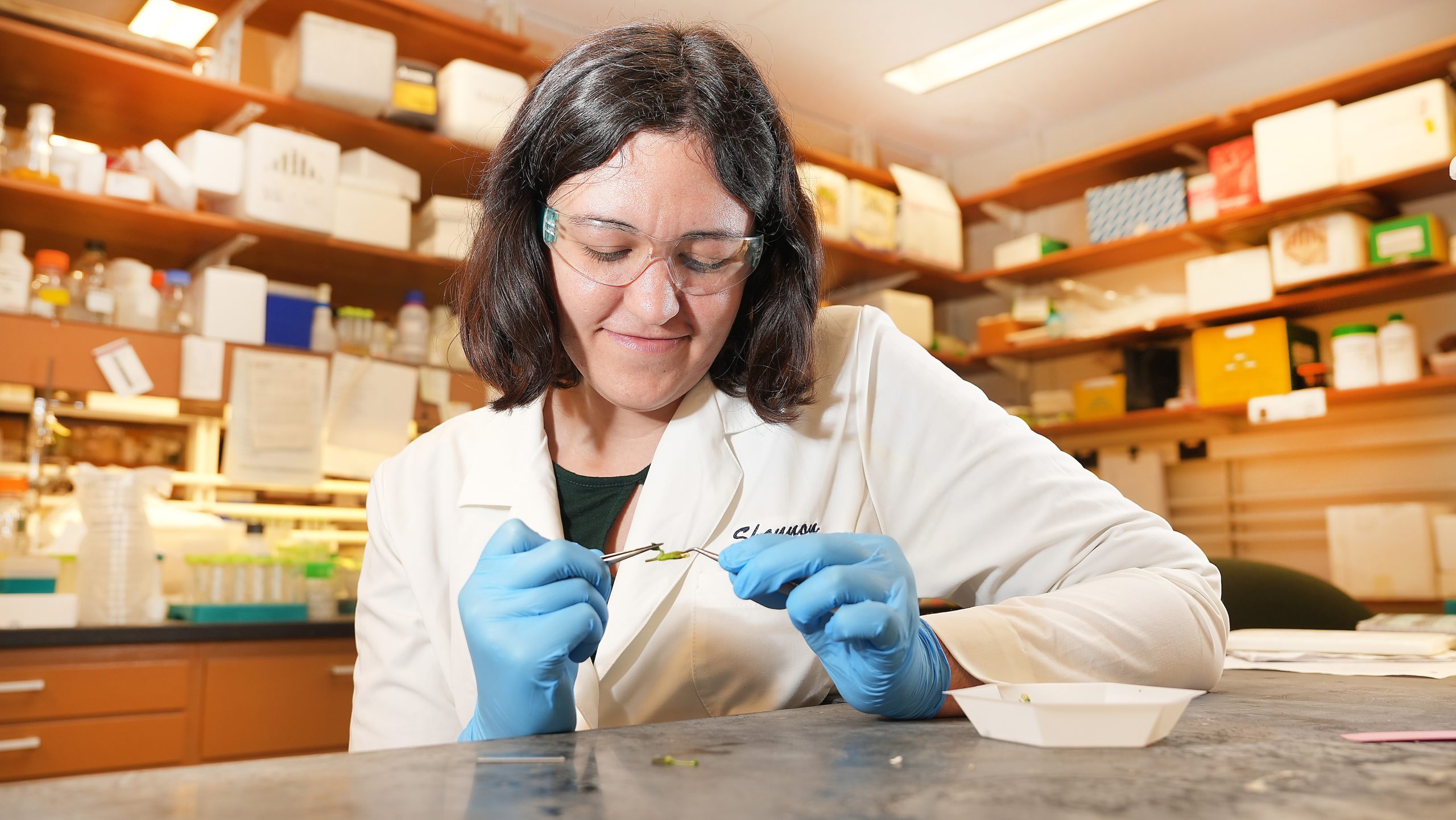
For Stirling, the study required mastering a painstaking method for temporarily altering the levels of proteins of the petunia pistils to identify the signal-receptor protein interactions. “Pistils and stigmas are small. They’re a little difficult to work with because of their size,” she said. “Even the sheer amount of stigmas you need to get enough sample for anything is quite large because they don’t weigh much.”
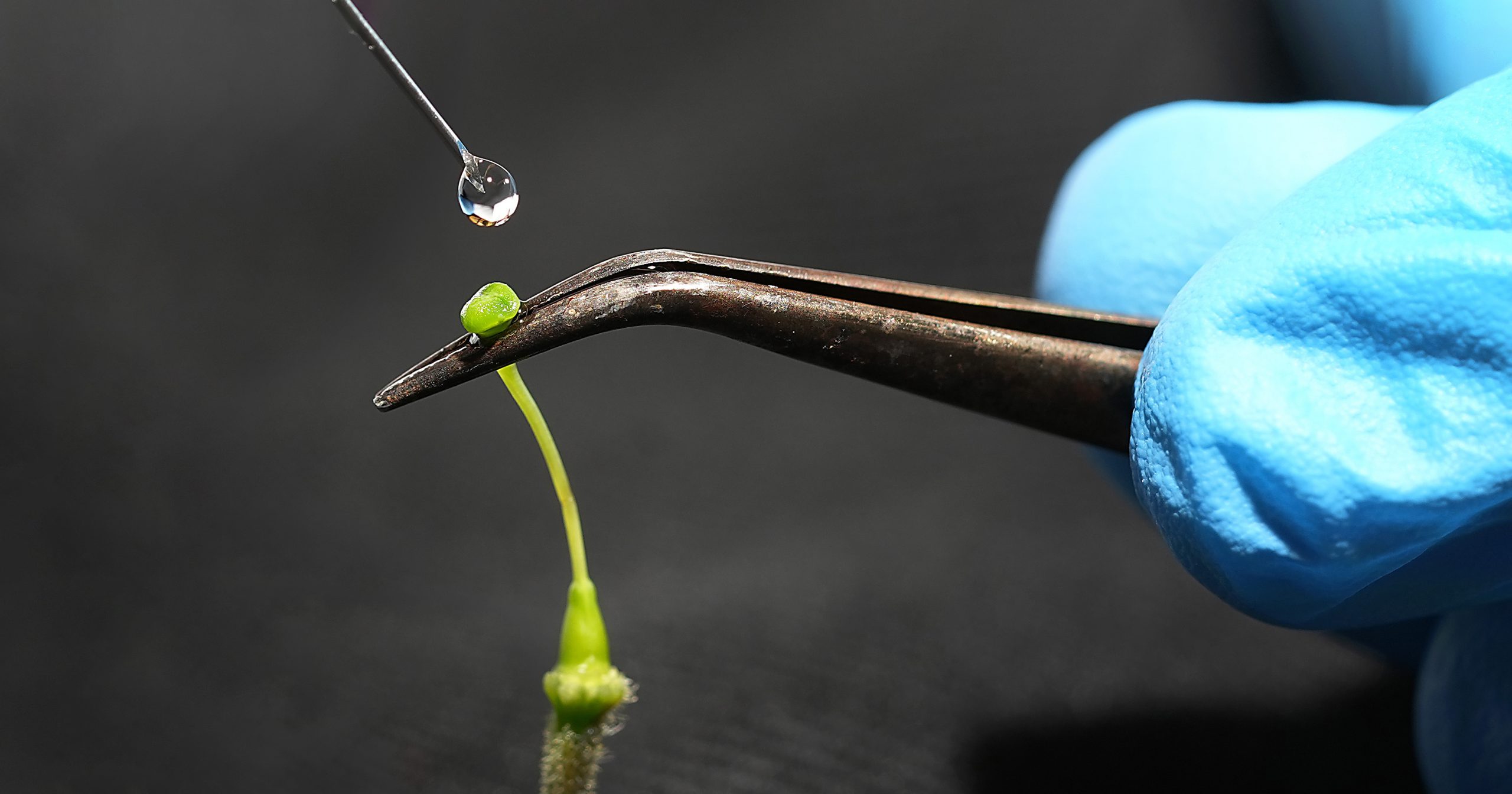
This method involved injecting a certain species of bacterium into the stigma to introduce targeted genes, then isolating the resulting proteins.
“It’s not easy to manipulate such a small organ,” Bergman noted. “But Shannon was able to gently prick the stigma with a syringe and infiltrate it with this bacterium so delicately. She’s quite an expert at this.”
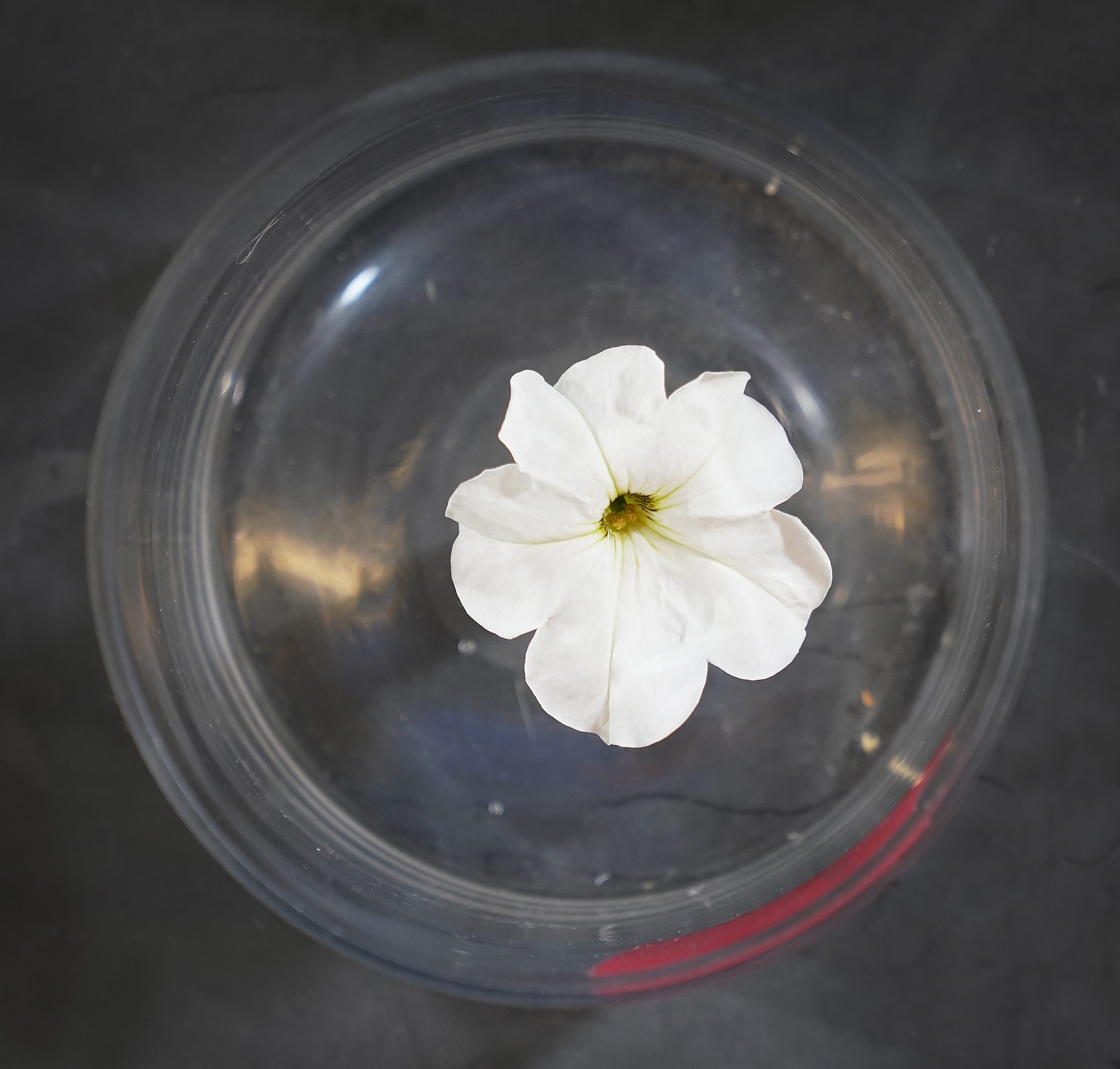
Petunias are often brightly colored and smell nice, but the Purdue scientists also value them because they serve as a fertile model system for their research.
Reference: “Volatile communication in plants relies on a KAI2-mediated signaling pathway” by Shannon A. Stirling, Angelica M. Guercio, Ryan M. Patrick, Xing-Qi Huang, Matthew E. Bergman, Varun Dwivedi, Ruy W. J. Kortbeek, Yi-Kai Liu, Fuai Sun, W. Andy Tao, Ying Li, Benoît Boachon, Nitzan Shabek and Natalia Dudareva, 21 March 2024, Science.
DOI: 10.1126/science.adl4685
“They’ve proven quite fruitful thus far,” Bergman said.
Never miss a breakthrough: Join the SciTechDaily newsletter.
Follow us on Google and Google News.