

Close Menu
    Facebook X (Twitter) Instagram
    SciTechDaily
    • Biology
    • Chemistry
    • Earth
    • Health
    • Physics
    • Science
    • Space
    • Technology
    Facebook X (Twitter) Pinterest YouTube RSS
    SciTechDaily
    Home»Biology»Vampire Bacteria? Scientists Uncover Blood-Hunting Behavior in Common Bacteria
    Biology

    Vampire Bacteria? Scientists Uncover Blood-Hunting Behavior in Common Bacteria

    By Washington State UniversityApril 22, 2024No Comments3 Mins Read
    Facebook Twitter Pinterest Telegram LinkedIn WhatsApp Email Reddit
    Share
    Facebook Twitter LinkedIn Pinterest Telegram Email Reddit
    Red Bacteria
    Researchers at Washington State University have identified a “bacterial vampirism” where deadly bacteria feed on human blood serum, offering new insights into bloodstream infections and potential treatments for at-risk individuals. (Artist’s concept.) Credit: SciTechDaily.com

    Some of the world’s deadliest bacteria seek out and feed on human blood, a newly discovered phenomenon researchers are calling “bacterial vampirism.”

    A team led by Washington State University researchers has found the bacteria are attracted to the liquid part of blood, or serum, which contains nutrients the bacteria can use as food. One of the chemicals the bacteria seemed particularly drawn to was serine, an amino acid found in human blood that is also a common ingredient in protein drinks.

    The research finding, published in the journal eLife, provides new insights into how bloodstream infections occur and could potentially be treated.
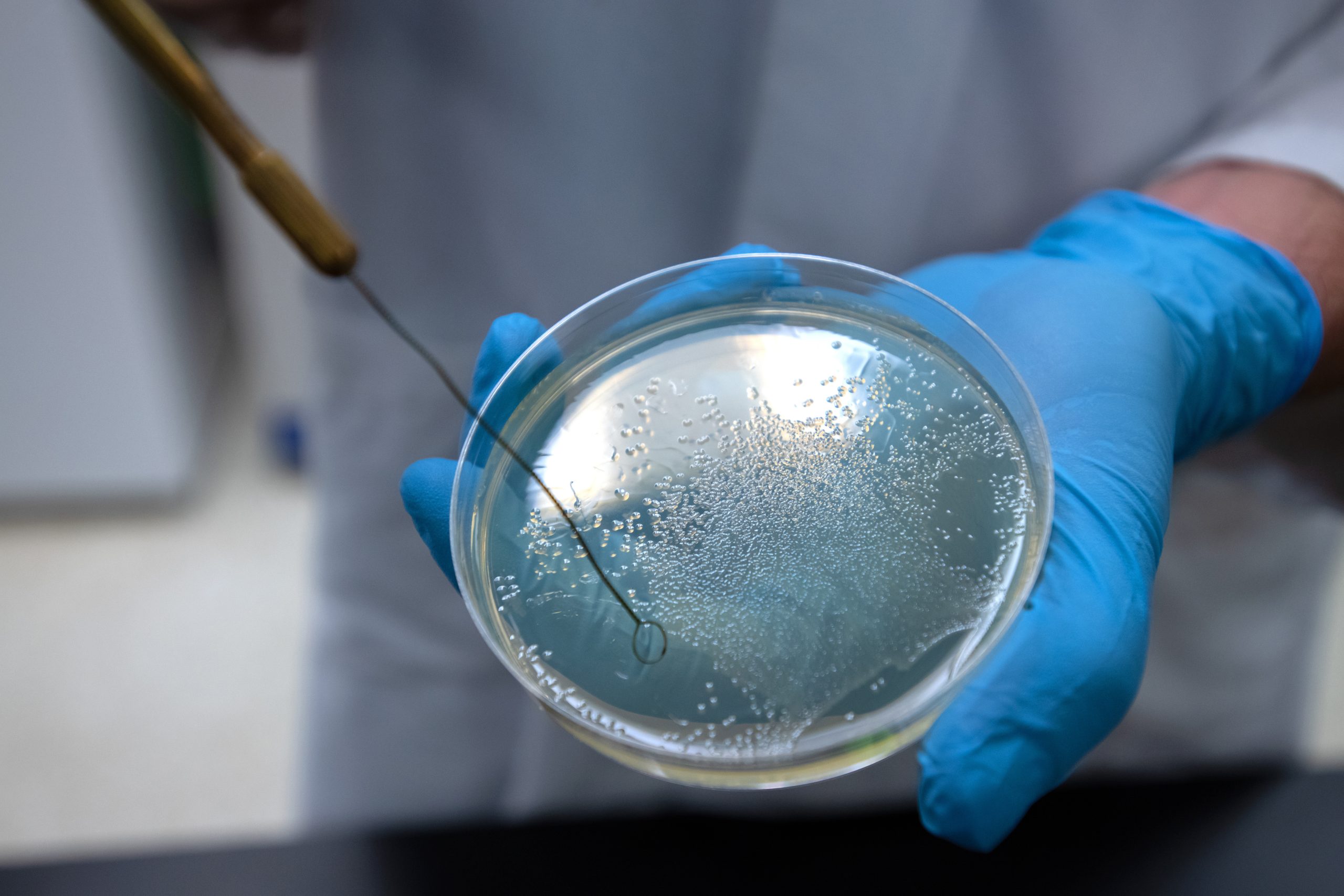
    Bacteria Petri Dish
    Washington State University researcher Arden Baylink holds a petri dish containing salmonella bacteria. Baylink and PhD student Siena Glenn have published research showing that some of the world’s deadliest bacteria seek out and eat serum, the liquid part of human blood, which contains nutrients the bacteria can use as food. Credit: Ted S. Warren, Washington State University College of Veterinary Medicine

    Bacteria Studied and Experimentation

    “Bacteria infecting the bloodstream can be lethal,” said Arden Baylink, a professor at WSU’s College of Veterinary Medicine and corresponding author for the research. “We learned some of the bacteria that most commonly cause bloodstream infections actually sense a chemical in human blood and swim toward it.”

    Baylink and the lead author on the study, WSU Ph.D. student Siena Glenn, found at least three types of bacteria, Salmonella enterica, Escherichia coli, and Citrobacter koseri, are attracted to human serum. These bacteria are a leading cause of death for people who have inflammatory bowel diseases (IBD), about 1% of the population. These patients often have intestinal bleeding that can be an entry points for the bacteria into the bloodstream.

    Siena Glenn
    Siena Glenn, a Washington State University Ph.D. student uses a high-powered microscope. Glenn, working with Assistant Professor Arden Baylink and colleagues, has published research showing that some of the world’s deadliest bacteria seek out and eat serum, the liquid part of human blood. Credit: Ted S. Warren, Washington State University College of Veterinary Medicine

    Using a high-powered microscope system designed by Baylink called the Chemosensory Injection Rig Assay, the researchers simulated intestinal bleeding by injecting microscopic amounts of human serum and watching as the bacteria navigated toward the source. The response is rapid — it takes less than a minute for the disease-causing bacteria to find the serum.

    Potential for New Treatments

    As part of the study, the researchers determined Salmonella has a special protein receptor called Tsr that enables bacteria to sense and swim toward serum. Using a technique called protein crystallography, they were able to view the atoms of the protein interacting with serine. The scientists believe serine is one of the chemicals from the blood that the bacteria sense and consume.

    “By learning how these bacteria are able to detect sources of blood, in the future we could develop new drugs that block this ability. These medicines could improve the lives and health of people with IBD who are at high risk for bloodstream infections,” Glenn said.

    Reference: “Bacterial vampirism mediated through taxis to serum” by Siena J. Glenn, Zealon Gentry-Lear, Michael Shavlik, Michael J. Harms, Thomas J. Asaki and Arden Baylink, 16 April 2024, eLife.
    DOI: 10.7554/eLife.93178.2

    The study was funded by the National Institute of Allergy and Infectious Diseases.

    Never miss a breakthrough: Join the SciTechDaily newsletter.
    Follow us on Google and Google News.

    Bacteria Blood Washington State University
    Share. Facebook Twitter Pinterest LinkedIn Email Reddit

    Related Articles

    New Test Determines Antibiotic Resistance in Less Than 90 Minutes

    Rare Example of Bacterial Gene Transfer Providing Evolutionary Benefit

    Marine Bacteria Use Bioluminescence to Lure Zooplankton and Fish

    Researchers Use Bacteria From Space to Create New Biofilm

    Genetically Modified Mosquitoes to Fight Diseases

    Antibiotic-Free Meat Might Still Be Contaminated with Drug Resistant Bacteria

    NDM-1 Super Bacteria Scares Medical Community in India

    Viruses Use Bacteria for Reproduction

    Autistic Children Have Different Gastrointestinal Bacteria

    Leave A Reply Cancel Reply

    • Facebook
    • Twitter
    • Pinterest
    • YouTube

    Don't Miss a Discovery

    Subscribe for the Latest in Science & Tech!

    Trending News

    New Research Shows Vitamin B12 May Hold the Key to Healthy Aging

    These Simple Daily Habits Can Quickly Improve Blood Pressure and Heart Risk Factors

    A Common Nutrient May Play a Surprising Role in Anxiety

    Doing This After 9 p.m. Could Double Your Risk of Gut Issues

    Scientists Discover How Coffee Impacts Memory, Mood, and Gut Health

    Why Did the Neanderthals Disappear? Scientists Reveal Humans Had a Hidden Advantage

    Physicists Propose Strange Experiment Where Time Goes Quantum

    Magnesium Magic: New Drug Melts Fat Even on a High-Fat, High-Sugar Diet

    Follow SciTechDaily
    • Facebook
    • Twitter
    • YouTube
    • Pinterest
    • Newsletter
    • RSS
    SciTech News
    • Biology News
    • Chemistry News
    • Earth News
    • Health News
    • Physics News
    • Science News
    • Space News
    • Technology News
    Recent Posts
    • This New Memory Technology Could Make Devices Last Months on One Charge
    • Scientists Turn Cancer’s Own Bacteria Against It in Breakthrough Therapy
    • Cannabis Can Make You Remember Things That Never Happened
    • Doctors Are Surprised by What This Vaccine Is Doing to the Heart
    • Quantum Breakthrough Turns Simple Forces Into Powerful New Interactions
    Copyright © 1998 - 2026 SciTechDaily. All Rights Reserved.
    • Science News
    • About
    • Contact
    • Editorial Board
    • Privacy Policy
    • Terms of Use

    Type above and press Enter to search. Press Esc to cancel.