
Five Newly released videos from NASA help describe the science of the sun and its effects on the solar system and Earth, while covering the areas of heliophysics: Space Weather, Solar Variability, the Heliosphere, Earth’s magnetosphere, and Earth’s upper atmosphere.
NASA has just released five new videos called “Mysteries of the Sun.” The videos describe the science of the sun and its effects on the solar system and Earth. Scientists study the sun not only to better understand the orb that influences life, but also to study how it sends solar material out into space, filling up the bubble that defines the farthest reaches of the solar system. The sun can also impact Earth’s technology: solar storms can affect our communications satellites and cause surges in power lines. These movies cover the breadth of solar, heliospheric, and geospace science, a field known as heliophysics.
With beautiful graphics and well-explained narration, the series has won awards even before its public release, including the 2011 Platinum 3rd Annual Pixie Award in the category of Motion Graphics, receiving compliments from the judges such as “breath-taking animation” and “Some of the best in the competition.”
“NASA constantly creates science products to reach out to the public,” said Ruth Netting, Manager, Communications and Public Engagement for NASA’s Science Mission Directorate, Washington. “Informing the public is not the only reason — we also want to get people involved in science.”
The five movies, available online at http://missionscience.nasa.gov/sun and on DVD, cover five areas of heliophysics: Space Weather, Solar Variability, the Heliosphere, Earth’s magnetosphere, and Earth’s upper atmosphere.
The five videos are:
Space Weather
This video describes the direct and dramatic effects that eruptions on the sun can cause at Earth. Earth’s magnetic fields change shape and strength in response to an eruption on the sun, and these changes in turn can damage space born technology and disrupt communications traveling through space. They also cause aurora.
Solar Variability
Rotations of the material deep inside the sun cause constantly shifting magnetic field lines. This variability drives the solar cycle, during which the north and south magnetic poles reverse position approximately every 11 years.
The Heliosphere
The solar wind streams out from the sun until it collides with material from the rest of space. This entire bubble defined by the solar wind is called the heliosphere and scientists study the very boundaries to better understand our place in space.
Earth’s Magnetosphere
Earth is enveloped in a protective magnetic envelope called the magnetosphere. This can change shape in response to the sun’s effects, causing various types of space weather at Earth.
Earth’s Upper Atmosphere
Certain layers, high up in the atmosphere also respond to incoming energy from the sun. These layers contain charged particles and so naturally respond to an influx of magnetic energy. Understanding such variability is crucial since it can, in turn, degrade radio communication as well as satellite orbits.
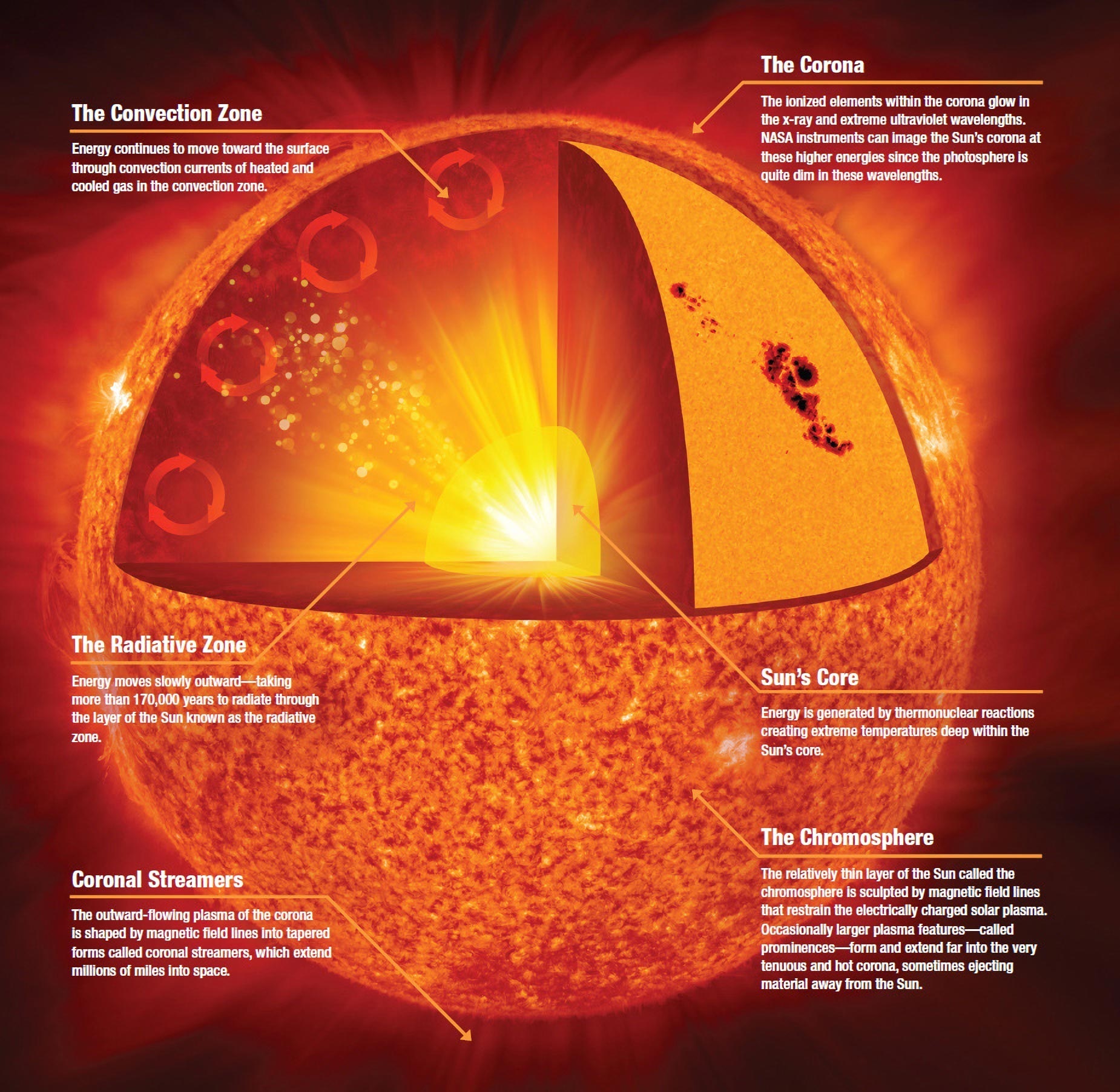
In addition to the movies, there is a guidebook with full-color images, diagrams, and charts that will make the science of heliophysics clear for all readers. The topics covered include the anatomy of the Sun, the solar cycle, solar storms, and solar variability, as well as the Sun’s effects on space weather and the Earth’s magnetosphere and upper atmosphere. One of the ways the Sun visibly influences events on Earth is the Aurora. The guide also provides an explanation of the connection between this phenomenon and the Sun.
Additional awards are as follows:
- Telly Award: 2012 Silver Award (highest honor): Non-Broadcast Productions – Use of Animation
- Telly Award: 2012 Bronze Award: Non-Broadcast Productions – Education
For Space Weather video:
- 2010 Gold 17th Annual Award of Excellence Communicator Award: Education
- 2010 Silver 17th Annual Award of Distinction Communicator Award: Use of Animation
- 2011 Silver TIVA-DC Peer Award for the category: Motion Graphics: 2D/3D Animation Over $25,000
- 2011 Bronze 32nd Annual Telly Award Film/Video: Education
For Solar Variability video:
- 2010 Gold 17th Annual Award of Excellence Communicator Award: Education
- 2010 Silver 17th Annual Award of Distinction Communicator Award Use of Animation
- 2011 Silver TIVA-DC Peer Award for the category: Motion Graphics: 2D/3D Animation Over $25,000
- 2011 Bronze 32nd Annual Telly Award Film/Video: Use of Animation
For Heliosphere video:
- 2011 Bronze TIVA-DC Peer Award for the category: Motion Graphics: 2D/3D Animation Over $25,000
Image: NASA/Jenny Mottar
Never miss a breakthrough: Join the SciTechDaily newsletter.
Follow us on Google and Google News.