
NASA’s UVSC Pathfinder will study the Sun’s corona to identify how solar energetic particles form, paving the way for forecasting dangerous space radiation storms.
A joint NASA-U.S. Naval Research Laboratory experiment dedicated to studying the origins of solar energetic particles — the Sun’s most dangerous form of radiation — is ready for launch.
UVSC Pathfinder — short for Ultraviolet Spectro-Coronagraph Pathfinder — will hitch a ride to space aboard STPSat-6, the primary spacecraft of the Space Test Program-3 (STP-3) mission for the Department of Defense. STP-3 is scheduled to lift off on a United Launch Alliance Atlas V 551 rocket no earlier than December 5, from Cape Canaveral Space Force Station in Florida.
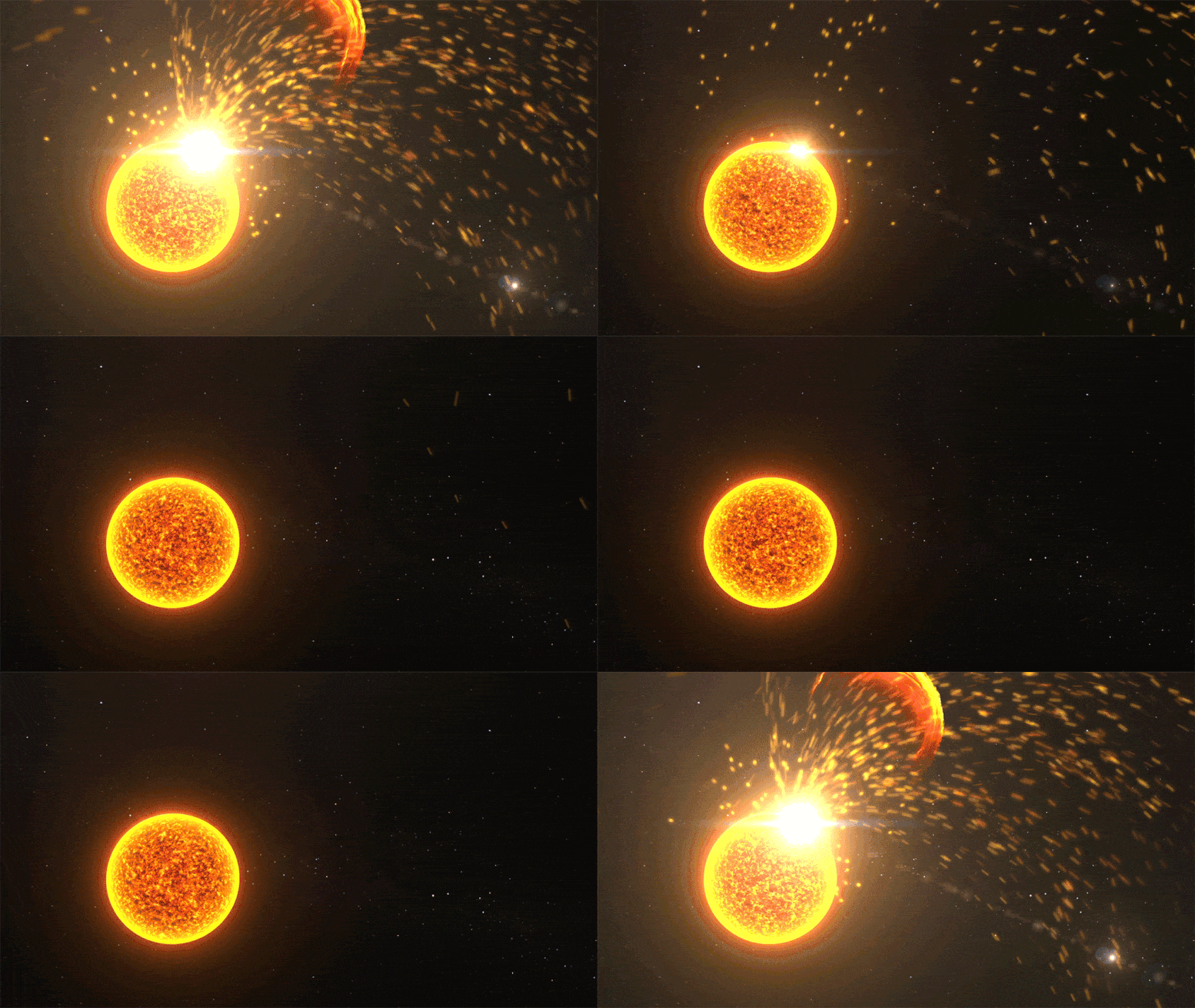
Solar energetic particles, or SEPs, are a type of space weather that pose a major challenge to space exploration. A solar particle storm, or SEP event, occurs when the Sun fires energetic particles into space at such high speeds that some reach Earth — 93 million miles away — in less than an hour. Flurries of the powerful particles can wreak havoc with spacecraft and expose astronauts to dangerous radiation.
UVSC Pathfinder will peer at the lowest regions of the Sun’s outer atmosphere, or corona, where SEPs are thought to originate. While the Sun releases eruptions almost daily when it is most active, there are only about 20 disruptive solar particle storms during any given 11-year solar cycle. Scientists can’t reliably predict which of these will produce SEPs, nor their intensity. Understanding and eventually predicting these solar storms are crucial for enabling future space exploration.
“It’s a pathfinder because we’re demonstrating new technology and a new way to forecast this type of space weather,” said Leonard Strachan, an astrophysicist at the U.S. Naval Research Laboratory in Washington, D.C., and the mission’s principal investigator. “Right now, there’s no real way of predicting when these particle storms will happen.”
Understanding and Predicting SEPs
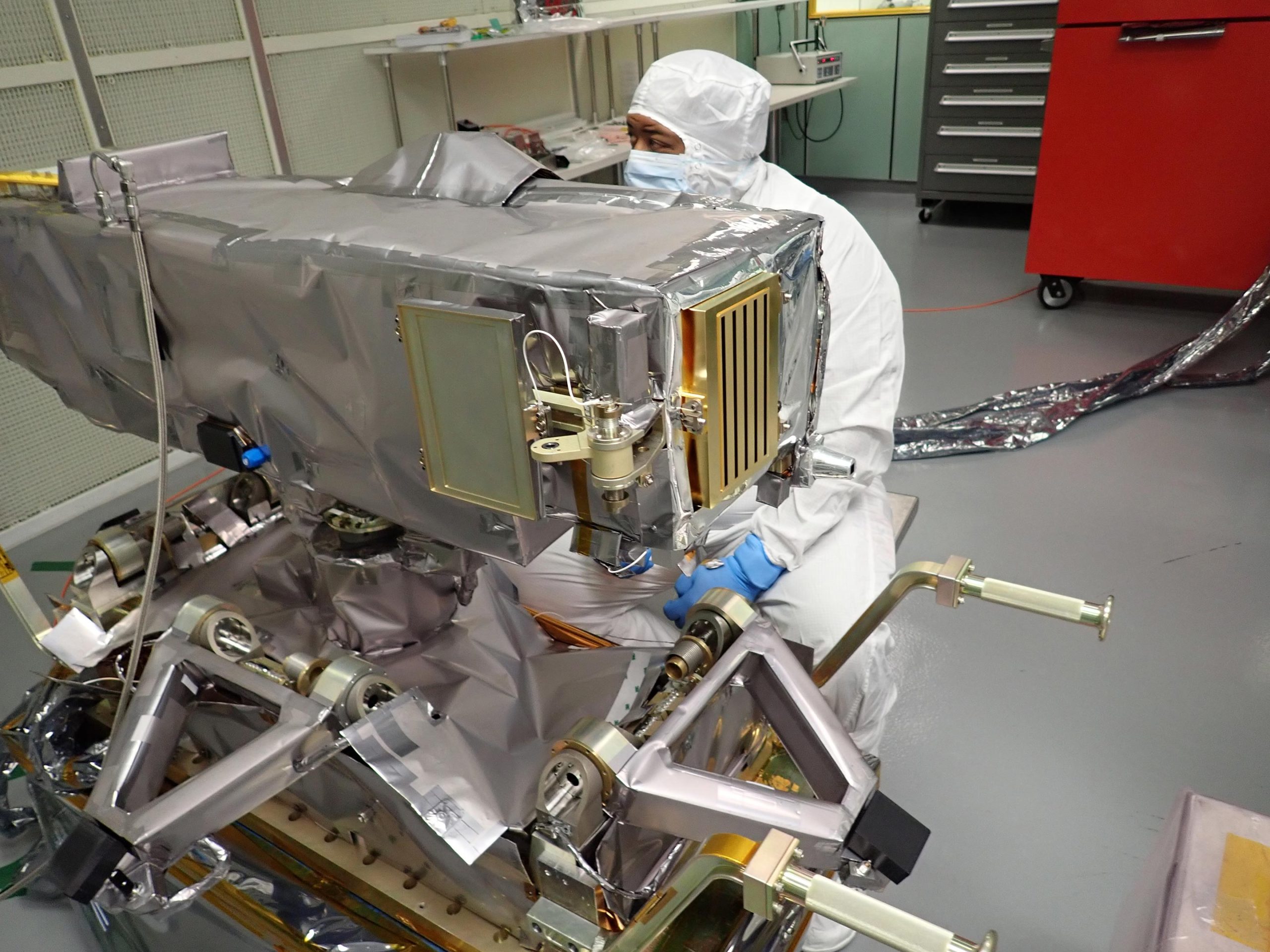
UVSC Pathfinder is a coronagraph, a kind of instrument that blocks the Sun’s bright face to reveal the dimmer, surrounding corona. Most coronagraphs have a single aperture with a series of occulters that block the Sun and reduce stray light. The novelty of UVSC Pathfinder is that it uses five separate apertures, each with its own occulter — significantly boosting the signal from the corona.
In the corona, scientists expect to find the special group of particles that eventually becomes solar energetic particles. Not just any regular particle in the Sun’s atmosphere can be energized to a SEP. Rather, scientists think SEPs come from swarms of seed particles residing in the corona that are already around 10 times hotter and more energetic than their neighbors. Those could come from bright bursts of energy, called flares, or regions of intense magnetic fields in the corona, called current sheets.
It takes some prior energetic solar activity to fire up the seed particles. Occasionally, the Sun unleashes massive clouds of solar material, called coronal mass ejections. Those explosions can generate a shock ahead of them, like the wave that crests at the front of a speeding boat. “If a coronal mass ejection comes out fast enough” — 600 miles (970 kilometers) per second at least — “it can produce a shock, which can sweep up these particles,” Strachan explained. “The particles get so much energy from the shock, they become SEPs.”
Unlike most coronagraphs that take images in visible light, UVSC Pathfinder is unique because it’s combined with a spectrometer that measures ultraviolet light, a kind of light that’s invisible to human eyes. By analyzing the light in the corona, researchers hope to identify when seed particles are present.
Scientists have routinely observed SEPs from the near-Earth perspective — 93 million miles (150 million kilometers) away from their origin. Since seed particles are only present in the corona, it has been impossible to measure them directly. UVSC Pathfinder aims to observe the elusive particles by remotely sensing their signatures in ultraviolet light. “We know rather little about them,” said Martin Laming, a U.S. Naval Research Laboratory physicist and UVSC Pathfinder’s science lead. “This is really a ground-breaking observation.”
The impacts of SEP swarms are serious. When it comes to spacecraft, they can fry electronics, corrupt a satellite’s computer programming, damage solar panels, and even disorient a spacecraft’s star tracker, used for navigation. The effect is like driving through a blizzard and getting lost: SEPs fill the star tracker’s view, and losing its ability to orient itself, it spins off orbit.
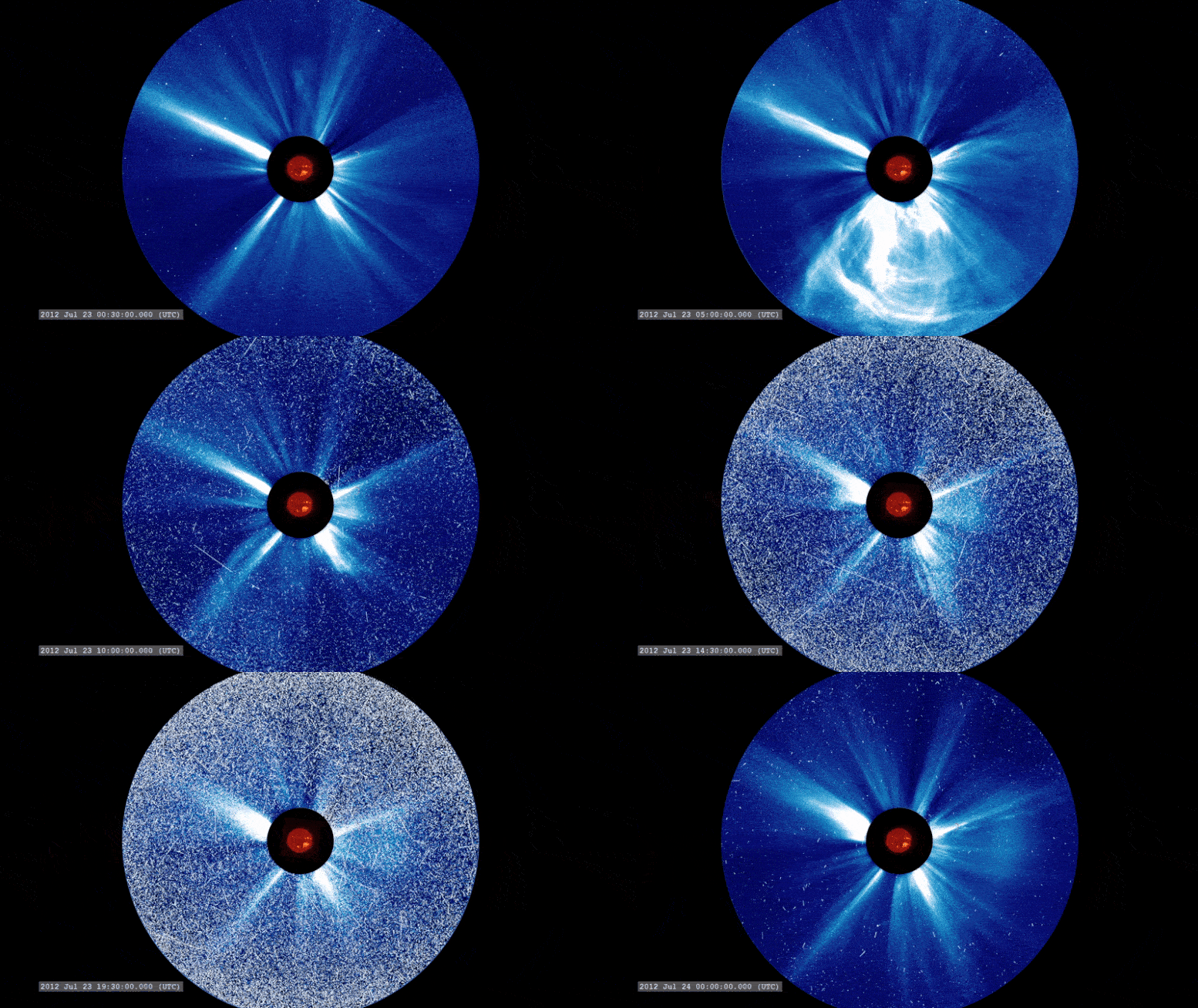
To humans, SEPs are dangerous because they can pass through spacecraft or an astronaut’s skin, where they can damage cells or DNA. This damage can increase the risk for cancer later in life, or in extreme cases, cause acute radiation sickness in the short term. (On Earth, our planet’s protective magnetic field and atmosphere shield humans from this harm.) A series of enormous solar flares in August 1972 — in between the Apollo 16 and 17 missions — serves as a reminder of the threat solar activity and radiation poses.
The UVSC Pathfinder experiment marks a major step toward understanding where SEPs come from and how they evolve as they travel through the solar system. The data will help scientists predict whether a solar explosion could generate problematic SEPs much the way we predict severe weather events on Earth. Forecasts would enable spacecraft operators and astronauts to take steps to mitigate their impacts. “If our thinking is correct, seed particles will be a really important signature of radiation storms to watch out for,” Laming said.
Joining NASA’s Heliophysics Fleet
UVSC Pathfinder is the latest addition to NASA’s fleet of heliophysics observatories. NASA heliophysics missions study a vast, interconnected system from the Sun to the space surrounding Earth and other planets, and to the farthest limits of the Sun’s constantly flowing stream of solar wind. UVSC Pathfinder provides key information on SEPs, enabling future space exploration.
The mission’s observations will complement those of two other solar observatories. The new coronagraph will look as close as 865,000 miles (1.4 million kilometers) from the Sun, while NASA’s Parker Solar Probe and the European Space Agency and NASA’s Solar Orbiter will directly sample the space up to a distance of 3.8 million miles (6.1 million kilometers) and 26.7 million miles (43 million kilometers) from the Sun, respectively. “We hope coordinated observations will be useful in pinning down the evolution of SEPs as they move out from the Sun,” Strachan said.
“The NASA science program has a long history of obtaining predictive space weather tools from the results of pure research missions,” said Daniel Moses, chief technologist in NASA’s Heliophysics Division. “Collaboration between the NASA Science Mission Directorate, the Naval Research Laboratory and the Department of Defense STP program has been particularly fruitful in this area. UVSC Pathfinder continues this proud tradition of basic research collaboration with the potential of developing a new, high-impact tool with predictive capability.”
UVSC Pathfinder is a NASA and U.S. Naval Research Laboratory payload aboard the Department of Defense’s Space Test Program Satellite-6 (STPSat-6). It flies alongside NASA’s Laser Communications Relay Demonstration (LCRD), which is testing an enhanced communications capability with the potential to increase bandwidth 10 to 100 times more than radio frequency systems — allowing space missions to send more data home.
UVSC Pathfinder was designed and built at the U.S. Naval Research Laboratory. It was funded through NASA’s Heliophysics Program and the Office of Naval Research. It is managed by the Heliophysics Technology and Instrument Development for Science, or H-TIDeS, program office at NASA Headquarters. STP is operated by the United States Space Force’s Space Systems Command.
Never miss a breakthrough: Join the SciTechDaily newsletter.
Follow us on Google and Google News.