

Novel vaccine includes NIH-funded technology in development since 2004.
A trial of a preventive HIV vaccine candidate has begun enrollment in the United States and South Africa. The Phase 1 trial will evaluate a novel vaccine known as VIR-1388 for its safety and ability to induce an HIV-specific immune response in people. The National Institute of Allergy and Infectious Diseases (NIAID), part of the National Institutes of Health, has provided scientific and financial support throughout the lifecycle of this HIV vaccine concept and is contributing funding for this study.
Understanding VIR-1388
VIR-1388 is designed to instruct the immune system to produce T cells that can recognize HIV and signal an immune response to prevent the virus from establishing chronic infection. VIR-1388 uses a cytomegalovirus (CMV) vector, meaning a weakened version of CMV delivers the HIV vaccine material to the immune system without causing disease in the study participants. CMV has been present in much of the global population for centuries. Most people living with CMV experience no symptoms and are unaware that they are living with the virus. CMV remains detectable in the body for life, which suggests it has the potential to deliver and then safely help the body retain HIV vaccine material for a long period, potentially overcoming the waning immunity observed with more short-lived vaccine vectors.
Funding and Collaboration
NIAID has funded the discovery and development of the CMV vaccine vector since 2004 and is funding this trial with the Bill & Melinda Gates Foundation and Vir Biotechnology, based in San Francisco. The trial is sponsored by Vir and conducted through the NIAID-funded HIV Vaccine Trials Network (HVTN) as study HVTN 142.
Trial Details
HVTN 142 is taking place at six sites in the United States and four in South Africa and will enroll 95 HIV-negative participants. Participants will be randomly assigned to one of four study arms: three arms will each receive a different dose of the vaccine, and one will receive a placebo. To optimize participant safety, this study will only enroll people already living with asymptomatic CMV. Initial results are expected in late 2024, and an optional long-term sub-study will continue to follow volunteers for up to three years after their first vaccine dose.
Additional information about the trial is available on ClinicalTrials.gov under study identifier NCT05854381.
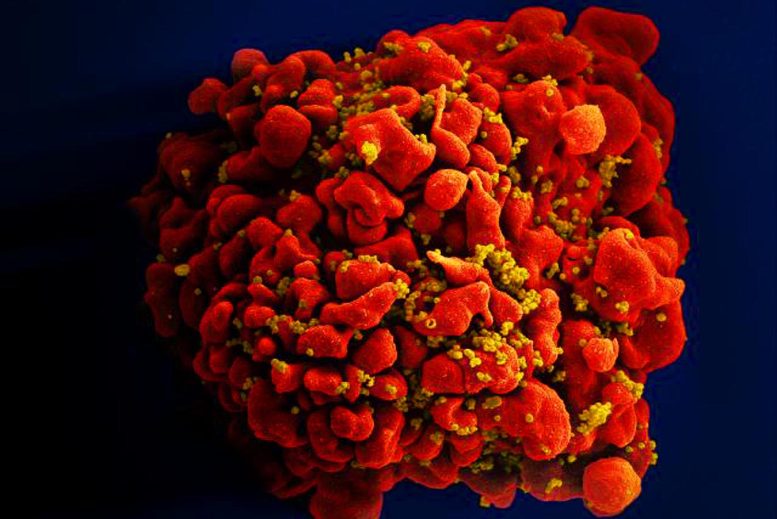
More About HIV
HIV continues to be a major global health issue with significant ramifications for public health and global economies. According to data from the World Health Organization (WHO) in 2019, an estimated 38 million people worldwide were living with HIV. In the same year, approximately 1.7 million new HIV infections were recorded, with children under 15 constituting 95,000 of these new cases. Tragically, HIV-related deaths in 2019 amounted to about 690,000.
In terms of treatment access, as we closed 2019, 81% of HIV-positive individuals were aware of their status. Among this informed group, 82% had access to antiretroviral therapy (ART). Impressively, of those undergoing ART, 88% had managed to suppress their viral loads, showcasing the efficacy of the treatment.
Focusing on the United States, the Centers for Disease Control and Prevention (CDC) reported that over 34,800 new HIV diagnoses occurred in 2019. By the end of 2018, the U.S. had an estimated 1.2 million people aged 13 and older living with HIV. Alarmingly, 14% of these individuals were unaware of their infection. It’s worth noting that among the new diagnoses in 2019, gay and bisexual men accounted for a significant 69%.
Prevention and mitigation strategies have evolved over the years, with condom use, needle exchange programs, and robust HIV awareness campaigns leading the frontlines in the battle against HIV spread. Moreover, Pre-exposure prophylaxis (PrEP), when taken with diligence, has shown remarkable efficacy, reducing the risk of contracting HIV from sexual encounters by nearly 99%. In the pursuit of global health improvement, leaders have set an ambitious goal for 2030: 95% of all HIV-positive individuals should be aware of their status, 95% of those diagnosed should be on ART, and 95% on treatment should have suppressed viral loads.
However, challenges persist. Stigmatization and discrimination remain potent barriers to effective HIV prevention, treatment, and broader support. Moreover, while some regions have made notable progress, disparities in access to critical services remain. Sub-Saharan Africa, for instance, was home to a staggering 67% of the global HIV-positive population in 2019, underscoring the regional variations in the pandemic. As the world grapples with these challenges, continued vigilance, funding, and innovative approaches remain essential to curbing the HIV epidemic.
Never miss a breakthrough: Join the SciTechDaily newsletter.
Follow us on Google and Google News.