
App-Based Coordination Between Paramedics, Hospital Team Speeds Treatment by 10 Minutes
Patients suffering a heart attack received percutaneous coronary intervention (PCI), a procedure to clear blocked arteries in the heart, an average of 10 minutes faster after clinicians and paramedics began using an app to facilitate efficient hospital intakes for these patients, according to a study being presented at the American College of Cardiology’s 70th Annual Scientific Session.
The study was conducted at Baystate Medical Center, a health system headquartered in Springfield, Massachusetts, that, like many U.S. hospitals, serves patients across a wide geographic area. Before adopting the app, clinicians typically only had about five minutes of advance notice when a heart attack patient was en route, even if the patient had traveled a long distance. The app allowed clinicians to begin coordinating with paramedics much earlier, helping teams prepare for rapid response upon arrival.
“Now everybody who is taking care of a patient is able to communicate on one platform much earlier, even when the paramedic is still in the patient’s home,” said Alina Capatina, MSN, program coordinator for acute coronary syndrome and ST-elevation myocardial infarction (STEMI) at Baystate Medical Center and the study’s lead author. “This lets us mobilize the cardiology team a lot quicker, which means we can be with the patient much faster. This is especially important on nights and weekends.”
General Devices EBridge App
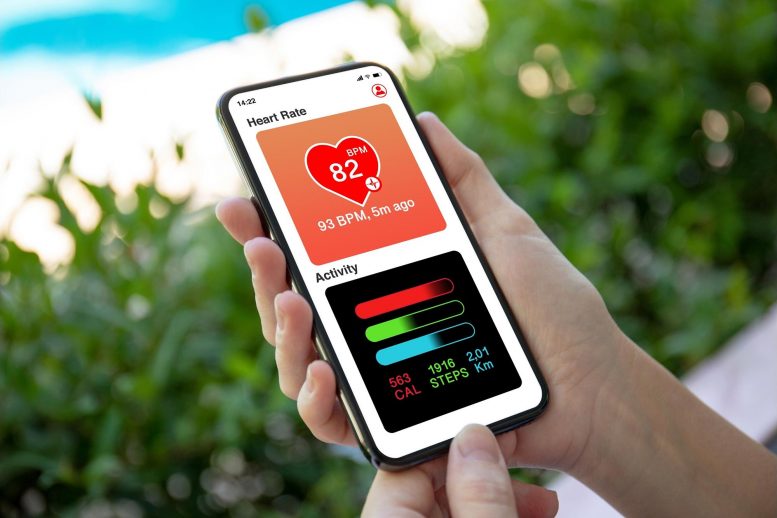
The hospital system began using the app, called General Devices EBridge, in May 2019. The phone-based app can be downloaded for free from any app store, but a facility license is required to customize the app and create accounts connecting individual users within an institution. After customizing the app’s module for intaking patients with STEMI (a heart attack in which one or more arteries is completely blocked), Capatina and her colleagues conducted trainings on the app with teams in the emergency department, catheterization laboratory, and emergency medical services (EMS). Team members used the app to communicate about specific patient cases on a combination of smartphones, tablets, and personal computers.
Researchers retrospectively analyzed STEMI cases involving PCI from 2017-2020, including 342 cases that occurred before the app was implemented and 82 cases in which the app was used. The average length of time between EMS arrival and PCI was about 10 minutes shorter among cases for which the app was used. The average time between arrival at the hospital and PCI was about 11 minutes shorter for these patients. The 2011 ACCF/AHA/SCAI Guideline for Percutaneous Coronary Intervention recommends primary PCI should be performed within 90 minutes of first medical contact.
Life-Saving Time Gains in PCI
Since a heart attack deprives tissues of blood and oxygen, restoring blood flow sooner helps to minimize the amount of permanent damage to the heart tissue.
“Time is muscle,” Capatina said. “The faster you can open up the artery, the better you can reduce the chance of future heart failure and death. Even five minutes can make a great difference.”
Capatina said the app’s success in improving the efficiency of STEMI intakes is a testament to the importance of communication and the critical role of every team involved, from first responders to the catheterization lab.
“The app is one component — the reason the app works is the people who use it,” Capatina said. “The app in itself is not going to magically improve outcomes, but having people who are engaged and committed, in conjunction with using the app, can improve outcomes.”
Broader Applications Beyond Heart Attacks
Capatina added that dedicated training and troubleshooting helped to ensure a smooth implementation for the app. Following the app’s success in the context of STEMI intakes, hospital administrators decided to expand its usage into other programs including hospital transfers, trauma response, and stroke response.
“This application has allowed us to improve an already well-functioning system,” Capatina said.
Capatina will present the study, “Reducing EMS-to-Balloon Time – There’s an App for That,” on Saturday, May 15, at 12 p.m. ET / 16:00 UTC at the American College of Cardiology’s 70th Annual Scientific Session.
Never miss a breakthrough: Join the SciTechDaily newsletter.
Follow us on Google and Google News.