
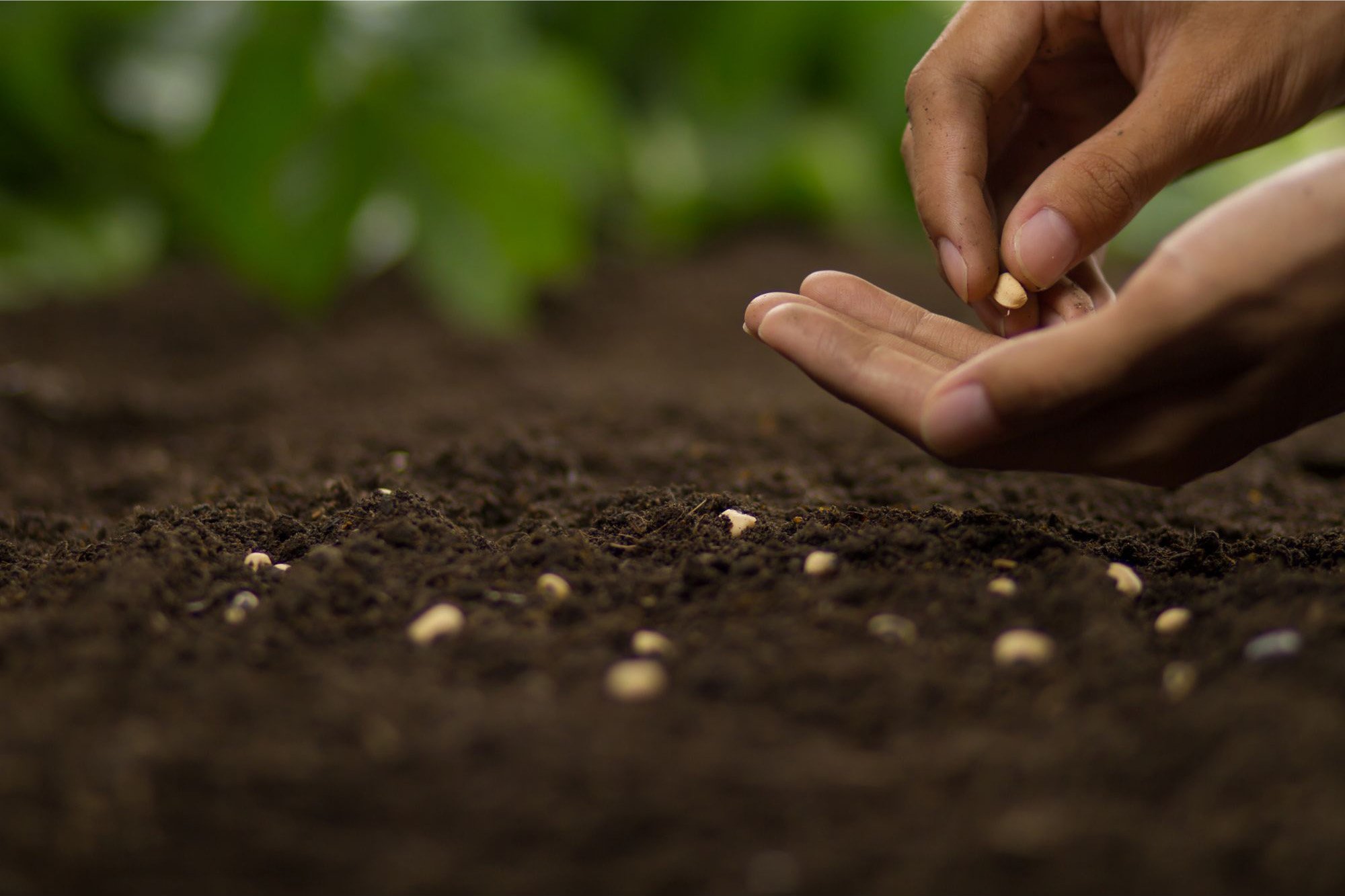
In a shifting climate, smallholder farmers are essential for global food security: adapting seeds is crucial, according to UVM evolutionary biologist Yolanda Chen.
Since World War II, humans have profoundly transformed the evolution of agricultural plants, reshaping our seed systems through industrial farming methods to meet the demands of a growing population. However, according to UVM researchers, in the face of a changing climate in the coming decades, the seeds that will sustain the world are in the care of smallholder farmers.
In a new discussion in Plants, People, Planet, Chen and coauthors examine how the emergence of professional crop breeders has “disrupted evolutionary processes” to “reshape the entire food system.” The mass production of high-yielding seeds in limited varieties has created a chasmic divide between a “formal seed system,” which now sells most seeds worldwide, and the “informal seed system”, which consists of farmers who select their own seeds to develop diverse, locally adapted crop varieties, known as landraces.
In selecting these landraces, smallholder farmers provide evosystem services—the benefits we gain from biodiversity, developed through evolutionary processes, Chen, a Fellow at the Gund Institute for Environment, explains. These services include crops’ adaptation to stresses including drought, salinity, and pests, which, she adds, are expected to increase as the climate warms, noting such services are crucial for the future of sustainability.
“Formal seed system crop breeders have selected varieties with a singular focus on achieving high yields,” Chen says. “The assumption is that breeding is a science of unlocking a crop’s yield potential—that modernity will feed the world.” This has been achieved using fertilizers, irrigation, and pesticides to recreate essentially the same fertile environment regardless of location. Crop breeders have selected modern seed varieties to grow in these ideal conditions, Chen says.
Modern Seeds Are Feeling the Heat
But outside those conditions, crop plants have evolved alongside microbial and animal species to tolerate a wide range of environments. For example, many plants produce compounds that attract local insects to prey on the plant’s parasites. In other words, says Chen, they’ve evolved a trait to “call in bodyguards.”
But plants from mass-produced seed haven’t retained this trait, which they don’t need with “constant support from pesticides,” Chen says. Having lost this ancient connection to their environment, plants don’t issue that call for help: “formal seed system crops have been selected to be mute.”
Of course, humans guiding crops’ evolution is nothing new, Chen says. Similar to interactions between plants and ecosystems, selective crop breeding by humans shapes crops for the places and climates where they’re planted. Conversely, depending on crops with high yields but no connection to their environment is a tradeoff. One-size-fits-all agriculture is quickly becoming an untenable prospect under the extreme heat or drought that many agricultural areas anticipate.
So what happens in extreme climates, when we can no longer create the perfect environment for formal seed system crops?
The Need for Diverse Seeds
The solution, Chen and co-authors propose, lies in pockets, sheds and barns across the world: that vast diversity of landrace seeds, tucked away by people growing crops in every possible ecosystem. Bred to yield in the mountains, deltas and deserts where farmers plant them, landrace seeds have the best chance of carrying the hardy traits needed to survive in whatever conditions climate change has in store.
“Landraces hold traits that will help the more commercial varieties adapt to local conditions,” Chen says: those evosystem services, bred into landrace seeds as fully as their vibrant flavors and colors.
But the issue isn’t just genetics, and Chen, an insect evolutionary ecologist, works with an interdisciplinary team including sociologists and plant geneticists. In modern agriculture, Chen sees “neocolonial ideas around who gets to decide what is important.” The farmers who’ve developed landraces are often smallholders in historically colonized places, their work unvalued in industrial agriculture or academic research.
The seed diversity smallholder farmers grow has been considered “a global public good,” Chen says. “But what’s in it for the smallholder farmer who’s incurred the costs of growing these landrace seeds?” As climate conditions make modern agricultural practices unsustainable, the solution isn’t for industrialized countries to ask seed-saving smallholders in developing countries, “‘Our crops are failing; can we have your seeds?’” Chen says.
“We need to find mechanisms for valuing and sharing seed diversity, to manage the evolution of our food crops,” she says. “And we don’t need to ask smallholder farmers around the world to carry the future of food security.”
Instead, Chen and her colleagues are creating a policy brief to share their knowledge with policymakers. Their goal is to establish practices that promote benefit-sharing to properly support smallholder farmers for the seed diversity they’ve created. A concurrent goal is finding ways to incorporate these farmers’ knowledge so this seed diversity can be utilized for the next generation of large-scale crops.
“It’s a paradigm shift from this ‘yield, yield, yield’ mentality,” Chen says. “We must center evolution and biodiversity in our agricultural processes. That’s how you achieve sustainability.”
Reference: “Human management of ongoing evolutionary processes in agroecosystems” by Alicia Mastretta-Yanes, Daniel Tobin, Mauricio R. Bellon, Eric von Wettberg, Angélica Cibrián-Jaramillo, Ana Wegier, Ana Sofía Monroy-Sais, Nancy Gálvez-Reyes, Jorge Ruiz-Arocho and Yolanda H. Chen, 11 June 2024, Plants, People, Planet.
DOI: 10.1002/ppp3.10521
Never miss a breakthrough: Join the SciTechDaily newsletter.
Follow us on Google and Google News.
2 Comments
There are no evolutionary processes! Not a single evolutionary event has been observed.
Soil fertility, water necessary and supply realignment with rains / lack thereof, fertilizers (Natural and man-made , both Nitrogenous and Photostatic) ) and resilient seeds aligned with changing climate requirements and appropriate sunlight / reflected sunlight (Moonlight) are the key drivers of plant Growth.
Optimizing the same to ensure Soil Fertility on a sustainable basis and ability to withstand the vagaries of Climate in a uncertain climate environment, requires a rethinking of Global Agricultural Practices and selection of crops to feed a hungry Planet. Localization and location (farm Specific) alignment of these key drivers using technology will be a essential requirement in the future.