
Close Menu
    Facebook X (Twitter) Instagram
    SciTechDaily
    • Biology
    • Chemistry
    • Earth
    • Health
    • Physics
    • Science
    • Space
    • Technology
    Facebook X (Twitter) Pinterest YouTube RSS
    SciTechDaily
    Home»Biology»New CRISPR/Cas9 Plant Genetics Technology to Improve Agricultural Yield and Resist the Effects of Climate Change
    Biology

    New CRISPR/Cas9 Plant Genetics Technology to Improve Agricultural Yield and Resist the Effects of Climate Change

    By University of California - San DiegoJuly 3, 2021No Comments3 Mins Read
    Facebook Twitter Pinterest Telegram LinkedIn WhatsApp Email Reddit
    Share
    Facebook Twitter LinkedIn Pinterest Telegram Email Reddit
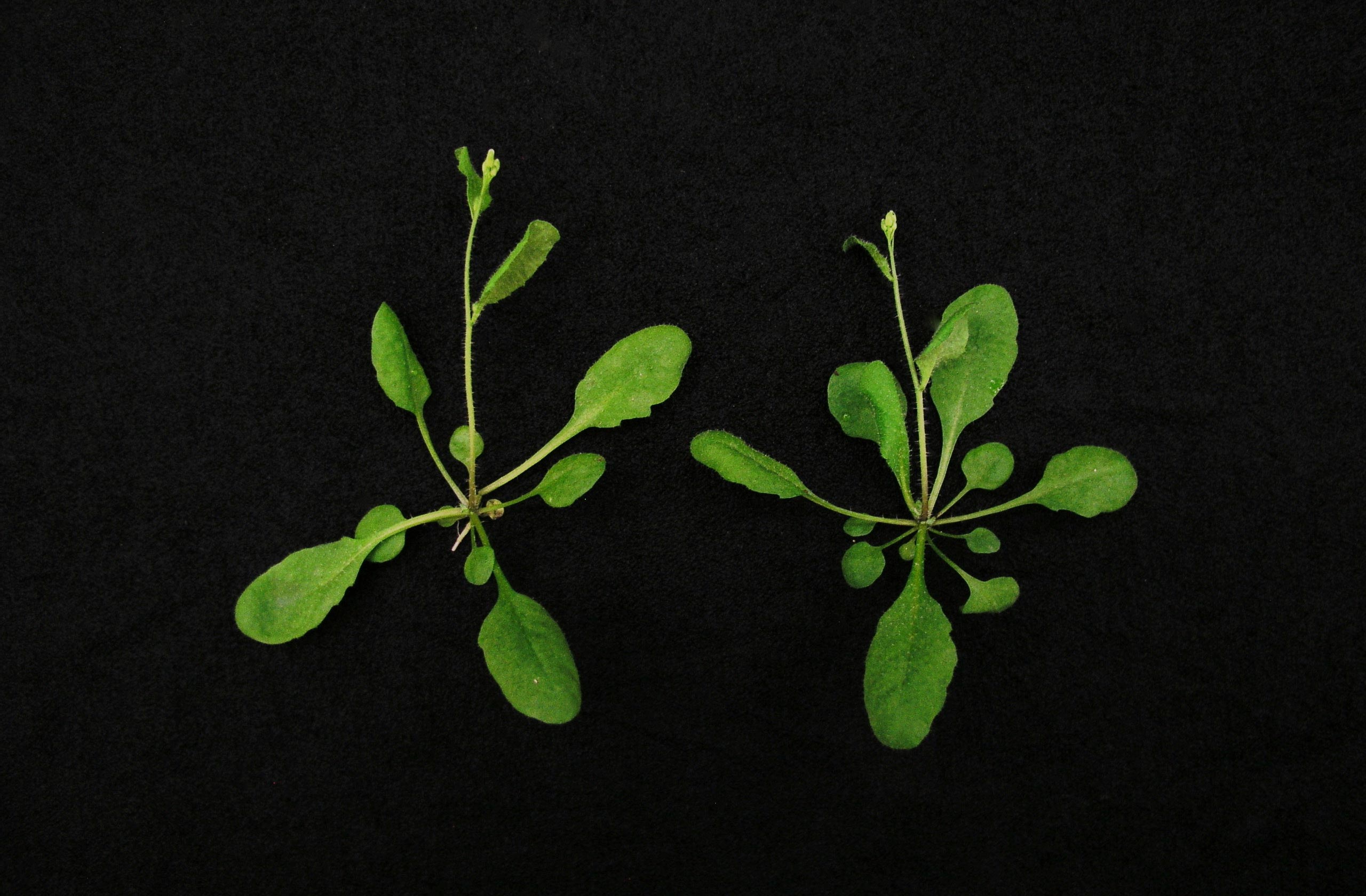
    Arabidopsis Plants
    Arabidopsis plants were used to develop the first CRISPR-Cas9-based gene drive in plants. Credit: Zhao Lab, UC San Diego

    Scientists Develop the First CRISPR/Cas9-Based Gene Drive in Plants

    New technology designed to breed more robust crops to improve agricultural yield and resist the effects of climate change.

    With a goal of breeding resilient crops that are better able to withstand drought and disease, University of California, San Diego (UCSD) scientists have developed the first CRISPR-Cas9-based gene drive in plants.

    While gene drive technology has been developed in insects to help stop the spread of vector-borne diseases such as malaria, researchers in Professor Yunde Zhao’s lab, along with colleagues at the Salk Institute for Biological Studies, demonstrated the successful design of a CRISPR-Cas9-based gene drive that cuts and copies genetic elements in Arabidopsis plants.

    Breaking from the traditional inheritance rules that dictate that offspring acquire genetic materials equally from each parent (Mendelian genetics), the new research uses CRISPR-Cas9 editing to transmit specific, targeted traits from a single parent in subsequent generations. Such genetic engineering could be used in agriculture to help plants defend against diseases to grow more productive crops. The technology also could help fortify plants against the impacts of climate change such as increased drought conditions in a warming world.

    New Plant Gene Drive Schematic
    A schematic representation of a new plant gene drive using CRISPR/Cas9 technology. Credit: Zhao Lab, UC San Diego

    The research, led by postdoctoral scholar Tao Zhang and graduate student Michael Mudgett in Zhao’s lab, is published in the journal Nature Communications. 

    Accelerating Crop Breeding Through Genetic Bias

    “This work defies the genetic constraints of sexual reproduction that an offspring inherits 50% of their genetic materials from each parent,” said Zhao, a member of the Division of Biological Sciences’ Section of Cell and Developmental Biology. “This work enables inheritance of both copies of the desired genes from only a single parent. The findings can greatly reduce the generations needed for plant breeding.”

    The study is the latest development by researchers in the Tata Institute for Genetics and Society (TIGS) at UC San Diego, which was built upon the foundation of a new technology called “active genetics” with potential to influence population inheritance in a variety of applications.

    Developing superior crops through traditional genetic inheritance can be expensive and time-consuming as genes are passed through multiple generations. Using the new active genetics technology based on CRISPR-Cas9, such genetic bias can be achieved much more quickly, the researchers say.

    Global Food Security Through Advanced Breeding

    “I am delighted that this gene drive success, now achieved by scientists affiliated with TIGS in plants, extends the generality of this work previously demonstrated at UC San Diego, to be applicable in insects and mammals,” said TIGS Global Director Suresh Subramani. “This advance will revolutionize plant and crop breeding and help address the global food security problem.”

    Reference: “Selective inheritance of target genes from only one parent of sexually reproduced F1 progeny in Arabidopsis” by Tao Zhang, Michael Mudgett, Ratnala Rambabu, Bradley Abramson, Xinhua Dai, Todd P. Michael and Yunde Zhao, 22 June 2021, Nature Communications.
    DOI: 10.1038/s41467-021-24195-5

    Coauthors of the paper include: Tao Zhang, Michael Mudgett, Ratnala Rambabu, Bradley Abramson, Xinhua Dai, Todd Michael and Yunde Zhao.

    The research was funded by TIGS-UC San Diego and a training grant from the National Institutes of Health.

    Never miss a breakthrough: Join the SciTechDaily newsletter.
    Follow us on Google and Google News.

    Agriculture Biotechnology Cell Biology Climate Change CRISPR Genetics Plant Science UCSD
    Share. Facebook Twitter Pinterest LinkedIn Email Reddit

    Related Articles

    New Self-Fertilizing Wheat Could Transform Farming

    Researchers Create New CRISPR Genetic Tools to Help Contain Mosquito Disease Transmission

    Researchers Engineered a New Synthetic Fly Species – Here’s Why

    The First Frost Is the Deepest – New Discovery May Help Us Grow Crops in Fluctuating Climate

    Genetic Copycatchers Detect Efficient and Precise CRISPR Editing in a Living Organism

    Development of Next-Generation Crops: Research Catches Up to World’s Fastest-Growing Plant

    Scientists Improve Photosynthesis in Quest to Create Heat-Tolerant Wheat

    CRISPR-HOT: New Genetic Tool Can Label Specific Genes and Cells

    Possible On/Off Switch for Plant Growth Identified

    Leave A Reply Cancel Reply

    • Facebook
    • Twitter
    • Pinterest
    • YouTube

    Don't Miss a Discovery

    Subscribe for the Latest in Science & Tech!

    Trending News

    Artificial Sweeteners May Harm Future Generations, Study Suggests

    Splashdown! NASA Artemis II Returns From Record-Breaking Moon Mission

    What If Consciousness Exists Beyond Your Brain

    Scientists Finally Crack the 100-Million-Year Evolutionary Mystery of Squid and Cuttlefish

    Beyond “Safe Levels”: Study Challenges What We Know About Pesticides and Cancer

    Researchers Have Found a Dietary Compound That Increases Longevity

    Scientists Baffled by Bizarre “Living Fossil” From 275 Million Years Ago

    Your IQ at 23 Could Predict Your Wealth at 27, Study Finds

    Follow SciTechDaily
    • Facebook
    • Twitter
    • YouTube
    • Pinterest
    • Newsletter
    • RSS
    SciTech News
    • Biology News
    • Chemistry News
    • Earth News
    • Health News
    • Physics News
    • Science News
    • Space News
    • Technology News
    Recent Posts
    • What if Dark Matter Has Two Forms? Bold New Hypothesis Could Explain a Cosmic Mystery
    • Researchers Expose Hidden Chemistry of “Ore-Forming” Elements in Biology
    • Geologists Reveal the Americas Collided Earlier Than We Thought
    • 20x Difference: Study Reveals True Source of Airborne Microplastics
    • Scientists Uncover Hidden Force Powering Yellowstone’s Supervolcano
    Copyright © 1998 - 2026 SciTechDaily. All Rights Reserved.
    • Science News
    • About
    • Contact
    • Editorial Board
    • Privacy Policy
    • Terms of Use

    Type above and press Enter to search. Press Esc to cancel.