
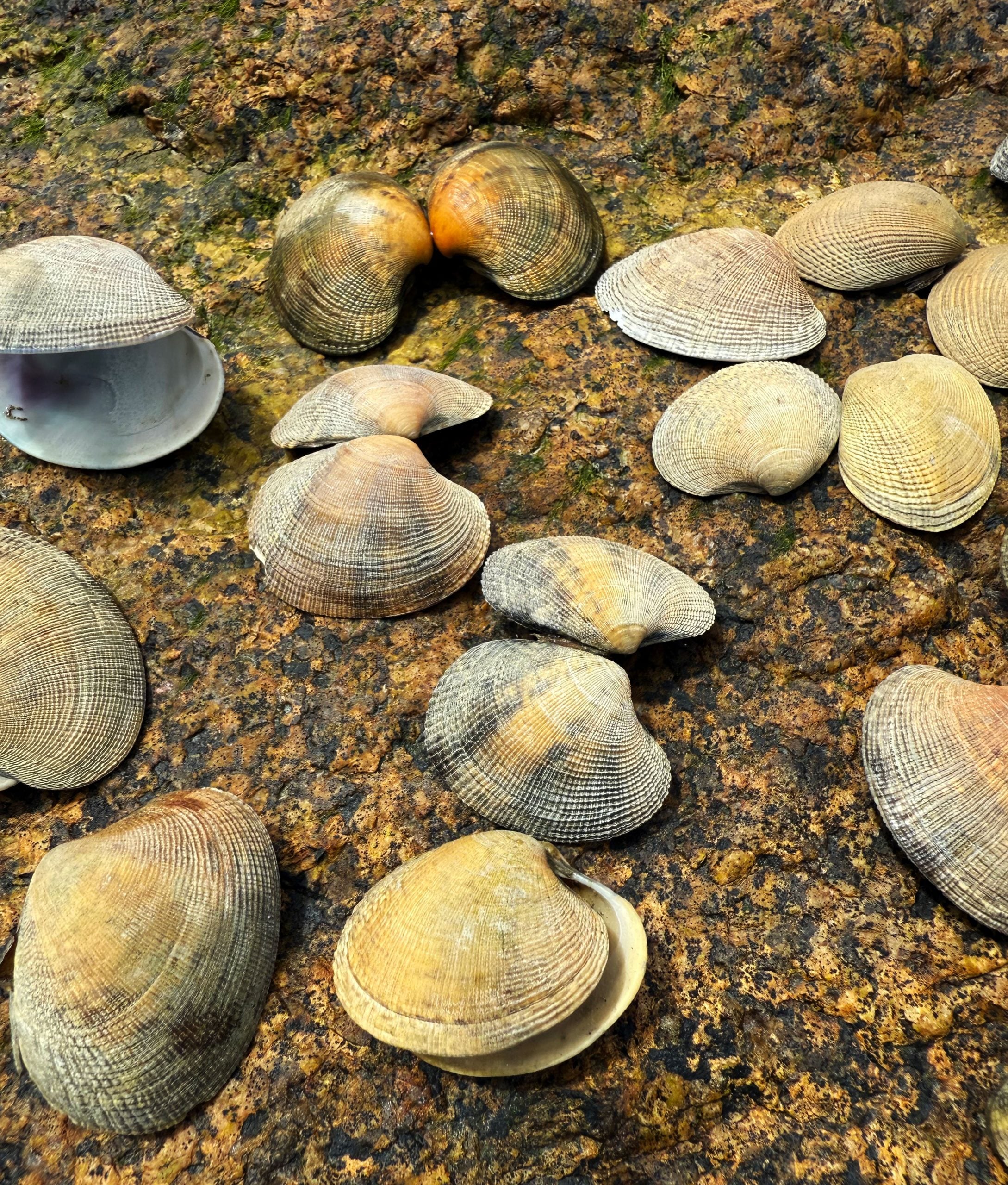
A research team found reproducing populations of Manila clams in Cape Cod and Boston Harbor.
A stretch of Atlantic shoreline that had remained free of Manila clams now appears to support reproducing populations of the invasive shellfish.
Biologists led by the University of Massachusetts Amherst, MIT Sea Grant at the Massachusetts Institute of Technology and the Center for Coastal Studies confirmed that Ruditapes philippinarum has established itself along the northwestern Atlantic coast. Published in Biological Invasions, the findings capture a rarely documented stage of biological invasion, when a species is first becoming established and beginning to spread through a new region.
Manila clams are native to waters extending from Russia’s Sakhalin Islands through Japan and southern China. Since at least the early 20th century, however, people have introduced them both intentionally and accidentally to the Pacific coast of North America and to Europe, allowing the species to spread across much of the Northern Hemisphere.
The clams are widely valued as food and support an industry worth about $7 billion annually. At the same time, dense populations can compete with native shellfish, hybridize with related species, and alter surrounding ecological communities.
Their arrival may also bring some benefits. Manila clams can provide abundant food for seabirds, crabs, raccoons, and other animals that prey on shellfish.
“Given that Manila clams are everywhere else in the northern hemisphere, it was only a matter of time before they showed up here, and we’ve been keeping an eye out for them,” says marine scientist Aly Putnam, who is a postdoctoral researcher at UMass Amherst and lecturer at Smith College, as well as the paper’s lead author.
A text message starts the search
The Northeastern U.S. had represented the last major gap in the Manila clam’s Northern Hemisphere range. Evidence that the species had reached this coastline emerged from something remarkably ordinary: a text message.
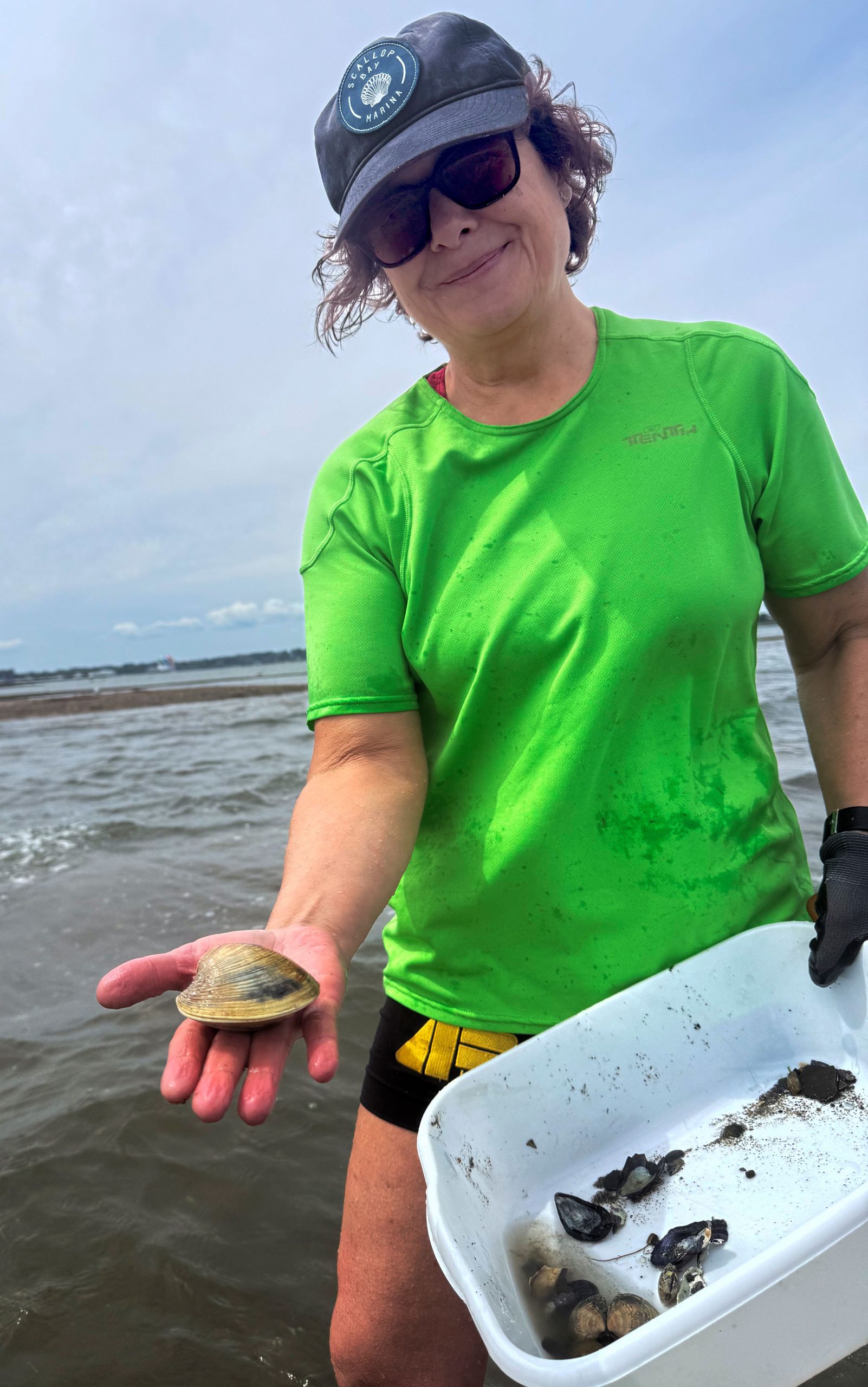
During the summer of 2025, Putnam was leading a small workshop on intertidal biodiversity at Spectacle Island in Boston Harbor when El Fernekees Hartshorn sent her a photograph of an unfamiliar clam. Fernekees Hartshorn, a recent University of Rhode Island graduate who had worked with Putnam on regional Rapid Assessment Surveys for marine invasive species, suggested that the shellfish might be a Manila clam. Fernekees Hartshorn is also a co-author of the paper.
Carolina Bastidas, a research scientist with MIT Sea Grant and Putnam’s co-investigator, was also participating in the Spectacle Island trip. The two began searching the shoreline for Manila clam shells and soon found them in large numbers.
At the same time, another group led by Owen Nichols of the Center for Coastal Studies had been following separate reports. Beginning in 2023, local clammers had described finding “weird clams” around Provincetown at the northern end of Cape Cod and at other locations across the Cape.
The Boston Harbor and Cape Cod investigations might have continued independently if James T. Carlton had not connected them. Carlton, an emeritus professor of marine sciences at Williams College and a leading authority on invasive marine species, learned about the shells found on Spectacle Island and urged Putnam and Bastidas to determine whether they represented an established population rather than discarded food or bait.
“Find me living clams,” he told the group—especially baby clams and clams that showed evidence of having reproduced.
Young clams confirm a new population
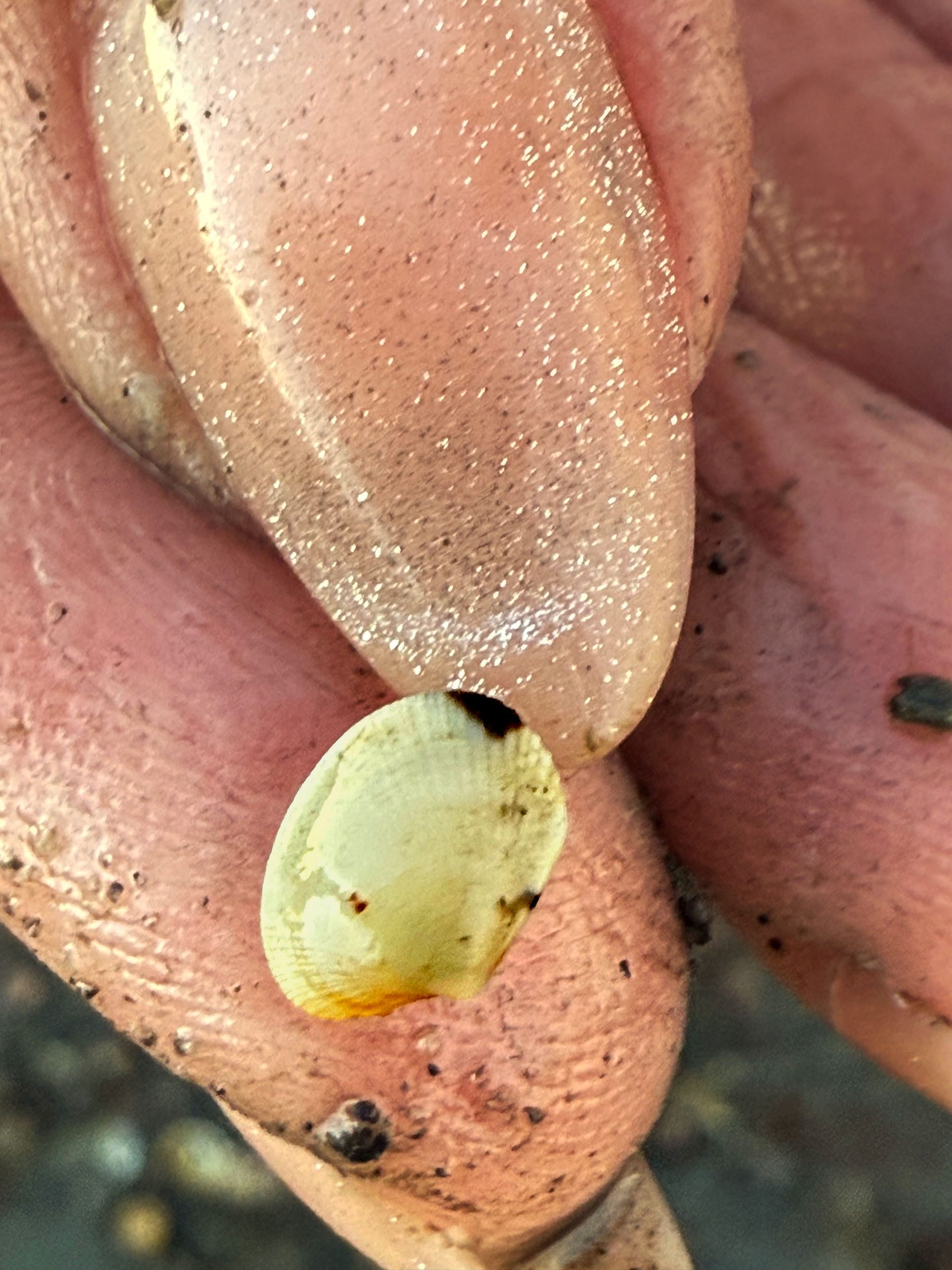
Putnam and Bastidas soon found the evidence Carlton requested. After spending hours digging at Squantum in Quincy and Calf Pasture Park in Boston, the researchers used sieve-based sampling to recover dozens of small living clams. The juvenile specimens showed that Manila clams had recently reproduced and that young clams were joining the population.
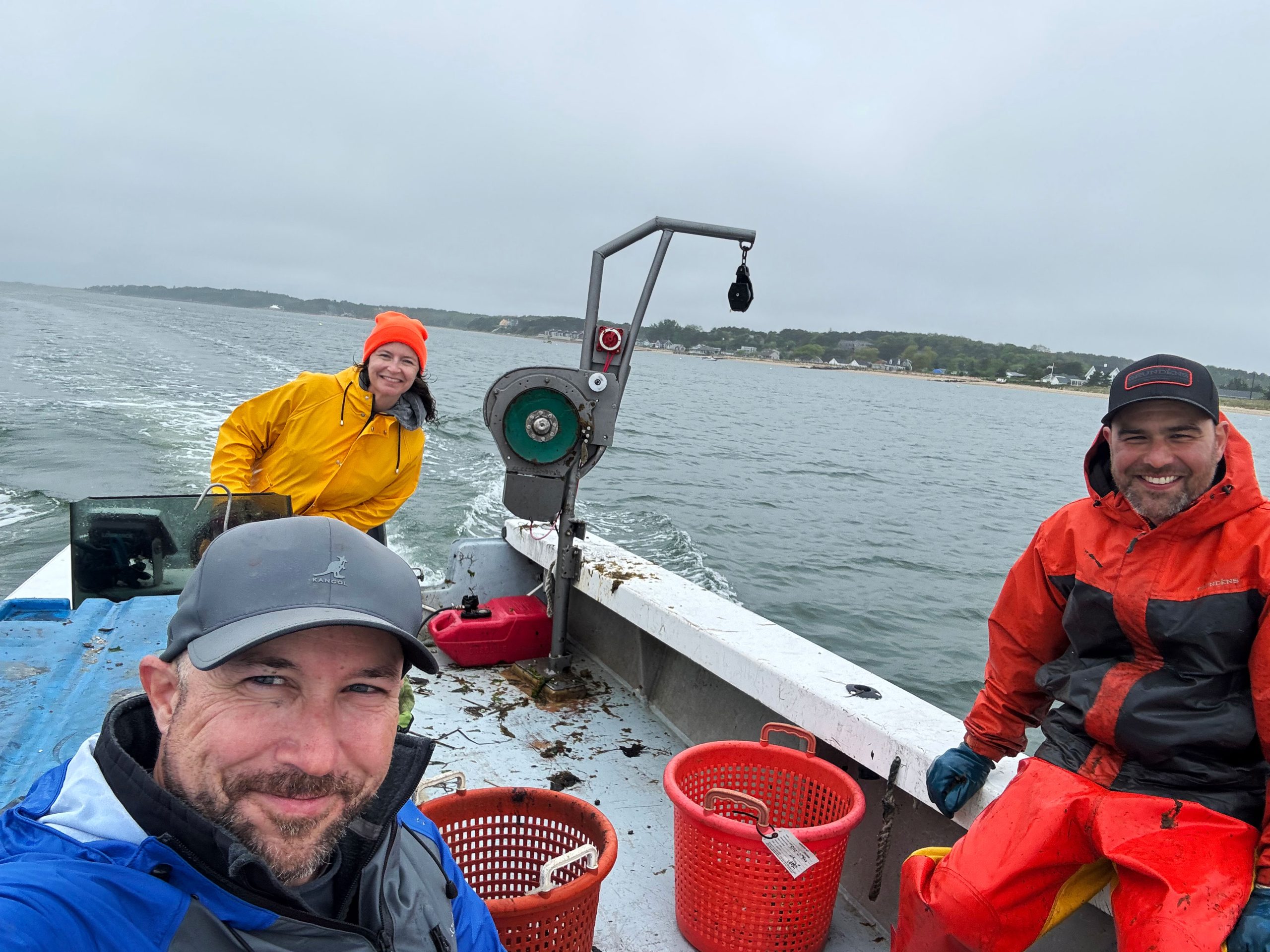
Nichols’s group then investigated the unusual clams reported around Cape Cod. They found female Manila clams that also showed evidence of reproduction, strengthening the case that the species was established at multiple locations rather than appearing only as isolated individuals.
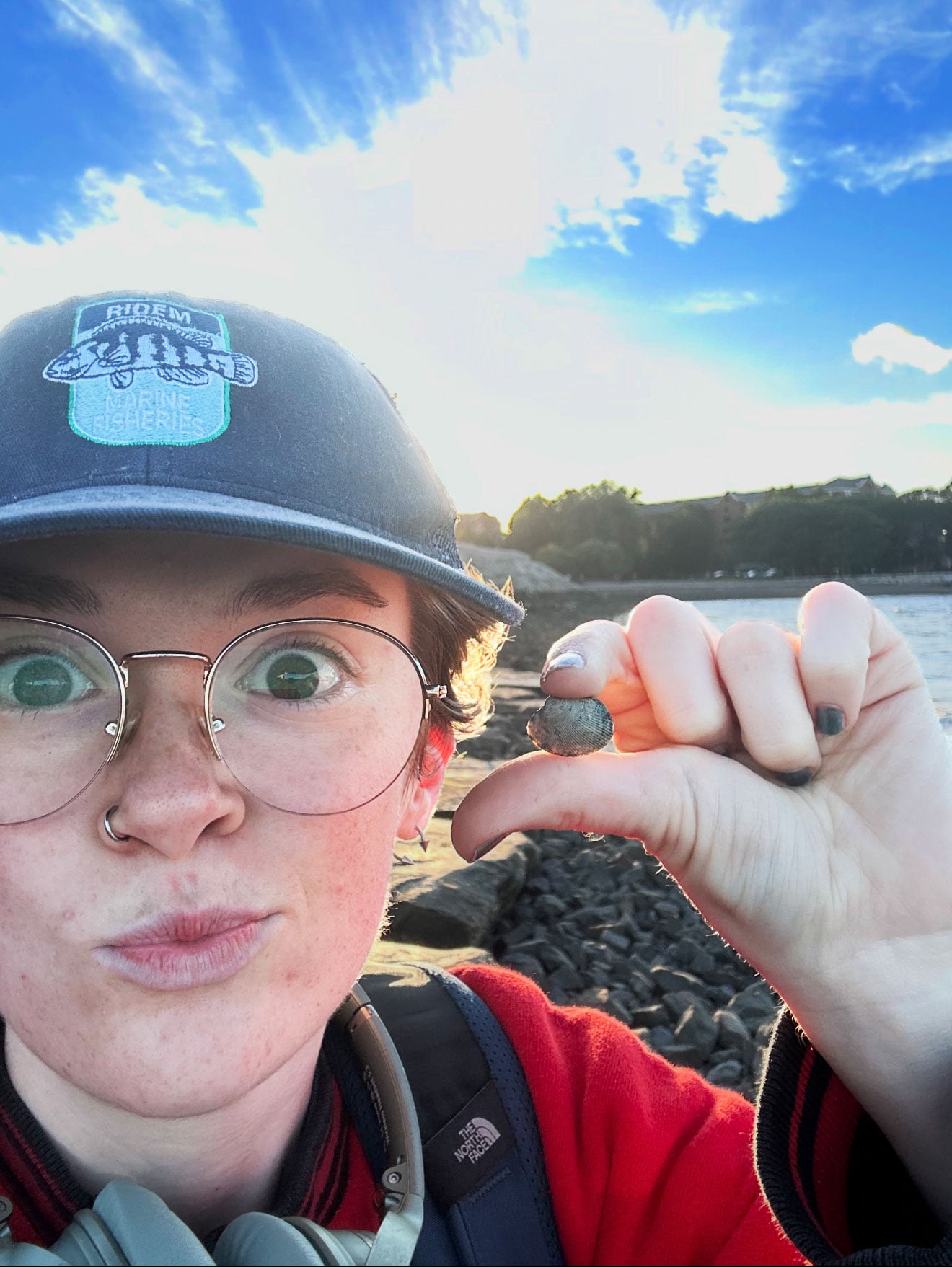
“When I learned about what each group was working on,” Carlton says, “I realized that this was a golden opportunity to not only combine forces but also to catch a detailed snapshot of the moment a new invasive species establishes itself.”
“As a marine biologist, I have worked with invasive species and with Rapid Assessment Surveys from the Northeast Aquatic Nuisance Species (NEANS) Panel for 11 years now,” says Bastidas. “Collaboration is invaluable for these sorts of efforts, and the fact we had already a network of people looking into Manila clams, means that we could catch them at the moment they established themselves.”
The ecological consequences remain uncertain
Researchers do not yet know how Manila clams reached the northwestern Atlantic or what their establishment could mean for coastal waters in the Northeastern U.S. Their presence could affect commercial shellfishing, native species and broader ecological relationships, but the direction and scale of those effects remain unclear.
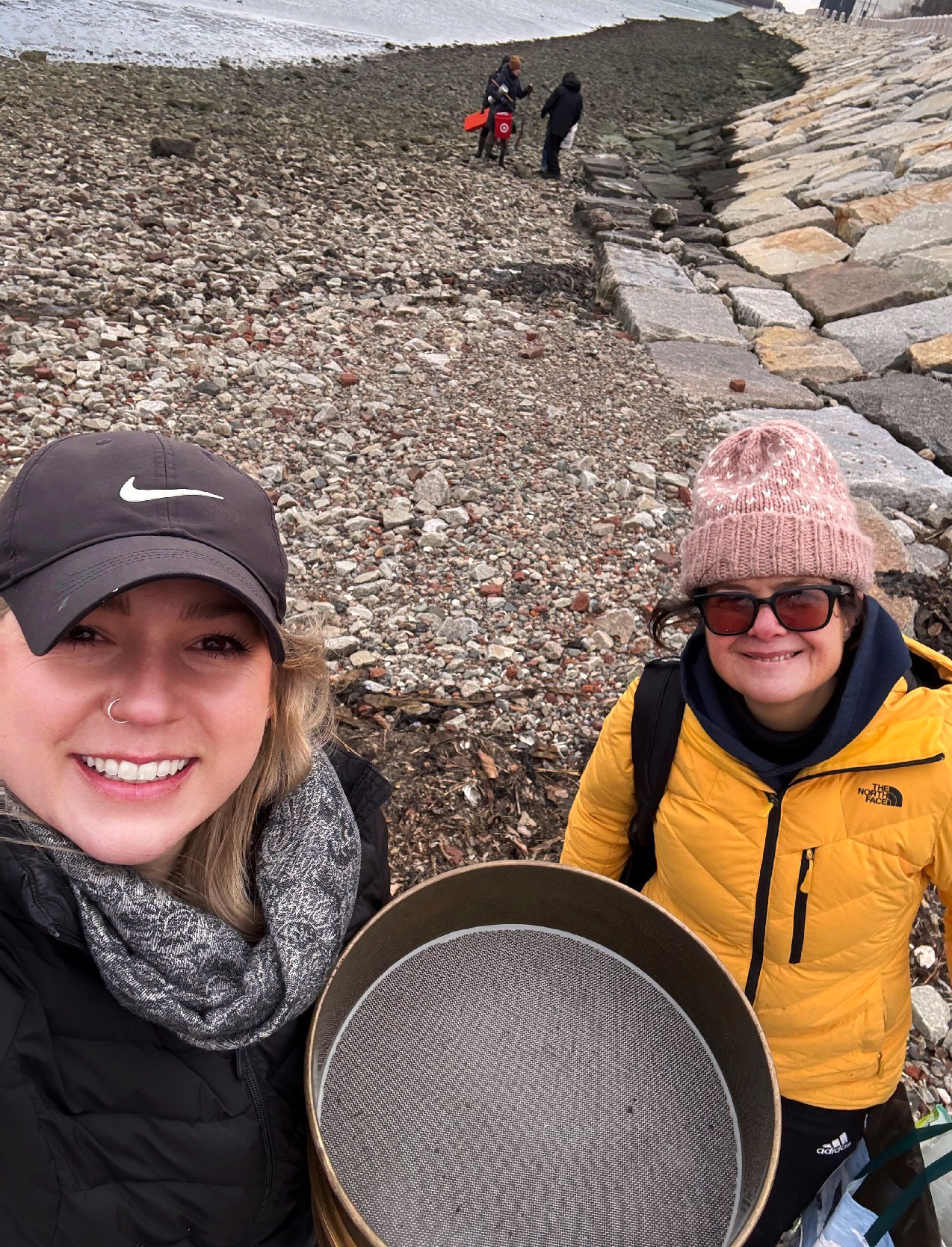
Bastidas says, “We do need more research to understand the Manila clam’s potential effects on the shellfishing industry and ecological communities. On the positive side, because Manila clams can become a source of food for other animals, they can relieve pressure on native species—for example, the predatory pressure of green crabs on softshell clams. So, there could also be positive impacts.”
“Discoveries like this remind us how much there is still a lot to learn about our coastal ecosystems,” said Putnam. “Finding the species is only the beginning. Now we are working to understand its distribution, if these populations are expanding and how these clams interact with other species in New England coastal systems. This research will help us determine whether this newcomer becomes a minor addition to the ecosystem or a more influential player in the years ahead.”
Reference: “Completing the journey in the global north: the Manila clam (Ruditapes philippinarum) (Bivalvia: Veneridae) arrives in the Northwest Atlantic Ocean” by Alysha B. Putnam, Carolina Bastidas, Owen C. Nichols, Jeff C. Clements, El Fernekees Hartshorn, Diana W. Chin, Alison Frye, Renee Gagne, Megan Lynn Geiger, Rachel Hutchinson, Vania Rivera Leon, Alexis J. Neffinger, Joshua Reitsma, Tommy Tucker, Isabella C. Yeung and James T. Carlton, 4 July 2026, Biological Invasions.
DOI: 10.1007/s10530-026-03861-z
Never miss a breakthrough: Join the SciTechDaily newsletter.
Follow us on Google and Google News.