
Close Menu
    Facebook X (Twitter) Instagram
    SciTechDaily
    • Biology
    • Chemistry
    • Earth
    • Health
    • Physics
    • Science
    • Space
    • Technology
    Facebook X (Twitter) Pinterest YouTube RSS
    SciTechDaily
    Home»Science»Well-Preserved Mammoth Discovered in the Permafrost of Northern Siberia
    Science

    Well-Preserved Mammoth Discovered in the Permafrost of Northern Siberia

    By SciTechDailyOctober 11, 20121 Comment2 Mins Read
    Facebook Twitter Pinterest Telegram LinkedIn WhatsApp Email Reddit
    Share
    Facebook Twitter LinkedIn Pinterest Telegram Email Reddit
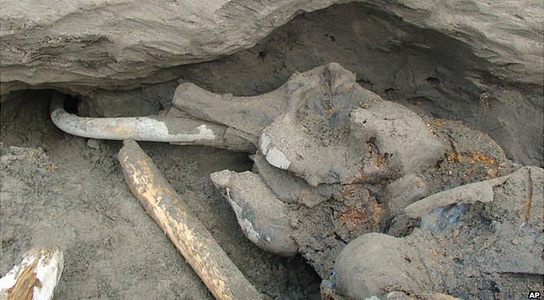
    zhenya-siberia-mammoth
    The carcass, discovered on Russia’s Taimyr Peninsula, still has one of its tusks.

    An 11-year-old boy, Zhenya Salinder, discovered a well-preserved mammoth carcass in the permafrost of Northern Siberia, 3,500 km (2,200 miles) northeast of Moscow in Sopochnaya Karga.

    A team of experts from the St Petersburg Zoology Institute excavated the mammoth in five days, extracting it from the frozen mud. They sent it to Moscow for further study. The team estimates that the mammoth was 16 years old when it died, and it stood about 2m (6.6ft) in height. It weighed 500kg (1,100lb).
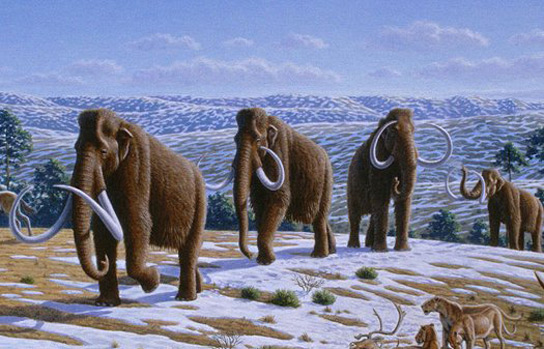
    wholly-mammoths-wikipedia
    Artist’s interpretation of woolly mammoths. Credit: Wikipedia

    The specimen has been named Zhenya, after the boy who discovered the carcass while walking his dogs in the same area. This specimen could either have been killed by Ice Age humans or a rival mammoth, states Alexei Tikhonov from the St Peterburg Zoology Institute.

    The team had to use traditional tools, such as axes, picks, and shovels, as well as a steamer that allowed them to thaw a thin layer of permafrost. This new specimen is 30,000 years old and better preserved than a specimen that was discovered earlier this year. However, this specimen might be less complete than others.

    Never miss a breakthrough: Join the SciTechDaily newsletter.
    Follow us on Google and Google News.

    Fossils Mammoth Siberia Zoology
    Share. Facebook Twitter Pinterest LinkedIn Email Reddit

    Related Articles

    Scientists Discover Bizarre 100-Million-Year-Old Insect With Giant Claws

    New Research: Abrupt Climate Warming Killed Mammoths

    Preserved Mammoth With Blood Discovered in Siberia

    Jurassic Period Super-Sized Fleas Had Armored Mouthparts to Attack the Thick Hide of Dinosaurs

    Researchers Discover Remains of Possibly Earliest Known Ancestor

    500 Million Year Old Tulip-Shaped Creature Discovered

    Hundreds of Lost Fossils From the Darwin Collection Rediscovered by the British Geological Survey

    Neanderthal Home Made of Mammoth Bones Discovered

    Nest of Juvenile Protoceratops Andrewsi Dinosaurs Discovered

    1 Comment

    1. tom on October 11, 2012 12:18 pm

      dna from this this creature be viable for use to grow new ones such as in-vitro etc etc

      coooool

      Reply
    Leave A Reply Cancel Reply

    • Facebook
    • Twitter
    • Pinterest
    • YouTube

    Don't Miss a Discovery

    Subscribe for the Latest in Science & Tech!

    Trending News

    JWST Finds a “Star” 100 Billion Times Brighter Than Any Star Should Be

    Scientists Find a Hidden Biological Link Across Different Forms of Autism

    Astronomers Discover a Ghostly River of Stars That Could Reveal Dark Matter

    Why Is Colorectal Cancer Rising in People Under 50? New Clues Point to the Environment

    Quantum Fluctuations Break a Crystal’s Symmetry Rules

    Why Does an Irregular Heartbeat Strike 40 Years Early in Some People?

    Scientists Reveal How ADHD Could Fuel Creative Thinking

    Scientists Find Just 3 Minutes of Sprinting Can Transform Blood Chemistry

    Follow SciTechDaily
    • Facebook
    • Twitter
    • YouTube
    • Pinterest
    • Newsletter
    • RSS
    SciTech News
    • Biology News
    • Chemistry News
    • Earth News
    • Health News
    • Physics News
    • Science News
    • Space News
    • Technology News
    Recent Posts
    • Billions of Invasive Fish Have Taken Over the Great Lakes. Scientists Say We Can Still Stop Their Next Invasion
    • Scientists Turn Red Strawberries White With a Single Gene Edit
    • NASA’s Artemis II Crew Flew Farther Than Any Humans Ever. Now They’re Being Honored
    • The Sun’s Corona Usually Looks White. In Spain, It Turned Gold
    • A SpaceX Falcon 9 Rocket Hit the Moon and Blasted Open a 60-Foot Crater
    Copyright © 1998 - 2026 SciTechDaily. All Rights Reserved.
    • Science News
    • About
    • Contact
    • Editorial Board
    • Privacy Policy
    • Terms of Use

    Type above and press Enter to search. Press Esc to cancel.