
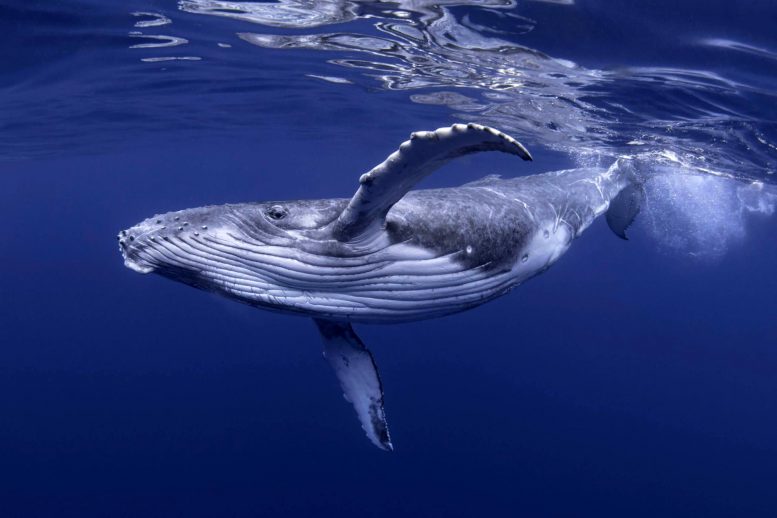
A recent study by Griffith University and a team of global researchers found that whales’ contribution to carbon capture is minimal and insufficient to significantly alter the course of climate change. This debunks media narratives painting whales as “climate engineers” and emphasizes the need for large-scale protection of marine environments and urgent behavioral changes to tackle climate change effectively.
Do whales increase the removal of carbon from the atmosphere?
Despite some hope that this would be the case, a new study led by Griffith University and a team of global researchers has found the amount of potential carbon capture by whales is too little to meaningfully alter the course of climate change.
Marine scientist Dr Olaf Meynecke and the team from the Griffith-led Whales and Climate Research Program including Professor Brendan Mackey and Dr. Jasper De Bie, reviewed the primary ways in which baleen whales (such as humpback whales) removed atmospheric carbon at regional and global scales.
The team found the amount potentially sequestered by the whales was too minimal to make significant impact on the trajectory of climate change.
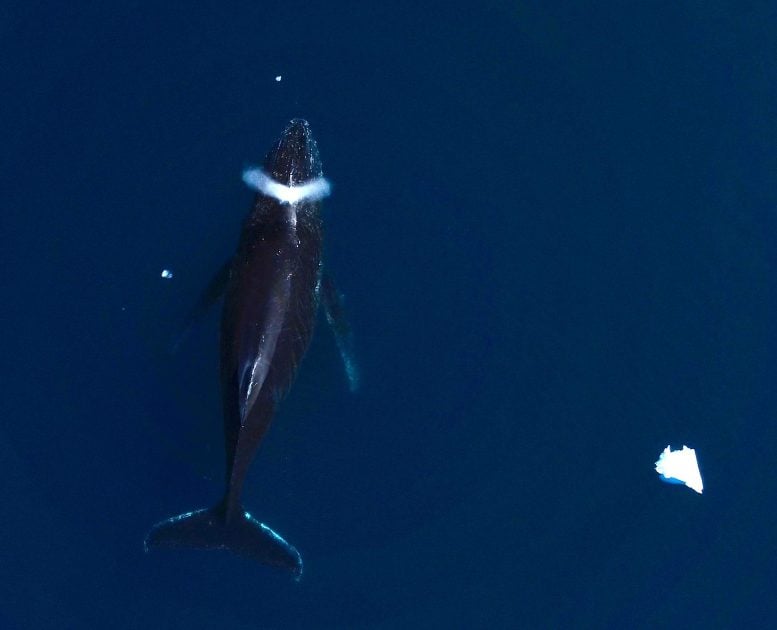
“Our study supports that whales are important for the marine ecosystem, but their contribution to the global carbon flux is too small to effectively reduce atmospheric carbon,” Dr Meynecke said.
“While our research group would very much like to highlight the opposite in order to benefit the conservation of whales and perhaps one day use carbon credits to support research, the debate is misguiding and creates false hope.
“This is in contrast to media perpetuating whales as climate engineers.
“Creating false hope in the ability of charismatic species to be climate engineers may act to further delay the urgent behavioral change needed to avert catastrophic climate change impacts, which can, in turn, have indirect consequences for the recovery of whale populations.”
The ocean carbon cycle is a major driver of the world’s climate and further investigation on existing gaps in whale ecology will help clarify their contribution to it, stressed the team.
Alternative Pathways for Whale-Driven Carbon Capture
There are other potential pathways in which whales can contribute to carbon capture: through their biomass in which carbon is kept for decades (depending on their life span); and when a whale dies by falling to the ocean floor where it may eventually be covered by sediment.
And while whales were vital to the healthy functioning of marine ecosystems, Dr. Meynecke said overstating their ability to prevent or counterbalance human-induced changes in global carbon budgets may unintentionally redirect attention from well-established methods of reducing greenhouse gases.
“Previous estimations neglect the scale in which carbon sequestration occurred both temporally and spatially. Some of the pathways suggested for carbon sequestration such as whale falls (when whales die and sink to the ocean floor but retain carbon for decades) also underestimate the breathing of whales.
“We think it is important to acknowledge that there are other values of whales that are more relevant to drive their conservation than carbon capture.
“Large-scale protection of marine environments including the habitats of whales will build resilience and assist with natural carbon capture at a global scale.”
The research has been published in Frontiers in Marine Science, Marine Megafauna.
Reference: “Do whales really increase the oceanic removal of atmospheric carbon?” by Jan-Olaf Meynecke, Saumik Samanta, Jasper de Bie, Elisa Seyboth, Subhra Prakash Dey, Giles Fearon, Marcello Vichi, Ken Findlay, Alakendra Roychoudhury and Brendan Mackey, 5 June 2023, Frontiers in Marine Science.
DOI: 10.3389/fmars.2023.1117409
This research was assisted by funding the Whales and Climate Research Program.
Never miss a breakthrough: Join the SciTechDaily newsletter.
Follow us on Google and Google News.