
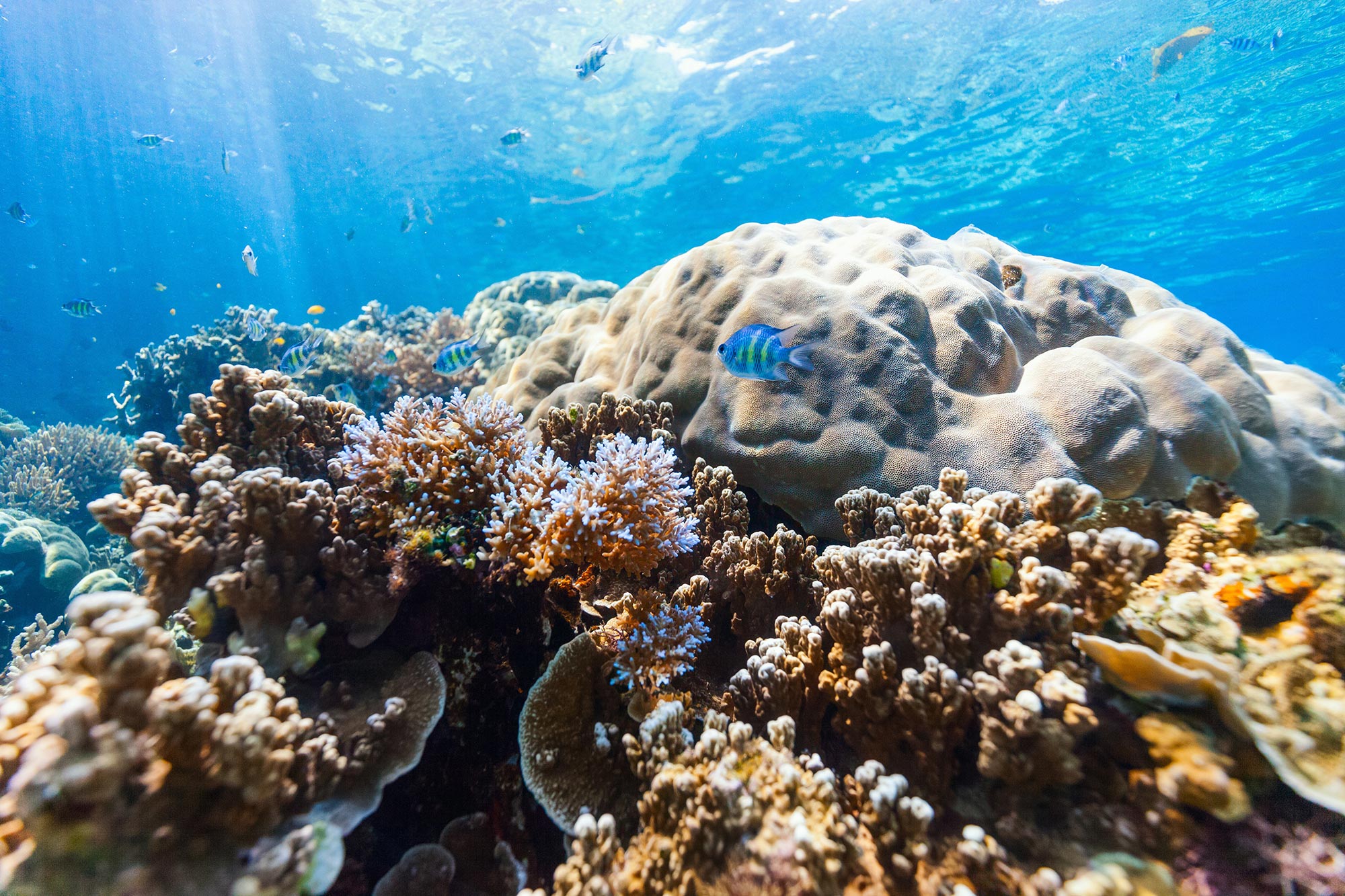
Coral reefs in the Gulf of Eilat paused growth for 3,000 years due to sea-level changes but later recovered. Scientists warn that today’s environmental threats could prevent future recovery.
A new study reveals that coral reefs in the Gulf of Eilat experienced a surprising 3,000-year “shutdown” in growth—from about 4,400 to 1,000 years ago—likely due to a temporary drop in sea level possibly triggered by global cooling. This interruption, which mirrors similar events observed in reefs off Mexico, Brazil, and Australia, points to a widespread environmental shift during that time. Although the reefs experienced a long pause, they eventually recovered, with coral species reestablishing from deeper waters, a testament to their natural resilience. However, researchers caution that modern challenges—such as climate change, pollution, and ocean acidification—present far greater risks, underscoring the urgent need for conservation to protect these essential marine ecosystems.
Led by Prof. Adi Torfstein from the Hebrew University and Prof. Oren Levy from Bar-Ilan University, in collaboration with an international team of researchers, the study uncovered this significant pause in coral reef growth in the Gulf of Eilat/Aqaba in the northern Red Sea during the late Holocene period. Published in Global Change Biology, the findings offer critical insights into the historical resilience of coral reef ecosystems and how they have responded to environmental changes over time.
Coral reefs play a vital role in marine biodiversity, supporting the oceanic carbon cycle and acting as natural barriers against coastal erosion and storm surges. Despite their importance, our understanding of how reefs have long responded to temperature fluctuations, sea-level shifts, and human influences remains limited.
Key Findings
A noticeable hiatus in reef growth between 4,400 and 1,000 years Before Present (BP) was observed, coinciding with similar events recorded in Mexico, Brazil, and Australia.
Coral diversity and abundance displayed remarkable consistency before and after the hiatus, suggesting that the reef ecosystem recovered by recolonizing from deeper coral communities.
The study attributes this temporary “shutdown” to a combination of tectonic activity and glacio-eustatic sea-level changes. A temporary sea-level drop, possibly caused by a cooling event, exposed the reef and halted its growth.
Additional analyses of coral skeletons in the modern era revealed a significant shift in the carbon isotopic composition, reflecting the increasing influence of human activity on the global carbon balance.
Innovative Research Methods
The research team included Dr. Bar Feldman from Bar-Ilan University, Prof. Aldo Shemesh from the Weizmann Institute, Dr. Yonathan Shaked from the Inter-University Institute of Marine Sciences (IUI), Prof. Mick O’Leary from the University of Western Australia and Prof. Huang Dunwei from the National University of Singapore, conducted extensive sampling of coral cores up to three meters long.
These samples provided an unprecedented window into the growth history of the reef over the past 10,000 years.
Implications for Future Coral Conservation
Despite the historical “switch-off,” the findings highlight the resilience of coral reef ecosystems in the face of environmental challenges. However, they also underscore the pressing need for conservation efforts to address the modern threats posed by climate change, ocean acidification, and human-induced disturbances.
“Understanding how reefs have responded to past sea-level changes helps us predict their future resilience and informs conservation strategies,” said Dr. Torfstein. “While our research shows that coral communities can recover after major disruptions, today’s climate crisis presents unprecedented challenges that demand urgent action.”
Reference: “Late Holocene “Turn-Off” of Coral Reef Growth in the Northern Red Sea and Implications for a Sea-Level Fall” by B. Feldman, A. Torfstein, M. O’Leary, N. Simon Blecher, R. Yam, Y. Shaked, A. Shemesh, D. Huang and O. Levy, 12 February 2025, Global Change Biology.
DOI: 10.1111/gcb.70073
Supported by the Israel Nature and Parks Authority, this study enhances our understanding of coral reef dynamics and contributes to global efforts to protect these fragile marine ecosystems.
Never miss a breakthrough: Join the SciTechDaily newsletter.
Follow us on Google and Google News.
4 Comments
Oh, for crying out loud – not bloody Eliana Nova, known spammer-scammer YET AGAIN!! This is a science space, not a dumping ground for your unwanted advertising garbage. Now will you bloody well f*** off?
“However, researchers caution that modern challenges—such as climate change, pollution, and ocean acidification—present far greater risks, …”
Are the authors suggesting that what happened previously wasn’t climate change after having written “likely due to a temporary drop in sea level possibly triggered by global cooling”?
The oceans have not acidified. They are quite alkaline, and probably always will be according to Stanford geochemist Konrad Krauskopf. The open oceans may have experienced a decline in pH of about 0.1 pH unit in the last century, which is less than the diurnal and seasonal changes, particularly in the tropics where there is a lot of evaporation.
“Additional analyses of coral skeletons in the modern era revealed a significant shift in the carbon isotopic composition, reflecting the increasing influence of human activity on the global carbon balance.”
Can isotopic fractionation — resulting from increased out-gassing and the (bi)carbonate buffering system reacting to carbonic acid — be ruled out? I would expect that 12C would be more reactive and mobile than 13C. The argument about changes in the Delta 13C is not compelling because they provide evidence that the change started long before the Industrial Revolution.
This strikes me as alarmist arm waving without supporting evidence.