
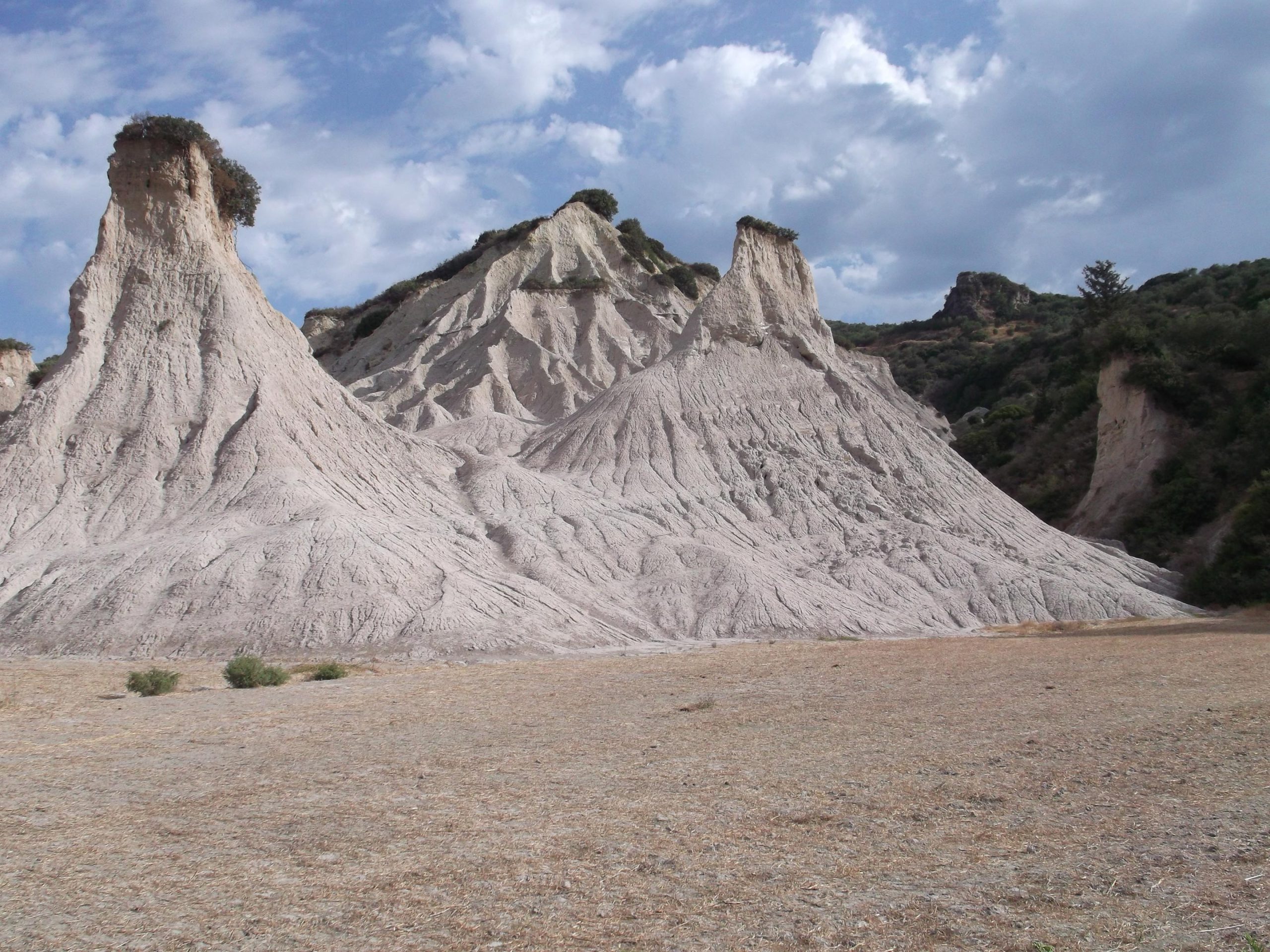
Research on the Messinian Salinity Crisis indicates that only a small fraction of Mediterranean marine species survived, with a biodiversity recovery time exceeding 1.7 million years.
Throughout Earth’s history, lithospheric movements have repeatedly led to the isolation of regional seas from the world ocean and to massive accumulations of salt. Salt giants, encompassing thousands of cubic kilometers, have been discovered by geologists in Europe, Australia, Siberia, the Middle East, and elsewhere. These salt accumulations serve as valuable natural resources and have been exploited from antiquity to the present in mines around the world, such as the Hallstatt mine in Austria and the Khewra Salt Mine in Pakistan.

Impact of the Messinian Salinity Crisis
Discovered in the early 1970s, the Mediterranean salt giant is a kilometer-thick salt layer beneath the Mediterranean Sea, formed around 5.5 million years ago due to disconnection from the Atlantic during the Messinian Salinity Crisis. In a new study published in Science, an international team of researchers – comprising 29 scientists from 25 institutes across Europe- has quantified the loss of biodiversity in the Mediterranean Sea due to the Messinian crisis and the biotic recovery afterward.
This video is a recreation of one of the proposed models for how the Mediterranean was isolated by the sinking of a lithospheric plate into the Earth’s mantle (approx. 6 million years ago) and how dry climate then led to the desiccation of that sea during the Messinian Salinity Crisis (approx. 5.5 million years ago), until 5.33 million years ago, the level of the Atlantic exceeded that of the Gibraltar land bridge and triggered a fast refill. Credit: © CSIC – Daniel García-Castellanos
Extended Recovery Time for Marine Biodiversity
After several decades of painstaking research on fossils dated from 12 to 3.6 million years found on land in the peri-Mediterranean countries and deep-sea sediment cores, the team found that almost 67% of the marine species in the Mediterranean Sea after the crisis were different than those before the crisis. Only 86 of 779 endemic species (living exclusively in the Mediterranean before the crisis) survived the enormous change in living conditions after the separation from the Atlantic.

The change in the configuration of the gateways, which led to the formation of the salt giant itself, resulted in abrupt salinity and temperature fluctuations, but also changed the migration pathways of marine organisms, the flow of larvae and plankton, and disrupted central processes of the ecosystem. Due to these changes, a large proportion of the Mediterranean inhabitants of that time, such as tropical reef-building corals, died out. After the reconnection to the Atlantic and the invasion of new species like the Great White shark and oceanic dolphins, Mediterranean marine biodiversity presented a novel pattern, with the number of species decreasing from west to east, as it does today.

Quantifying and Understanding Biodiversity Recovery
Because peripheral seas like the Mediterranean are important biodiversity hotspots, it was very likely that the formation of salt giants throughout geologic history had a great impact, but it hasn’t been quantified up to now. “Our study now provides the first statistical analysis of such a major ecological crisis,” explains Konstantina Agiadi from the University of Vienna’s Department of Geology, who led the study.
Furthermore, it quantifies for the first time the timescales of recovery after a marine environmental crisis, which is actually much longer than expected: “The biodiversity in terms of number of species only recovered after more than 1.7 million years,” says the geoscientist. The methods used in the study also provide a model connecting plate tectonics, the birth and death of the oceans, Salt, and marine life that could be applied to other regions of the world.

New Research Directions and Questions
“The results open a bunch of new exciting questions,” states Daniel García-Castellanos from Geosciences Barcelona (CSIC), who is the senior author of this study: “How and where did 11% of the species survive the salinization of the Mediterranean? How did previous, larger salt formations change the ecosystems and the Earth System?” These questions are still to be explored, for instance also within the new Cost Action Network “SaltAges” starting in October, where researchers are invited to explore the social, biological, and climatic impacts of salt ages.
Reference: “The marine biodiversity impact of the Late Miocene Mediterranean salinity crisis” by Konstantina Agiadi, Niklas Hohmann, Elsa Gliozzi, Danae Thivaiou, Francesca R. Bosellini, Marco Taviani, Giovanni Bianucci, Alberto Collareta, Laurent Londeix, Costanza Faranda, Francesca Bulian, Efterpi Koskeridou, Francesca Lozar, Alan Maria Mancini, Stefano Dominici, Pierre Moissette, Ildefonso Bajo Campos, Enrico Borghi, George Iliopoulos, Assimina Antonarakou, George Kontakiotis, Evangelia Besiou, Stergios D. Zarkogiannis, Mathias Harzhauser, Francisco Javier Sierro, Marta Coll, Iuliana Vasiliev, Angelo Camerlenghi and Daniel García-Castellanos, 29 August 2024, Science.
DOI: 10.1126/science.adp3703
Never miss a breakthrough: Join the SciTechDaily newsletter.
Follow us on Google and Google News.
1 Comment
“The biodiversity in terms of number of species only recovered after more than 1.7 million years,”
Does that represent the amount of time it took the extirpated species to be replaced by forms evolving from survivors, or does it represent the amount of time the basin was isolated from the Atlantic Ocean?