
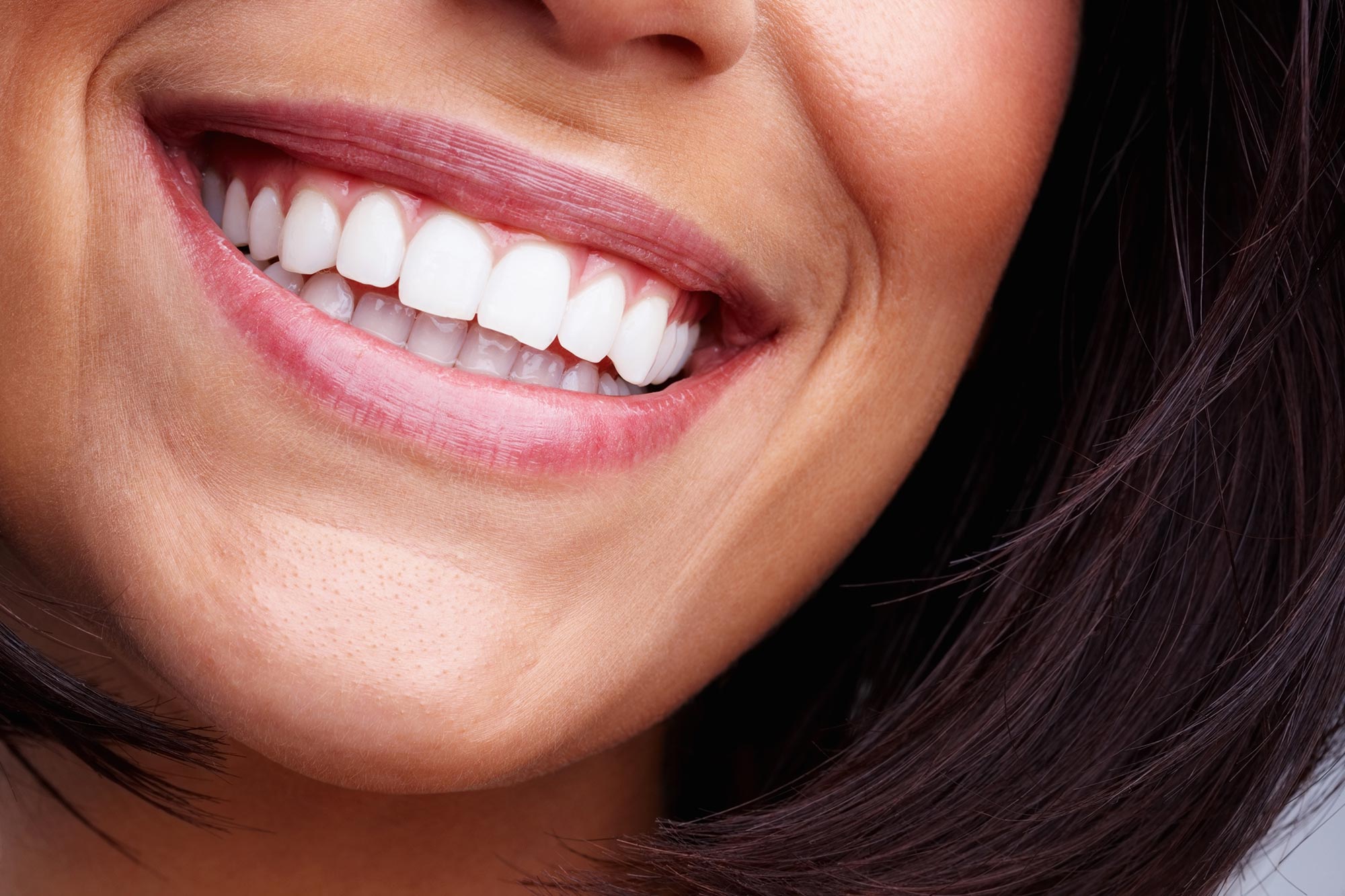
A new vibration-activated whitening powder uses electric toothbrush motion to brighten teeth while repairing enamel and influencing oral bacteria.
Tooth stains are not always a brushing problem. Some people discolor more easily because of genetics, and dark pigments from everyday items like tomatoes, coffee, and tea can gradually cling to the tooth surface. Many over-the-counter whiteners can lift those stains, but the same chemistry can also leave teeth more vulnerable.
A research team reporting in ACS Nano is exploring a different idea: use an electric toothbrush as the trigger. They created a prototype whitening powder that turns vibration into the chemical activity needed to break up stains. In lab tests, the approach improved brightness while also helping protect the tooth surface.
“This work offers a safe, at-home teeth whitening strategy integrating whitening, enamel repair, and microbiome balance for long-term oral health,” says Min Xing, first author on the study.
Most popular whitening strips, gels, and mouth rinses rely on peroxide. These products work by producing reactive oxygen species (ROS), highly reactive compounds that can dismantle stain molecules. The drawback is that these same reactions can roughen or weaken enamel, which may make teeth stain again more quickly and may contribute to additional oral problems.
Xing, Wenhao Qian, Xuanyong Liu, Jiajun Qiu, and colleagues aimed to keep the stain-fighting chemistry, but limit when it happens by making it start only during electric toothbrush use, while also supporting repair.
A Vibration-Activated Whitening Powder
Their powder, called BSCT, is made by combining strontium and calcium ions with barium titanate in a solution, then heating the mixture into a ceramic. Under vibration, BSCT generates a small electric field through the piezoelectric effect, a property used in technologies that convert mechanical motion into electrical signals. In this case, that tiny burst of electricity sets off reactions that produce the whitening species right at the tooth surface.
When the researchers tested BSCT on human teeth stained with tea and coffee, the change was noticeable after four hours of brushing with an electric toothbrush. After 12 hours, the treated teeth were almost 50% whiter than teeth stained the same way but brushed with saline, essentially a simple salt solution used as a non-whitening comparison. The powder also did more than brighten.
On teeth with damaged enamel and dentin, brushing with BSCT helped rebuild these layers because strontium, calcium, and barium ions from the powder formed mineral deposits on the surface, adding material back where it was missing.
Effects on Oral Bacteria and Inflammation
Next, researchers tested the powder on rats fed high-sugar diets. Daily brushing for one minute over four weeks using BSCT helped restore the rats’ oral microbiome, killing periodontitis-causing Porphyromonas gingivalis and Staphylococcus aureus bacteria and reducing inflammation.
Though current tests haven’t yet incorporated the BSCT powder into a toothpaste formula, researchers say that this study is a step toward a new, effective, at-home treatment for safely whitening teeth and promoting oral health.
Reference: “Sr-, Ca-Doped BaTiO3 with Synergistic Piezoelectric Catalysis and Microbial Balance Effects Enables Tooth Whitening for Home Oral Health” by Min Xing, Yechuan Deng, Kuicai Ye, Jiayin Feng, Zhengqian Fu, Wenhao Qian, Xuanyong Liu and Jiajun Qiu, 5 January 2026, ACS Nano.
DOI: 10.1021/acsnano.5c16997
The authors acknowledge funding from the Youth Innovation Promotion Association of the Chinese Academy of Sciences, the Science and Technology Commission of Shanghai Municipality, the Shanghai Medical Key Specialty, the Medical Key Subject of Xuhui District, and the Opening Project of the State Key Laboratory of High Performance Ceramics.
Never miss a breakthrough: Join the SciTechDaily newsletter.
Follow us on Google and Google News.
2 Comments
“the change was noticeable after four hours of brushing with an electric toothbrush.”
I really hope they mean that the effects were visible four hours after brushing the teeth, and not that you have to brush your teeth for four hours. 🙂
Yes! At 2 minutes per bush session, 4 hours would be 240 minutes, which at 1X daily brushing would be 120 days. 2x brushing daily would bring that down to 60 days or 2 months.
Regardless, it will be decades before this gets to market.