
Close Menu
    Facebook X (Twitter) Instagram
    SciTechDaily
    • Biology
    • Chemistry
    • Earth
    • Health
    • Physics
    • Science
    • Space
    • Technology
    Facebook X (Twitter) Pinterest YouTube RSS
    SciTechDaily
    Home»Health»Smart Bandages Automatically Sense and Treat Bacterial Infections
    Health

    Smart Bandages Automatically Sense and Treat Bacterial Infections

    By American Chemical SocietyJanuary 29, 2020No Comments2 Mins Read
    Facebook Twitter Pinterest Telegram LinkedIn WhatsApp Email Reddit
    Share
    Facebook Twitter LinkedIn Pinterest Telegram Email Reddit
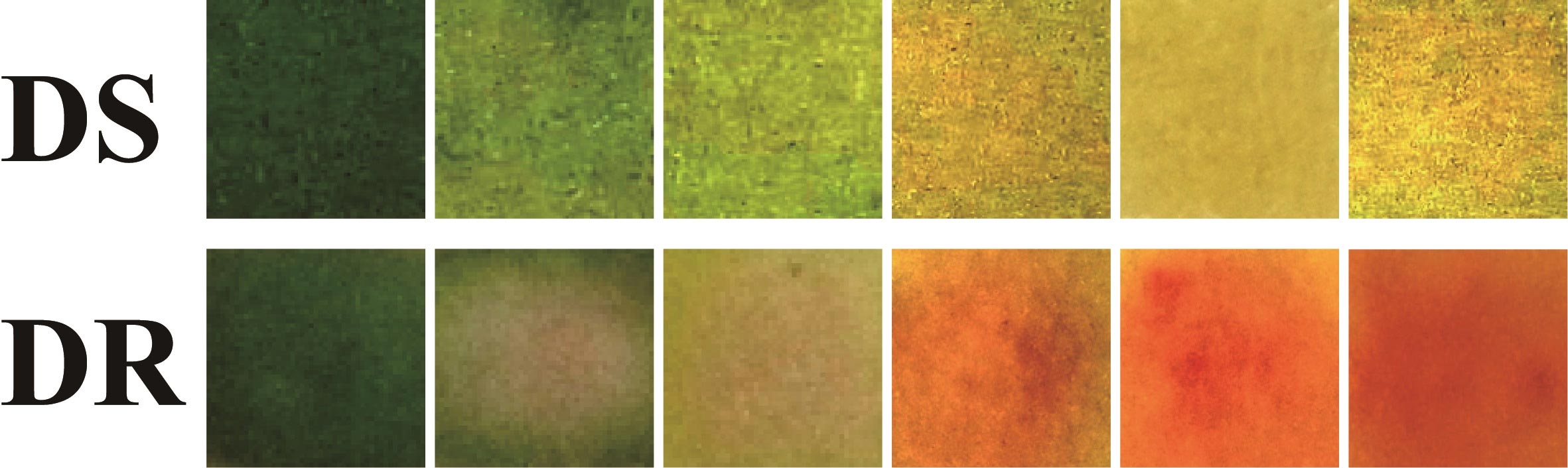
    Color Changing Bandages
    A bandage changed color from green to yellow, and from green to red, in the presence of increasing concentrations of drug-sensitive (DS) and drug-resistant (DR) E.coli, respectively. Credit: Adapted from ACS Central Science 2020, DOI: 10.1021/acscentsci.9b01104

    According to the World Health Organization, antibiotic resistance is one of the biggest threats to global health. Sensing and treating bacterial infections earlier could help improve patients’ recovery, as well curb the spread of antibiotic-resistant microbes. Now, researchers reporting in ACS Central Science have developed color-changing bandages that can sense drug-resistant and drug-sensitive bacteria in wounds and treat them accordingly.

    Xiaogang Qu and colleagues developed a material that changes color from green to yellow when it contacts the acidic microenvironment of a bacterial infection. In response, the material, which is incorporated into a bandage, releases an antibiotic that kills drug-sensitive bacteria. If drug-resistant bacteria are present, the bandage turns red in color through the action of an enzyme produced by the resistant microbes. When this happens, the researchers can shine light on the bandage, causing the material to release reactive oxygen species that kill or weaken the bacteria, making them more susceptible to the antibiotic. The team showed that the bandage could speed the healing of wounds in mice that were infected with drug-sensitive or drug-resistant bacteria.

    Reference: “Colorimetric Band-aids for Point-of-Care Sensing and Treating Bacterial Infection” by Yuhuan Sun, Chuanqi Zhao, Jingsheng Niu, Jinsong Ren and Xiaogang Qu, 29 January 2020, ACS Central Science.
    DOI: 10.1021/acscentsci.9b01104

    The authors acknowledge funding from the National Natural Science Foundation of China and the Key Research Program of Frontier Sciences of the Chinese Academy of Sciences.

    Never miss a breakthrough: Join the SciTechDaily newsletter.
    Follow us on Google and Google News.

    American Chemical Society Bacteria Biomedical Engineering Injury
    Share. Facebook Twitter Pinterest LinkedIn Email Reddit

    Related Articles

    Scientists Discover Anti-Aging Molecules Hiding in Your Blood

    Hidden Danger: Brain Implants Could Allow Bacteria To Invade the Brain

    New Nanotech Bandages Kill Bacteria and Speed Up Healing

    Scientists Unveil New Antibiotic to Combat Drug-Resistant Superbugs

    The $1 Cure: How Programmable Bacteria Are Reshaping Cancer Therapy

    New Type of Cholera Vaccine May Offer Much Longer-Lasting Protection

    Antimicrobial Coating for Orthopedic Implants Prevents Dangerous Bacterial Infections

    Bacteria Reprogrammed to Make Designer Molecule Used in Pharmaceutical Drugs

    New Strategy Makes Bacteria More Vulnerable to Antibiotics

    Leave A Reply Cancel Reply

    • Facebook
    • Twitter
    • Pinterest
    • YouTube

    Don't Miss a Discovery

    Subscribe for the Latest in Science & Tech!

    Trending News

    The Strange “Spacetime Crystal” That Can Suddenly Turn Into a Black Hole

    The Surprising Way Asteroids May Have Helped Life Begin on Earth

    Vast Hidden Structure Discovered Under Miles of Ice in East Antarctica

    A Surprising Discovery Suggests Autism Is Not One Condition

    New Alzheimer’s Discovery Could Change How Scientists Fight the Disease

    Yale Discovery Overturns Long-Held “Evolutionary Dead End” Theory

    UCLA Scientists Uncover a “Hidden Weakness” in Some of the World’s Deadliest Cancers

    Humpback Whale Stuns Scientists With 15,000 Kilometer Journey Across Oceans

    Follow SciTechDaily
    • Facebook
    • Twitter
    • YouTube
    • Pinterest
    • Newsletter
    • RSS
    SciTech News
    • Biology News
    • Chemistry News
    • Earth News
    • Health News
    • Physics News
    • Science News
    • Space News
    • Technology News
    Recent Posts
    • Your Gut Microbes May Decide How Many Calories You Really Absorb
    • Millions Take This Joint Supplement but Scientists Found a Concerning Alzheimer’s Link
    • Scientists Uncover What Kept Humanity’s First Campfires Burning 780,000 Years Ago
    • Why Evolution Stalled for Millions of Years Before Suddenly Exploding
    • New Feathered Dinosaur May Have Solved a 120-Million-Year-Old Fossil Mystery
    Copyright © 1998 - 2026 SciTechDaily. All Rights Reserved.
    • Science News
    • About
    • Contact
    • Editorial Board
    • Privacy Policy
    • Terms of Use

    Type above and press Enter to search. Press Esc to cancel.