
Close Menu
    Facebook X (Twitter) Instagram
    SciTechDaily
    • Biology
    • Chemistry
    • Earth
    • Health
    • Physics
    • Science
    • Space
    • Technology
    Facebook X (Twitter) Pinterest YouTube RSS
    SciTechDaily
    Home»Health»Why Most People Regain Lost Weight? Obesity Severely Impairs the Brain’s Response to Nutrients
    Health

    Why Most People Regain Lost Weight? Obesity Severely Impairs the Brain’s Response to Nutrients

    By Amsterdam University Medical CentersJune 18, 2023No Comments4 Mins Read
    Facebook Twitter Pinterest Telegram LinkedIn WhatsApp Email Reddit
    Share
    Facebook Twitter LinkedIn Pinterest Telegram Email Reddit
    Diminished Cognition Brain fMRI Concept
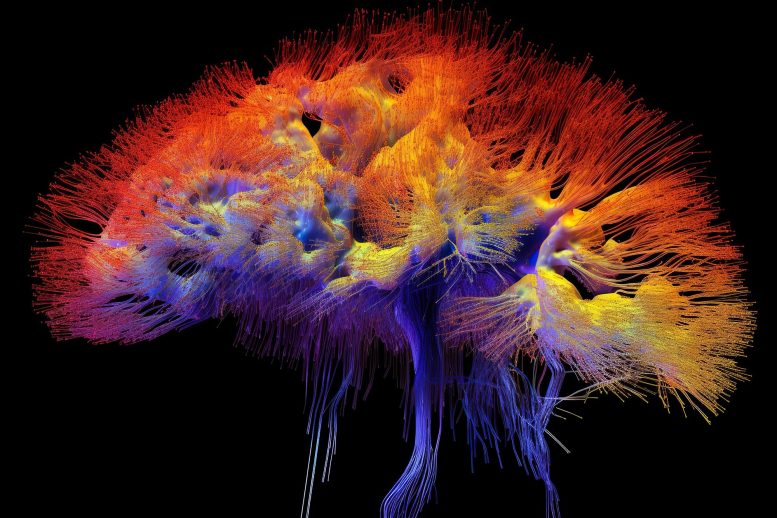
    New research indicates that brain responses to nutrients are diminished in people with obesity and don’t improve even after weight loss. The study revealed that individuals with obesity released less dopamine in a brain region crucial for food intake motivation, compared to those with healthy body weight. Additionally, obese participants showed reduced brain activity upon nutrient infusion into the stomach. The lack of brain response improvement after weight loss could explain why most individuals regain weight after initial successful weight loss, the researchers concluded.

    A joint study by Amsterdam UMC and Yale University reveals that obesity is linked to a diminished brain response to nutrients, which persists even after weight loss. This diminished response, which involves lower dopamine release and reduced nutrient-sensing activity, may contribute to the difficulty in maintaining weight loss.

    Brain responses to specific nutrients are diminished in individuals with obesity and are not improved after weight loss, according to a study led by Amsterdam University Medical Centers (UMC) and Yale University, published today in Nature Metabolism.  

    “Our findings suggest that long-lasting brain adaptations occur in individuals with obesity, which could affect eating behavior. We found that those with obesity released less dopamine in an area of the brain important for the motivational aspect of food intake compared to people with a healthy body weight. Dopamine is involved in the rewarding feelings of food intake.  

    The subjects with obesity also showed reduced responsivity in brain activity upon infusion of nutrients into the stomach. Overall, these findings suggest that sensing of nutrients in the stomach and gut and/or of nutritional signals is reduced in obesity and this might have profound consequences for food intake.” says Mireille Serlie, lead researcher and Professor of Endocrinology at Amsterdam UMC. 

    Nutrient Sensing and Its Impact on Food Intake

    Food intake is dependent on the integration of complex metabolic and neuronal signals between the brain and several organs, including the gut and nutritional signals in the blood. This network triggers sensations of hunger and satiation, regulates food intake as well as the motivation to look for food. While these processes are increasingly better understood in animals, including in the context of metabolic diseases such as obesity, much less is known about what happens in humans. Partly due to the difficulty in designing experimental setups in the clinic that could shed light on to these mechanisms.  

    In order to address this lack of knowledge, Serlie, who is also a professor at Yale, and colleagues from both institutions designed a controlled trial. This trial consisted of infusing specific nutrients directly into the stomach of 30 participants with a healthy body weight and 30 individuals with obesity, while simultaneously measuring their brain activity through the use of MRI and dopamine release using SPECT scans.  

    While the participants with a healthy body weight displayed specific patterns of brain activity and dopamine release after nutrient infusion, these responses were severely blunted in participants with obesity. Moreover, 10% body weight loss (following a 12-week diet) was insufficient to restore these brain responses in individuals with obesity, suggesting long-lasting brain adaptations occur in the context of obesity and remain even after weight loss is achieved.  

    “The fact that these responses in the brain are not restored after weight loss, may explain why most people regain weight after initially successful weight loss,” concludes Serlie.

    For more on this study, see Yale Study Finds Severely Impaired Response to Nutrients.

    Reference: “Brain responses to nutrients are severely impaired and not reversed by weight loss in humans with obesity: a randomized crossover study” by Katy A. van Galen, Anouk Schrantee, Kasper W. ter Horst, Susanne E. la Fleur, Jan Booij, R. Todd Constable, Gary J. Schwartz, Ralph J. DiLeone and Mireille J. Serlie, 12 June 2023, Nature Metabolism.
    DOI: 10.1038/s42255-023-00816-9

    Never miss a breakthrough: Join the SciTechDaily newsletter.
    Follow us on Google and Google News.

    Brain Neuroscience Obesity
    Share. Facebook Twitter Pinterest LinkedIn Email Reddit

    Related Articles

    Scientists Reveal Why You Still Have Room for Dessert Even When You’re Full

    Why Some People Can’t Stop Eating: Scientists Discover Unique Brain Circuit Linked to BMI

    Molecule NPY and Weight Gain: How Chronic Stress Drives the Brain To Crave Comfort Food

    Obesity May Permanently Change the Brain – Yale Study Finds Severely Impaired Response to Nutrients

    Green Mediterranean Diet: How Eating Healthy Can Make Your Brain Younger

    Shocking Discovery: Obesity Causes Neurodegeneration Similar to Alzheimer’s Disease

    Surprise Protector of Females’ Brains: Subcutaneous Fat

    Neuroscientists Are Unraveling the Mystery of Why We Overeat

    Ketone Supplements May Protect and Improve Brain Health in People With Obesity

    Leave A Reply Cancel Reply

    • Facebook
    • Twitter
    • Pinterest
    • YouTube

    Don't Miss a Discovery

    Subscribe for the Latest in Science & Tech!

    Trending News

    Largest-Ever Study Finds Medicinal Cannabis Ineffective for Anxiety, Depression, PTSD

    250-Million-Year-Old Egg Solves One of Evolution’s Biggest Mysteries

    Living With Roommates Might Be Changing Your Gut Microbiome Without You Knowing

    Century-Old Cleaning Chemical Linked to 500% Increased Risk of Parkinson’s Disease

    What if Your Memories Never Happened? Physicists Take a New Look at the Boltzmann Brain Paradox

    One of the Universe’s Largest Stars May Be Getting Ready To Explode

    Scientists Discover Enzyme That Could Supercharge Ozempic-Like Weight Loss Drugs

    Popular Sweetener Linked to DNA Damage – “It’s Something You Should Not Be Eating”

    Follow SciTechDaily
    • Facebook
    • Twitter
    • YouTube
    • Pinterest
    • Newsletter
    • RSS
    SciTech News
    • Biology News
    • Chemistry News
    • Earth News
    • Health News
    • Physics News
    • Science News
    • Space News
    • Technology News
    Recent Posts
    • Scientists Prove There Are Just Six Degrees of Separation in a Social Network
    • Bee Bacteria Could Fix a Major Flaw in Plant-Based Milk
    • Scientists Discover a Surprising Way To Make Bread Healthier and More Nutritious
    • Natural Compounds Boost Bone Implant Success While Killing Bacteria and Cancer Cells
    • After 60 Years, Scientists Uncover Unexpected Brain Effects of Popular Diabetes Drug Metformin
    Copyright © 1998 - 2026 SciTechDaily. All Rights Reserved.
    • Science News
    • About
    • Contact
    • Editorial Board
    • Privacy Policy
    • Terms of Use

    Type above and press Enter to search. Press Esc to cancel.