

Close Menu
    Facebook X (Twitter) Instagram
    SciTechDaily
    • Biology
    • Chemistry
    • Earth
    • Health
    • Physics
    • Science
    • Space
    • Technology
    Facebook X (Twitter) Pinterest YouTube RSS
    SciTechDaily
    Home»Science»With Genetic Tweak Maize Cells Produce Enzyme-Replacement Drug
    Science

    With Genetic Tweak Maize Cells Produce Enzyme-Replacement Drug

    By SciTechDailySeptember 20, 2012No Comments2 Mins Read
    Facebook Twitter Pinterest Telegram LinkedIn WhatsApp Email Reddit
    Share
    Facebook Twitter LinkedIn Pinterest Telegram Email Reddit
    waxy-maize
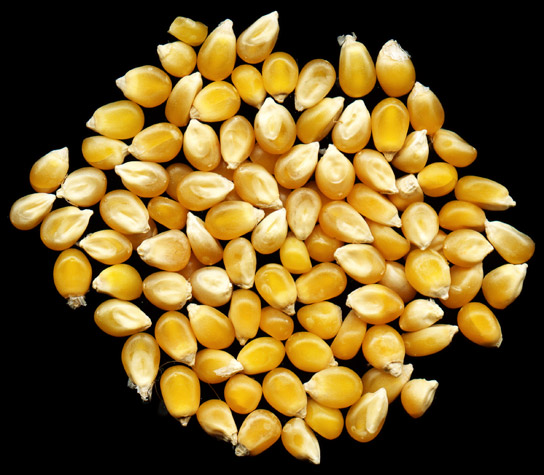
    Plant biologists have developed a method to produce essential drug enzymes in maize.

    Some complex protein drugs need to be made by culturing mammalian cells. Plant biologists have developed a way to manufacture the necessary enzymes for drugs in maize.

    The scientists published their findings in the journal Nature Communications. Plant biologist Allison Kermode, at Simon Fraser University in Burnaby, Canada, whose husband works with people who have lysosomal storage disorders, is working on ways to create enzyme-replacement drugs.
    maize-corn

    When human proteins are expressed in plant cells, they are usually decorated with plant-specific sugar molecules that prompt a dangerous immune reaction in patients. The biologists came up with ways to avoid these problems.

    The group tweaked the protein-producing genes to ensure that once the proteins are made, they would not move through the cell’s Golgi complex, the structure through which the problematic sugars are added. The newly engineered maize seeds produce proteins decorated with sugars that can be easily converted to human forms.

    Other attempts to solve this problem require mutating the protein, which can disrupt its function, or engineering plants to modify the proteins in a different way, which can be time-consuming and doesn’t always work.

    Cereal crops can be grown using established methods, and the seeds themselves are ideal for long-term protein storage. It will take time before these drugs reach clinical trials. Enzymes purified from engineered seeds are functional, but they haven’t been tested in humans. The seeds also have to produce enough proteins.

    Reference: “Production of α-L-iduronidase in maize for the potential treatment of a human lysosomal storage disease” by Xu He, Thomas Haselhorst, Mark von Itzstein, Daniel Kolarich, Nicolle H. Packer, Tracey M. Gloster, David J. Vocadlo, Lorne A. Clarke, Yi Qian and Allison R. Kermode, 18 September 2012, Nature Communications.
    DOI: 10.1038/ncomms2070

    Never miss a breakthrough: Join the SciTechDaily newsletter.
    Follow us on Google and Google News.

    Disease Drugs Enzyme Maize Plant Biology
    Share. Facebook Twitter Pinterest LinkedIn Email Reddit

    Related Articles

    Scientists Tap Into Flower “Superpower” for Groundbreaking New Drug Treatments

    New Compound Could Help Improve Heart Attack Recovery

    New Organ on a Chip Lets Researchers Study Effects of Drugs and Disease

    ‘Promiscuous’ Enzyme Turns Plant Waste into Sustainable Products

    Breakthrough Technique Uses Nanoparticles to Combat Cancer Drug Resistance

    Scientists Identify Specific Enzyme Related to Colon Cancer

    Tethered Nanoparticles Improve the Performance of Immune-Based Drugs

    New MIT Gene Therapy Technique May Help Prevent Cancer Metastasis

    Genetically Reducing AMPK Activity May Prevent Hereditary Hearing Loss

    Leave A Reply Cancel Reply

    • Facebook
    • Twitter
    • Pinterest
    • YouTube

    Don't Miss a Discovery

    Subscribe for the Latest in Science & Tech!

    Trending News

    Even Occasional Binge Drinking May Triple Liver Damage Risk

    Liftoff! NASA’s Artemis II Launch Sends Astronauts Around the Moon for First Time in 50 Years

    Scientists Discover New Way To Eliminate “Zombie Cells” Driving Aging

    This New Quantum Theory Could Change Everything We Know About the Big Bang

    This One Vitamin May Help Protect Your Brain From Dementia Years Later

    Stopping Weight-Loss Drugs Like Ozempic Can Quickly Erase Heart Benefits

    A 500-Million-Year-Old Surprise Is Forcing Scientists to Rethink Spider Evolution

    Coffee and Blood Pressure: What You Need To Know Before Your Next Cup

    Follow SciTechDaily
    • Facebook
    • Twitter
    • YouTube
    • Pinterest
    • Newsletter
    • RSS
    SciTech News
    • Biology News
    • Chemistry News
    • Earth News
    • Health News
    • Physics News
    • Science News
    • Space News
    • Technology News
    Recent Posts
    • Longevity Isn’t Equal: Why Life-Extending Treatments May Be a “Biological Lottery”
    • AI May Soon Detect Cancer Just by Listening to You Speak
    • Your Child’s Clothes Could Contain Toxic Lead, Study Finds
    • Atomic Chains Turn Electric Fields into Measurable Quantum Signals
    • 12,000-Year-Old Native American Dice Rewrite the History of Gambling
    Copyright © 1998 - 2026 SciTechDaily. All Rights Reserved.
    • Science News
    • About
    • Contact
    • Editorial Board
    • Privacy Policy
    • Terms of Use

    Type above and press Enter to search. Press Esc to cancel.