
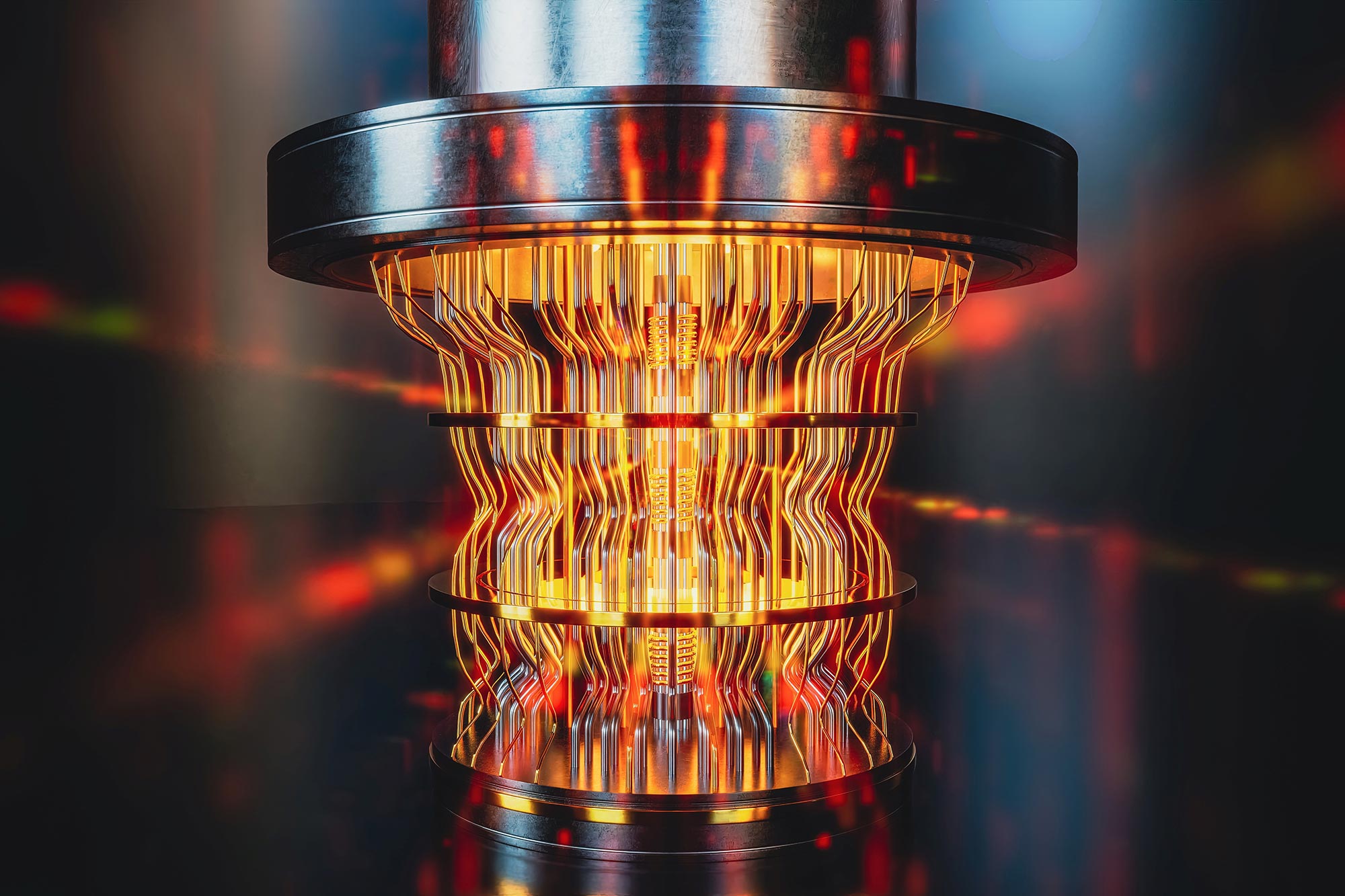
The JUPITER supercomputer set a new milestone by simulating 50 qubits. New memory and compression innovations made this breakthrough possible.
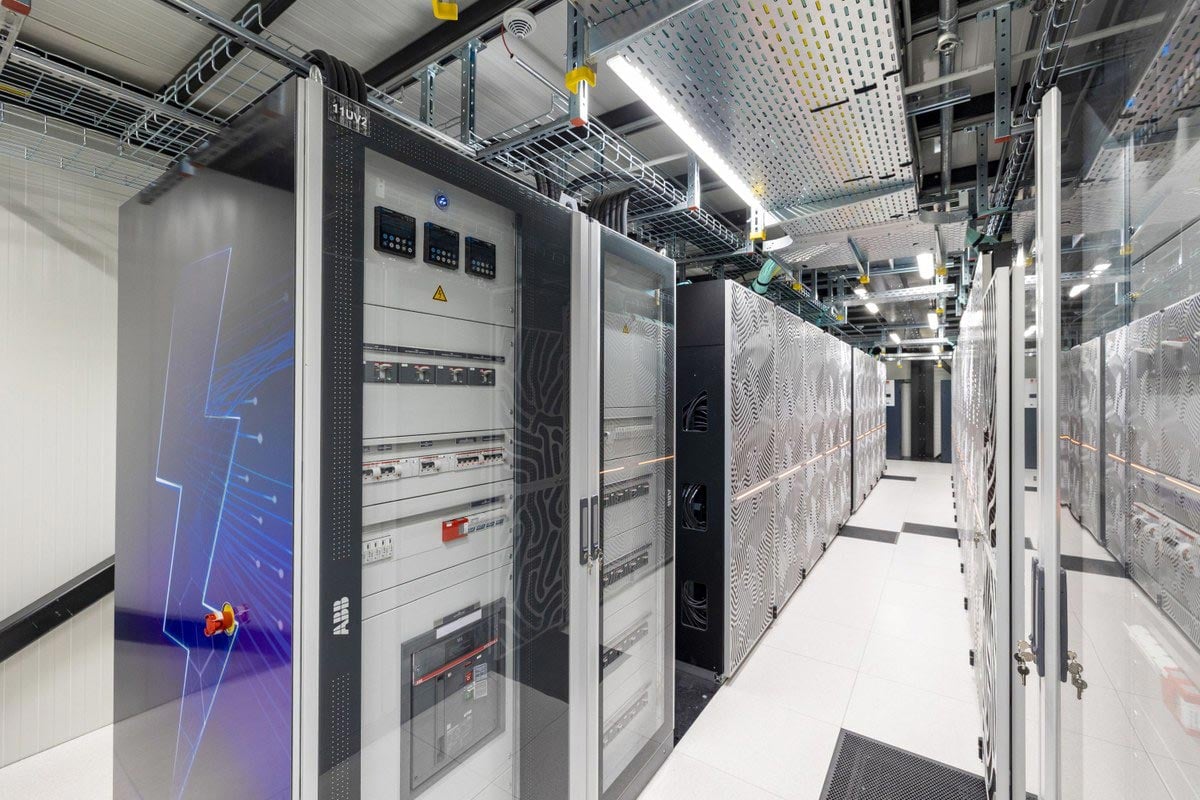
A team from the Jülich Supercomputing Centre, working with NVIDIA specialists, has achieved a major milestone in quantum research. For the first time, they successfully simulated a universal quantum computer with 50 qubits, using JUPITER, Europe’s first exascale supercomputer, which began operation at Forschungszentrum Jülich in September.
This accomplishment breaks the previous record of 48 qubits set by Jülich scientists in 2019 on Japan’s K computer. The new result highlights the extraordinary capabilities of JUPITER and provides a powerful testbed for exploring and validating quantum algorithms.
Simulating quantum computers is essential for advancing future quantum technologies. These simulations let researchers check experimental findings and experiment with new algorithmic approaches long before quantum hardware becomes advanced enough to run them directly. Key examples include the Variational Quantum Eigensolver (VQE), which can analyze molecules and materials, and the Quantum Approximate Optimization Algorithm (QAOA), used to improve decision-making in fields such as logistics, finance, and artificial intelligence.
Pushing the limits of classical computing
Recreating a quantum computer on conventional systems is extremely demanding. As the number of qubits grows, the number of possible quantum states rises at an exponential rate. Each added qubit doubles the amount of computing power and memory required.
Although a typical laptop can still simulate around 30 qubits, reaching 50 qubits requires about 2 petabytes of memory, which is roughly two million gigabytes. “Only the world’s largest supercomputers currently offer that much,” says Prof. Kristel Michielsen, Director at the Jülich Supercomputing Centre. “This use case illustrates how closely progress in high-performance computing and quantum research are intertwined today.”
The simulation replicates the intricate quantum physics of a real processor in full detail. Every operation – such as applying a quantum gate – affects more than 2 quadrillion complex numerical values, a “2” with 15 zeros. These values must be synchronized across thousands of computing nodes in order to precisely replicate the functioning of a real quantum processor.
Breakthrough enabled by new memory technology
The record was made possible by the close coupling of central processing units (CPUs) and graphics processing units (GPUs) in NVIDIA GH200 Superchips, which are used in the JUPITER supercomputer. This design allows data that exceeds GPU memory limits to be temporarily stored in CPU memory with minimal loss of performance.
To exploit this hybrid memory system, specialists at the NVIDIA Application Lab – a initiative between the Jülich Supercomputing Centre (JSC) and NVIDIA – enhanced Jülich’s simulation software Jülich Universal Quantum Computer Simulator (JUQCS). The new version, JUQCS-50, now performs quantum operations efficiently even when parts of the data are offloaded to the CPU.
Further innovations include a byte-encoding compression method that reduces memory requirements eightfold and a dynamic algorithm that continuously optimizes data exchange between more than 16,000 GH200 Superchips.
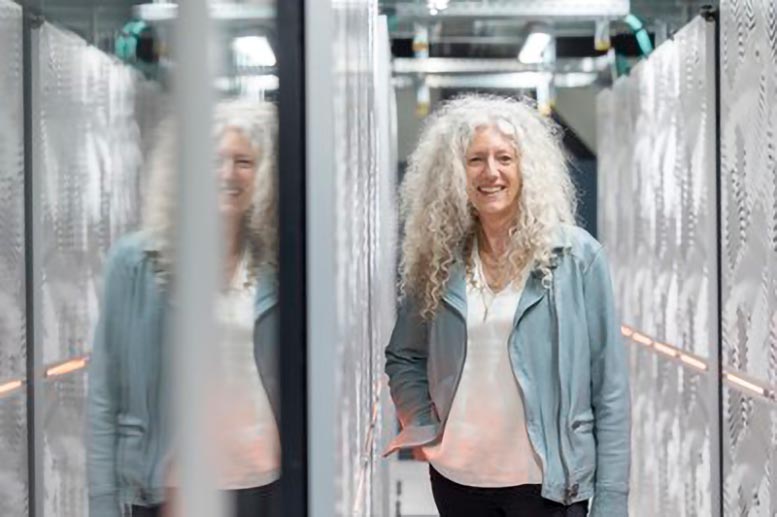
“With JUQCS-50, we can emulate universal quantum computers with high fidelity and tackle questions that no existing quantum processor can yet solve,” says Prof. Hans De Raedt of the Jülich Supercomputing Centre and lead author of the study published as a preprint.
Integration into Jülich’s quantum infrastructure
JUQCS-50 will also be accessible to external research institutions and companies via JUNIQ – the Jülich UNified Infrastructure for Quantum Computing. It will serve both as a research tool and as a benchmark for future supercomputers.
The development took place within the framework of the JUPITER Research and Early Access Program (JUREAP). “Through early collaboration, hardware and software could be co-designed during JUPITER’s construction phase, in close cooperation between Jülich experts and NVIDIA – an important step towards realising the full potential of this exascale system,” explains Dr. Andreas Herten, a member of the Jülich JUPITER project team and co-author of the study.
Reference: “Universal Quantum Simulation of 50 Qubits on Europe’s First Exascale Supercomputer Harnessing Its Heterogeneous CPU-GPU Architecture” by Hans De Raedt, Jiri Kraus, Andreas Herten, Vrinda Mehta, Mathis Bode, Markus Hrywniak, Kristel Michielsen and Thomas Lippert, 7 Nov 2025, arXiv
DOI:10.48550/arXiv.2511.03359
JUPITER is funded jointly, with half of its funding being provided by the European High Performance Computing Joint Undertaking (EuroHPC JU), a quarter coming from the Federal Ministry of Research, Technology and Space (BMFTR, formerly BMBF), and a quarter from the Ministry of Culture and Science of the State of North Rhine-Westphalia (MKW NRW) via the Gauss Centre for Supercomputing (GCS).
Never miss a breakthrough: Join the SciTechDaily newsletter.
Follow us on Google and Google News.
3 Comments
Awesome! Soon our phones will be so glutted with with commercials we will be unable to make calls!
I simulated 1024 qubits yesterday
So it can essentially hack Bitcoin if it wanted too right???