
Close Menu
    Facebook X (Twitter) Instagram
    SciTechDaily
    • Biology
    • Chemistry
    • Earth
    • Health
    • Physics
    • Science
    • Space
    • Technology
    Facebook X (Twitter) Pinterest YouTube RSS
    SciTechDaily
    Home»Health»Yale Study Shows Fructose is Generated in the Human Brain
    Health

    Yale Study Shows Fructose is Generated in the Human Brain

    By Ziba KashefFebruary 27, 20171 Comment3 Mins Read
    Facebook Twitter Pinterest Telegram LinkedIn WhatsApp Email Reddit
    Share
    Facebook Twitter LinkedIn Pinterest Telegram Email Reddit
    Yale Shows Fructose is Generated in the Human Brain
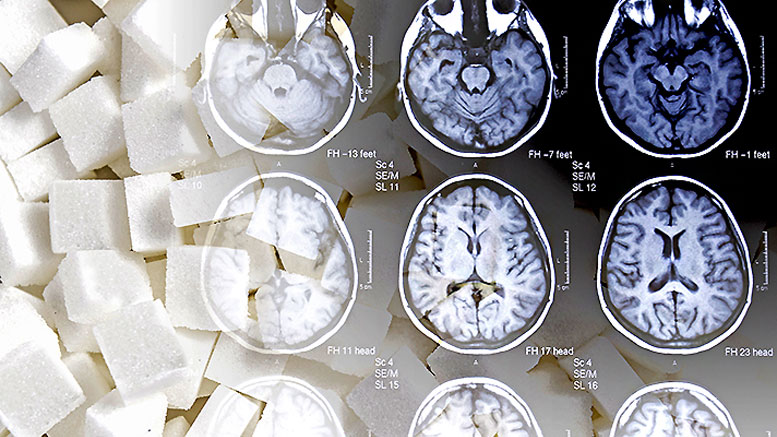
    A new study found that fructose, a sugar linked to obesity and diabetes, is produced in the human brain from glucose, raising questions about its effects on the brain and eating behavior.

    A new study from Yale University shows that fructose, a form of sugar linked to obesity and diabetes, is produced in the human brain from glucose. The finding raises questions about fructose’s effects on the brain and eating behavior.

    The study was published on February 23 by JCI Insight.

    Fructose is a simple sugar found in fruits, vegetables, table sugar, and many processed foods. Excess consumption of fructose contributes to high blood sugar and chronic diseases like obesity. The Yale research team had demonstrated in a prior study that fructose and another simple sugar, glucose, had different effects on brain activity. But it was not known whether fructose was produced in the brain or crossed over from the bloodstream.

    To investigate, the research team gave eight healthy, lean individuals infusions of glucose over a four-hour period. They measured sugar concentrations in the brains of the study participants using magnetic resonance spectroscopy, a noninvasive neuroimaging technique. Sugar concentrations in the blood were also assessed.

    The researchers found cerebral fructose levels rose significantly in response to a glucose infusion, with minimal changes in fructose levels in the blood. They surmised that the high concentration of fructose in the brain was due to a metabolic pathway called the polyol pathway that converts glucose to fructose.

    “In this study, we show for the first time that fructose can be produced in the human brain,” said first author Dr. Janice Hwang, assistant professor of medicine.

    While the production of fructose in the brain had been seen in animals, it had not been demonstrated in humans, Hwang noted.

    The finding raises several key research questions, which the research team plans to pursue. “By showing that fructose in the brain is not simply due to dietary consumption of fructose, we’ve shown fructose can be generated from any sugar you eat,” said Hwang. “It adds another dimension to understanding fructose’s effects on the brain.”

    Glucose in the brain sends signals of fullness, but that is not the case with fructose, she said.

    The conversion of glucose to fructose in the brain, known as the polyol pathway, also occurs in other parts of the body. “This pathway may be one other mechanism by which high blood sugar can exert its adverse effects,” Hwang added.

    Other Yale authors are Lihong Jiang, Muhammad Hamza, Feng Dai, Renata Belfort-DeAguiar, Gary Cline, Douglas L. Rothman, Graeme Mason, and Robert S. Sherwin.

    This study was supported in part by grants from the National Institutes of Health, and the Yale Center for Clinical Investigation supported by the Clinical Translational Science Award, as well as the Endocrine Fellows Foundation.

    Reference: “The human brain produces fructose from glucose” by Janice J. Hwang, Lihong Jiang, Muhammad Hamza, Feng Dai, Renata Belfort-DeAguiar, Gary Cline, Douglas L. Rothman, Graeme Mason and Robert S. Sherwin, 23 February 2017, JCI Insight.
    DOI: 10.1172/jci.insight.90508

    Never miss a breakthrough: Join the SciTechDaily newsletter.
    Follow us on Google and Google News.

    Disease Fructose Medicine Neurology Yale University
    Share. Facebook Twitter Pinterest LinkedIn Email Reddit

    Related Articles

    Genomic Analysis Reveals Roots of Neuropsychiatric Diseases

    Study Shows Early HIV Treatment Helps Halt Brain Damage

    Monkeys and Humans Share Same Signs of Alzheimer’s

    Yale Researchers Reveal How HIV Spreads in Real Time

    Yale Study Shows One in Four Hepatitis C Patients Denied Initial Drug Therapy

    New HIV Finding Dampens Hopes of an Impending Cure

    Researchers May Have Pinpointed a Strategy for Eliminating Latent HIV

    Yale Scientists Discover Alzheimer’s Missing Link

    Intensive Glycemic Control Does Not Definitively Reduce the Risk of Impaired Kidney Function

    1 Comment

    1. Ismail Adam Khatr on February 27, 2017 11:03 am

      Conscious is not the same as conscience in humans only. Manipulated by religions, politicians, stimulants and retardants, imaginations etc.

      Reply
    Leave A Reply Cancel Reply

    • Facebook
    • Twitter
    • Pinterest
    • YouTube

    Don't Miss a Discovery

    Subscribe for the Latest in Science & Tech!

    Trending News

    Your Blood Pressure Reading Could Be Wrong Because of One Simple Mistake

    Astronomers Stunned by Ancient Galaxy With No Spin

    Physicists May Be on the Verge of Discovering “New Physics” at CERN

    Scientists Solve 320-Million-Year Mystery of Reptile Skin Armor

    Scientists Say This Daily Walking Habit May Be the Secret to Keeping Weight Off After Dieting

    New Therapy Rewires the Brain To Restore Joy in Depression Patients

    Giant Squid Detected off Western Australia in Stunning Deep-Sea Discovery

    Popular Sugar-Free Sweetener Linked to Liver Disease, Study Warns

    Follow SciTechDaily
    • Facebook
    • Twitter
    • YouTube
    • Pinterest
    • Newsletter
    • RSS
    SciTech News
    • Biology News
    • Chemistry News
    • Earth News
    • Health News
    • Physics News
    • Science News
    • Space News
    • Technology News
    Recent Posts
    • 540-Million-Year-Old Fossils Reveal a Huge Surprise About Early Life on Earth
    • Scientists Create “Living” Materials That Crawl, Walk, and Dig on Their Own
    • Dante’s Inferno May Secretly Be About a Planet-Destroying Asteroid Strike
    • Mixing Edible Cannabis and Alcohol May Impair Driving More Than Scientists Expected
    • Scientists Reverse Stroke Damage Using Stem Cells in Breakthrough Study
    Copyright © 1998 - 2026 SciTechDaily. All Rights Reserved.
    • Science News
    • About
    • Contact
    • Editorial Board
    • Privacy Policy
    • Terms of Use

    Type above and press Enter to search. Press Esc to cancel.