
Close Menu
    Facebook X (Twitter) Instagram
    SciTechDaily
    • Biology
    • Chemistry
    • Earth
    • Health
    • Physics
    • Science
    • Space
    • Technology
    Facebook X (Twitter) Pinterest YouTube RSS
    SciTechDaily
    Home»Earth»Young Volcanic Island Nishinoshima Belches Ash and Lava As It Grows in the Pacific
    Earth

    Young Volcanic Island Nishinoshima Belches Ash and Lava As It Grows in the Pacific

    By Michael Carlowicz, NASA Earth ObservatoryJuly 7, 2020No Comments2 Mins Read
    Facebook Twitter Pinterest Telegram LinkedIn WhatsApp Email Reddit
    Share
    Facebook Twitter LinkedIn Pinterest Telegram Email Reddit
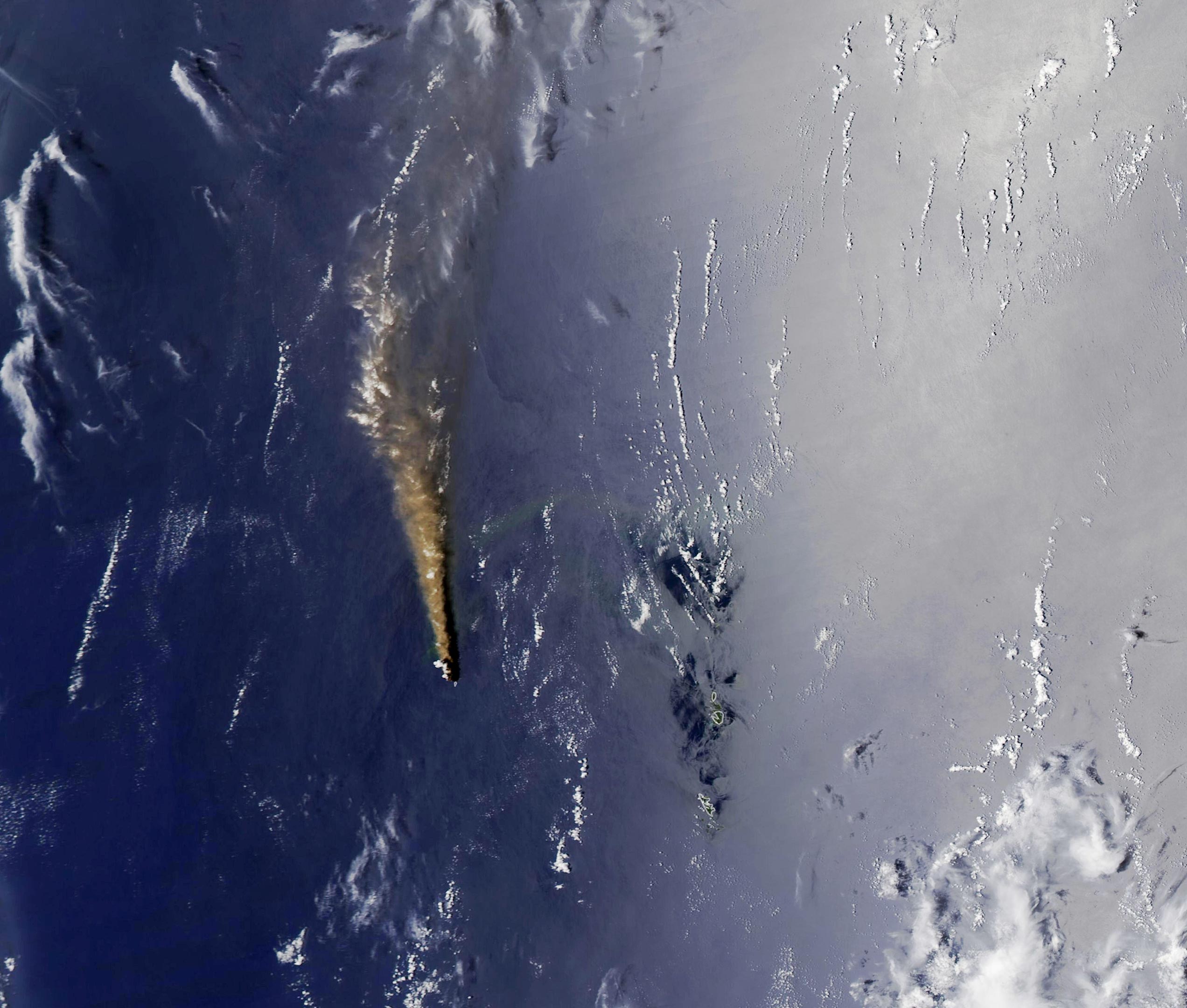
    Nishinoshima July 6, 2020 Annotated
    July 6, 2020

    A young volcanic island has been growing in the western Pacific Ocean since 2013. Since mid-June 2020, it has been going through a vigorous growth spurt.

    The images on this page show some of the latest eruptive activity at Nishinoshima, a volcanic island about 1,000 kilometers (600 miles) south of Tokyo, Japan. The Moderate Resolution Imaging Spectroradiometer (MODIS) on NASA’s Aqua satellite acquired the natural-color image above on July 6, 2020, when the volcanic plume stretched hundreds of kilometers to the north and rose several thousand meters into the sky.

    The false-color image below, acquired by Landsat 8 on July 4, 2020, combines shortwave infrared and visible wavelengths (bands 7-6-4). It reveals the heat signature of erupting lava and the relative coolness of the dark ash plume (blowing north). The bright purple clouds close to the island could be steam from the volcano or from lava vaporizing seawater.
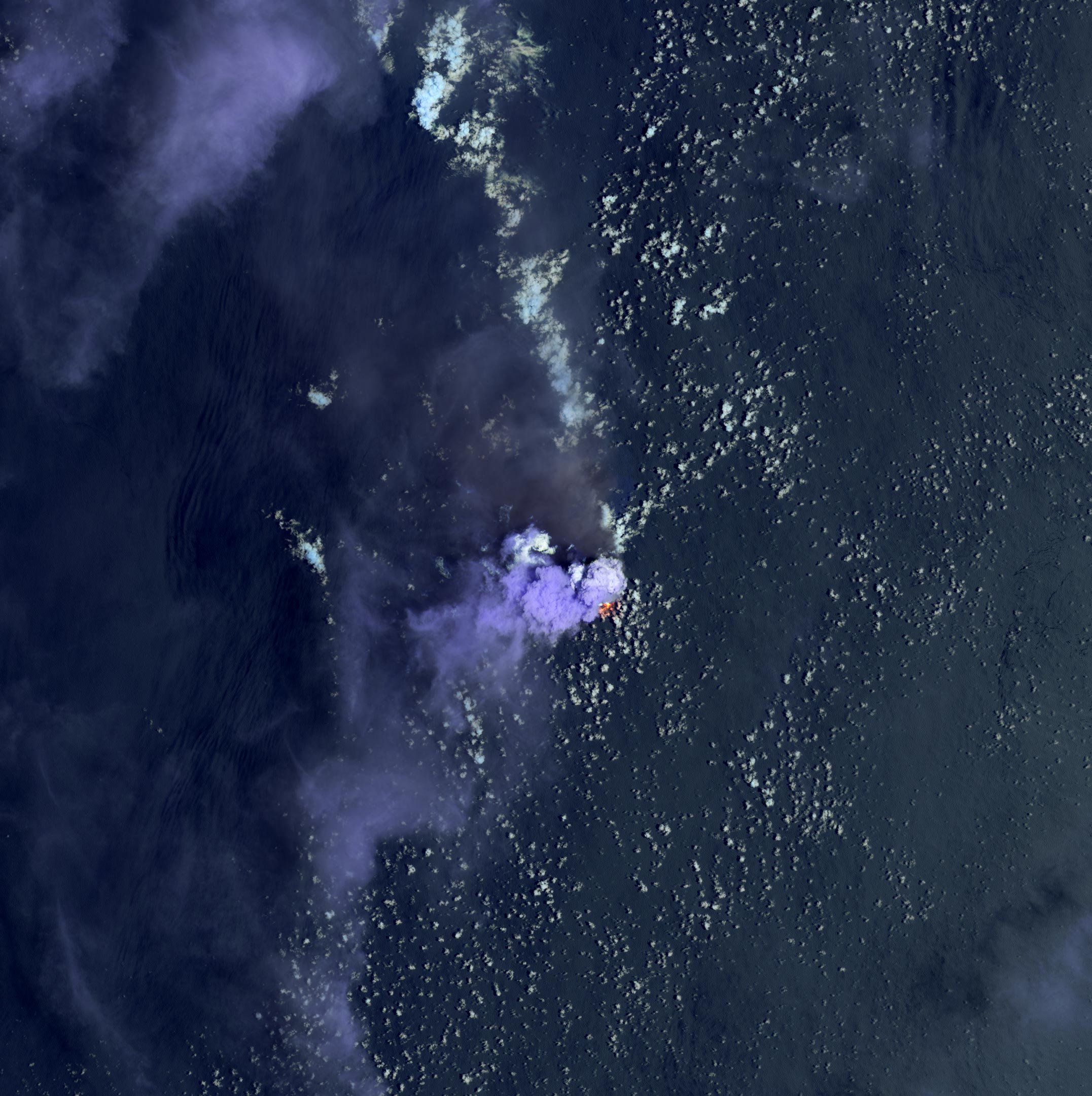
    Nishinoshima July 4, 2020 Annotated
    July 4, 2020

    According to reports and aerial photographs from the Japan Coast Guard, activity at the volcano appeared to pick up in late May, spewing ash and lava with more vigor than in previous months. On July 3, the volcanic plume rose as high as 4700 meters (15,400 feet) above sea level; the next day, ash was detected as high as 8300 meters (27,200 feet), the highest altitude a plume has risen since the volcano poked above the water line in 2013. Volcanic bombs were ejected as far as 2.5 kilometers (1.6 miles) from Nishinoshima that day.

    According to news reports citing the Geospatial Information Authority of Japan, the southern shore of the island grew by at least 150 meters between June 19 and July 3. The European Space Agency’s TROPOMI satellite also observed a sizable plume of sulfur dioxide from the eruption.

    Nishinoshima is part of the Ogasawara Islands, in the Volcano Islands arc. It is located at 27° 14’ North latitude and 140° 52’ East longitude, about 130 kilometers (80 miles) from the nearest inhabited island. You can see the evolution of the island eruption by visiting our Nishinoshima event page.

    NASA Earth Observatory image by Lauren Dauphin, using MODIS data from NASA EOSDIS/LANCE and GIBS/Worldview.

    Never miss a breakthrough: Join the SciTechDaily newsletter.
    Follow us on Google and Google News.

    NASA NASA Earth Observatory Popular Volcano
    Share. Facebook Twitter Pinterest LinkedIn Email Reddit

    Related Articles

    Sharkcano! – NASA Satellite Catches Submarine Eruption of Kavachi Volcano

    Massive Tonga Volcano Plume Reached the Mesosphere – 36 Miles Into the Atmosphere

    Island Obliterated: Dramatic Changes at Hunga Tonga-Hunga Ha’apai

    Hunga Tonga Island Obliterated – NASA Satellites Capture Massive Blast

    A Wolf Awakens in the Galápagos Islands at Night

    Mount Michael, Volcano Track or Plume? 1,000-Meter-Tall Active Stratovolcano Puts On a Show

    Volcanic Eruption Continues at La Palma – Effects Being Felt From Above and Below

    “Smoking Mountain” – An Outburst From Popocatépetl Volcano in Mexico

    Unusual “Volcano Track” Clouds Investigated

    Leave A Reply Cancel Reply

    • Facebook
    • Twitter
    • Pinterest
    • YouTube

    Don't Miss a Discovery

    Subscribe for the Latest in Science & Tech!

    Trending News

    One of the Universe’s Largest Stars May Be Getting Ready To Explode

    Scientists Discover Enzyme That Could Supercharge Ozempic-Like Weight Loss Drugs

    Popular Sweetener Linked to DNA Damage – “It’s Something You Should Not Be Eating”

    Ancient “Rock” Microbes May Reveal How Complex Life Began

    Researchers Capture Quantum Interference in One of Nature’s Rarest Atoms

    “A Plague Is Upon Us”: The Mass Death That Changed an Ancient City Forever

    Scientists Discover Game-Changing New Way To Treat High Cholesterol

    This Small Change to Your Exercise Routine Could Be the Secret to Living Longer

    Follow SciTechDaily
    • Facebook
    • Twitter
    • YouTube
    • Pinterest
    • Newsletter
    • RSS
    SciTech News
    • Biology News
    • Chemistry News
    • Earth News
    • Health News
    • Physics News
    • Science News
    • Space News
    • Technology News
    Recent Posts
    • Bee Bacteria Could Fix a Major Flaw in Plant-Based Milk
    • Scientists Discover a Surprising Way To Make Bread Healthier and More Nutritious
    • Natural Compounds Boost Bone Implant Success While Killing Bacteria and Cancer Cells
    • After 60 Years, Scientists Uncover Unexpected Brain Effects of Popular Diabetes Drug Metformin
    • New Research Uncovers Hidden Side Effects of Popular Weight-Loss Drugs
    Copyright © 1998 - 2026 SciTechDaily. All Rights Reserved.
    • Science News
    • About
    • Contact
    • Editorial Board
    • Privacy Policy
    • Terms of Use

    Type above and press Enter to search. Press Esc to cancel.