
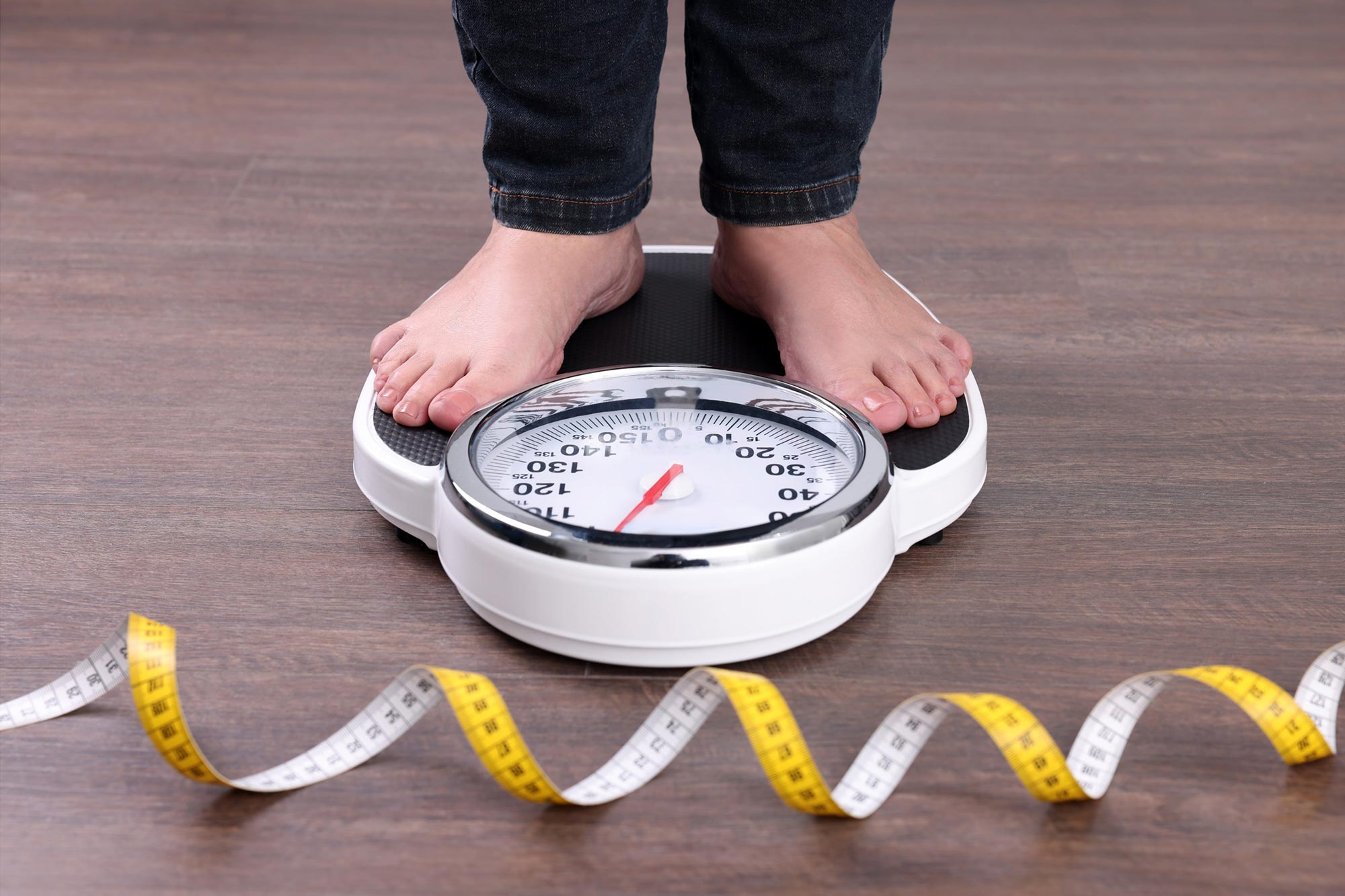
New research presented at the European Congress on Obesity reveals significant differences in body composition among people with similar BMIs, showing higher fat in central regions and reduced muscle mass in limbs with age.
This finding challenges the efficacy of BMI as a sole metric for obesity and suggests a need for new tools to assess changes in body composition across different age groups.
BMI and Obesity Research
Body mass index (BMI) is a widely used method for assessing a person’s weight status and categorizing them as having normal weight, overweight, or obesity. However, new research set to be presented at the European Congress on Obesity (ECO 2025) in Malaga, Spain (May 11-14) suggests that BMI may not fully capture important differences in body composition.
The study finds that people with obesity who have similar BMIs can show significant variations in fat and muscle distribution based on their age. Specifically, older adults tend to have more fat concentrated in the central regions of the body and less muscle mass in their arms and legs compared to younger individuals.
The researchers propose that as people with obesity age, their fat and muscle distribution shifts, even if their BMI remains the same. This suggests that BMI alone may not be a reliable tool for assessing body composition changes over time. The study was conducted by researchers from the University of Rome “Tor Vergata,” the University of Modena and Reggio Emilia in Italy, and Beirut University in Lebanon, including Professor Marwan El Ghoch from the University of Modena and Reggio Emilia.
Age-Related Changes in Body Composition
Obesity is a major health concern, characterized by an excessive accumulation of body fat, which can also be accompanied by a loss of lean muscle mass. While BMI is commonly used to assess obesity, little is known about how fat and muscle mass change throughout life. This study aims to fill that gap by analyzing differences in total and regional body composition across different age groups.
A total of 2,844 adults of both sexes and a Body Mass Index (BMI) of 25 kg/m2 and above referred to the Division of Clinical Nutrition at the Department of Biomedicine and Prevention at the University of Rome “Tor Vergata” underwent body composition assessments by means of Dual-energy X-ray Absorptiometry (DXA). The sample was categorized into three different age groups: ‘Young-age’ (20–39 years), ‘Middle-age’ (40–59 years), and ‘Older-age’ (60–79 years) adults that were compared with each other after being matched by body weight and BMI.
Gender and Age Differences in Body Fat and Muscle Mass
The males showed an increasing trend in total BF percentage and a decreasing total LM, from the younger to older groups, while females maintained similar values for these total compartments (total BF% and LM) across the three age groups.
However, more interestingly, participants in the middle- and older-age groups of both sexes, showed higher trunk fat percentage by +1.23% to +4.21%, and lower appendicular lean mass (ALM) by –0.81 kg to –2.63 kg with respect to the young-age group, revealing higher abdominal fat and lower muscle mass in arms and legs, despite the fact that all age groups in this study were of similar BMIs.
Redefining Measurement Tools for Obesity
Professor El Ghoch explains: “These results clearly indicate that we cannot rely only on BMI without considering the content and distribution of body composition in people with obesity across the different age groups, since those in middle- and older-age have higher central adiposity and lower muscle mass with respect to the younger group. Our findings open new directions for future research as we suggest that people with obesity might experience a sort of redistribution within their body compartments (i.e. fat and muscle) as they age, without meaningful changes in their BMI. Namely an increased fat trunk accumulation and a decrease in muscle mass in the extremities.”
The authors explain that this redistribution may have major negative health consequences – such as low-grade chronic inflammation, insulin resistance, and increase in the risk of several cardiometabolic diseases – without significant changes in BMI. Professor El Ghoch explains: “Accordingly, the use of BMI becomes useless and misleading, and future research is needed to identify new tools that are able to detect these changes in fat and muscle mass in this specific population. However, our findings need confirmation through longitudinal studies.”
Professor El Ghoch adds: “Instead of BMI, we need to rely on new simple-to-use tools that are able to detect these changes in fat mass and distribution – such as waist-to-height ratio – as well muscle mass and strength, including the handgrip test.”
Reference: “Difference in Body Composition Patterns between Age Groups in Italian Individuals with Overweight and Obesity: When BMI Becomes a Misleading Tool in Nutritional Settings” by Antonino De Lorenzo, Leila Itani, Marwan El Ghoch, Paola Gualtieri, Giulia Frank, Glauco Raffaelli, Massimo Pellegrini and Laura Di Renzo, 24 July 2024, Nutrients.
DOI: 10.3390/nu16152415
Never miss a breakthrough: Join the SciTechDaily newsletter.
Follow us on Google and Google News.