
Close Menu
    Facebook X (Twitter) Instagram
    SciTechDaily
    • Biology
    • Chemistry
    • Earth
    • Health
    • Physics
    • Science
    • Space
    • Technology
    Facebook X (Twitter) Pinterest YouTube RSS
    SciTechDaily
    Home»Space»Hubble Image of the Week – The Colorful Galaxies in the Constellation of Leo
    Space

    Hubble Image of the Week – The Colorful Galaxies in the Constellation of Leo

    By SciTechDailyMay 23, 2016No Comments2 Mins Read
    Facebook Twitter Pinterest Telegram LinkedIn WhatsApp Email Reddit
    Share
    Facebook Twitter LinkedIn Pinterest Telegram Email Reddit
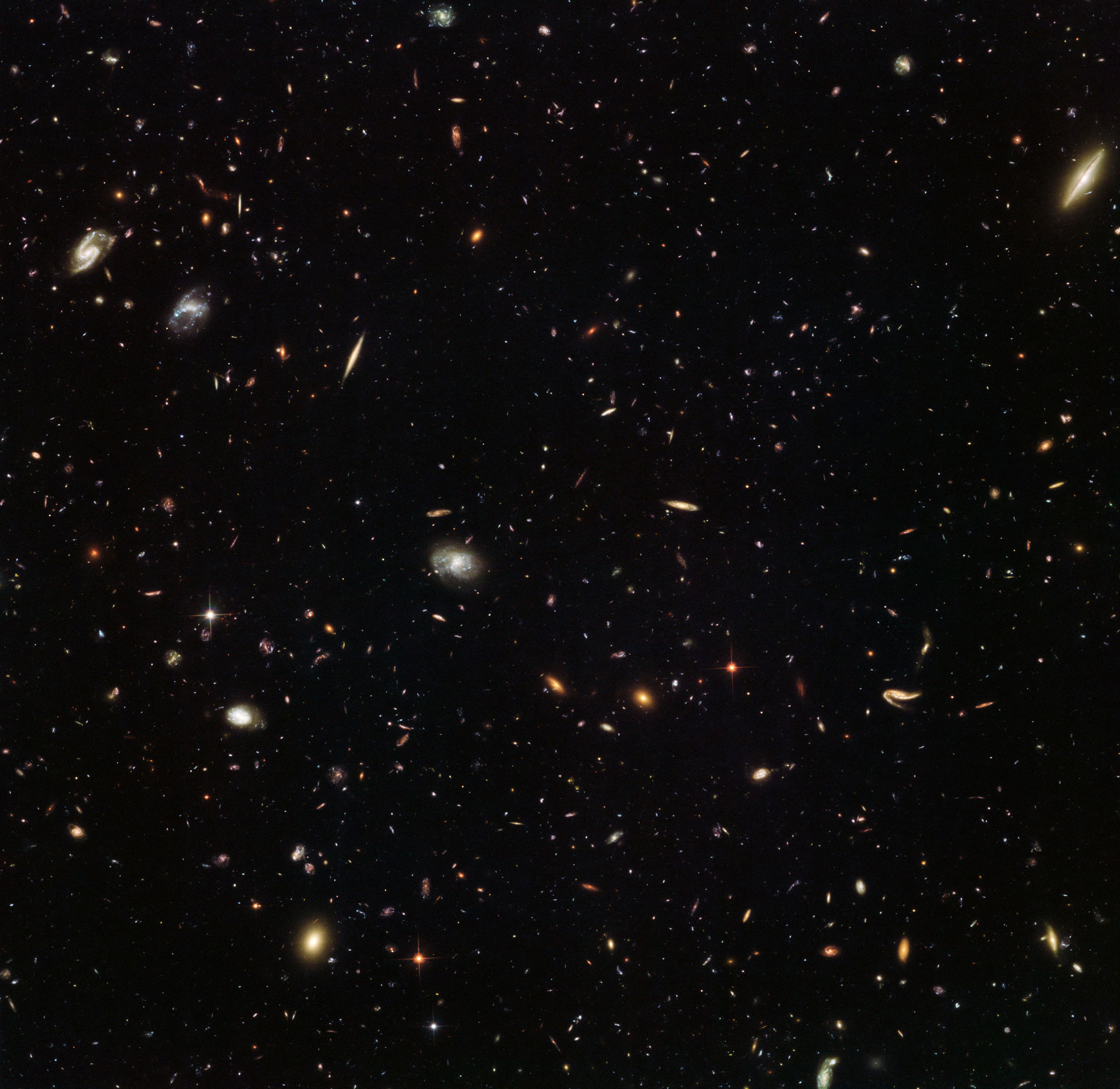
    Hubble Views the Colorful Galaxies in the Constellation of Leo
    The colorful galaxies in the constellation of Leo. Credit: ESA/Hubble & NASA Acknowledgment: Judy Schmidt (Geckzilla)

    This newly released Hubble image reveals the colorful galaxies in the constellation of Leo.

    Nearly as deep as the Hubble Ultra Deep Field, which contains approximately 10,000 galaxies, this incredible image from the NASA/ESA Space Telescope reveals thousands of colorful galaxies in the constellation of Leo (The Lion). This vibrant view of the early Universe was captured as part of the Frontier Fields campaign, which aims to investigate galaxy clusters in more detail than ever before, and to explore some of the most distant galaxies in the Universe.

    Galaxy clusters are massive. They can have a tremendous impact on their surroundings, with their immense gravity warping and amplifying the light from more distant objects. This phenomenon, known as gravitational lensing, can help astronomers to see galaxies that would otherwise be too faint, aiding our hunt for residents of the primordial Universe.

    MACS J1149.5+2223 is a galaxy cluster located approximately five billion light-years away. In 2012, it helped astronomers uncover one of the most distant galaxies ever discovered. Light from the young galaxy, magnified 15 times by the galaxy cluster, first shone when our 13.7-billion-year-old Universe was a mere 500 million years old — just 3.6 percent of its current age!

    In 2014 and 2015, MACS J1149.5+2223 was observed as part of the Frontier Fields campaign. While one of Hubble’s cameras observed the galaxy cluster itself, another simultaneously captured the spectacular scene pictured above, of an “unremarkable” patch of space. Referred to as a parallel field, this image — when compared to other similar fields — will help astronomers understand how the Universe looks in different directions.

    Never miss a breakthrough: Join the SciTechDaily newsletter.
    Follow us on Google and Google News.

    Astronomy Cosmology Hubble Space Telescope NASA
    Share. Facebook Twitter Pinterest LinkedIn Email Reddit

    Related Articles

    Hubble Image of the Week – Dwarf Galaxy Leo A

    Hubble Image of the Week – Swimming in Sculptor

    Astronomers Measure the Farthest Galaxy Ever Seen in the Universe

    Hubble Image of the Week – Peculiar Galaxy NGC 1487

    Hubble Image of the Week: Infant Star’s Artistic Outburst

    Hubble Views Turbulent Birthing Ground Orion B Molecular Cloud Complex

    Magnified Image Reveals the Faintest Known Galaxy from the Early Universe

    Hubble Image of the Week: Quadruple Star System DI Cha

    Hubble Image of the Week – Evolution in Slow Motion

    Leave A Reply Cancel Reply

    • Facebook
    • Twitter
    • Pinterest
    • YouTube

    Don't Miss a Discovery

    Subscribe for the Latest in Science & Tech!

    Trending News

    Breakthrough Parkinson’s Drug Targets Disease at Its Genetic Roots

    Just 4 Weeks of Simple Diet Changes Reversed Signs of Aging in Older Adults

    Scientists May Have Finally Solved Why Humans Are Right-Handed

    NASA’s Hubble Accidentally Witnesses a Comet Shattering in Space

    Researchers Discover the Body’s Hidden “Off Switch” for Inflammation

    Scientists Discover Metformin Doesn’t Work the Way We Thought

    Tea or Coffee? Your Daily Choice Could Affect Osteoporosis Risk

    Vitamin C May Fight Cancer in a Surprising Way

    Follow SciTechDaily
    • Facebook
    • Twitter
    • YouTube
    • Pinterest
    • Newsletter
    • RSS
    SciTech News
    • Biology News
    • Chemistry News
    • Earth News
    • Health News
    • Physics News
    • Science News
    • Space News
    • Technology News
    Recent Posts
    • Scientists Stunned by Hybrid California Bees That Beat Deadly Mites
    • Scientists Discover Terrifying Giant Crocodile That Hunted Human Ancestors
    • Scientists Finally Think They Know Why T. rex Had Tiny Arms
    • Scientists Are Turning Ocean Trash Into Roads – and It’s Actually Working
    • This Alien Planet Has Rock Clouds That Vaporize Before Sunset
    Copyright © 1998 - 2026 SciTechDaily. All Rights Reserved.
    • Science News
    • About
    • Contact
    • Editorial Board
    • Privacy Policy
    • Terms of Use

    Type above and press Enter to search. Press Esc to cancel.