
Close Menu
    Facebook X (Twitter) Instagram
    SciTechDaily
    • Biology
    • Chemistry
    • Earth
    • Health
    • Physics
    • Science
    • Space
    • Technology
    Facebook X (Twitter) Pinterest YouTube RSS
    SciTechDaily
    Home»Biology»Why Older People Are More Susceptible to Fraud
    Biology

    Why Older People Are More Susceptible to Fraud

    By SciTechDailyDecember 4, 20121 Comment3 Mins Read
    Facebook Twitter Pinterest Telegram LinkedIn WhatsApp Email Reddit
    Share
    Facebook Twitter LinkedIn Pinterest Telegram Email Reddit
    older-people-trustworthiness
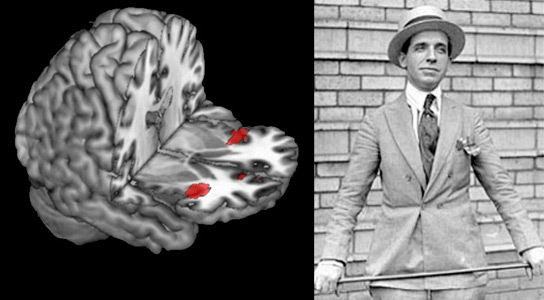
    Spotting an untrustworthy face, like that of the legendary fraudster Charles Ponzi (right), may depend on activation in the brain’s anterior insula (left). Credit: (left) UCLA; (right) Wikipedia Commons

    Researchers have discovered one of the reasons why it may seem like older people fall victim to financial fraud. Scientists have found out that the human ability to judge trustworthiness of people’s faces diminishes with age.

    The scientists published their findings in the journal Proceedings of the National Academy of Sciences. Shelley Taylor, psychologist at the University of California, Los Angeles, and her colleagues examined how people in two age groups perceived the photos of faces that had been pre-rated for trustworthiness and approachability. These faces conveyed well-known cues of trustworthiness, such as a direct gaze and a sincere smile that turns up fully towards the eyes.

    Both age groups perceived faces rated as trustworthy or neutral as equally trustworthy and approachable, but the older adults, aged 55 to 84 with a mean age of 69, rated untrustworthy faces as significantly more trustworthy and approachable than the younger adults, aged 20 to 42 mean age of 23.

    They missed facial cues that are usually pretty easily distinguished, states Taylor. Most of the older adults showed this effect. A further 44 participants were asked to rate the faces for trustworthiness while undergoing functional magnetic resonance imaging (fMRI).

    Young adults showed a strong response in the anterior insula, which is known to control gut feelings that inform decision-making, especially when viewing untrustworthy faces. The older adults didn’t display such activation, suggesting that they were getting diminished or no warning signs.

    This is the first time that someone has looked to see if the way older people process social information around trustworthiness makes them more susceptible to fraud. Further work is needed in order to determine if the observed results were caused by age-related changes in the brain or if older adults are simply less motivated to look for social signals of untrustworthiness. This could explain their reduced activity in this brain region. It’s been shown previously that older adults tend to remember more positive than negative information, relative to younger adults.

    Reference: “Neural and behavioral bases of age differences in perceptions of trust” by Elizabeth Castle, Naomi I. Eisenberger, Teresa E. Seeman, Wesley G. Moons, Ian A. Boggero, Mark S. Grinblatt and Shelley E. Taylor, 3 December 2012, Proceedings of the National Academy of Sciences.
    DOI: 10.1073/pnas.1218518109

    Never miss a breakthrough: Join the SciTechDaily newsletter.
    Follow us on Google and Google News.

    Aging Brain Brain Activity Neurology Neuroscience Psychology
    Share. Facebook Twitter Pinterest LinkedIn Email Reddit

    Related Articles

    Brain Scans of Rappers During Improvisation Show Creativity At Work

    Study Shows Broca’s Area Has Multiple Roles

    Growth in Brain’s White Matter Tracts Could Predict Literacy

    Life Long Learning and Experiences Are Good for the Brain

    Von Economo Neuron Discovered in the Insula of Macaque Monkeys

    Scientists Discover Link Between TBI and PTSD

    Researchers Use FDDNP–PET Scanning to Predict Cognitive Decline

    Neuroscientists Create Model to Study Burst Suppression and Brain States

    Researchers Use fMRI to Study How Humor Activates Kids’ Brain Regions

    1 Comment

    1. C on October 28, 2025 10:36 pm

      The problem with this conclusion is that most financial fraud takes place over the phone – where one cant see the other person’s face.

      Reply
    Leave A Reply Cancel Reply

    • Facebook
    • Twitter
    • Pinterest
    • YouTube

    Don't Miss a Discovery

    Subscribe for the Latest in Science & Tech!

    Trending News

    One of the Universe’s Largest Stars May Be Getting Ready To Explode

    Scientists Discover Enzyme That Could Supercharge Ozempic-Like Weight Loss Drugs

    Popular Sweetener Linked to DNA Damage – “It’s Something You Should Not Be Eating”

    Ancient “Rock” Microbes May Reveal How Complex Life Began

    Researchers Capture Quantum Interference in One of Nature’s Rarest Atoms

    “A Plague Is Upon Us”: The Mass Death That Changed an Ancient City Forever

    Scientists Discover Game-Changing New Way To Treat High Cholesterol

    This Small Change to Your Exercise Routine Could Be the Secret to Living Longer

    Follow SciTechDaily
    • Facebook
    • Twitter
    • YouTube
    • Pinterest
    • Newsletter
    • RSS
    SciTech News
    • Biology News
    • Chemistry News
    • Earth News
    • Health News
    • Physics News
    • Science News
    • Space News
    • Technology News
    Recent Posts
    • Scientists Raise Concerns Over Newly Recognized Pollutant Found Everywhere in the Air
    • New Study Challenges 40-Year Puzzle About Childhood Body Fat
    • 20-Year Study Finds Daily Multivitamins Don’t Extend Lifespan
    • Landmark Study Links Never Marrying to Significantly Higher Cancer Risk
    • Revolutionary Imaging Technique Unlocks Secrets of Matter at Extreme Speeds
    Copyright © 1998 - 2026 SciTechDaily. All Rights Reserved.
    • Science News
    • About
    • Contact
    • Editorial Board
    • Privacy Policy
    • Terms of Use

    Type above and press Enter to search. Press Esc to cancel.