
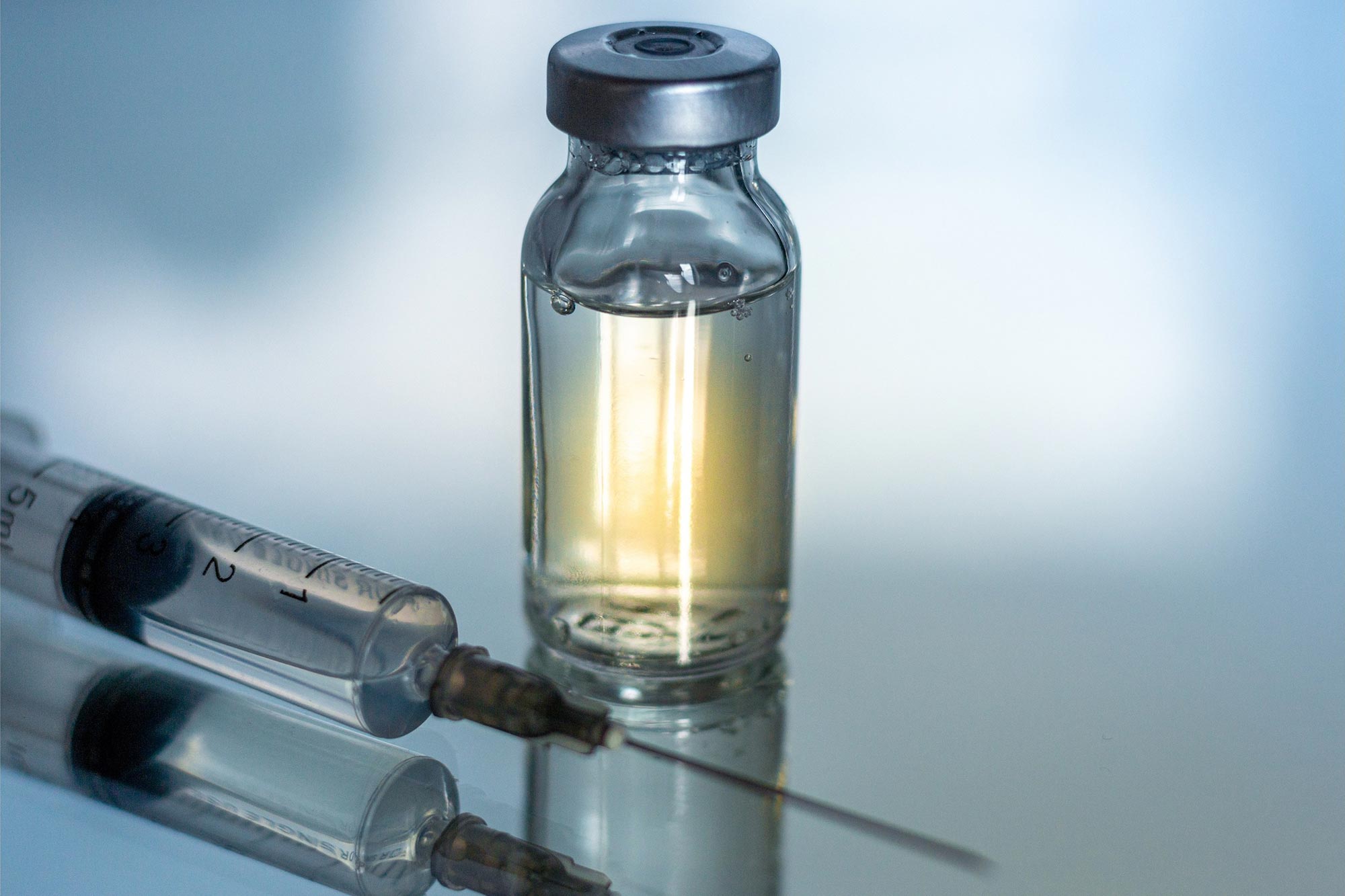
A live-attenuated vaccine currently in development has demonstrated safety and 100% efficacy against the Lassa virus in preclinical studies.
Researchers from the Texas Biomedical Research Institute (Texas Biomed), The Scripps Research Institute, and the National Institute of Allergy and Infectious Diseases (NIAID) have developed a vaccine candidate for Lassa virus that successfully protected guinea pigs from an otherwise lethal dose of the virus. Their findings were recently published in npj Vaccines.
Lassa virus, which currently has no approved vaccine or cure, causes tens to hundreds of thousands of cases of Lassa fever each year. The virus is transmitted to humans through contact with food or surfaces contaminated by infected rodents. While many individuals experience no symptoms, the virus can lead to severe illness, including fever, heavy bleeding, and organ failure, often within two weeks of infection. Fatality rates are estimated to range between 15% and 20%.
Lassa fever is prevalent in Western Africa and is classified by the World Health Organization (WHO) as a priority disease for vaccine research and development due to its potential to cause a public health emergency.
A Decade of Research on Live-Attenuated Vaccines
Texas Biomed Professor Luis Martínez-Sobrido, PhD, and Scripps Research Institute Professor Juan Carlos de la Torre, PhD, have been working on a Lassa virus vaccine candidate for the past 10 years.
They have focused on developing a live-attenuated vaccine, which includes a live but weakened or “attenuated” version of the virus. Other live-attenuated vaccines already in use include those for measles, mumps, and rubella (MMR), smallpox, chickenpox, and yellow fever.
“A live-attenuated vaccine can offer longer-lasting and broader protection because now your body’s immune system is being trained to recognize the entire virus—not just one small piece of it,” Dr. Martínez-Sobrido said.
A key requirement for any live-attenuated vaccine is to ensure it has been modified in such a way it cannot revert to its original form nor mix together with other natural circulating strains and cause disease. While unlikely, this latter scenario could potentially happen if a person was vaccinated and infected around the same time.
Dr. Martínez-Sobrido and Dr. de la Torre combined their distinct approaches to attenuate Lassa virus by tweaking both sections of its genome, which consists of a small segment and a large segment.
Specifically, Dr. Martínez-Sobrido and his team used a technique called codon deoptimization to edit the RNA in the small segment to turn down the production of a key protein responsible for binding the virus to infected cells. Meanwhile, Dr. de la Torre and his team replaced part of the large segment RNA with the corresponding part from the small segment. Together, these edits produce a modified virus that still looks enough like the real thing to prompt the desired immune response but cannot cause illness or disease.
“By combining our two attenuation approaches, it makes for unbreakable attenuation,” said Dr. Martínez-Sobrido. “We’ve attenuated both segments of the virus and so if either segment were to recombine with a wild virus, the resulting virus will still be attenuated and unable to cause disease.”
Promising Results in Preclinical Studies
In the paper, the researchers demonstrated the attenuated virus’s robust safety profile, reduced replication (also known as loss of fitness), and that it did not evolve to regain virulence (the ability to cause disease). Moreover, the study, which was completed in collaboration with NIAID’s Integrated Research Facility at Fort Detrick, showed very promising efficacy results. The study involved 50 guinea pigs, divided into groups that received the vaccine and those that remained unvaccinated. Following an exposure to a normally lethal dose of the virus, the vaccinated guinea pigs remained healthy and showed no adverse side effects.
“It was 100% protective, which is exactly what you want,” Dr. Martínez-Sobrido said.
The team next plans to study the vaccine in nonhuman primates, the current gold standard to evaluate if vaccines are safe and effective before moving forward to clinical trials in people.
Reference: “A Lassa virus live attenuated vaccine candidate that is safe and efficacious in guinea pigs” by Brian D. Carey, Shuiqing Yu, Jillian Geiger, Chengjin Ye, Louis M. Huzella, Rebecca J. Reeder, Monika Mehta, Shawn Hirsch, Rebecca Bernbaum, Beatrice Cubitt, Bapi Pahar, Scott M. Anthony, Anthony Marketon, John G. Bernbaum, Julie P. Tran, Ian Crozier, Luis Martínez-Sobrido, Gabriella Worwa, Juan Carlos de la Torre and Jens H. Kuhn, 17 November 2024, npj Vaccines.
DOI: 10.1038/s41541-024-01012-w
The Lassa vaccine development work is supported by NIAID grants #R21AI121840 and R21AI169789 and Department of Defense grant W81XWH1910496.
Never miss a breakthrough: Join the SciTechDaily newsletter.
Follow us on Google and Google News.
3 Comments
Yay! More jabs!
It can only be 100% effective if it kills the host as well as the virus.
No one in their right mind is going to trust industrial vaccines – at all. You might pass that back to the vaccine manufacturers.
Of course, that might be the big plan after all – first their phony vaccine doesn’t work against their mild bio-weapon #1, then no one takes any vaccine for the real killer, Virus #2.
Then the virus manufacturer (behind the whole scheme) establishes new colonies of workers in their controlled and newly available planned environment of the future.
But so far, most of these people have proved they are intellectually incapable of even running a good dodge, let alone foreseeing the future.
Y’all should cool it on poking the scientists with sticks, you might make them mad, and the last thing the world needs right now is more mad scientists.