
Close Menu
    Facebook X (Twitter) Instagram
    SciTechDaily
    • Biology
    • Chemistry
    • Earth
    • Health
    • Physics
    • Science
    • Space
    • Technology
    Facebook X (Twitter) Pinterest YouTube RSS
    SciTechDaily
    Home»Science»125-Million-Year-Old Dinosaur Feathers Reveal Traces of Ancient Proteins
    Science

    125-Million-Year-Old Dinosaur Feathers Reveal Traces of Ancient Proteins

    By University College CorkOctober 2, 2023No Comments3 Mins Read
    Facebook Twitter Pinterest Telegram LinkedIn WhatsApp Email Reddit
    Share
    Facebook Twitter LinkedIn Pinterest Telegram Email Reddit
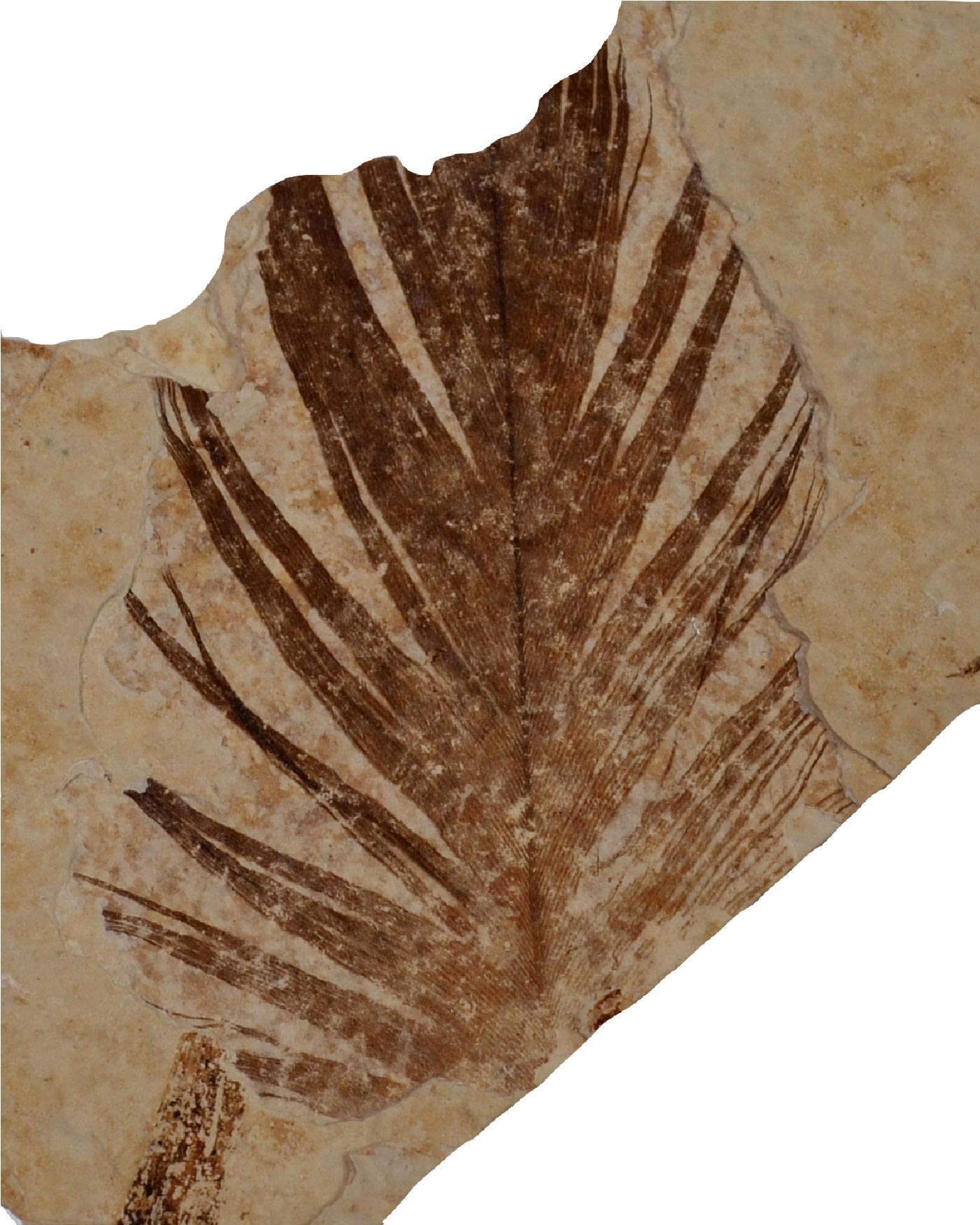
    Green River Formation Fossil Feather
    Isolated fossil feather from the Green River Formation (ca. 50 million years old, USA). Specimen held in the Yale University Peabody Museum of Natural History. Scale bar indicates 100 mm. Credit: Dr. Tiffany Slater

    New method reveals similarities between dinosaurs and birds.

    Paleontologists at University College Cork (UCC) in Ireland have discovered X-ray evidence of proteins in fossil feathers that sheds new light on feather evolution.

    Previous studies suggested that ancient feathers had a different composition to the feathers of birds today. The new research, however, reveals that the protein composition of modern-day feathers was also present in the feathers of dinosaurs and early birds, confirming that the chemistry of feathers originated much earlier than previously thought.
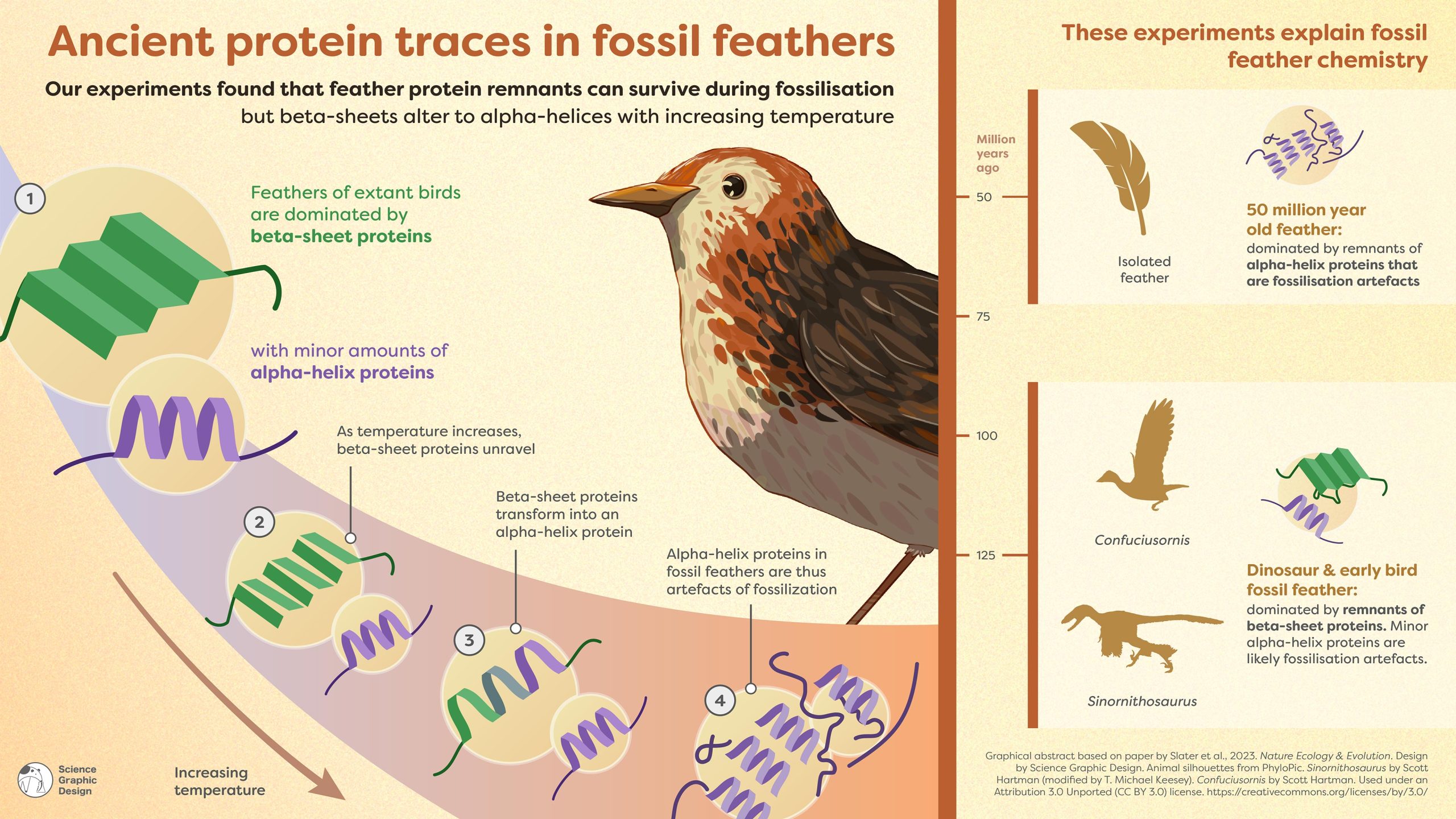
    Dinosaur Feathers Reveal Traces of Ancient Proteins
    A graphical abstract based on paper by Slater et al., 2003. Credit: Science Graphic Design

    The research, published today in Nature Ecology and Evolution, was led by paleontologists Dr. Tiffany Slater and Prof. Maria McNamara of UCC’s School of Biological, Earth, and Environmental Science, who teamed with scientists based at Linyi University (China) and the Stanford Synchrotron Radiation Lightsource (USA).

    The team analyzed 125-million-year-old feathers from the dinosaur Sinornithosaurus and the early bird Confuciusornis from China, plus a 50-million-year-old feather from the USA.

    Tiffany Slater
    Dr. Tiffany Slater pictured at the School of Biological, Earth and Environmental Sciences at University College Cork. Credit: Daragh Mc Sweeney/Provision

    Discovery of Beta-Proteins in Dinosaur Feathers

    “It’s really exciting to discover new similarities between dinosaurs and birds,” Dr. Slater says. “To do this, we developed a new method to detect traces of ancient feather proteins. Using X-rays and infrared light we found that feathers from the dinosaur Sinornithosaurus contained lots of beta-proteins, just like feathers of birds today.”

    To help interpret the chemical signals preserved in the fossil feathers, the team also ran experiments to help understand how feather proteins break down during the fossilization process.

    “Modern bird feathers are rich in beta-proteins that help strengthen feathers for flight,” Dr. Slater says.
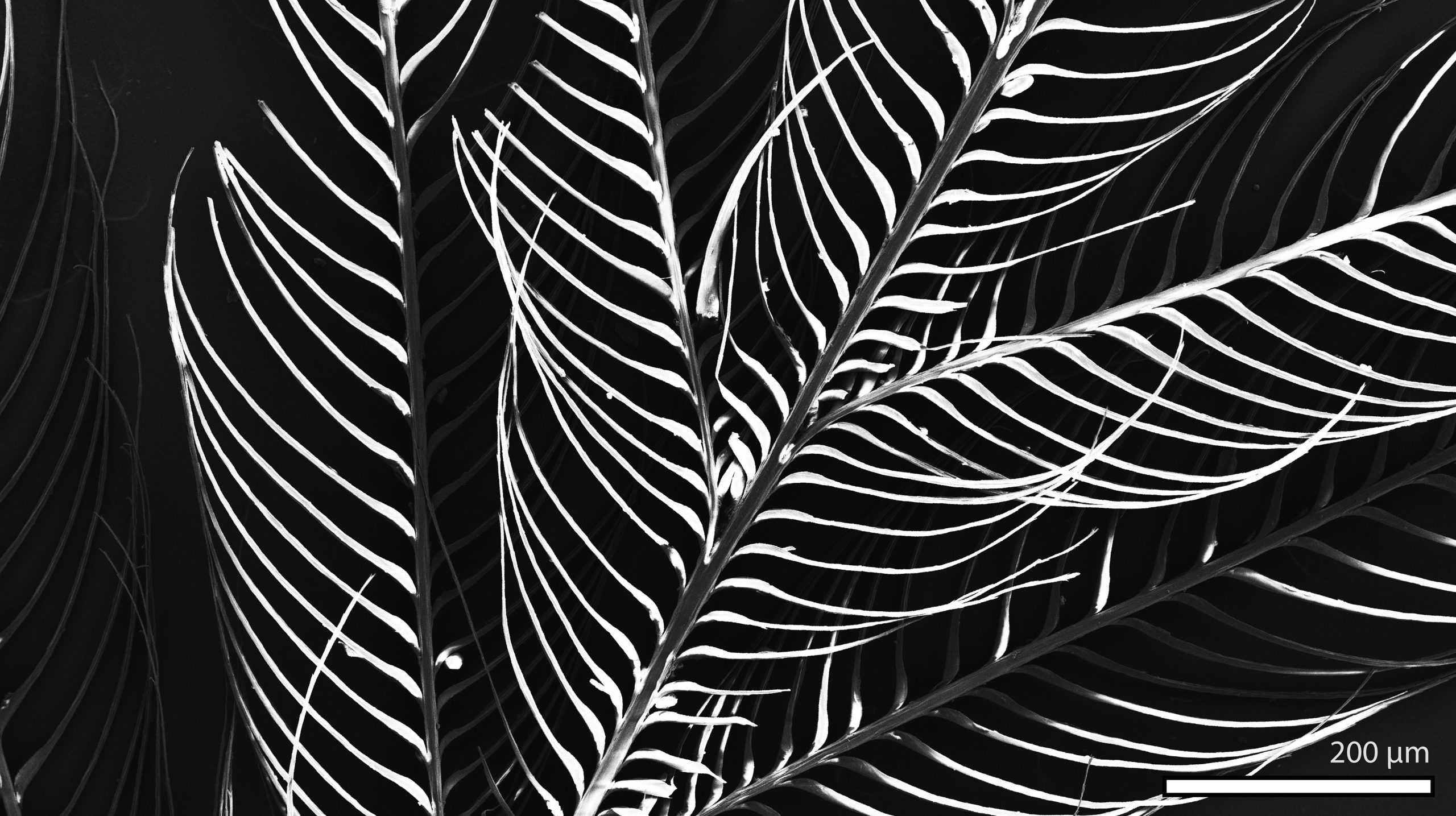
    Zebra Finch Feather Scanning Electron Microscopy
    Scanning electron microscopy image of zebra finch feather. Scale bar indicates 200 µm. Credit: Dr. Tiffany Slater

    “Previous tests on dinosaur feathers, though, found mostly alpha-proteins. Our experiments can now explain this weird chemistry as the result of protein degradation during the fossilization process. So although some fossil feathers do preserve traces of the original beta-proteins, other fossil feathers are damaged and tell us a false narrative about feather evolution.”

    This research helps answer a long-standing debate about whether feather proteins, and proteins in general, can preserve in deep time.
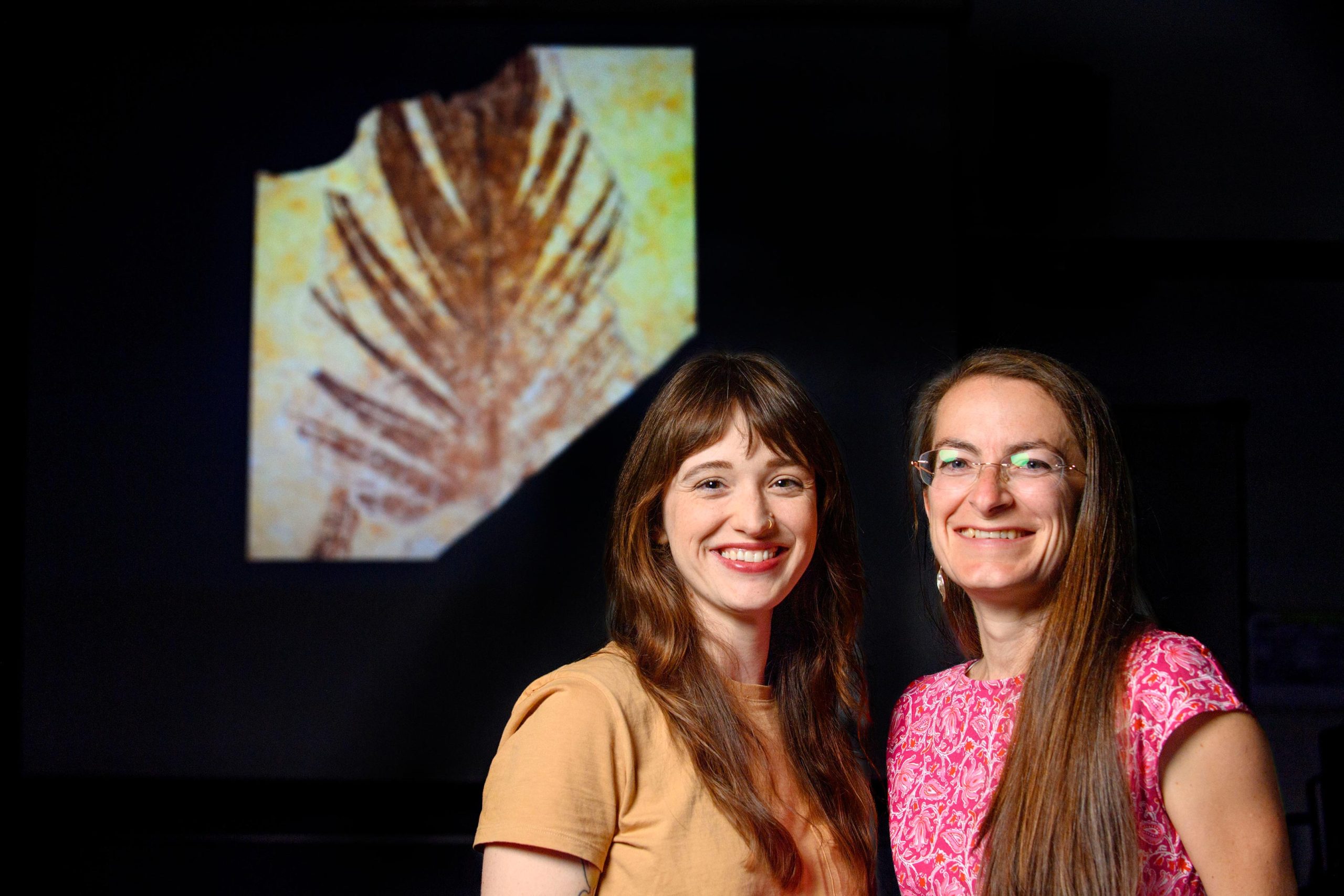
    Tiffany Slater and Maria McNamara
    Dr. Tiffany Slater and Prof. Maria McNamara pictured in the experimental fossilization laboratory at the School of Biological, Earth and Environmental Sciences at University College Cork. Credit: Daragh Mc Sweeney/Provision

    Prof. Maria McNamara, senior author on the study, said “Traces of ancient biomolecules can clearly survive for millions of years, but you can’t read the fossil record literally because even seemingly well-preserved fossil tissues have been cooked and squashed during fossilization. We’re developing new tools to understand what happens during fossilization and unlock the chemical secrets of fossils. This will give us exciting new insights into the evolution of important tissues and their biomolecules.”

    For more on this research, see New Study Reveals Shocking Similarities Between Dinosaur and Bird Feathers.

    Reference: “Preservation of corneous β-proteins in Mesozoic feathers” by Tiffany S. Slater, Nicholas P. Edwards, Samuel M. Webb, Fucheng Zhang, and Maria E. McNamara, 21 September 2023, Nature Ecology & Evolution.
    DOI: 10.1038/s41559-023-02177-8

    Never miss a breakthrough: Join the SciTechDaily newsletter.
    Follow us on Google and Google News.

    Birds Evolution Feathers Fossils Paleontology University College Cork
    Share. Facebook Twitter Pinterest LinkedIn Email Reddit

    Related Articles

    A 30,000-Year-Old Fossil Frozen in Volcanic Ash Holds an Unbelievable Secret

    “One-of-a-Kind” Fossil Discovery Could Solve the Mystery of Modern Bird Intelligence

    Old Science, New Twists: Ancient Frog Fossils Disrupt 100-Year-Old Beliefs

    Unlocking the Secrets of the Past: New Study Reveals Shocking Similarities Between Dinosaur and Bird Feathers

    “Wonderchicken” – Origin of Modern Birds Revealed by Fossil From the Age of Dinosaurs

    Remarkable Discovery of 1 Billion-Year-Old Green Seaweed Micro-Fossils in China

    One-of-a-Kind Dinosaur Specimen Discovered in China Offers View Into Dinosaur-Bird Evolution

    What Came First, the Animal or the Embryo? New Research Has Answer

    Cretaceous Period Sankofa Pyrenaica Fossilized Eggs Are Unusually Shaped

    Leave A Reply Cancel Reply

    • Facebook
    • Twitter
    • Pinterest
    • YouTube

    Don't Miss a Discovery

    Subscribe for the Latest in Science & Tech!

    Trending News

    Breakthrough Parkinson’s Drug Targets Disease at Its Genetic Roots

    Just 4 Weeks of Simple Diet Changes Reversed Signs of Aging in Older Adults

    Scientists May Have Finally Solved Why Humans Are Right-Handed

    NASA’s Hubble Accidentally Witnesses a Comet Shattering in Space

    Researchers Discover the Body’s Hidden “Off Switch” for Inflammation

    Scientists Discover Metformin Doesn’t Work the Way We Thought

    Tea or Coffee? Your Daily Choice Could Affect Osteoporosis Risk

    Vitamin C May Fight Cancer in a Surprising Way

    Follow SciTechDaily
    • Facebook
    • Twitter
    • YouTube
    • Pinterest
    • Newsletter
    • RSS
    SciTech News
    • Biology News
    • Chemistry News
    • Earth News
    • Health News
    • Physics News
    • Science News
    • Space News
    • Technology News
    Recent Posts
    • Scientists Stunned by Hybrid California Bees That Beat Deadly Mites
    • Scientists Discover Terrifying Giant Crocodile That Hunted Human Ancestors
    • Scientists Finally Think They Know Why T. rex Had Tiny Arms
    • Scientists Are Turning Ocean Trash Into Roads – and It’s Actually Working
    • This Alien Planet Has Rock Clouds That Vaporize Before Sunset
    Copyright © 1998 - 2026 SciTechDaily. All Rights Reserved.
    • Science News
    • About
    • Contact
    • Editorial Board
    • Privacy Policy
    • Terms of Use

    Type above and press Enter to search. Press Esc to cancel.