
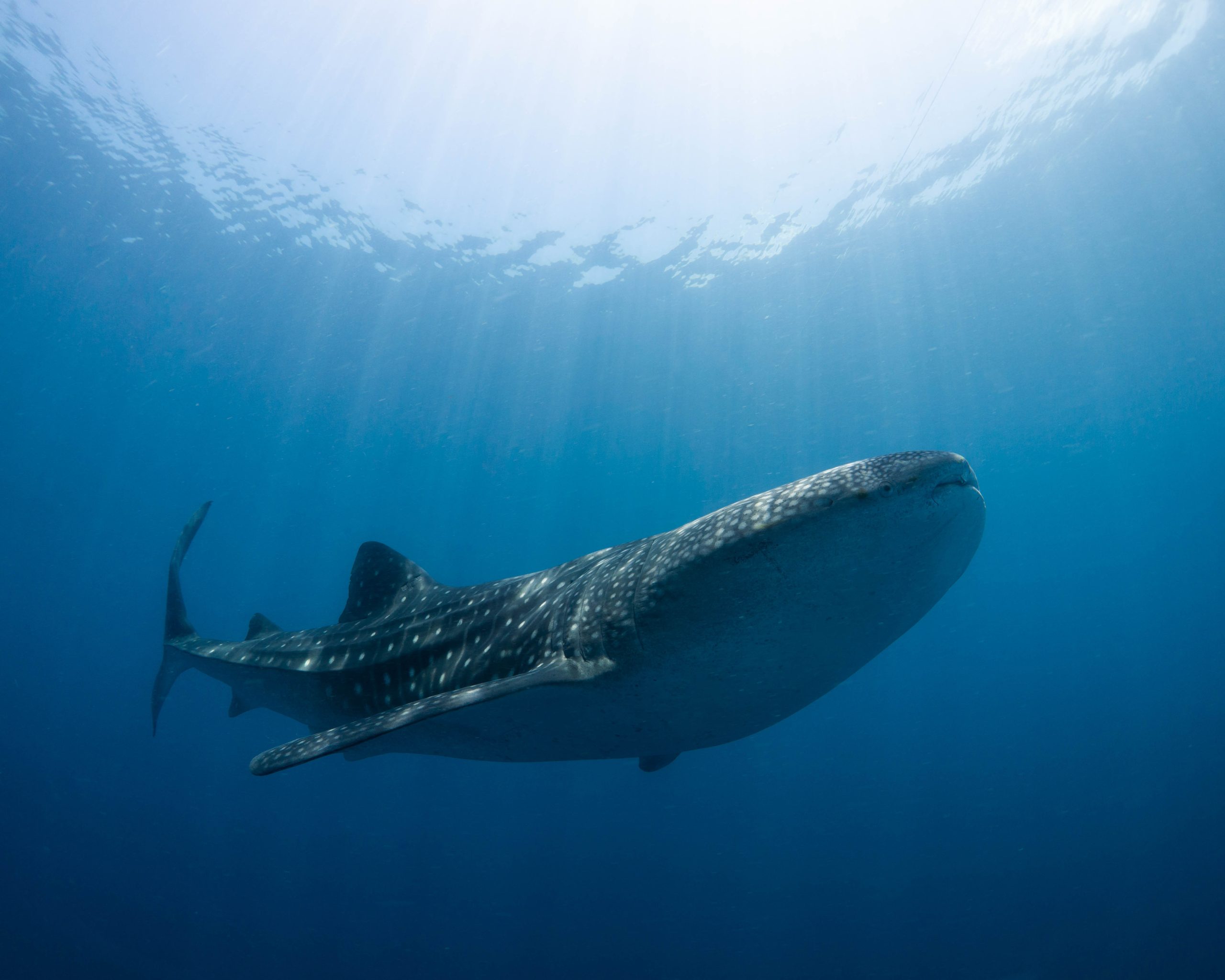
Global warming may drive endangered whale sharks into busier shipping lanes, raising the risk of fatal collisions with large vessels. A new study highlights a potential 15,000-fold increase in overlap between whale sharks and ships by 2100, stressing the need for climate mitigation efforts.
A new study published in Nature Climate Change suggests that global warming may heighten the risk that large ships pose to whale sharks.
Researchers from the University of Southampton and Marine Biological Association (MBA) predict that increased ocean temperatures will see this already endangered species driven into new habitats crossed by busy shipping lanes.
The study predicts that the co-occurrence of whale sharks and large ships could be 15,000 times higher by the end of the century compared to the present day.
Climate Change and Habitat Shifts
Lead author Dr Freya Womersley, University of Southampton and MBA Postdoctoral Research Scientist said: “These shifts in the whale sharks’ habitat were most extreme under high emission scenarios. A global reshuffling could lead to core habitat losses in some areas as well as increased co-occurrence with shipping traffic as oceans warm and other variables change.”
Whale sharks, the world’s largest fish, are highly mobile and responsive to changes in temperature. Recent evidence suggests they are also particularly vulnerable to ship strikes — where large marine animals are struck and injured, often fatally, by large vessels in the global fleet.

Researchers used whale shark satellite-tracking data coupled with global climate models to project the distribution of whale sharks under three different future climate scenarios.
The models project core habitat losses of over 50% in some national waters by 2100 under high emissions (where we continue to rely heavily on fossil fuels), with the greatest potential losses in Asia. Under a sustainable development scenario (in line with the target of no more than 2°C of global warming), some areas showed a gain in core habitat, notably in Europe.
Impact of Climate Mitigation Efforts
“The shifts we predict are likely to be less extreme if we are able to slow warming and mitigate climate change, suggesting that even complex, multi-factor impacts of climate change can be somewhat alleviated by our actions,” says Professor David Sims, co-author and Senior Research Fellow at the University of Southampton and MBA.
The team paired the distribution maps with information on shipping traffic density to determine if these habitat shifts would see whale sharks move into more heavily trafficked areas in the future, potentially increasing the likelihood of ship strikes.
They found that some newly suitable habitats overlapped with busy shipping routes. This was the case in the US part of the North Pacific Ocean, the Japanese part of the Eastern China Seas, and the Sierra Leonian part of the North Atlantic Ocean, among many other sites globally.
Some areas, such as the Mexican part of the Gulf of Mexico, saw reductions in co-occurrence, where core habitats shifted into more coastal waters, away from the busy shipping routes in the center of the Gulf.
Professor Sims says: “Overall ship co-occurrence increased under all future climate scenarios, even if shipping remained at current levels, rather than its anticipated expansion of up to 1,200 percent by 2050.”
Womersley added: “We show that climate change has the potential to indirectly impact highly mobile marine species through interacting pressures of humans and the environment. This highlights the importance of factoring climate change into discussions around endangered species management.”
Reference: “Climate-driven global redistribution of an ocean giant predicts increased threat from shipping” by Freya C. Womersley, Lara L. Sousa, Nicolas E. Humphries, Kátya Abrantes, Gonzalo Araujo, Steffen S. Bach, Adam Barnett, Michael L. Berumen, Sandra Bessudo Lion, Camrin D. Braun, Elizabeth Clingham, Jesse E. M. Cochran, Rafael de la Parra, Stella Diamant, Alistair D. M. Dove, Carlos M. Duarte, Christine L. Dudgeon, Mark V. Erdmann, Eduardo Espinoza, Luciana C. Ferreira, Richard Fitzpatrick, Jaime González Cano, Jonathan R. Green, Hector M. Guzman, Royale Hardenstine, Abdi Hasan, Fábio H. V. Hazin, Alex R. Hearn, Robert E. Hueter, Mohammed Y. Jaidah, Jessica Labaja, Felipe Ladino, Bruno C. L. Macena, Mark G. Meekan, John J. Morris Jr., Bradley M. Norman, Cesar R. Peñaherrera-Palma, Simon J. Pierce, Lina Maria Quintero, Dení Ramírez-Macías, Samantha D. Reynolds, David P. Robinson, Christoph A. Rohner, David R. L. Rowat, Ana M. M. Sequeira, Marcus Sheaves, Mahmood S. Shivji, Abraham B. Sianipar, Gregory B. Skomal, German Soler, Ismail Syakurachman, Simon R. Thorrold, Michele Thums, John P. Tyminski, D. Harry Webb, Bradley M. Wetherbee, Nuno Queiroz and David W. Sims, 7 October 2024, Nature Climate Change.
DOI: 10.1038/s41558-024-02129-5
The research was supported by the UK Natural Environment Research Council (NERC) and the European Research Council (ERC) under the EU Horizon 2020 Programme.
Never miss a breakthrough: Join the SciTechDaily newsletter.
Follow us on Google and Google News.