
Close Menu
    Facebook X (Twitter) Instagram
    SciTechDaily
    • Biology
    • Chemistry
    • Earth
    • Health
    • Physics
    • Science
    • Space
    • Technology
    Facebook X (Twitter) Pinterest YouTube RSS
    SciTechDaily
    Home»Biology»250-Year-Old Mystery Solved: These Saltwater Crocodiles Traveled Thousands of Miles Across the Indian Ocean
    Biology

    250-Year-Old Mystery Solved: These Saltwater Crocodiles Traveled Thousands of Miles Across the Indian Ocean

    By Staatliche Naturwissenschaftliche Sammlungen BayernsFebruary 28, 20261 Comment3 Mins Read
    Facebook Twitter Pinterest Telegram LinkedIn WhatsApp Email Reddit
    Share
    Facebook Twitter LinkedIn Pinterest Telegram Email Reddit
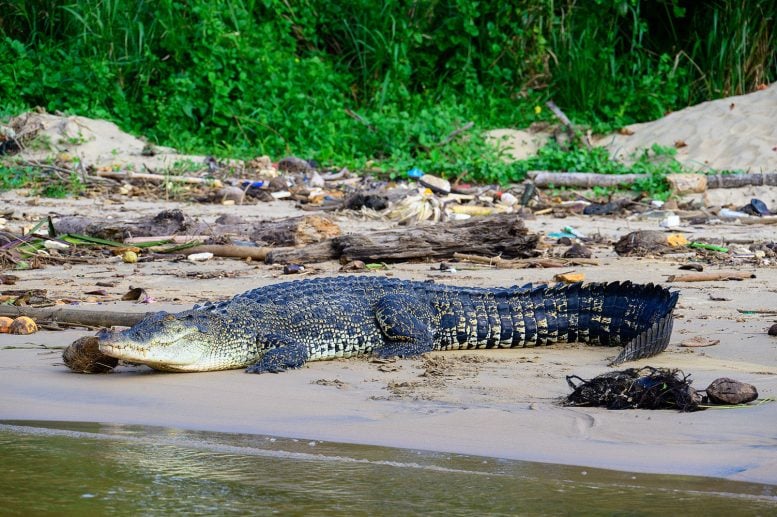
    Saltwater Crocodile in the City of Matara in Southern Sri Lanka
    Saltwater crocodiles can grow to more than six meters in length and weigh over a metric ton, making them among the largest and heaviest living reptiles in the world. They often inhabit coastal areas, such as the mouth of the Nilgawa River in the city of Matara in southern Sri Lanka, which is shown here. Credit: Kathrin Glaw, SNSB

    Genetic evidence confirms Seychelles crocodiles were saltwater crocodiles capable of long-distance ocean dispersal, with a historic range exceeding 12,000 kilometers (~7500 miles).

    Historical records from expeditions over 250 years ago describe crocodiles as abundant along the shores of the Seychelles Islands. However, after permanent settlement began in 1770, the local population declined rapidly and was driven to extinction within about five decades.

    A recent genetic investigation confirms that these island crocodiles belonged to the westernmost population of the saltwater crocodile (Crocodylus porosus). This finding supports an earlier theory that had relied only on physical features to link the Seychelles animals to the widespread species.
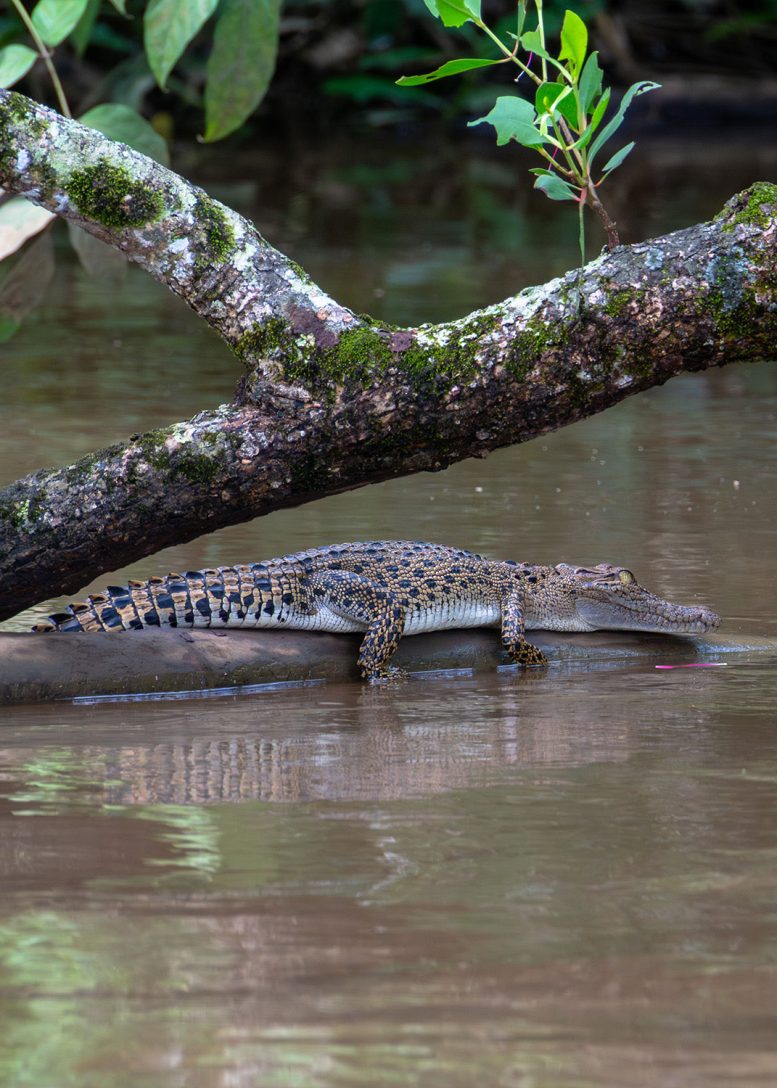
    A Subadult Saltwater Crocodile Basking in the Nilgawa River
    A subadult saltwater crocodile basking in the Nilgawa River, Sri Lanka. Credit: Kathrin Glaw, SNSB

    DNA Analysis of Historical and Modern Crocodile Specimens

    To trace the species’ evolutionary background and geographic spread, scientists from Germany and the Seychelles compared DNA sequences from living saltwater crocodiles with mitochondrial genomes preserved in museum specimens of the genus Crocodylus.

    Their analysis included material from the now vanished Seychelles crocodile population, which disappeared roughly 200 years ago.

    Saltwater crocodiles are uniquely equipped for marine life compared to other crocodilian species. They possess specialized salt glands that remove excess salt from their bodies, allowing them to tolerate seawater for extended periods. This biological advantage made it possible for them to reach and establish populations on distant islands and coastlines separated by thousands of kilometers.
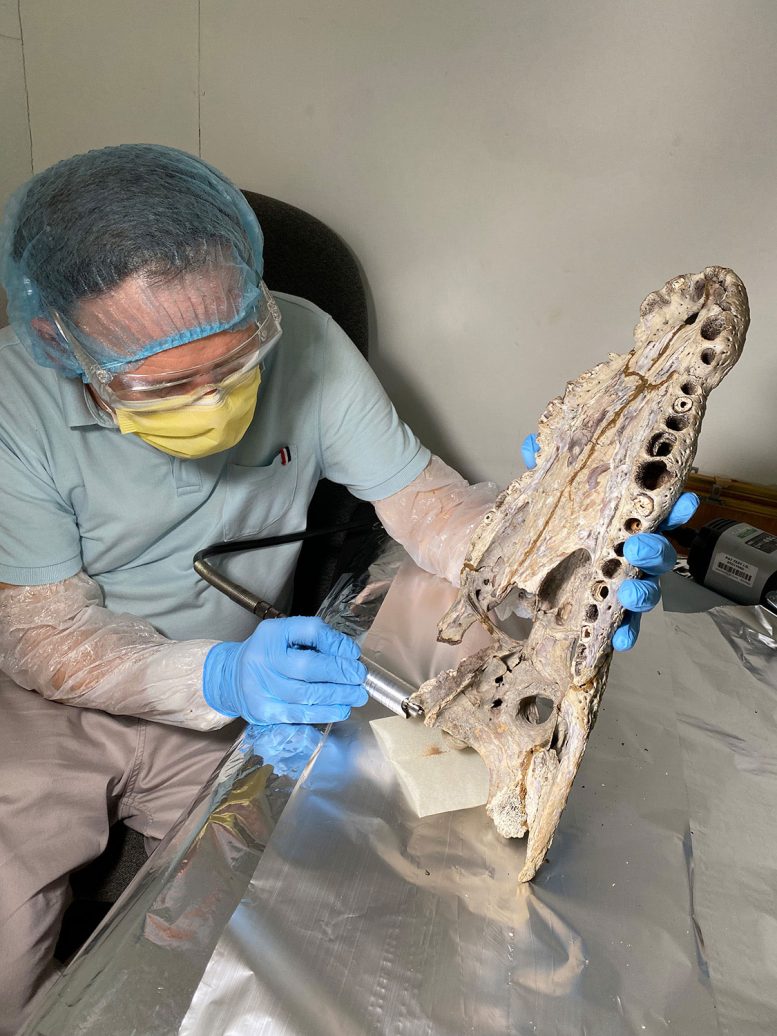
    Three Incomplete Seychelles Crocodile Skulls From the Seychelles National Museum
    The three incomplete skulls from the Seychelles National Museum are among the few preserved remains of the Seychelles crocodiles. Credit: Kathrin Glaw, SNSB

    “The founders of the Seychelles population must have drifted at least 3,000 kilometers across the Indian Ocean to reach the remote archipelago, perhaps even much further,” says reptile expert Frank Glaw of the Bavarian State Collections of Natural History (SNSB) and senior author of the study.

    Ocean Dispersal and Global Range of Saltwater Crocodiles

    “The genetic patterns suggest that saltwater crocodile populations remained connected over long periods and across great distances, pointing to the high mobility of this species,” explains first author Stefanie Agne of the University of Potsdam.

    Today, the saltwater crocodile ranks among the most widely distributed reptiles on the planet. Before humans eliminated the Seychelles population, its territory extended even farther, spanning over 12,000 kilometers (~7500 miles) from Vanuatu in the Pacific Ocean to the Seychelles in the Indian Ocean.

    Reference: “Mitogenomic Crocodylia phylogeny and population structure of Crocodylus porosus including the extinct Seychelles crocodile” by Stefanie Agne, Patrick Arnold, Berthilde Belle, Nicolas Straube, Michael Hofreiter and Frank Glaw, 28 January 2026, Royal Society Open Science.
    DOI: 10.1098/rsos.251546

    Never miss a breakthrough: Join the SciTechDaily newsletter.
    Follow us on Google and Google News.

    Crocodiles Evolution Genetics Reptiles
    Share. Facebook Twitter Pinterest LinkedIn Email Reddit

    Related Articles

    Ancient Predators, Modern Mysteries: Mapping the Crocodile’s Evolutionary Path

    Study of Ancient Proteins Clarifies Mystery of Crocodiles’ Unique Hemoglobin

    Genetic Evolution and the Ice Age: What Crocodile DNA Reveals

    Ancient DNA Reveals New Spot in the Tree of Life for Extinct “Horned” Crocodile

    Genetic Analysis Shows Crocodile Evolution Was Rebooted by Ice Age Glaciations

    Similarities Between Acorn Worm and Vertebrate Brain

    Iceman Ötzi’s DNA Reveals Health Risks and Relations

    Human Y-Chromosome Has Enough Genes to Stay for Millions of Years

    Researchers Discover that Prions Play Role in Yeast Survival and Evolution

    1 Comment

    1. crock master on March 2, 2026 7:42 am

      the second I saw the title of this article I thought. “dang it!”.

      Reply
    Leave A Reply Cancel Reply

    • Facebook
    • Twitter
    • Pinterest
    • YouTube

    Don't Miss a Discovery

    Subscribe for the Latest in Science & Tech!

    Trending News

    Breakthrough Bowel Cancer Trial Leaves Patients Cancer-Free for Nearly 3 Years

    Natural Compound Shows Powerful Potential Against Rheumatoid Arthritis

    100,000-Year-Old Neanderthal Fossils in Poland Reveal Unexpected Genetic Connections

    Simple “Gut Reset” May Prevent Weight Gain After Ozempic or Wegovy

    2.8 Days to Disaster: Scientists Warn Low Earth Orbit Could Suddenly Collapse

    Common Food Compound Shows Surprising Power Against Superbugs

    5 Simple Ways To Remember More and Forget Less

    The Atomic Gap That Could Cost the Semiconductor Industry Billions

    Follow SciTechDaily
    • Facebook
    • Twitter
    • YouTube
    • Pinterest
    • Newsletter
    • RSS
    SciTech News
    • Biology News
    • Chemistry News
    • Earth News
    • Health News
    • Physics News
    • Science News
    • Space News
    • Technology News
    Recent Posts
    • Scientists Discover Stem Cells That Could Regrow Teeth and Bone
    • Scientists Discover Natural Molecule That Stops Alzheimer’s Protein Clumps From Forming
    • Early Cannabis Use May Stall Key Brain Skills in Teens
    • Popular Vitamin D Supplement Has “Previously Unknown” Negative Effect, Study Finds
    • Powerful Antioxidant Found To Play a Key Role in Proper Protein Folding
    Copyright © 1998 - 2026 SciTechDaily. All Rights Reserved.
    • Science News
    • About
    • Contact
    • Editorial Board
    • Privacy Policy
    • Terms of Use

    Type above and press Enter to search. Press Esc to cancel.