
Zircons (and the Secrets They Hold) Are Forever
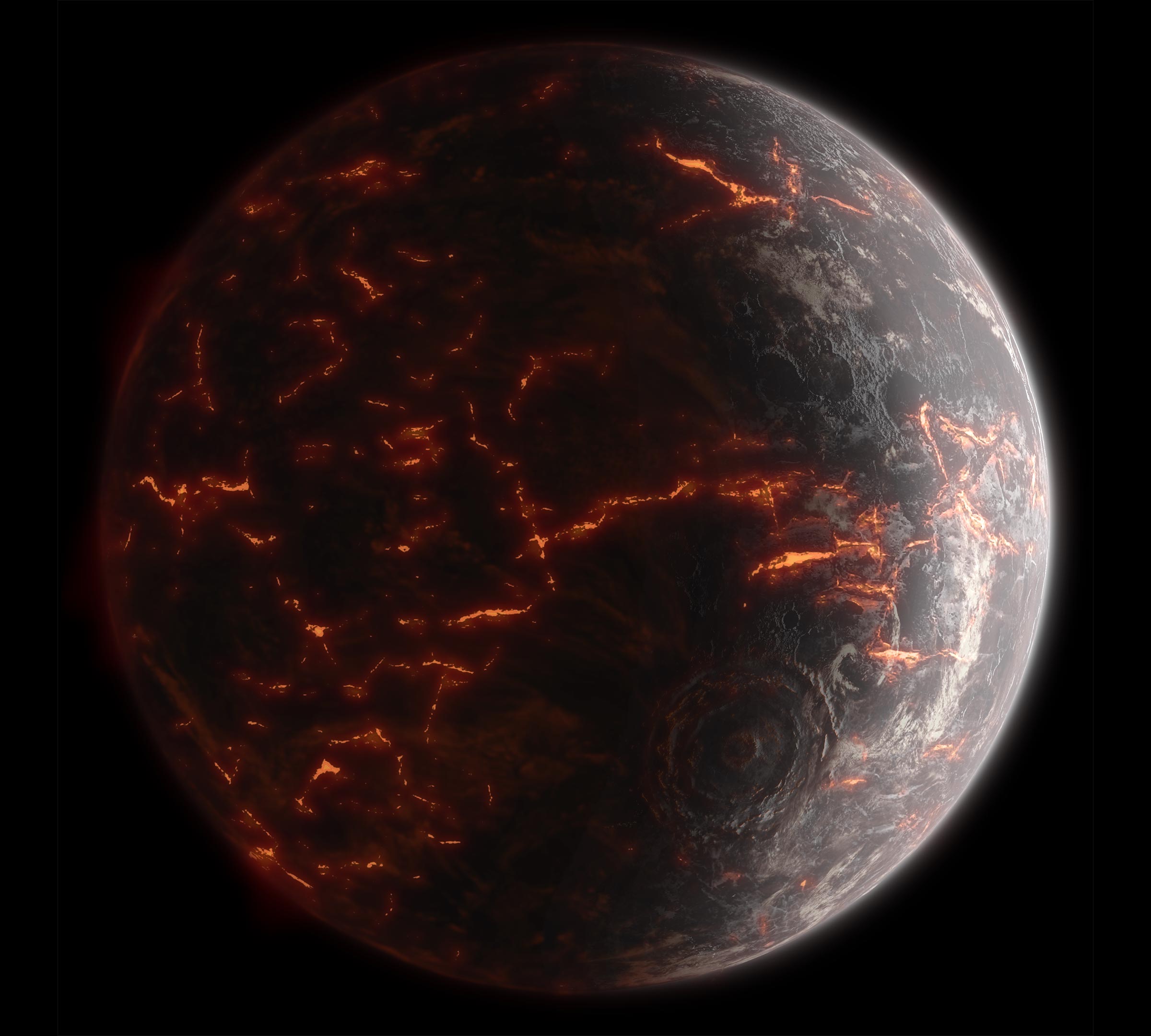
Scientists have long known that plate tectonics, the movement of distinct, rigid plates that make up the Earth’s crust, formed continents and mountains and was crucial to the evolution of the planet’s surface from one of molten lava and rock to an environment hospitable to life.
What’s been less apparent is when it began.
A team of Harvard University-led scientists has analyzed some very rare, ancient, and nearly indestructible crystals the size of small grains of sand called zircons for chemical clues about the onset of plate tectonics. The research study, published recently in the journal AGU Advances, suggests that 3.8 billion years ago there was a major transition in the geochemistry of these zircons that make them look much more like the zircons that are formed today in the red-hot environments where plate tectonics happen.
“Prior to 3.8 billion years ago, the planet doesn’t seem to be as dynamic,” said Nadja Drabon, a Harvard assistant professor of Earth and Planetary Sciences and the paper’s first author. “Today, there’s lots of crust that gets constantly destroyed in what are called subduction zones, and new crust is created. Many [previous] zircons showed that back then once the early crust formed, it lived for a really long time —about 600 million years in this case. While there was some internal reworking, we never created new granitic crust…. Then 3.8 billion years ago, everything changes.”
Zircons: Time Capsules of Earth’s Early History
Think of Zircons as tiny time capsules that retain chemical clues of the Earth’s first 500 million years. Some were formed in the magma of the planet more than 4 billion years ago when the Earth, geologically speaking, was still in its infancy. It makes them the oldest known materials on Earth. Their secrets can be understood by zapping them with lasers, which is what the researchers did for their analysis.
The scientists saw that 3.8 billion years ago as the planet was cooling a lot of new crust was suddenly being formed and that the geochemical signatures of zircons began to look like those generated in subduction zones, the places where two colliding tectonic plates meet and one slides under the other and into the mantle where it is recycled (code word for burned to a crisp).
The researchers say it’s not clear whether there were subduction zones 3.8 billion years ago, but what is known is that the new crust being formed was likely a result of some type of plate tectonics.
Early Tectonic Activity and Earth’s Habitability
The study adds to growing research that tectonic movement occurred relatively early in Earth’s 4.5 billion-year history. It offers hints about how the planet became habitable and the conditions under which the earliest forms of life developed.
Today, the Earth’s outer shell consists of about 15 shifting blocks of crust, which hold the planet’s continents and oceans. The process was key to the evolution of life and the development of the planet because the process exposed new rocks to the atmosphere, which led to chemical reactions that stabilized Earth’s surface temperature over billions of years.
Evidence of when the change began is hard to come by because it’s so scarce. Only 5 percent of all rocks on Earth are older than 2.5 billion years old, and no rock is older than about 4 billion years.
This is where the zircons come in.
The team of scientists, which included geologists from Stanford and Louisiana State University, gathered 3,936 new zircons from a 2017 expedition in South Africa. Thirty-three of them were at least 4 billion years old. It was quite the haul because zircons from that time period are difficult to find because of their size.
Geochemical Clues from Ancient Zircons
Researchers essentially have to get lucky after grinding down rocks they’ve collected into sand and separating the resulting finds. The South African zircons ranged from 4.1 billion to 3.3 billion years old. The team looked at three different geochemical features of the zircon crystals they found: the hafnium isotope, oxygen isotope, and trace element compositions. Each gave them a different piece of the puzzle.
For instance, the hafnium isotope offered hints about the formation and evolution of the Earth’s crust; the oxygen isotopes about whether there were oceans; and the trace elements about the composition of the crust. The data suggested that the rate of crust formation started picking up almost 4 billion years ago.
The researchers also looked at data from other studies on ancient zircons that have been found around the world to see whether they saw evidence of a similar shift. They did when it came to data on hafnium isotopes.
“All of them show this shift between 3.8 and 3.6 billion years ago,” Drabon said.
Drabon says there wasn’t much data on the other two geochemical features and hopes to focus on those next, including looking at when oceans started forming.
“I don’t even know where to start,” Drabon said laughing. There’s so much to do, she said.
Reference: “Destabilization of Long-Lived Hadean Protocrust and the Onset of Pervasive Hydrous Melting at 3.8 Ga” by Nadja Drabon, Benjamin L. Byerly, Gary R. Byerly, Joseph L. Wooden, Michael Wiedenbeck, John W. Valley, Kouki Kitajima, Ann M. Bauer and Donald R. Lowe, 21 April 2022, AGU Advances.
DOI: 10.1029/2021AV000520
Never miss a breakthrough: Join the SciTechDaily newsletter.
Follow us on Google and Google News.
1 Comment
4 Billion Old of Crystals:
Recently, scientists analyzed some very weird, ancient, and nearly indestructible crystals the size of small grains of sand called zircons for chemical clues about the onset of plate tectonics. Their study suggests that these zircons underwent a significant transition in geochemistry some 3.8 billion years ago.