
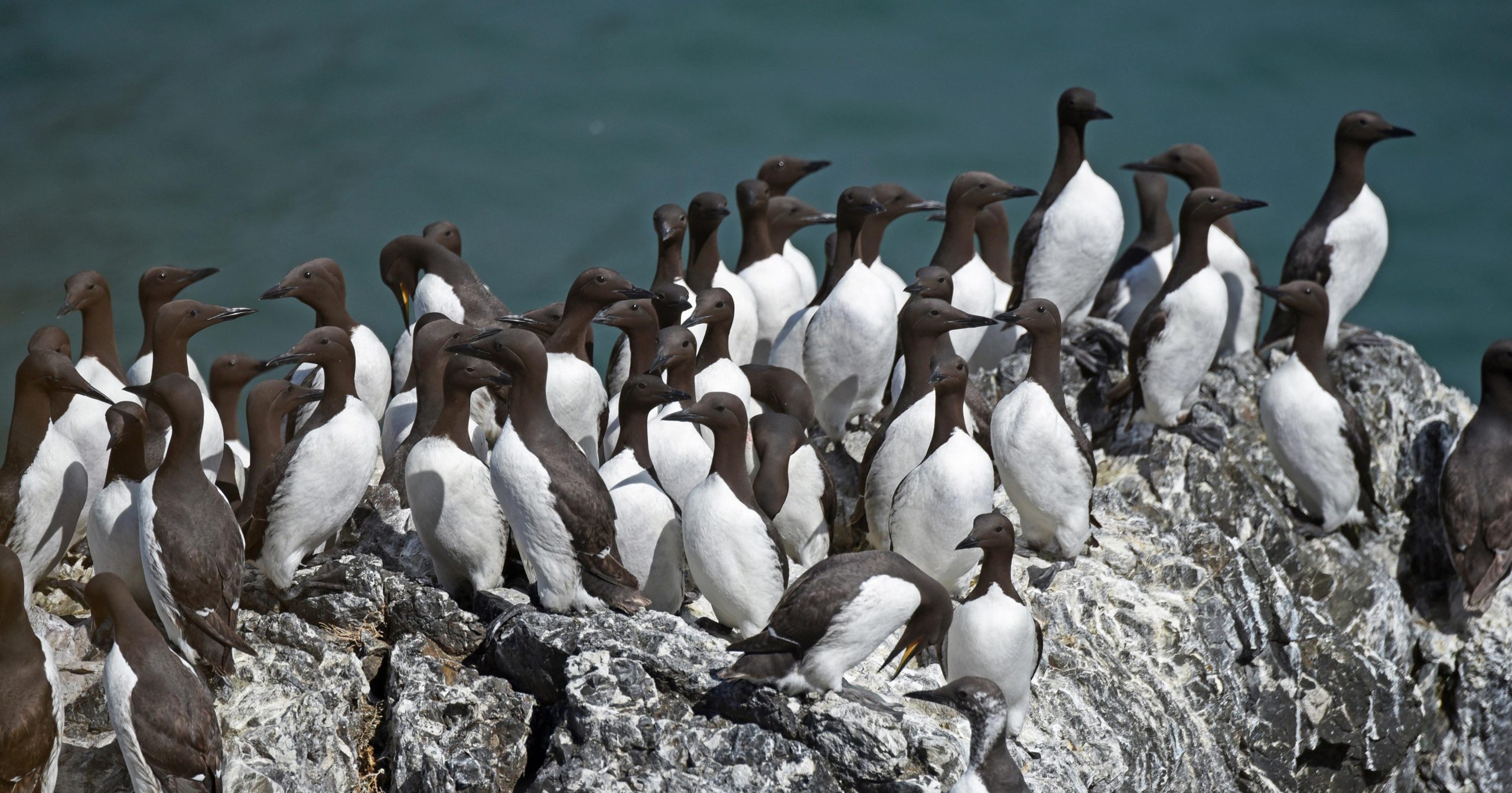
The “warm blob” marine heat wave has resulted in the death of 4 million common murres in Alaska, with the population not recovering due to altered food webs and persistent warming trends.
Murres are common seabirds that resemble flying penguins. These stout, tuxedo-patterned birds dive and swim in the ocean to catch small fish, then fly back to islands or coastal cliffs where they nest in large colonies. Despite their hardy appearance, these birds are incredibly vulnerable to changes in ocean conditions.
A new study conducted in collaboration with a University of Washington citizen science program, which trains coastal residents to search local beaches and document dead birds, has revealed the devastating impact of warming waters on Alaska’s common murres.
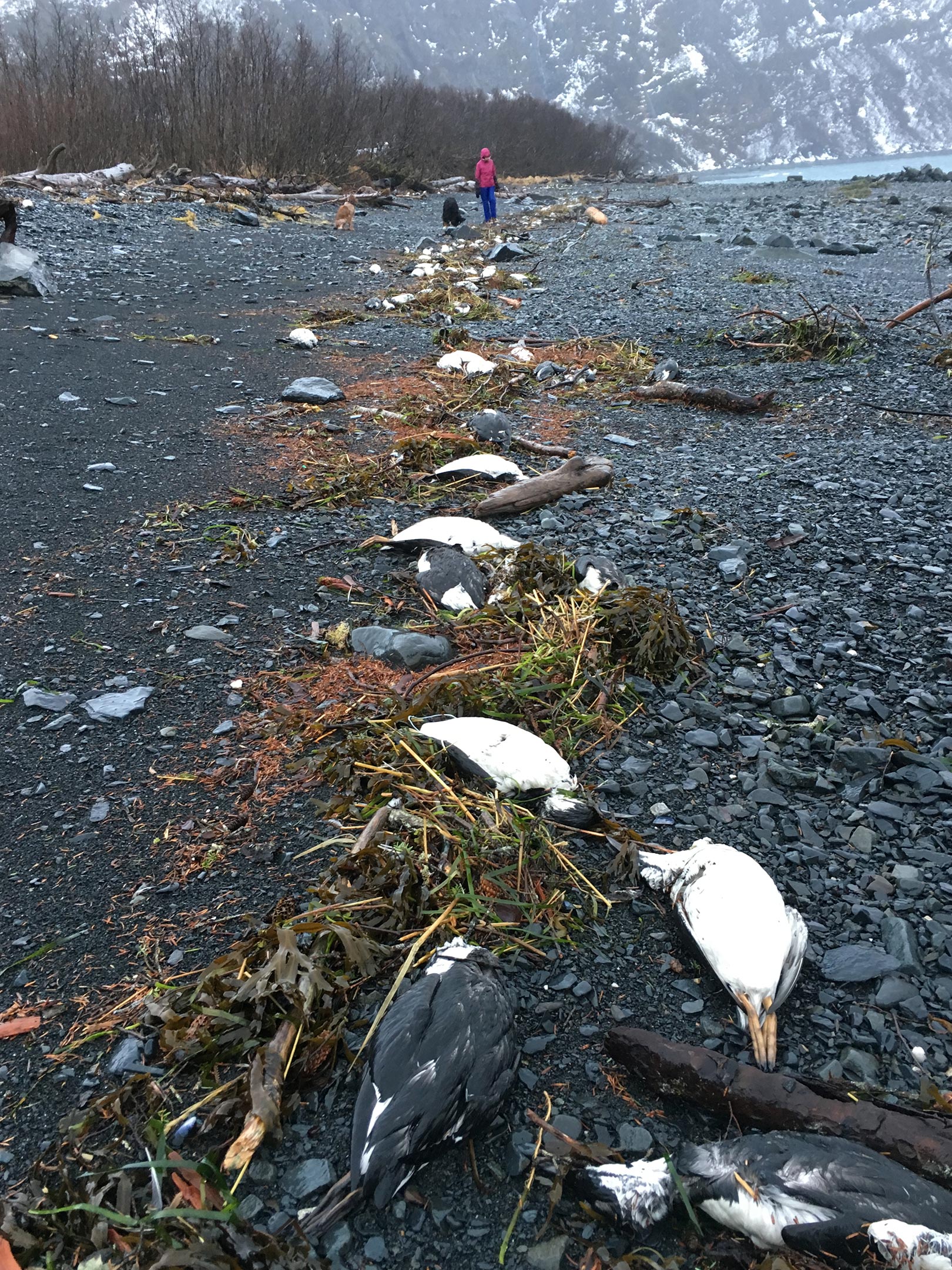
Documenting a Crisis: Massive Murre Mortality
In 2020, participants of the UW-led Coastal Observation and Seabird Survey Team, or COASST, and other observers first identified the massive mortality event affecting common murres along the West Coast and Alaska. That study documented 62,000 carcasses, mostly in Alaska, in one year. In some places, beachings were more than 1,000 times normal rates. However, the 2020 study did not estimate the total size of the die-off after the 2014-16 marine heat wave known as “the blob.”
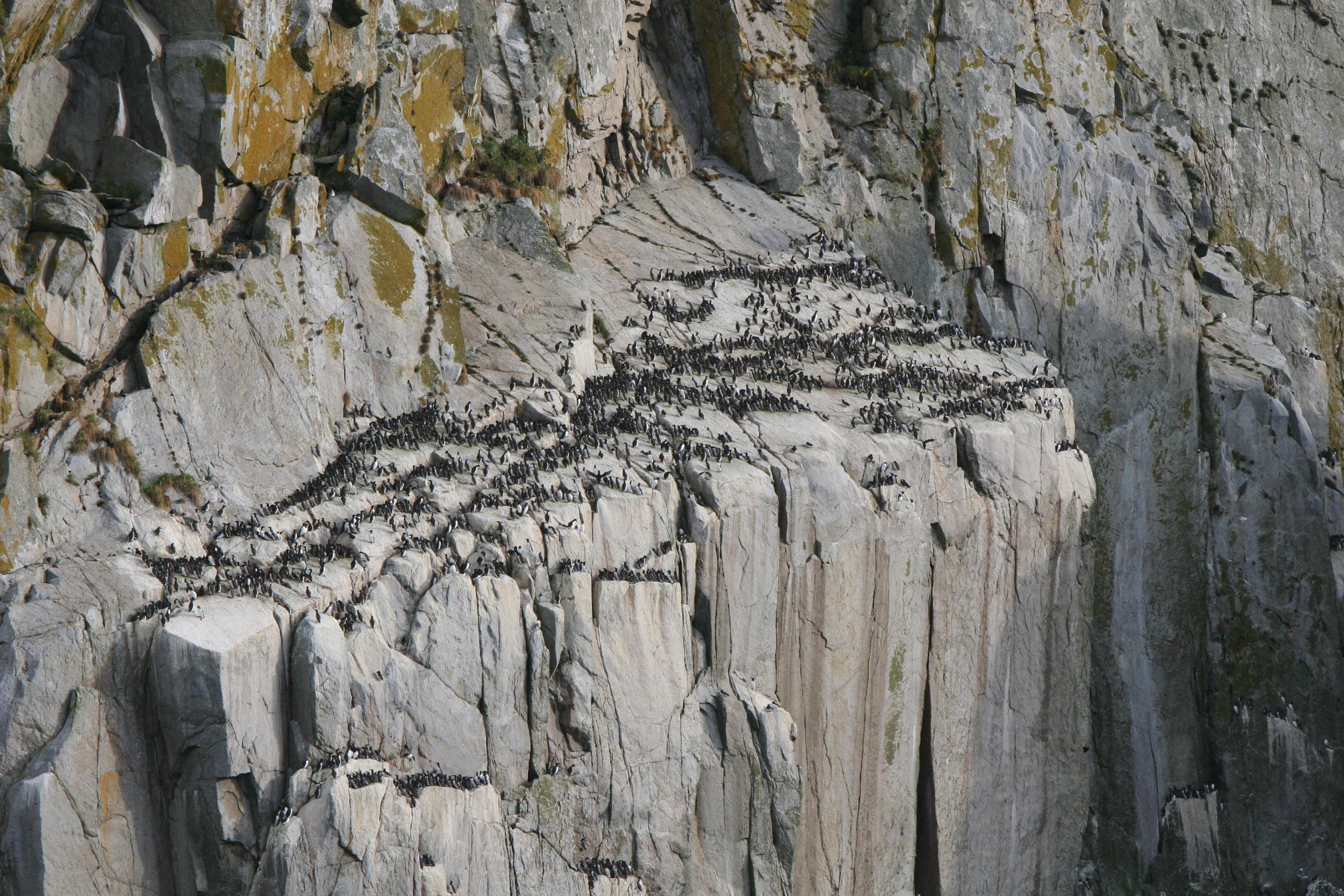
Measuring the Impact of Marine Heat Waves
In this new paper, recently published in Science, a team led by the U.S. Fish and Wildlife Service analyzed years of colony-based surveys to estimate total mortality and later impacts. The analysis of 13 colonies surveyed between 2008 and 2022 finds that colony size in the Gulf of Alaska, east of the Alaska Peninsula, dropped by half after the marine heat wave. In colonies along the eastern Bering Sea, west of the peninsula, the decline was even steeper, at 75% loss.
The study, led by Heather Renner, a wildlife biologist at the U.S. Fish and Wildlife Service, estimates that 4 million Alaska common murres died in total, about half the total population. No recovery has yet been seen, the authors write.
“This study shows clear and surprisingly long-lasting impacts of a marine heat wave on a top marine predator species,” said Julia Parrish, a UW professor of aquatic and fishery sciences and of biology, who was a co-author on both the 2020 paper and the new study. “Importantly, the effect of the heat wave wasn’t via thermal stress on the birds, but rather shifts in the food web leaving murres suddenly and fatally without enough food.”

The “Warm Blob” and Its Ecological Aftermath
The “warm blob” was an unusually warm and long-lasting patch of surface water in the northeast Pacific Ocean from late 2014 through 2016, affecting weather and coastal marine ecosystems from California to Alaska. As ocean productivity decreased, it affected the food supply for top predators, including seabirds, marine mammals, and commercially important fish. Based on the condition of the murre carcasses, the authors of the 2020 study concluded that the most likely cause of the mass mortality event was starvation.
Before this marine heat wave, about a quarter of the world’s population, or about 8 million common murres, lived in Alaska. Authors estimate the population is now about half that size. While common murre populations have fluctuated before, the authors note the Alaska population has not recovered from this event as it did after previous, smaller die-offs.
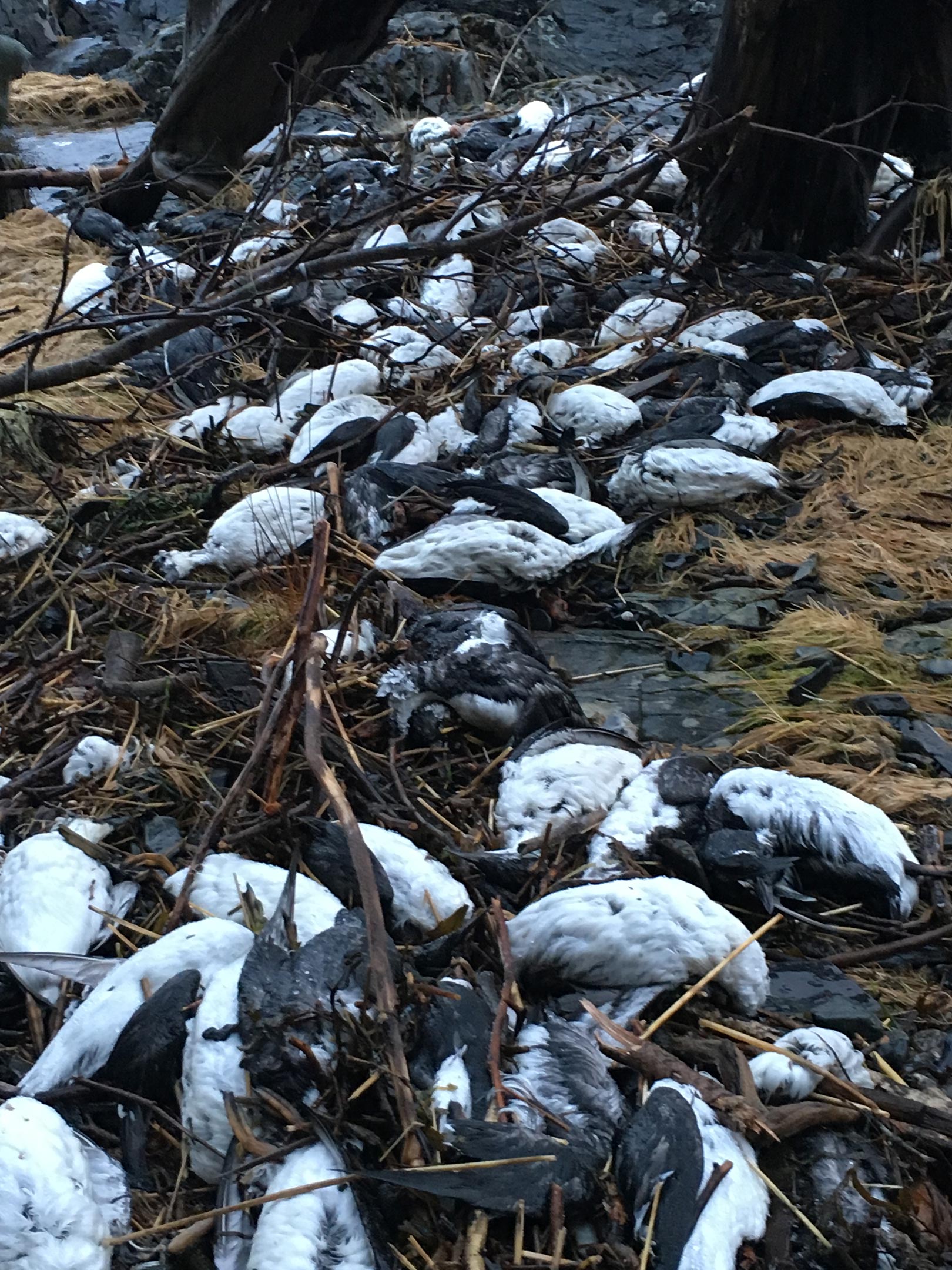
Climate Change and Seabird Survival
While the “warm blob” appears to have been the most intense marine heat wave yet, persistent, warm conditions are becoming more common under climate change. A 2023 study led by the UW, including many of the same authors, showed that a 1 degree Celsius increase in sea surface temperature for more than six months results in multiple seabird mass mortality events.
“Whether the warming comes from a heat wave, El Niño, Arctic sea ice loss or other forces, the message is clear: Warmer water means massive ecosystem change and widespread impacts on seabirds,” Parrish said.
“The frequency and intensity of marine bird mortality events is ticking up in lockstep with ocean warming,” Parrish said.
The 2023 paper suggested seabird populations would take at least three years to recover after a marine heat wave. Parrish said that common murres in Alaska haven’t recovered even seven years after “the blob” which is worrisome.
“We may now be at a tipping point of ecosystem rearrangement where recovery back to pre-die-off abundance is not possible.”
Reference: “Catastrophic and persistent loss of common murres after a marine heatwave” by Heather M. Renner, John F. Piatt, Martin Renner, Brie A. Drummond, Jared S. Laufenberg and Julia K. Parrish, 12 December 2024, Science.
DOI: 10.1126/science.adq4330
Never miss a breakthrough: Join the SciTechDaily newsletter.
Follow us on Google and Google News.
1 Comment
“The ‘warm blob’ was an unusually warm and long-lasting patch of surface water in the northeast Pacific Ocean from late 2014 through 2016, affecting weather and coastal marine ecosystems from California to Alaska. … While the ‘warm blob’ appears to have been the most intense marine heat wave yet, persistent, warm conditions are becoming more common under climate change.”
2016 coincides with an exceptionally strong El Nino event. I don’t think that anyone has even attempted to link El Ninos to anthropogenic global warming prior to this paper. We aren’t even sure why the episodic El Ninos occur. One has to be careful not to assume what is likely a spurious correlation has any relationship to CO2, in the absence of supporting evidence.
The article acknowledges that hyperthermia did not play a direct role. However, they failed to enlighten the reader as to why the murres suffered starvation. It is important to documents die offs such as this, but I’m disappointed that they didn’t provide more information on what link(s) in the food chain failed and exactly why. Why, if the atmosphere is generally warming, are there local concentrations of warmth? Where is the heat coming from?
The seasonal ramp-up phase of biogenic CO2 is typically similar most years, but shows a strong influence of temperature causing CO2 to find its way into the atmosphere during El Nino events. That is, the slope is steeper and the peak higher during El Ninos, apparently because chemical and biological activity is increase with higher temperatures.